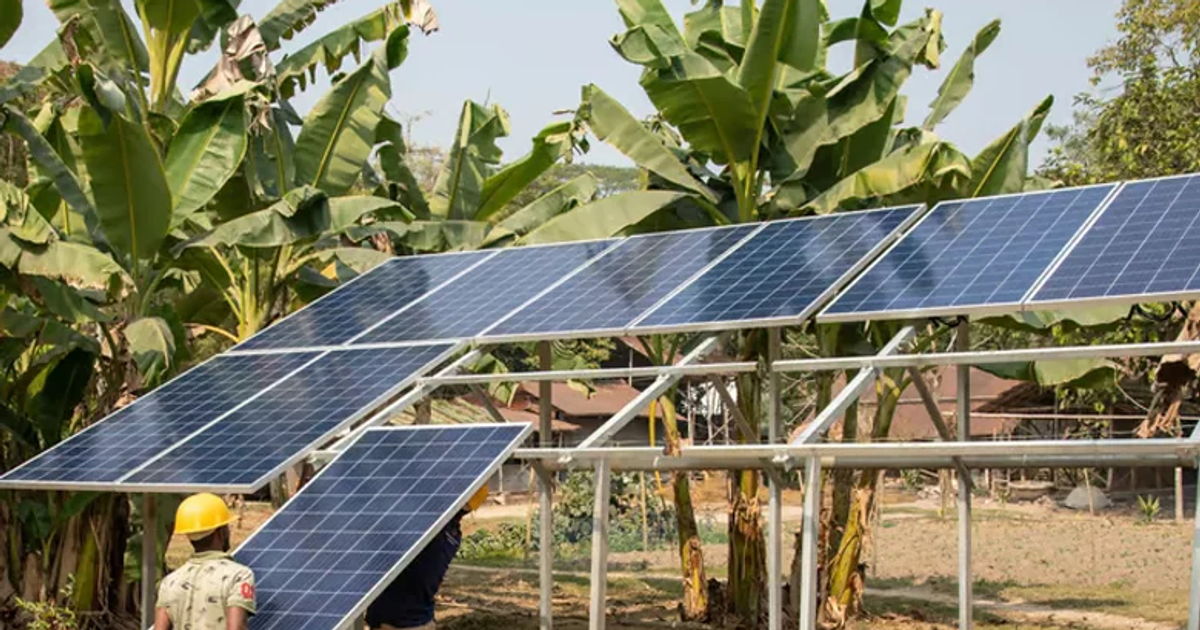
The Rockefeller Foundation and the World Bank are accelerating the expansion of solar farms across Nigeria, Ethiopia, and other African economies, unlocking new momentum in the continent’s clean energy transition.
The investments aim to expand electricity access, strengthen grid resilience, and reduce dependence on fossil fuels.
Solar infrastructure is emerging as a cornerstone of Africa’s energy future, offering scalable, cost-effective solutions to chronic power shortages.
Successful implementation could transform Africa’s electricity and economic landscape.
Solar Investments Accelerate Africa’s Energy Transition
Africa faces one of the world’s largest electricity access gaps, with millions lacking reliable power.
Solar energy enables a scalable, cost-effective solution that can rapidly expand electricity access without increasing carbon emissions.
Investments from global institutions, such as the Rockefeller Foundation and the World Bank, are helping accelerate solar deployment, strengthening Africa’s energy transition trajectory.
This shift positions solar power as a cornerstone of Africa’s future energy systems.
Strategic Financing Supports Solar Infrastructure Expansion
Institutional financing is enabling the development of solar projects across key African energy markets.
Solar Investment Strategic Impact Areas
Strategic Focus | Implementation Mechanism | Energy System Impact |
|---|---|---|
Solar farm construction | Utility-scale renewable energy projects | Expands electricity generation capacity |
Grid infrastructure support | Integration with national power systems | Improves grid reliability and stability |
Electricity access expansion | Solar deployment in underserved areas | Increases energy access rates |
Clean energy transition | Replacement of fossil fuel generation | Reduces carbon emissions |
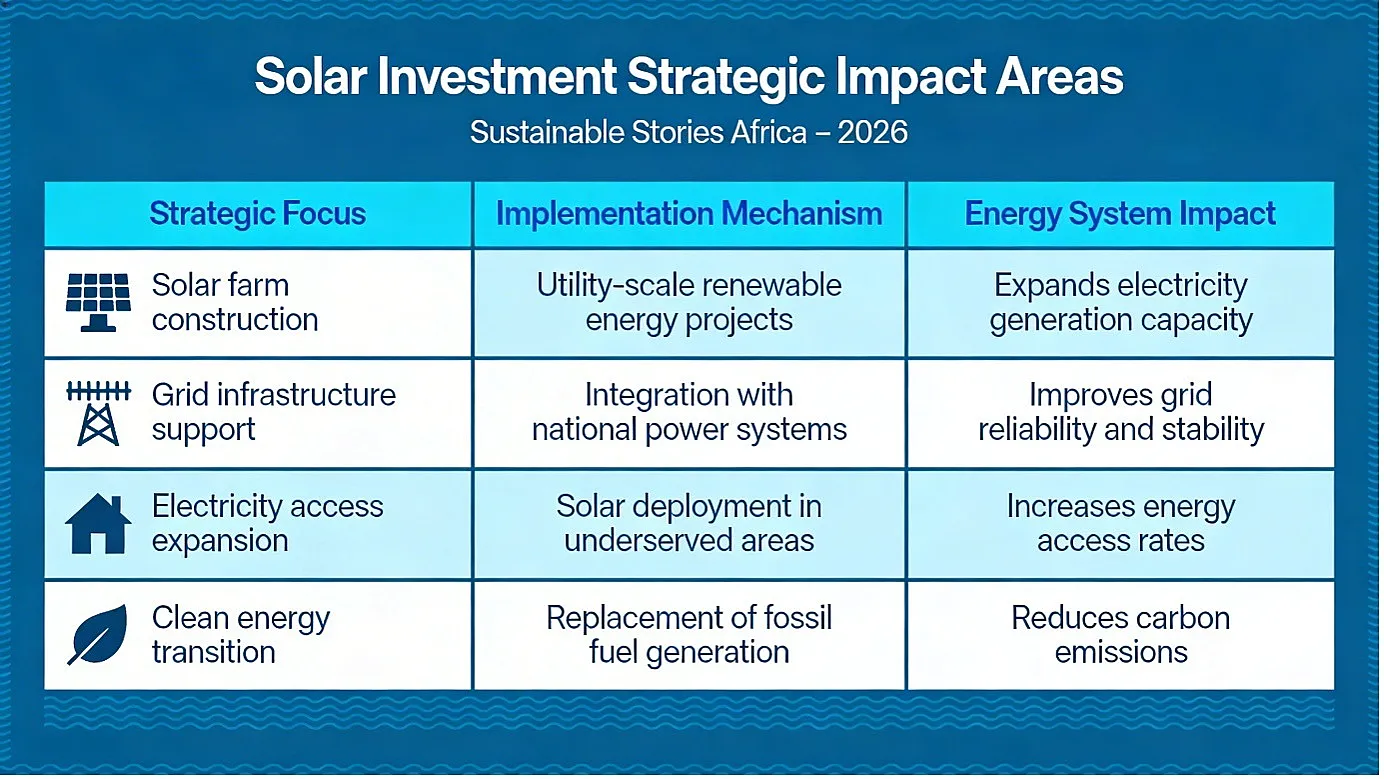
These investments enable countries to accelerate the deployment of renewable energy while enhancing the long-term sustainability of the power system.
Solar Expansion Strengthens Economic And Energy Stability
Solar investments deliver both environmental and economic benefits, strengthening Africa’s development trajectory.
Reliable electricity is essential for industrial growth, job creation, and economic stability.
Economic And Energy Benefits Of Solar Expansion
Strategic Benefit | Economic Impact | Long-Term Outcome |
|---|---|---|
Increased electricity generation | Supports industrial and economic activity | Accelerates economic growth |
Reduced fossil fuel dependence | Lowers energy costs and import reliance | Improves energy security |
Expanded electricity access | Supports businesses and households | Enhances economic productivity |
Climate mitigation impact | Reduces emissions and environmental risks | Strengthens sustainability outcomes |
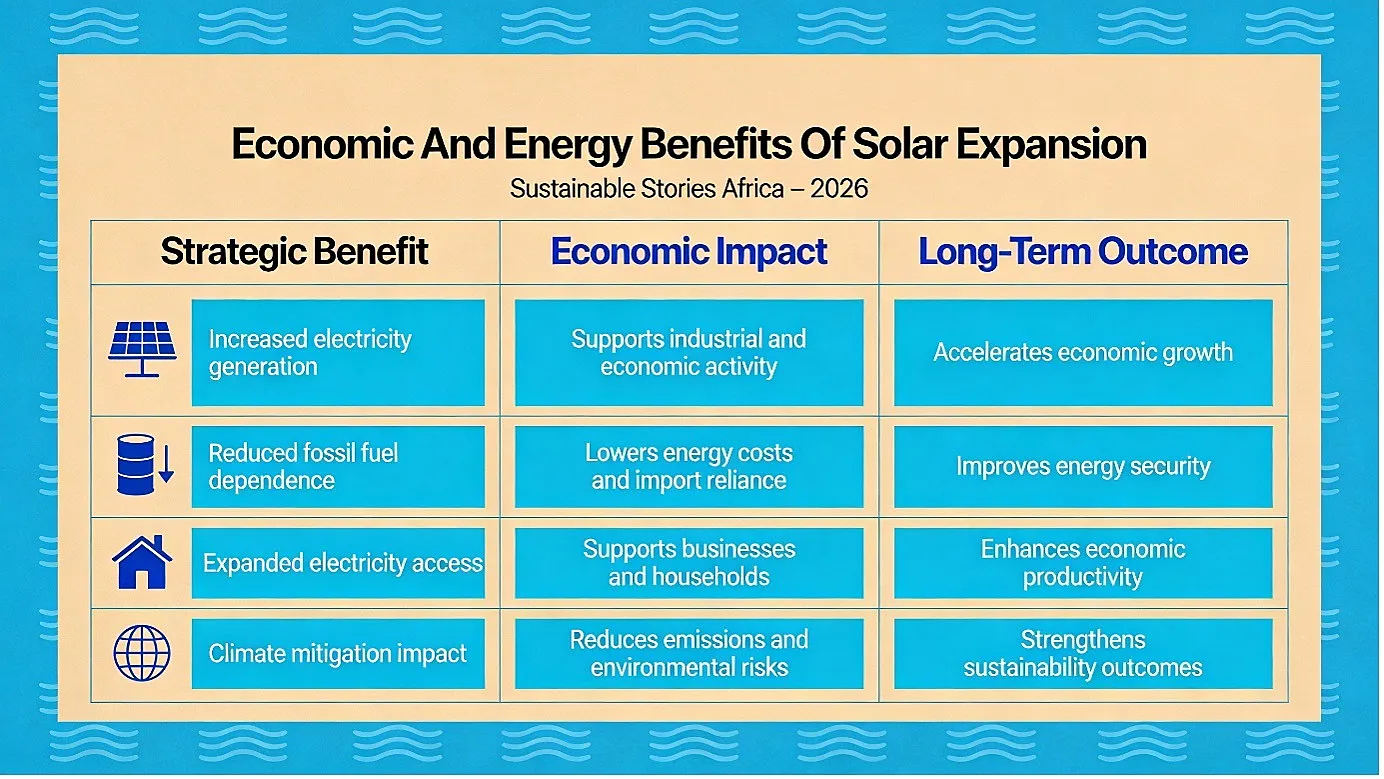
Solar energy offers a pathway to sustainable economic transformation.
Coordinated Investment Critical To Scale Deployment
Scaling solar energy deployment requires coordinated investment, policy alignment, and infrastructure planning.
Governments must strengthen regulatory frameworks, enable private sector participation, and integrate solar energy into national power strategies.
International partnerships and financing institutions will continue to play a critical role in accelerating the deployment of renewable energy.
Effective coordination will ensure solar investments deliver lasting economic and energy benefits.
Path Forward – Strategic Solar Investments Enable Energy Transformation
Continued investment in solar infrastructure will strengthen electricity access, grid reliability, and economic resilience across African economies.
Institutional financing and policy support will accelerate deployment.
Public-private collaboration and regulatory stability will ensure solar expansion delivers sustainable energy systems, supporting Africa’s long-term development and climate transition goals.
Culled From: Rockefeller, World Bank fund solar farm expansion in Nigeria, Ethiopia, others - Energy in Africa