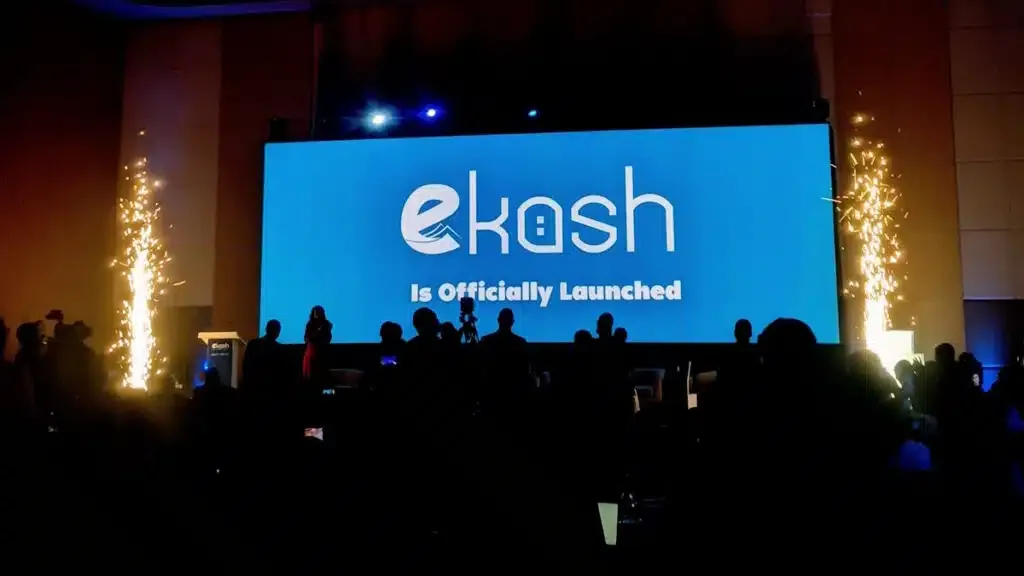
Rwanda has designated eKash as its national instant payment platform for bank and mobile wallet transfers.
The system went live on 14 July with fees capped at RWF20 and a single-transaction limit of RWF10 million.
Interoperability could expand financial inclusion, but reliability, fraud controls and access for low-connectivity users will determine trust.
Twenty Francs Moves Money Instantly
Rwanda has moved domestic interoperable retail payments onto eKash, a national instant-payment platform that connects bank accounts and mobile wallets.
The system went live on 14 July 2026 with transfer fees capped at RWF20, about one US cent, regardless of the amount sent.
Customers can transfer up to RWF10 million, roughly $6,800, in a single transaction.
They do not need a new account or application: participating banks and mobile money providers can make eKash available through existing apps, wallets and USSD channels.
That design places interoperability behind familiar services rather than asking consumers to learn another brand.
One Rail Connects Fragmented Providers
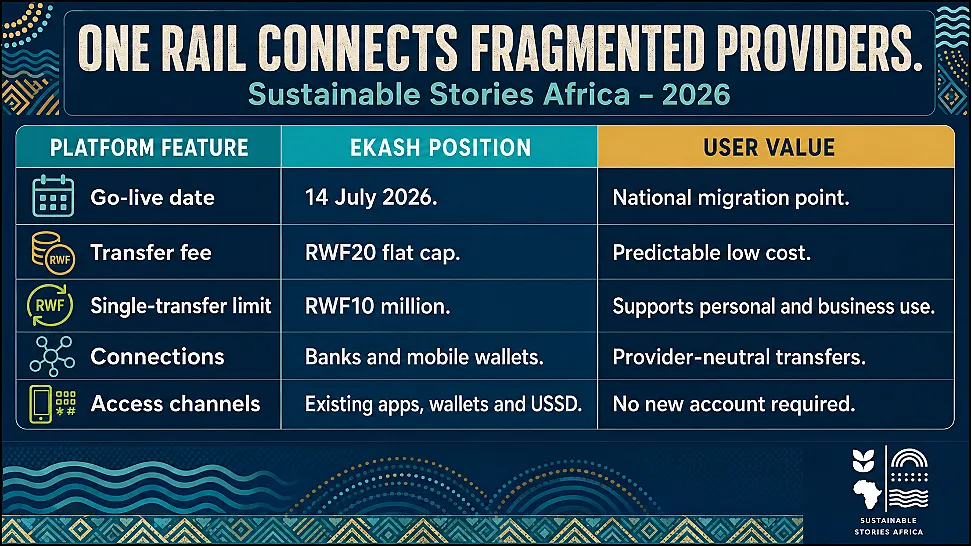
The platform supports bank-to-bank, bank-to-wallet, wallet-to-bank and wallet-to-wallet transactions through a common national switch.
The National Bank of Rwanda directed domestic interoperable retail payments to transition to eKash, while RSwitch managed the migration and financial institutions notified customers ahead of launch.
The pricing change is substantial. Transfers reported to have cost as much as RWF5,000 can now cost RWF20. For households sending small amounts and businesses making frequent payments, predictable low fees can determine whether digital channels are a convenience or an unaffordable surcharge.
Rwanda joins a wider African shift toward instant interoperable payment systems.
Nigeria, Ghana, South Africa, Tanzania and Egypt have developed national rails to reduce fragmentation and cash dependence.
The infrastructure can increase competition because a user’s ability to pay another person no longer depends on both parties choosing the same provider.
- For providers, a common rail can reduce duplicated connections and speed product development.
- For the central bank, it can improve visibility over retail-payment performance and systemic dependencies.
- Those benefits also concentrate operational importance in shared infrastructure, making redundancy, cyber resilience and transparent service standards essential.
Interoperability Can Widen Inclusion
A cheap, always-available payment layer can help traders settle suppliers, families send emergency funds, and small enterprises receive payments without maintaining several wallets.
It can also provide fintech firms a shared foundation for new services rather than forcing each provider to build bilateral connections.
The inclusion outcome is not automatic.
- People need reliable mobile coverage, accessible phones, agents who can support cash-in and cash-out, clear dispute resolution and interfaces in languages they understand.
- Flat pricing also needs transparent monitoring so providers do not recreate high costs elsewhere.
Merchant acceptance will be another test. If small traders can receive low-cost payments without expensive equipment or delayed settlement, eKash can support formal records and easier business finance. If onboarding is complex or customers fear mistaken transfers, cash will retain its advantage despite the lower headline fee.
Protect Trust As Volumes Grow
The National Bank of Rwanda and RSwitch should publish data about availability, transaction success, fraud, complaints and dispute resolution.
- Banks and mobile money operators need strong authentication, real-time monitoring and clear customer messages that distinguish eKash from scams in its name.
- Policymakers should track whether low fees increase use among women, rural residents, low-income households and microenterprises.
- Competition authorities should ensure access remains fair for smaller providers.
Rwanda has made the payment rail faster and cheaper; the next test is whether every user can depend on it safely when money matters most.
- Consumer protection should include simple reversal and error-resolution rules, accessible support and rapid action on social-engineering scams.
- Financial literacy campaigns can explain that eKash is infrastructure within existing channels, reducing the risk that fraudsters persuade users to download false applications or disclose credentials.
Path Forward – Keep Payments Cheap, Safe And Inclusive
Rwanda should publish reliability, fraud, complaints and inclusion indicators while maintaining fair access for all providers.
Strong authentication and rapid dispute resolution will protect trust.
Low fees must translate into meaningful use among rural residents, women and small businesses.
The platform’s success will be measured by dependable everyday payments, not launch-day speed alone.
Culled From: Rwanda launches eKash instant payments platform