Sahara Group has launched a $50,000 innovation programme for African researchers and innovators.
The Asharami M.A.D (Making A Difference) Equation aims to move energy research from journals into real industry applications.
For Africa’s energy systems, the bigger question is whether ideas can become scalable solutions that improve access, reliability and sustainability.
Turning Research Into Energy Solutions
Sahara Group has announced the Asharami M.A.D Equation, a $50,000 innovation programme designed to support African researchers and innovators working on practical solutions for energy access, system resilience and sustainable development.
The programme, announced in a company press release dated June 4, 2026, targets innovators across Africa, especially those at postgraduate and advanced research levels. Applications close on June 20, 2026.
The initiative focuses on a familiar gap in Africa’s innovation ecosystem: strong research often exists in universities and journals; however, it does not always move into the companies, grids, plants and communities where it can solve real problems.
For millions of Africans, the energy challenge is experienced daily and in its practicality.
It is the small business losing sales during outages, the clinic managing unreliable power, the student studying with poor lighting, and the manufacturer spending more on backup energy than on productivity.
What Sahara Is Offering
The Asharami M.A.D Equation will award a total prize pool of $50,000. The winner will receive $25,000, while the 2nd and 3rd finishers will receive $15,000 and $10,000, respectively.
Beyond funding, Sahara said participants will receive mentorship, technical support and opportunities for real-world implementation within the group’s operations.

According to Ejiro Gray, Director, Governance and Sustainability at Sahara Group, Africa’s energy future will depend on the continent’s ability to convert knowledge into action.
She said the platform is designed to unlock the potential within Africa’s academic and research communities by linking innovation directly to industry needs.
“The platform will empower a new generation of solution-driven thinkers capable of delivering practical interventions that improve energy reliability, expand access, and support sustainability goals across the continent,” Gray said.
Bethel Obioma, Head, Corporate Communications at Sahara Group, said the programme is intended to go beyond funding by helping scholars and innovators translate their work into solutions that strengthen energy systems, improve livelihoods and drive inclusive growth.
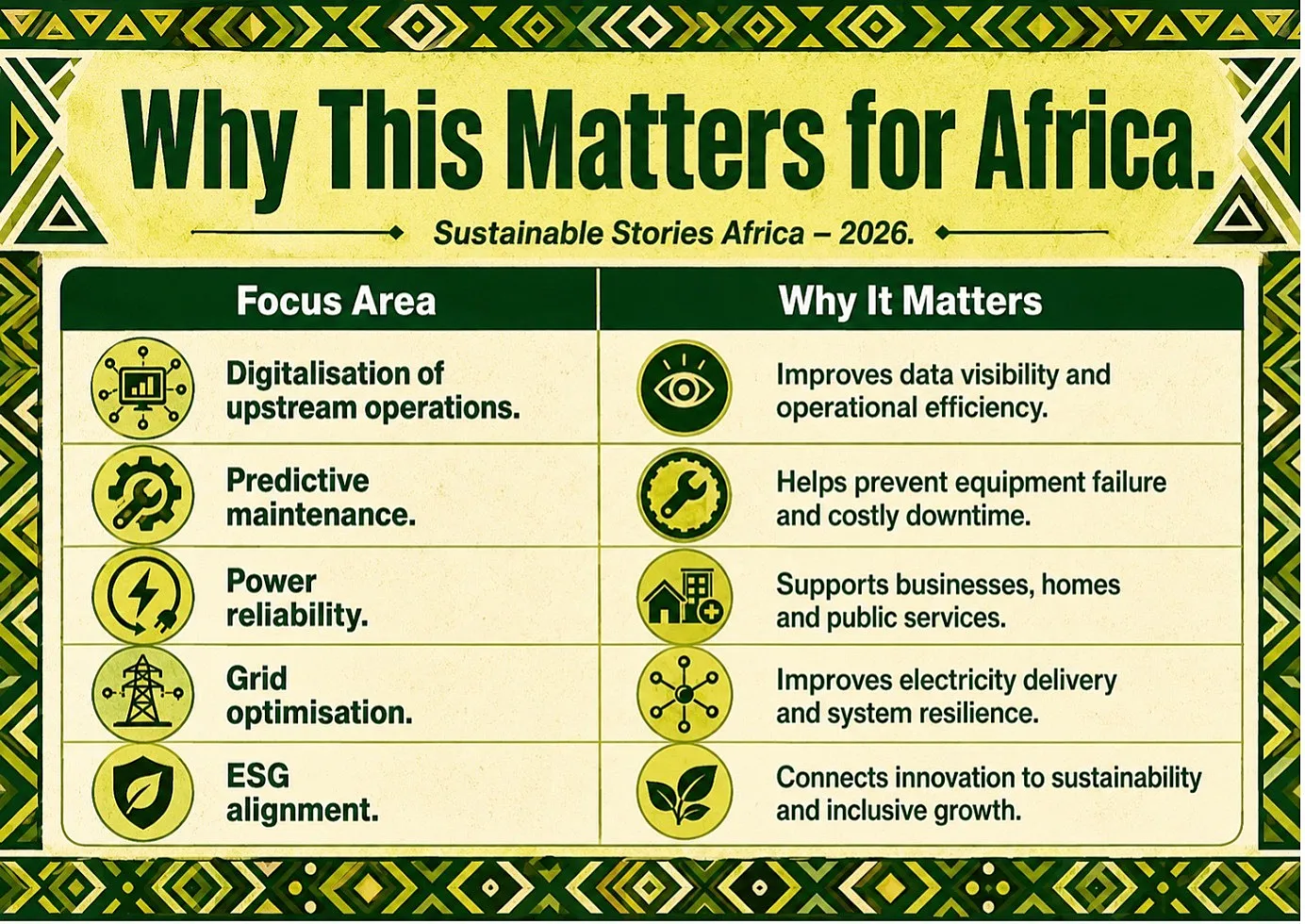
Why This Matters for Africa
The programme’s focus areas include digitalisation of upstream operations, predictive maintenance, power reliability and grid optimisation.
These are not abstract corporate themes. They sit at the heart of Africa’s energy productivity challenge.
- Predictive maintenance can reduce downtime in energy infrastructure.
- Grid optimisation can improve power delivery.
- Digitalisation can help operators make faster and better decisions.
- Innovation in power reliability can reduce the dependence of businesses and households on costly backup systems.
If the programme succeeds, it could help close the distance between African research and African infrastructure.
That is important because the continent would not only need more energy projects; it would require solutions designed around local realities, affordability, maintenance constraints and system reliability.
The risk, however, is that innovation challenges can become one-off visibility exercises if they are not linked to procurement, patient capital, commercial pilots and long-term institutional support.
Execution Must Follow the Prize
Sahara’s announcement is an important signal, but the real value will depend on what happens after winners are selected.
To avoid becoming another short-cycle innovation contest, the programme should create a clear pathway from selection to pilot testing, technical validation, deployment and scale.
- Researchers need access to industry data, engineering support, regulatory guidance and commercial partners.
Universities and research institutions also have a role to play.
- They should encourage applied research, protect intellectual property fairly and support innovators in translating technical work into bankable solutions.
For investors and energy companies, the message is equally clear.
- Africa’s energy transition will require more than infrastructure financing. It will need a stronger bridge between research, industry and execution.
Path Forward – Move Ideas Into Real Systems
The Asharami M.A.D Equation can help African innovation move from academic promise to operational impact, with the backing of pilots, mentorship and implementation discipline.
The priority now is practical execution: transparent selection, strong technical support, real-world testing and measurable outcomes.
Well done, the programme can support energy access, ESG goals and Africa’s wider sustainable development agenda.
Sahara Group Press Release