Sahara Group has begun bunkering operations in Mauritania after receiving a 2026 licence from the government.
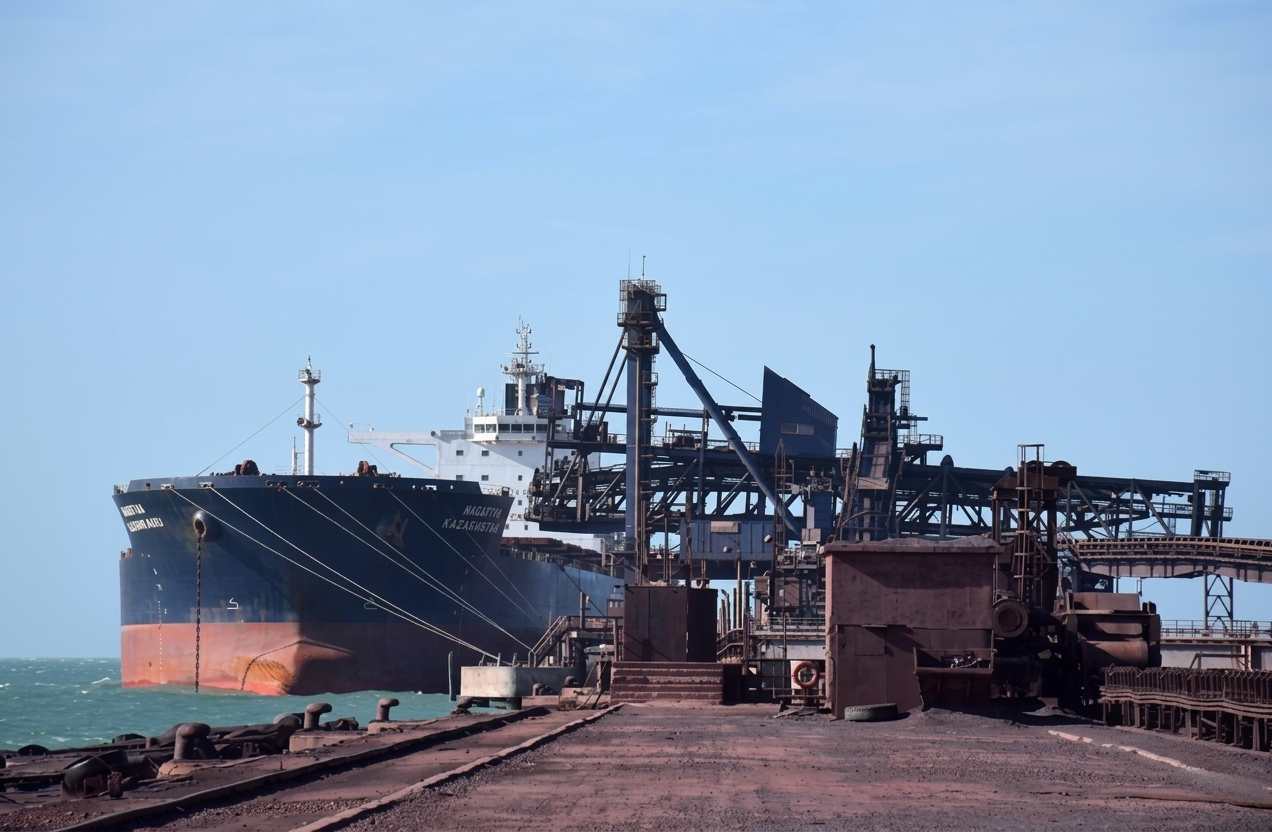
The launch places a 7,600 DWT tanker offshore Nouadhibou to supply compliant marine fuels.
For ship operators, ports and coastal economies, the move could reduce fuel-access gaps along West Africa’s Atlantic trade corridor.
Fuel Access Reshapes Atlantic Shipping
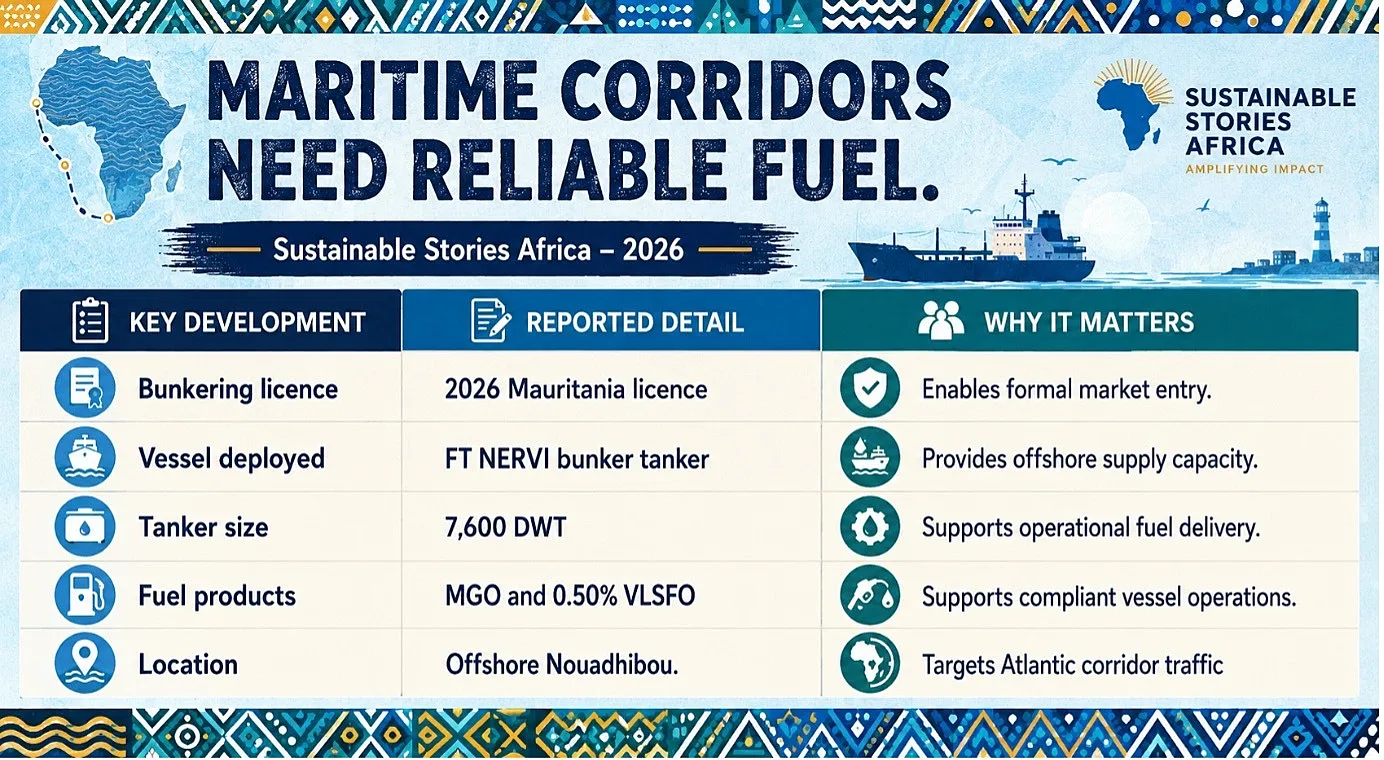
Sahara Group has commenced bunkering operations in Mauritania, positioning the country as a stronger service point for vessels moving through West and North West Africa’s Atlantic corridor after securing a 2026 bunkering licence from the Government of Mauritania.
The company said the launch includes the charter of the FT NERVI, a 7,600 DWT bunker tanker stationed offshore Nouadhibou to supply ISO 8217:2022 Marine Gasoil and 0.50% Very Low Sulphur Fuel Oil to regional and international vessels.
The announcement matters because bunkering is not just a shipping-side service. It is part of the invisible infrastructure that determines whether ports can compete, vessels can turn around quickly, and trade routes can operate without costly detours.
For Mauritania, the operation adds another layer to its aspiration to serve as a reliable Atlantic maritime and trade hub. For the wider region, this shows a practical question: can African coastal markets build the fuel, logistics and compliance systems needed to capture more value from the ships already moving through their waters?
“This development is significant for Mauritania and for Africa’s maritime economy,” said Wale Ajibade, Executive Director, Sahara Group. He said the company’s operational bunkering capacity would support port competitiveness, improve vessel turnaround efficiency and strengthen infrastructure for regional and international trade.
Maritime Corridors Need Reliable Fuel
The launch gives vessels in Mauritanian waters immediate access to compliant marine fuel closer to active trading routes. In practical terms, that could matter for a cargo operator calculating port calls, an offshore services company managing operating time, or a crew trying to avoid fuel delays that can ripple across delivery schedules.
Sahara framed the move as part of a broader strategy to deploy midstream infrastructure, maritime assets and trading capability across Africa’s growing energy and trade ecosystems.
The company said Mauritania’s ports could become more attractive as a reliable service for shipping and offshore trade, supporting vessel traffic, associated marine services and deeper participation in global trade flows.
The environmental dimension is also central. The 0.50% sulphur fuel offering aligns with the International Maritime Organisation’s global sulphur limit, which cut the permitted sulphur content of marine fuel used outside designated emission control areas to 0.50% from 3.50% under IMO 2020 rules.
Sahara said the availability of ISO 8217:2022-compliant fuels reflects its commitment to recognised marine fuel standards covering quality, safety and environmental performance.
Cleaner Trade Can Build Value
Mauritania's gain from the Sahara's bunkering operation may extend well beyond fuel sales.
Efficient bunkering can anchor a wider ecosystem of logistics providers, inspection services, vessel agents, maintenance firms, and maritime workers, determining whether port activity becomes a narrow transaction or a genuine development platform.
Sahara's existing maritime footprint adds credibility to the announcement. The company's deployment of LPG vessels across multiple African markets has strengthened coastal supply chains, marine-based distribution systems, and safe logistics delivery.
Group Executive Director Wale Ajibade cited that continental experience as the foundation for operational discipline in Mauritania, leveraging vessels, people, and systems already proven across the region.
The broader opportunity is the network effect. More compliant fuel access points reduce friction across shipping routes, strengthen supply-chain resilience, and make African regional waters more attractive to global shipping, turning competitiveness into connectivity.
Path Forward – Build Corridors Beyond Single Transactions
Sahara’s Mauritania operation should be watched as more than a corporate expansion story. It is a test of whether Africa’s coastal economies can turn maritime geography into an operational advantage.
The path forward is clear: reliable fuel supply, transparent regulation, local value creation and cleaner shipping standards.
If sustained, the launch could advance Sahara’s Beyond XXX narrative of investing in platforms that enable mobility, trade and sustainable growth across Africa and beyond.
Sahara Group Press Release