The U.S. Securities and Exchange Commission has proposed fully rescinding its 2024 climate disclosure rules, arguing that the regulations exceeded its statutory authority.
The move marks a significant shift in U.S. sustainability reporting policy and reopens a debate over what investors should know about climate-related risks.
For companies, investors, and emerging markets, the decision could reshape expectations around ESG transparency, compliance costs, and market accountability.
Climate Disclosure Battle Reignites
The U.S. Securities and Exchange Commission (SEC) has formally proposed rescinding its landmark 2024 climate-related disclosure rules, a move that could fundamentally reshape the future of environmental, social and governance (ESG) reporting in the world's largest capital market.
The proposal follows months of legal uncertainty and reflects a dramatic shift in regulatory priorities under the current SEC leadership.
The SEC said the rules should be withdrawn in their entirety because they exceed the agency's statutory authority and conflict with a traditional materiality-based approach to corporate disclosure.
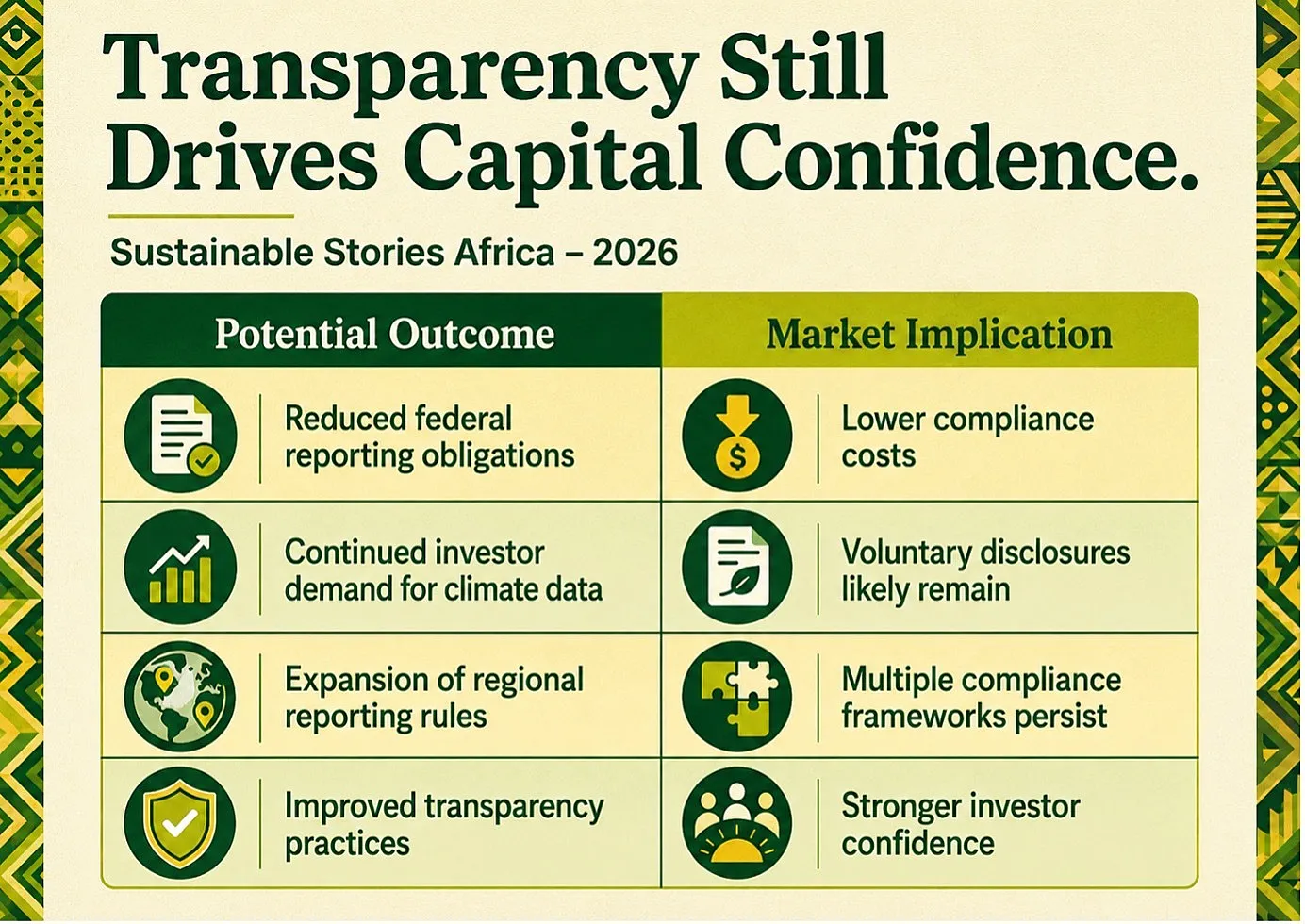
The Commission also argued that the requirements would impose high costs on companies without delivering benefits proportionate to those burdens.
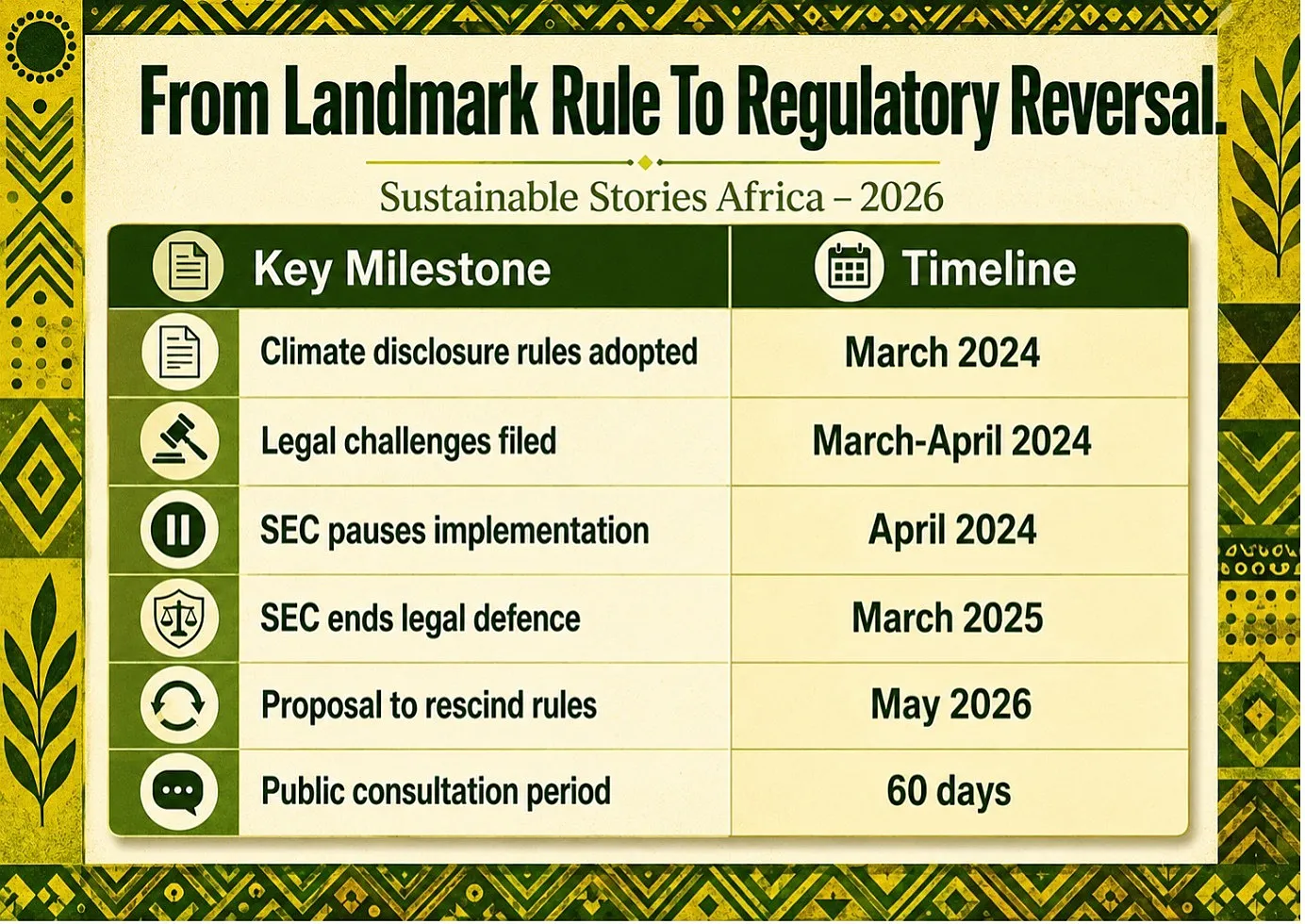
The proposal opens a 60-day public comment period and could formally end one of the most consequential ESG reporting initiatives ever attempted by a U.S. regulator.
For investors, businesses, and regulators around the world, the decision is about far more than climate reporting. It touches a deeper question: what information is material to financial markets in an era increasingly shaped by climate-related risks?
From Landmark Rule To Regulatory Reversal
When adopted in March 2024, the SEC's climate disclosure framework was designed to provide investors with more consistent information about climate-related risks facing publicly listed companies.
The rule required disclosures regarding material climate risks, governance practices, financial impacts from severe weather events, and, for certain firms, greenhouse gas emissions.
However, the rule never took effect.
Almost immediately after adoption, lawsuits from business groups and several Republican-led states challenged the SEC's authority to mandate such disclosures.
Facing growing legal opposition, the agency paused implementation in 2024 and ultimately ended its legal defence of the rules in 2025.
The latest proposal formalises what many observers had anticipated for months.
The SEC's current leadership argues that investors should continue receiving financially material information, but that climate-specific mandates risk extending beyond the agency's legal remit.
Supporters of the rollback say the proposal will reduce compliance burdens and allow companies to focus on disclosures directly linked to financial performance. Critics, however, argue that climate risks increasingly influence corporate valuations, supply chains, insurance costs, and long-term business resilience.
For African companies seeking international investment, the debate carries particular significance.
Many firms already navigate multiple disclosure regimes, including European sustainability requirements and emerging reporting frameworks across global markets.
Transparency Still Drives Capital Confidence
Even if the SEC ultimately rescinds the rules, climate-related disclosure is unlikely to disappear from corporate boardrooms.
Investors worldwide continue to seek information on physical climate risks, transition risks, energy costs, supply-chain vulnerabilities, and resilience strategies.
Financial institutions increasingly incorporate these factors into lending, investment, and risk-management decisions.
For African businesses targeting international capital, greater transparency can serve as a competitive advantage.
Investors often view credible sustainability disclosures as indicators of governance quality, strategic planning, and operational resilience.
The reality is that climate-related information remains valuable regardless of regulatory mandates.
Companies operating across global markets increasingly face disclosure expectations from customers, financiers, insurers, and international partners.
As a result, many organisations may continue reporting climate-related information even in the absence of SEC requirements.
Markets Need Clarity And Consistency
The SEC's proposal highlights a growing global tension between regulatory restraint and investor demand for sustainability-related information.
- Businesses need clarity about what information must be disclosed.
- Investors need confidence that risks affecting future performance are visible.
- Policymakers need frameworks that balance transparency, competitiveness, and legal certainty.
For emerging economies, including those across Africa, the lesson may be less about a single U.S. rule and more about the broader direction of global markets.
Capital increasingly flows toward organisations that can demonstrate resilience, governance strength, and preparedness for long-term environmental and economic disruptions.
Whether through regulation, investor pressure, or market expectations, the demand for credible sustainability information is unlikely to disappear.
Path Forward – Building Credible Sustainable Market Frameworks
The immediate priority is the SEC's consultation process, which will determine whether the proposed rescission becomes final. Policymakers, investors, businesses, and civil society groups are expected to weigh in on the future of climate-related disclosure requirements.
For African markets, the broader opportunity lies in developing disclosure frameworks that balance investor needs, regulatory practicality, and sustainable development objectives.
Strong governance, materiality-focused reporting, and transparent risk management remain essential foundations for attracting long-term capital and advancing ESG outcomes.
Culled From: SEC Proposes Full Rescission of 2024 Climate Disclosure Rules Citing Statutory Authority and Materiality Concerns