Senegal plans to mobilise 36.5 billion CFA francs, about $64.9 million, for aquaculture expansion by 2030.
The strategy aims to lift fish farming output from 3,049 tonnes to 20,000 tonnes.
For households, fishers and investors, the plan links food security with ocean pressure and jobs.
Senegal Rebuilds Fish Supply Inland
Senegal is preparing a major aquaculture expansion, with its National Aquaculture Agency planning to mobilise 36.51 billion CFA francs, or about $64.9 million, between 2026 and 2030 to boost fish farming and reduce pressure on marine stocks.
The plan targets annual aquaculture output of 20,000 tonnes by 2030, up from 3,049 tonnes in 2025, marking a more than sixfold increase if delivery matches ambition.
The programme was approved under Senegal’s new Strategic Aquaculture Development Plan and is expected to rely heavily on private-sector investment.
Why Aquaculture Matters Now
Fish is central to Senegal’s diet, economy and coastal culture. Yet the country’s marine fisheries face growing pressure from overfishing, illegal catches, climate change and rising demand.
Reporting from 2024 noted that fish accounts for more than 70% of household protein intake, while the fishing industry supports around 600,000 direct and indirect jobs.
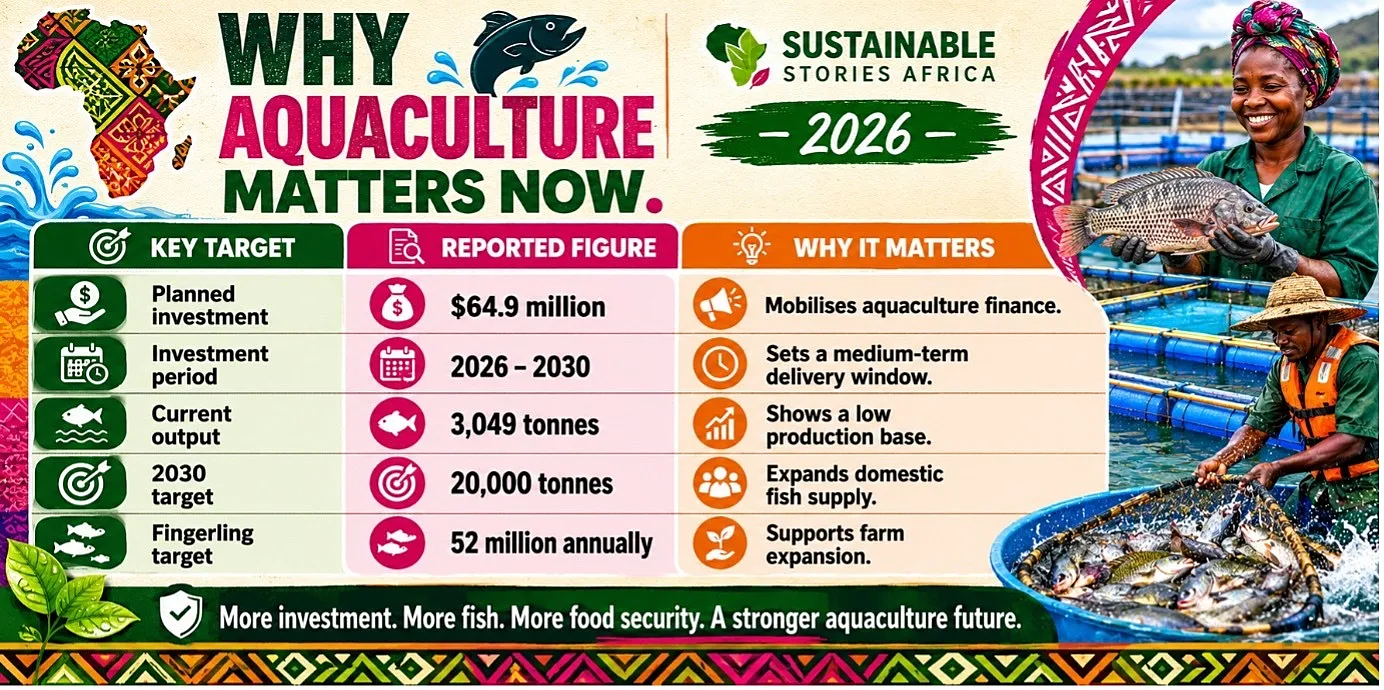
The strategy also includes plans to raise annual fingerling production capacity to 52 million units and develop domestic fish-feed manufacturing to reduce reliance on imported inputs.
Farmed Fish Can Protect Diets
For coastal families, fish is not a luxury. It is lunch, income and identity. When wild catches decline, prices rise, and access to nutritious food becomes harder for low-income households.
Aquaculture can help close that gap. More farmed fish can support local protein supply, create jobs in hatcheries and feed production, and give young people new opportunities outside overcrowded capture fisheries.
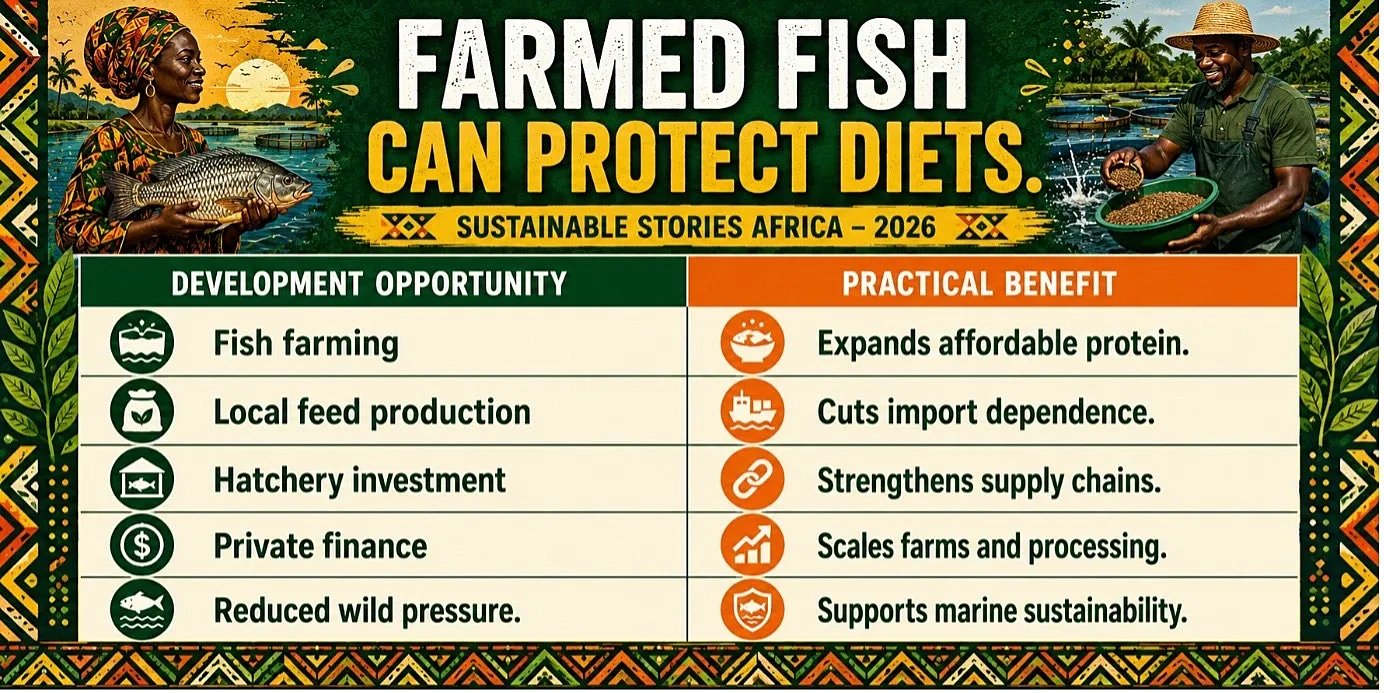
However, the opportunity must be managed carefully. Poorly regulated aquaculture can create water pollution, disease risks and unequal market access. Strong standards will decide whether growth becomes sustainable.
Investment Must Reach Producers
Senegal’s next task is to convert the aquaculture plan into bankable farms, affordable feed, reliable hatcheries and inclusive markets.
Private investors will need clear rules, viable sites, technical support and predictable demand.
Government agencies must also ensure larger firms do not crowd out small producers.
Training, extension services, water-quality monitoring and access to finance should be built into the programme from the start.
For Africa’s blue economy, Senegal’s plan sends a practical message: protecting oceans now requires investment beyond the shoreline.
Path Forward – Grow Fish Without Depleting Seas
Senegal should prioritise sustainable feed, hatcheries, water standards, smallholder finance and transparent delivery tracking.
If implemented well, aquaculture can strengthen food security, protect marine ecosystems and create blue-economy jobs.
The measure of success will be simple: more affordable fish without exhausting the waters that sustain coastal communities.
Culled From: Senegal Plans $64.9M Investment to Expand Fish Farming by 2030 - Ecofin Agency