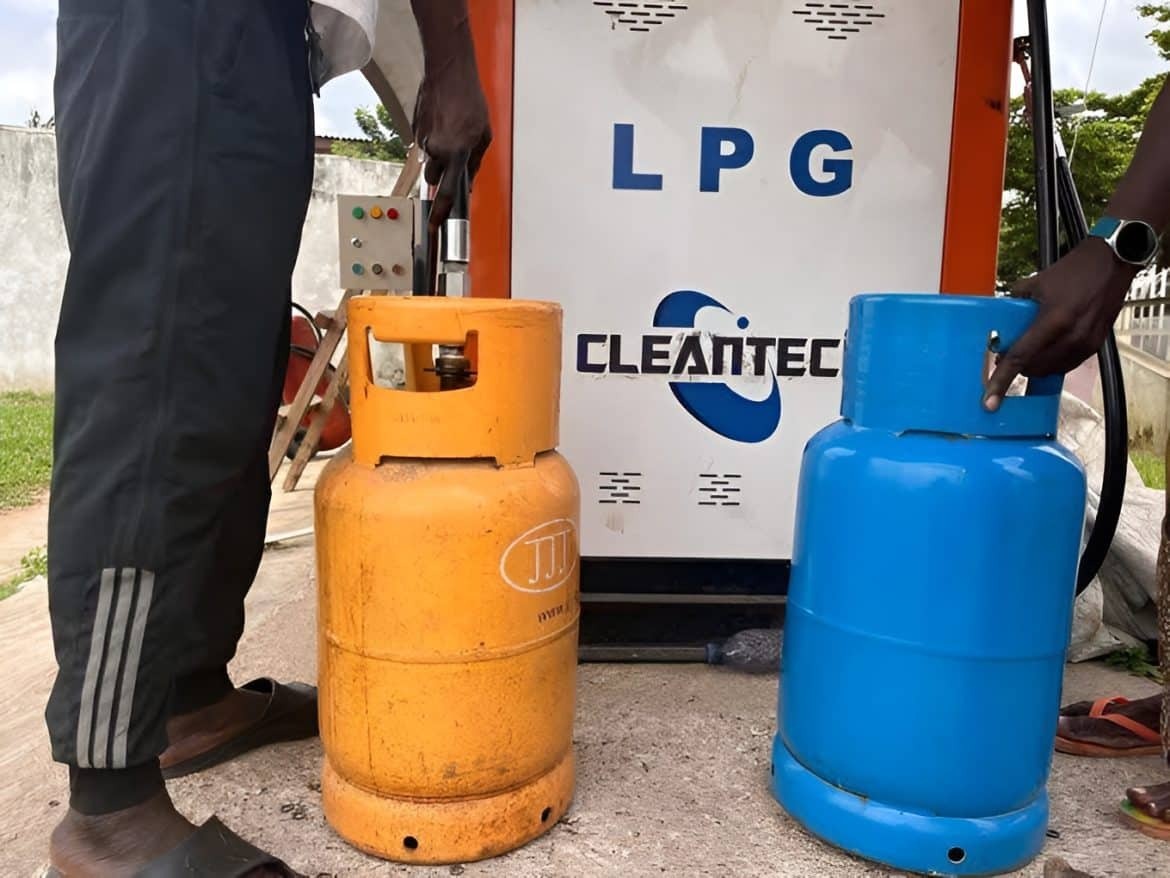
Businessfront’s 10-year review shows Nigeria’s cooking gas prices have risen sharply, with 12.5kg LPG refills now costing more than six times their 2016 level.
The surge matters because LPG remains central to Nigeria’s clean-cooking plan, public-health goals and net-zero pathway.
For households, the crisis is painfully simple: cleaner cooking is becoming harder to afford.
Clean Cooking Is Becoming Too Expensive
Nigeria’s clean-cooking ambition is facing a household affordability test as a decade of data shows that liquefied petroleum gas, better known as cooking gas, has moved beyond the reach of many low- and middle-income families.
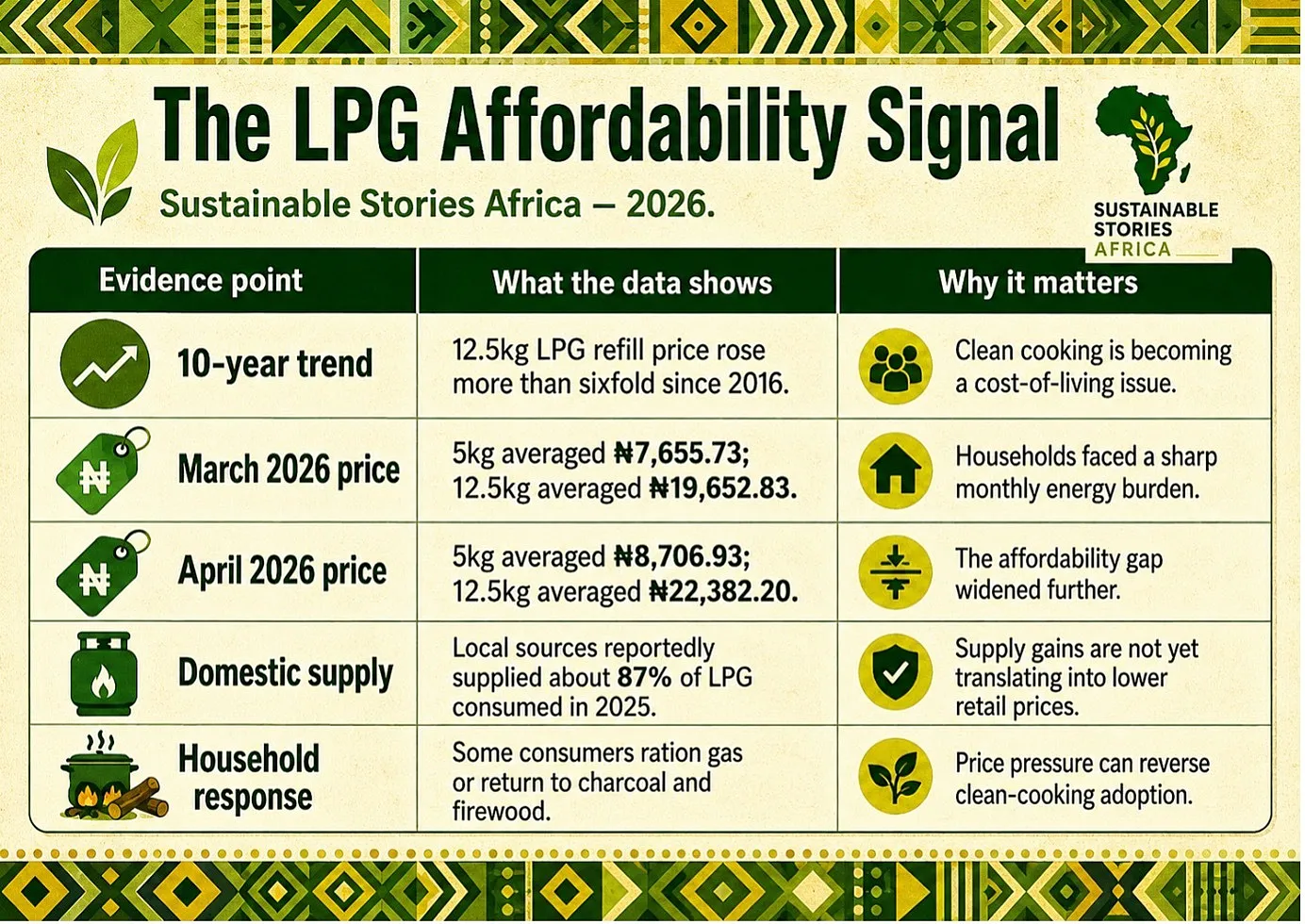
A Businessfront analysis published on June 17, 2026, found that the average cost of refilling a 12.5kg LPG cylinder has risen more than sixfold since 2016.
The increase is driven by the depreciation of the naira, global energy shocks, supply disruptions, logistics costs and uneven domestic distribution.
The warning is timely. Nigeria has promoted LPG as a cleaner alternative to firewood, charcoal and kerosene, hoping to reduce household air pollution, slow deforestation, and support its energy transition commitments.
However, rising prices are changing kitchen decisions across the country.
For many families, the question is no longer whether LPG is cleaner. It is whether they can afford to refill the cylinder before the next meal.
The Price Data Tells A Hard Story
Recent price data captures how quickly affordability can deteriorate. NBS-linked reports show the average cost of a 5kg LPG cylinder rose from N7,655.73 in March 2026 to N8,706.93 in April, while 12.5kg cylinders climbed from N19,652.83 to N22,382.20 in the same period.
Critically, prices have risen faster than household incomes, creating a clean-cooking paradox for Africa's largest gas producer: more domestic supply has improved market resilience, but not affordability for ordinary consumers.
The human cost is visible in everyday trade-offs:
- A household reserves gas for quick meals and returns to charcoal for longer cooking
- A young mother weighs refilling gas against buying food or paying for transport
- A food vendor passes rising energy costs to inflation-stretched customers
This is why clean cooking cannot be treated as an energy story alone. It is equally a public health, gender, climate, forestry and household welfare story.
Affordable LPG Can Protect Health And Forests
Nigeria’s Energy Transition Plan identifies cooking as a critical sector for decarbonisation.
It says 161 million people, about 74% of the population, lack access to clean cooking, with serious health and quality-of-life consequences, especially for women and children.
The National Clean Cooking Policy also places LPG at the centre of the transition, targeting 54% LPG and 20% electric cooking in the 2030 clean-cooking mix.
If that ambition works, the gains could be significant: cleaner kitchens, lower exposure to smoke, reduced pressure on forests, stronger local clean-cooking markets and new jobs in stove production, cylinder distribution, maintenance and financing.
However, the policy logic depends on affordability. Awareness campaigns can introduce clean cooking. Cylinders can support access. Domestic production can improve availability.
However, if refill prices keep rising, adoption may slow, stall or reverse.
The danger is that Nigeria builds a clean-cooking transition that looks convincing on paper but fails at the point of household payment.
Affordability Must Become The Centrepiece
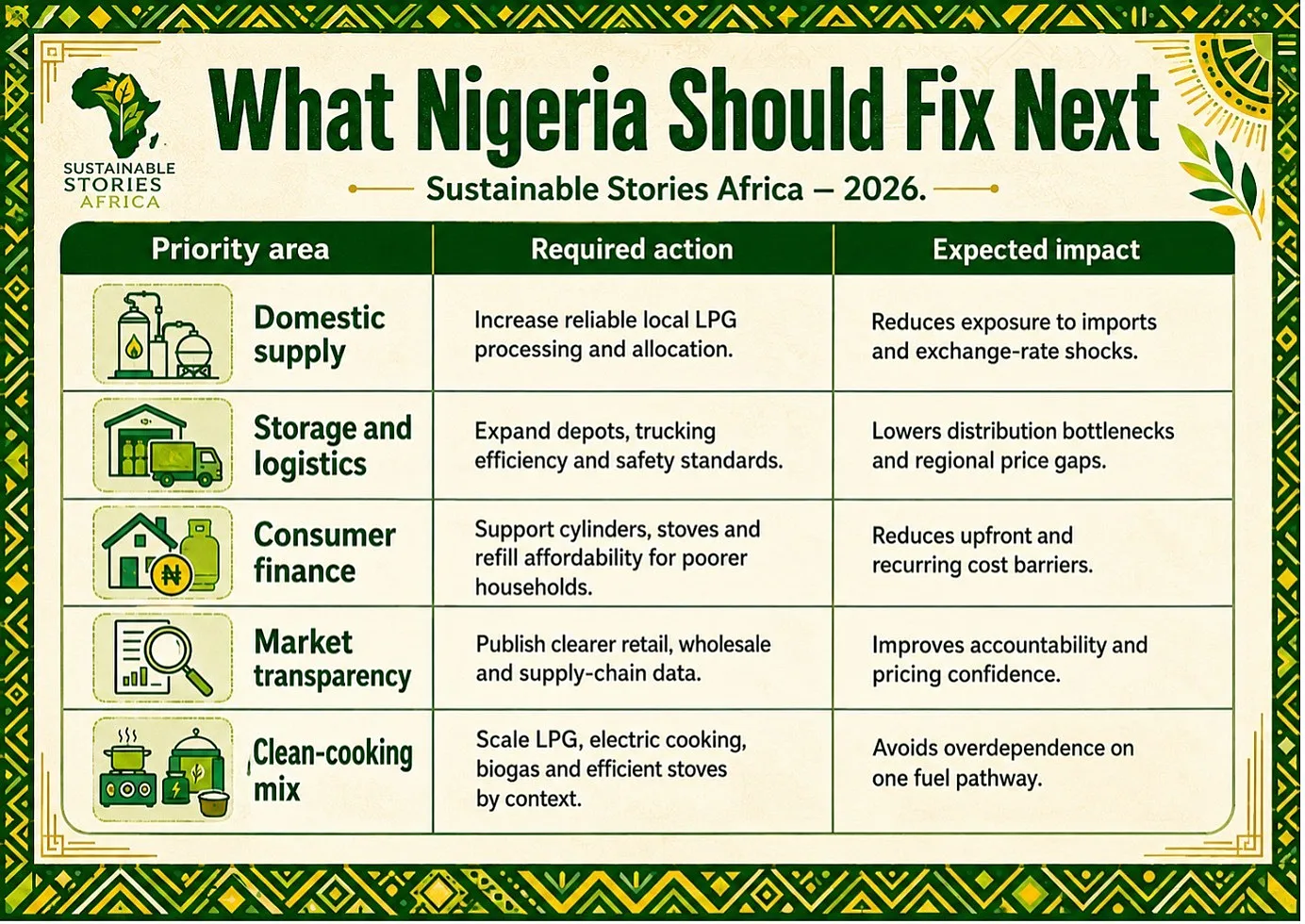
Nigeria’s clean-cooking strategy now needs a sharper affordability pillar. Expanding LPG supply is necessary, but it is no longer sufficient.
- Government, regulators and industry operators should focus on reducing bottlenecks across storage, transport, distribution and retail pricing.
- Domestic LPG prioritisation should be matched with transparent market data, better logistics infrastructure and predictable regulation that gives investors confidence without leaving consumers exposed.
Targeted support also matters. Instead of broad subsidies that can be expensive and distortionary, policymakers can support low-income households through cylinder-financing schemes, clean-cooking vouchers, community refill models and concessional funding for last-mile distribution.
Investors also have a role. Banks, development finance institutions and carbon market actors should treat clean cooking as essential social infrastructure.
Affordable cooking energy affects health, productivity, education, forests and women’s time. It deserves financing models that match its development value.
Path Forward – Make Clean Cooking Affordable Again
Nigeria’s clean-cooking transition must now move from ambition to affordability. LPG supply, pricing, logistics, consumer finance and electric cooking options should be treated as a single integrated policy system.
The goal is simple but urgent: keep cleaner fuels within household reach, protect women and children from smoke exposure, reduce pressure on forests, and make energy transition visible in the kitchen, not only in national plans.
Culled From: Nigeria's clean cooking plan suffers as 10 years of data show massive soaring LPG prices - Businessfront