A South African municipality is considering new charges for households with rooftop solar systems connected to the grid.
The proposal comes as families invest in private power to escape unreliable electricity and rising costs.
For households, municipalities and clean-energy investors, the debate raises a bigger question: how should cities fund grid infrastructure without punishing citizens who are helping the energy transition?
Solar Freedom Meets Municipal Revenue Pressure
In Emfuleni, a municipality that includes Vanderbijlpark and Vereeniging, rooftop solar is no longer just a private household decision. It has become a public finance debate.
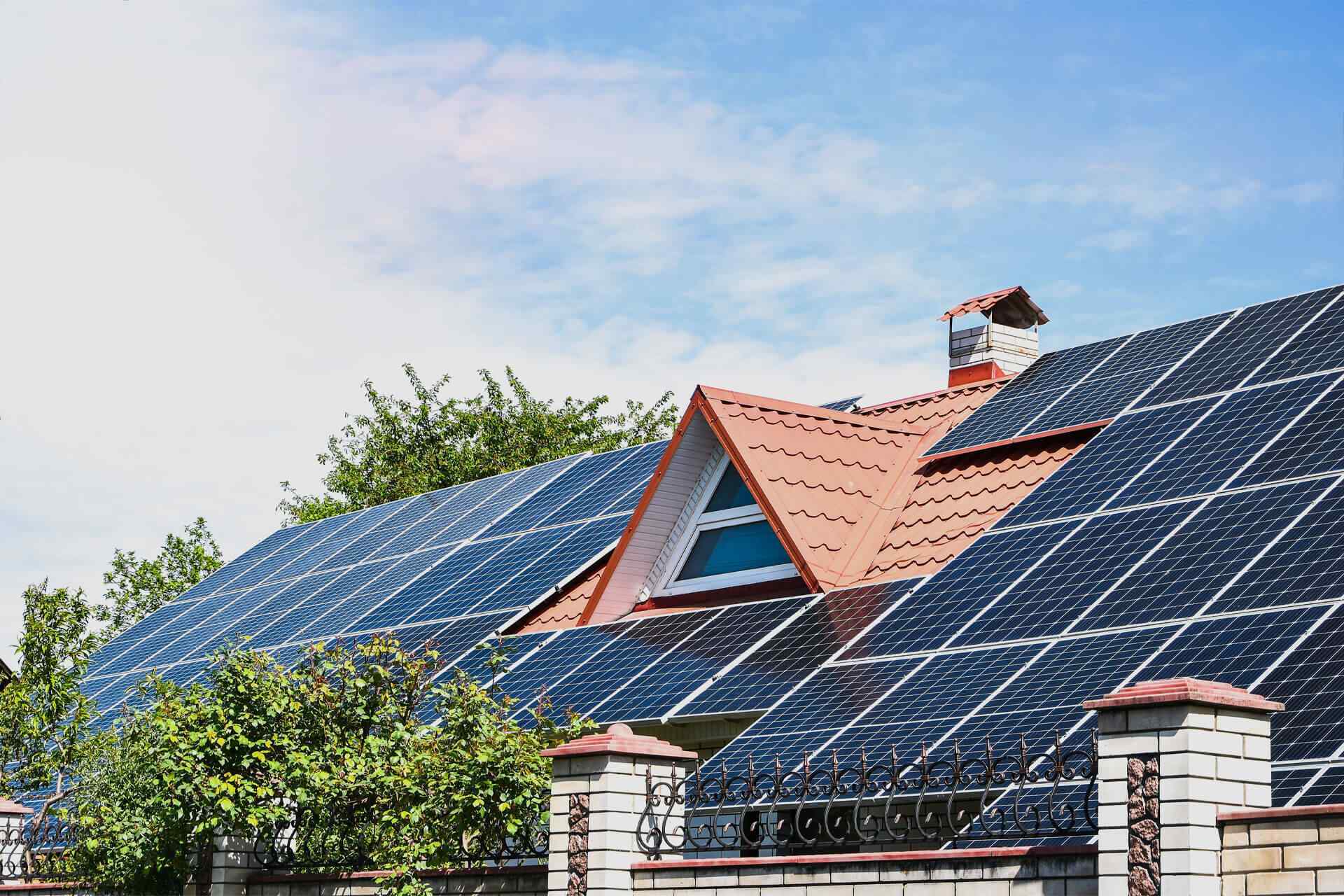
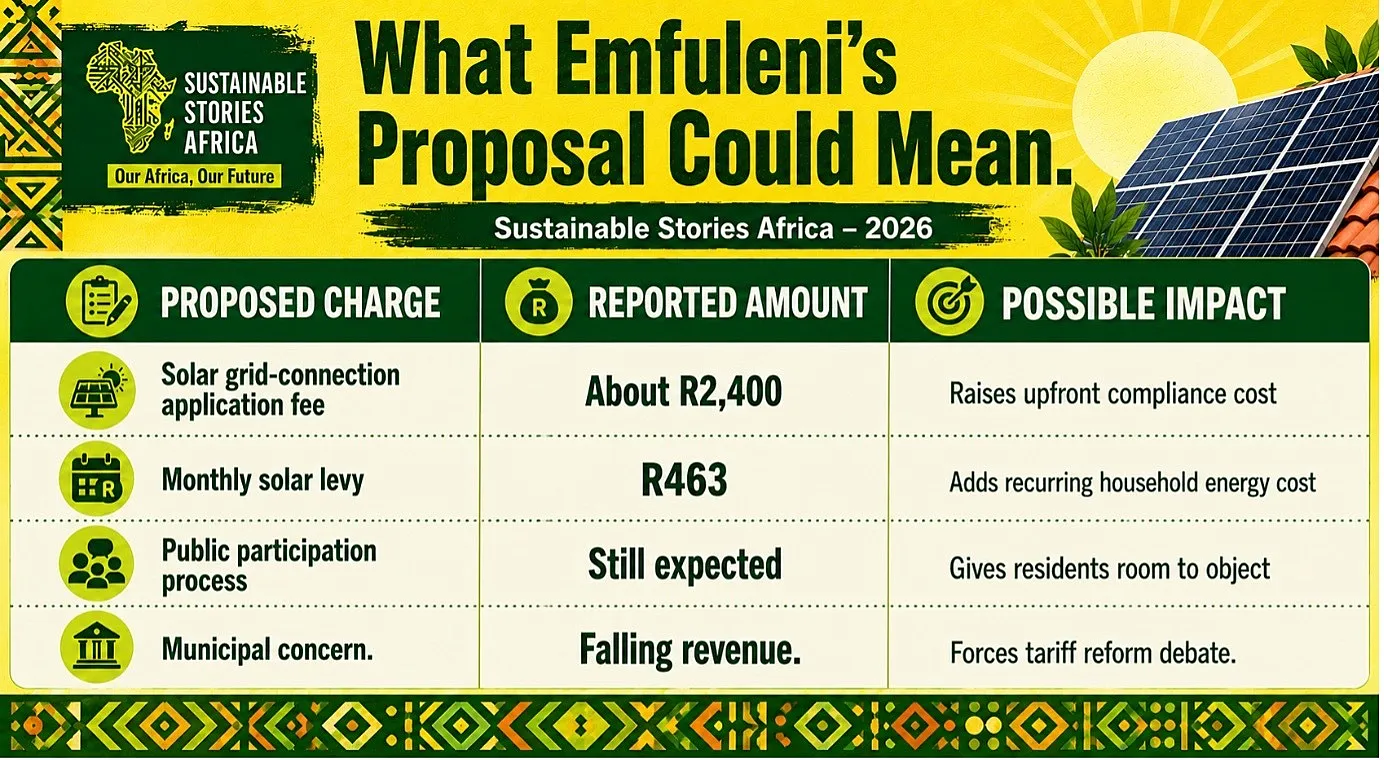
The municipality has approved, in principle, a proposal to require residents who apply to install solar panels and connect them to the grid to pay an application fee of about R2,400.
Households with solar panels could also face a monthly levy of R463.
The plan has triggered criticism because it comes at a time when many South African households are turning to solar not as a luxury, but as protection against an unstable electricity supply.
- For a family that saved for panels, batteries and an inverter after years of power cuts, the proposed levy feels like a charge on resilience.
- For the municipality, however, the issue is revenue: when more users consume less grid electricity, municipal electricity income comes under pressure.
Rooftop Solar Is Changing City Finances
South Africa’s rooftop solar boom is reshaping the relationship between households and municipalities.
For years, local governments relied on electricity sales as a major revenue stream. However, as households reduce dependence on the grid, the old model is becoming harder to sustain.
Municipalities still need to maintain substations, wires, billing systems and grid infrastructure, even when some customers buy less electricity.
That creates a difficult policy question.
- Should solar users pay fixed charges because they remain connected to the grid?
- Or should municipalities avoid discouraging clean-energy adoption at a moment when South Africa needs more distributed power?
In Emfuleni, opposition has been sharp. Freedom Front Plus councillor Gerda Senekal described the levy and application fee as a desperate revenue measure, arguing that residents are being asked to pay extra for generating reliable power themselves.
The controversy is not only about one municipality. It reflects a broader transition challenge facing African cities: clean energy is growing faster than many local tariff systems.
Fair Rules Can Strengthen Clean Energy
A well-designed solar policy can protect both households and municipalities.
If cities create transparent, fair and predictable tariffs, rooftop solar can become part of the solution rather than a threat.
Solar households can reduce peak demand, improve grid resilience and lower pressure on national power systems.
Municipalities can still recover legitimate grid-service costs without appearing to punish residents for investing in cleaner power.
The danger is that poorly designed levies could slow adoption, weaken trust and make solar feel like a financial trap.
- For middle-income households, every added fee changes the payback calculation.
- For lower-income communities hoping to access cheaper clean-energy models in future, punitive charges could deepen inequality by keeping solar affordable only for wealthier households.
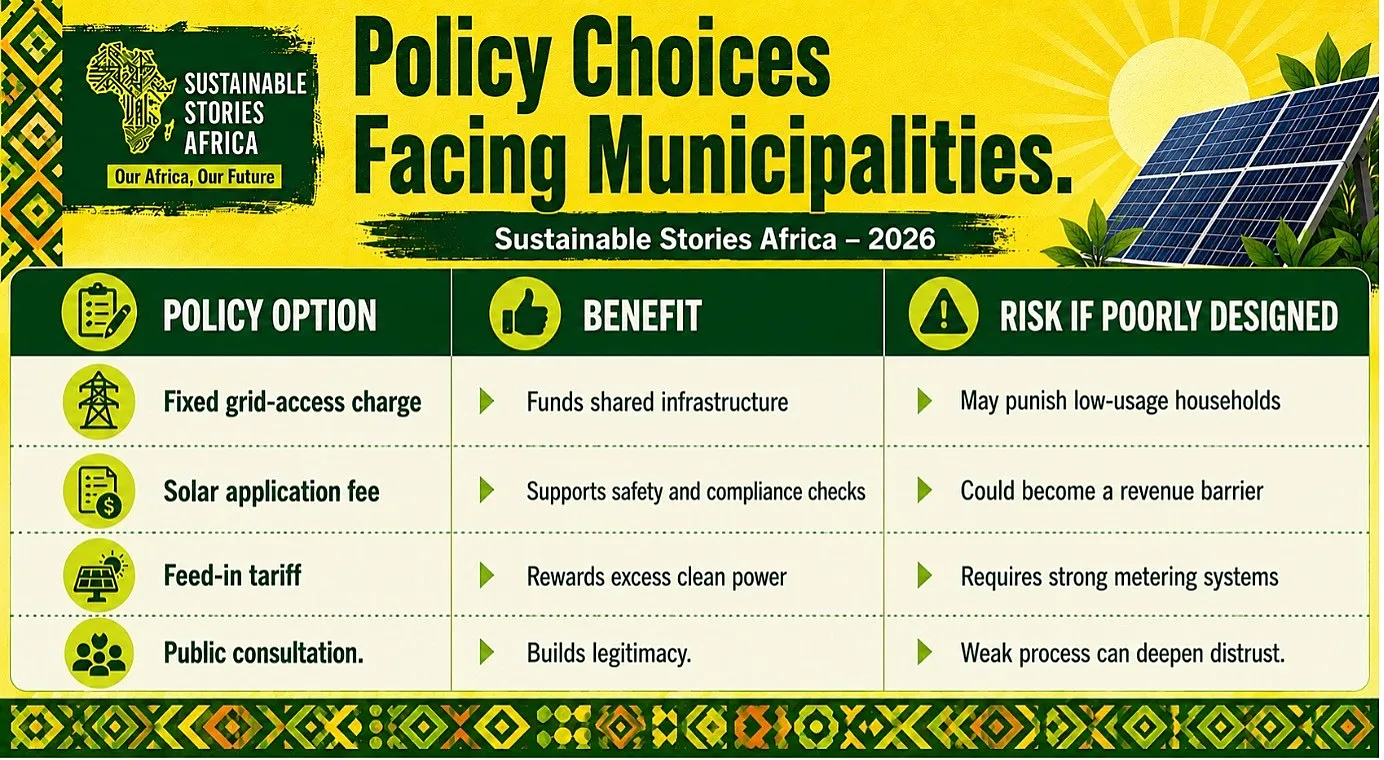
The best outcome is not free grid access for everyone, nor unlimited municipal charges. It is a balanced model in which households pay fairly for services they use, while cities actively support clean-energy adoption.
Cities Need Transparent Solar Tariff Reform
Emfuleni’s proposal should now move through a credible public participation process, with clear disclosure of the cost basis behind any levy.
Residents deserve to know whether the charge reflects real grid service costs, administrative costs, revenue shortfalls, or a mixture of all three.
Without that transparency, the policy risks being seen as a penalty on self-reliance.
Municipalities also need national guidance. South Africa’s rooftop solar market is growing too quickly for fragmented local rules.
Clear standards on registration, safety, feed-in tariffs, fixed charges and consumer protection would help households, installers, lenders and cities plan with confidence.
For Africa’s wider energy transition, the lesson is urgent: clean-energy policy must align climate ambition with financial sustainability.
Path Forward – Fair Tariffs For Solar Growth
Emfuleni’s levy debate should become a catalyst for better municipal energy reform, not a brake on rooftop solar. Cities need tariffs that recover the grid costs without discouraging cleaner household power.
The path forward is transparency, public consultation, fair pricing and stronger regulation.
If handled well, rooftop solar can protect households, strengthen grids and advance South Africa’s just energy transition.
Culled From: South African city wants to charge a monthly levy to households with solar panels on their roofs – Newsday