South Africa has proposed a new wholesale power pricing framework that could accelerate the end of Eskom’s century-long dominance of electricity supply.
The plan would separate generation, grid, reliability and market-related costs, creating clearer rules for private producers, traders, municipalities and large buyers.
For households and businesses, the reform could shape future tariffs, investment flows and the reliability of a power system still rebuilding trust after years of load shedding.
A Monopoly Gives Way To Market Rules
South Africa's electricity market is approaching its most significant structural reset in decades.
The National Energy Regulator of South Africa has proposed a wholesale pricing framework designed to drive competition, open trading and greater cost transparency, marking a decisive shift from Eskom's long-standing single-buyer model.
The proposal would unbundle electricity costs into clearer components, with generators earning payments for capacity availability, system support services and real-time production.
The framework is expected to influence more than $14 billion in private international investment, already reshaping the country's grid. Public consultations conclude around August, with NERSA's board then deciding on approval and phased rollout, potentially beginning in 2026 to 2027.
For Africa's most industrialised economy, this is more than tariff reform; it is a defining test of whether South Africa can trade crisis management for a rules-based energy market that attracts capital and enables cleaner growth.
Pricing Reform Moves From Policy To Practice
The proposed wholesale framework sits within a broader reform arc shaped by years of crippling power shortages, steep tariff hikes and mounting pressure to dismantle Eskom's monopoly.
South Africa's amended electricity law now mandates a competitive market platform, with the National Transmission Company South Africa managing key grid and market functions during the transition.
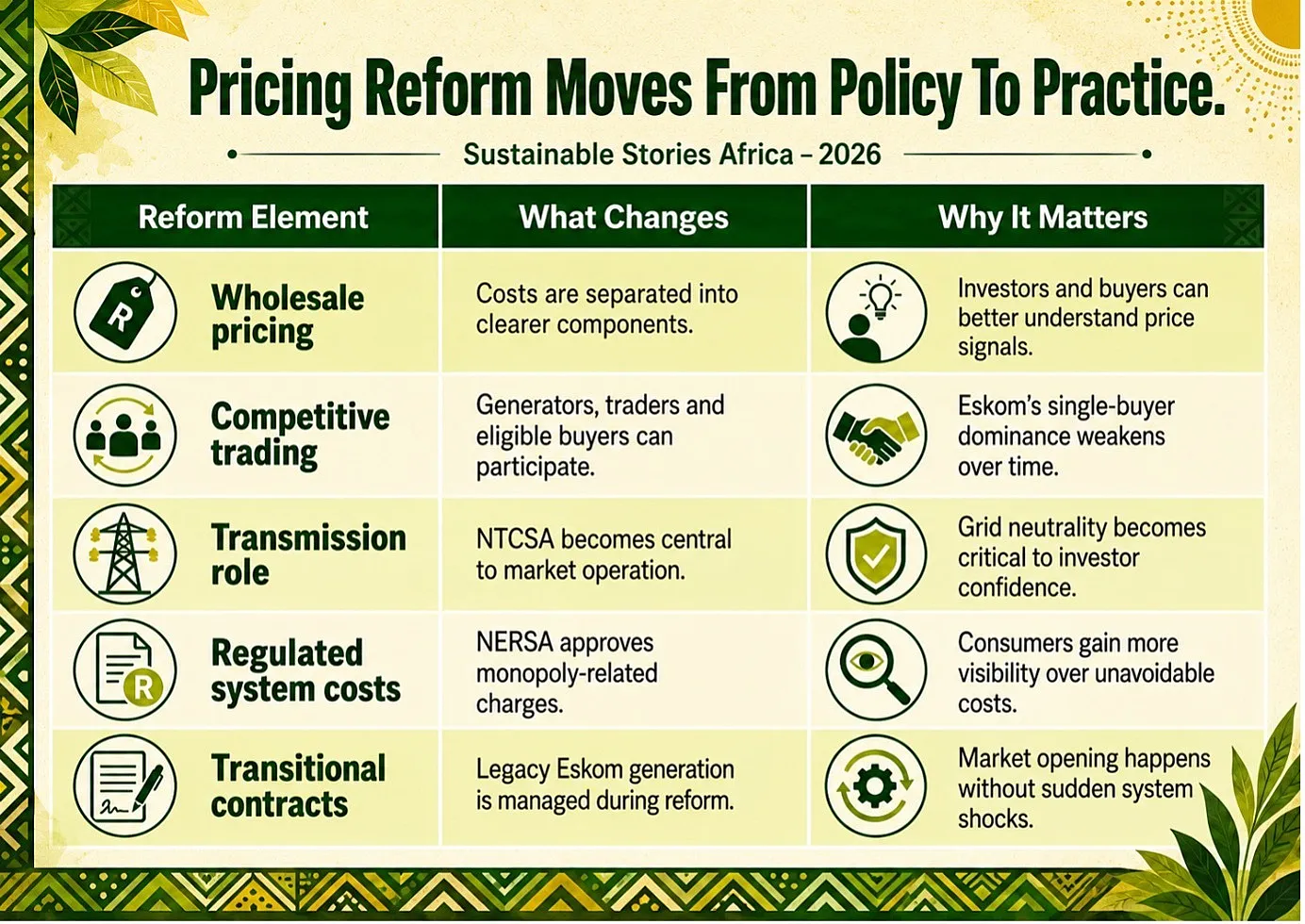
The framework would underpin SAWEM, the South African Wholesale Energy Market, which will replace bundled pricing with transparent charges covering energy, transmission, reliability services and legacy costs.
The urgency is real: Eskom's 2026/27 tariffs rose 8.76% for direct customers and 9.01% for municipal bulk buyers, squeezing manufacturers, mines and households already navigating broader inflation.
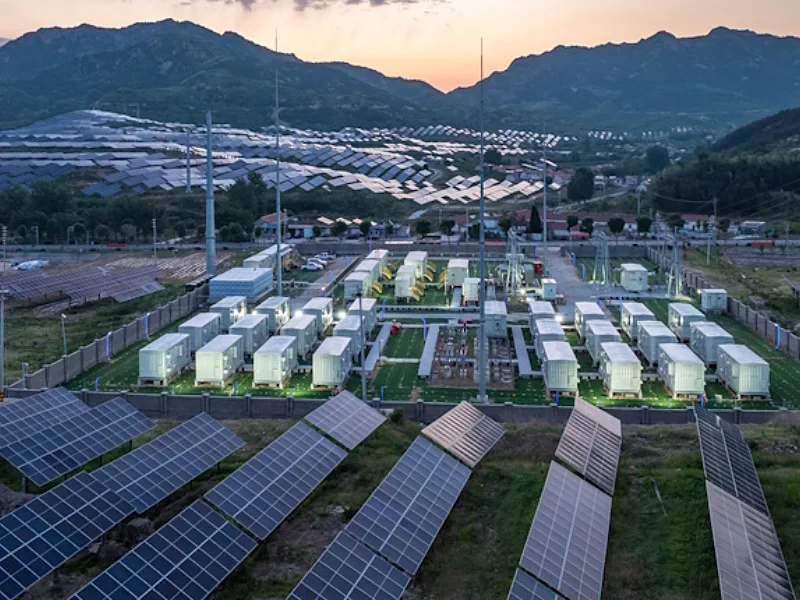
Private renewables have demonstrated momentum, mobilising over 200 billion rand and adding roughly 6,000 megawatts without burdening Eskom's balance sheet.
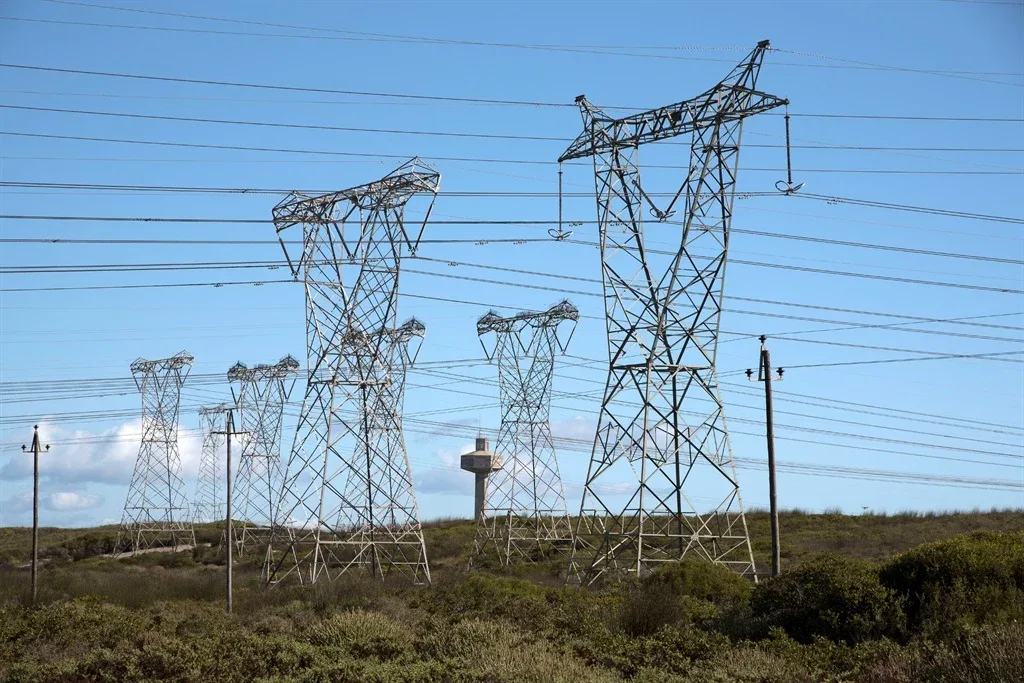
However, sustaining that trajectory requires grid investment estimated at 390 billion rand over the next decade, transparent pricing and restored market confidence.
Competition Could Lower Risk, Not Bills
The wholesale pricing framework's primary promise is not cheaper electricity — it is better risk allocation.
Transparent pricing would reveal when power is costly, where the grid is constrained and which assets deliver reliability, giving investors the rules they need to model returns with confidence.
- For renewable developers, clearer wholesale signals could unlock new solar, wind, storage and hybrid projects.
- For large industrial buyers, direct procurement becomes more financeable.
- For municipalities, new supply options could improve resilience and reduce single-supplier dependence.
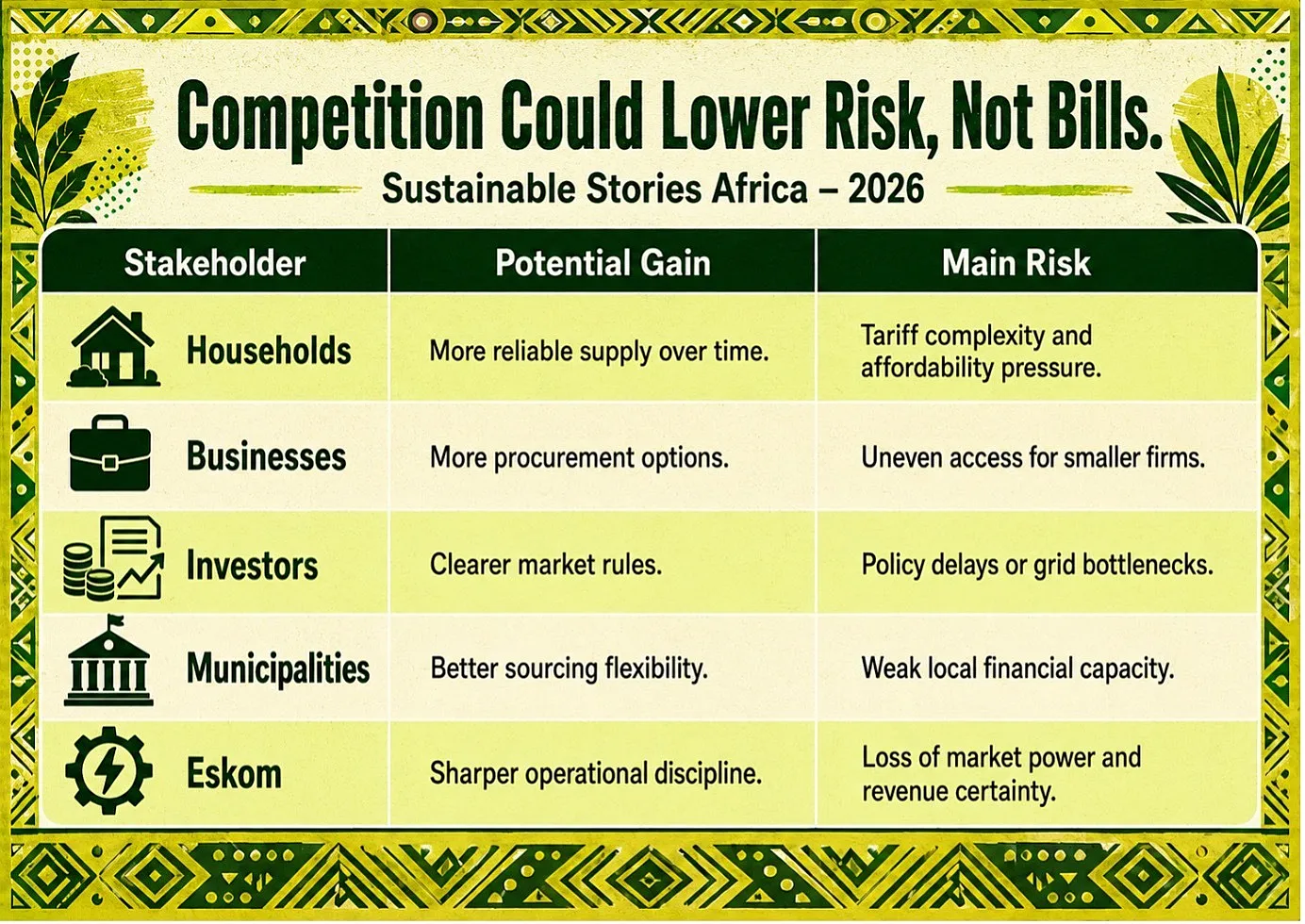
However, the risks are real. Poor communication could render the framework opaque to ordinary consumers. Unequal grid access may entrench advantages for industrial players.
If legacy Eskom costs are transferred too aggressively, households and small businesses could bear the cost of market reform before experiencing any of its benefits.
Regulators Must Now Build Public Trust
Execution is now the defining challenge. NERSA, NTCSA, Eskom, municipalities and the Department of Electricity and Energy must translate technical reform into public confidence through clear consultation, plain-language tariff communication, credible market rules and fair grid access.
Critically, the energy transition must not become a two-speed system, where corporations secure cleaner, cheaper power while low-income households remain exposed to rising tariffs and unreliable networks.
Eskom has welcomed NTCSA's licensing as market operator, signalling institutional readiness.
However, market trust ultimately depends on a neutral grid operator, predictable pricing rules, and a regulator strong enough to balance investment needs with affordability.
For African markets watching closely, South Africa's lesson is clear: dismantling a monopoly requires designing a market that can hold competition, social equity and climate ambition simultaneously.
Path Forward – Clear Rules Can Unlock Cleaner Power
South Africa’s power pricing plan could become a model for emerging markets seeking to move from crisis-driven electricity reform to investable, transparent energy systems.
The immediate priority is to finalise credible rules, protect consumers and align tariffs with grid expansion.
If implemented carefully, the reform can support ESG goals by enabling cleaner power, reducing system risk, attracting private capital and improving energy security.
The promise is not instant relief, but a fairer power market built for long-term resilience.
Culled From: South Africa’s proposed power pricing plan to end Eskom monopoly | Semafor