Spiro has secured an additional $55 million from Chinese investor NewTrails Capital, lifting its latest funding round to $270 million.
The deal strengthens one of Africa’s best-funded electric mobility companies at a time when cities are seeking cleaner, cheaper transport options.
For riders, commuters and governments, the investment signals a bigger shift: electric two-wheelers are moving from ambition to infrastructure.
Electric Mobility Gets Fresh Capital
Africa’s electric motorcycle race has gained a powerful new charge.
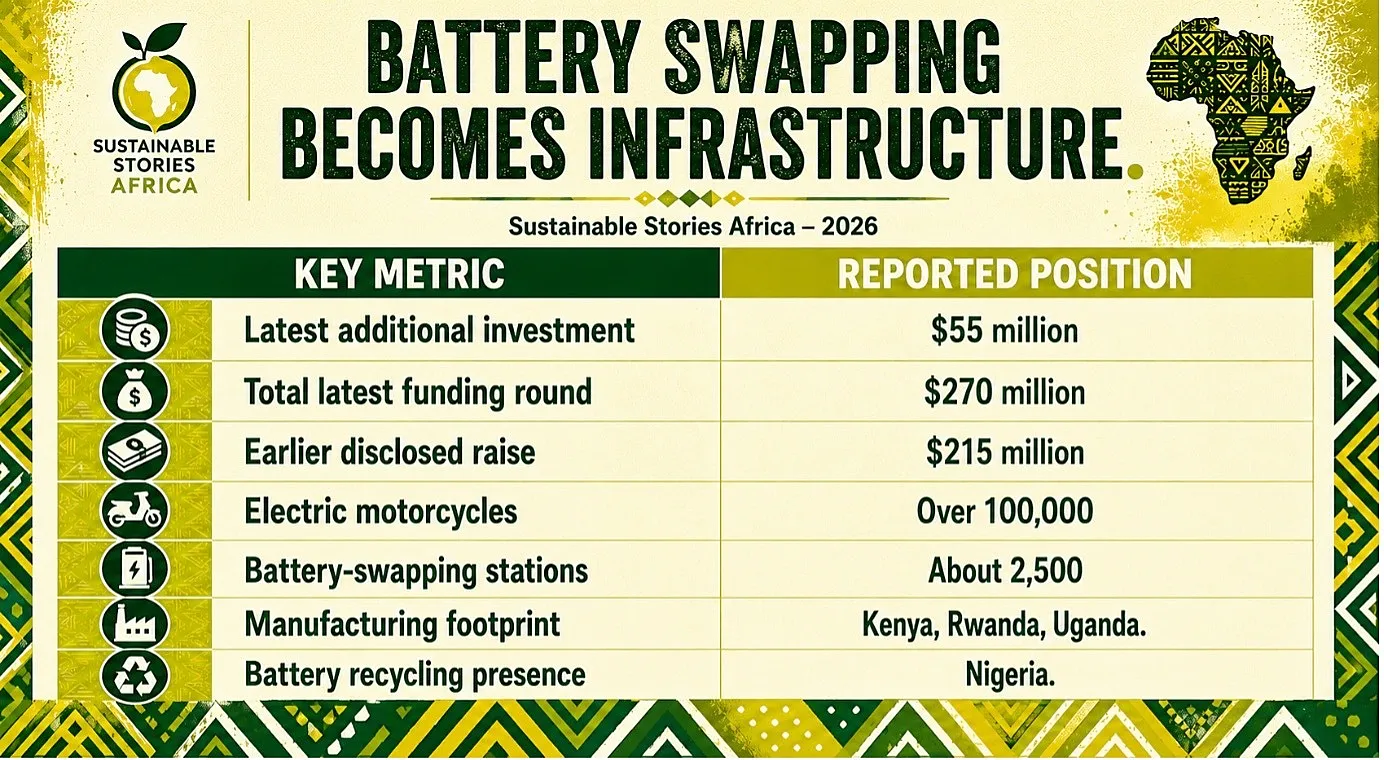
Spiro, the African electric motorcycle and battery-swapping company, has raised an additional $55 million equity investment from Chinese early-stage investor NewTrails Capital, bringing its latest funding round to $270 million.
The new commitment follows a previously announced $215 million raise from European and African investors, one of the largest funding rounds disclosed in Africa’s electric mobility sector.
The funding matters because it lands at the intersection of three pressures shaping African cities: expensive fuel, rising urban transport demand, and the urgent need to cut emissions without slowing economic activity.
For thousands of motorcycle riders who depend on daily income, the promise of lower running costs is not only a climate story. It is a livelihood story.
Spiro framed the investment as a vote of confidence in Africa’s electric mobility future, saying what was once considered ambitious is increasingly becoming part of the continent’s transport reality.
Battery Swapping Becomes Infrastructure
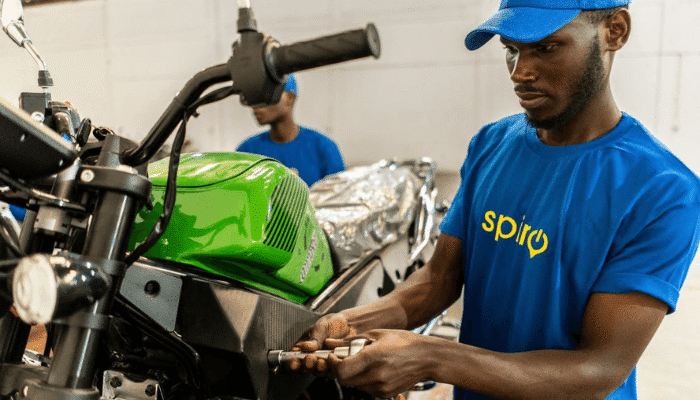
Spiro is no longer presenting itself only as a motorcycle company. Its bigger bet is infrastructure.
The company now reports a fleet of more than 100,000 electric motorcycles supported by about 2,500 battery-swapping stations across African markets.
It has also established manufacturing facilities in Kenya, Rwanda and Uganda, while operating a battery recycling plant in Nigeria to support circularity in the sector.
This model matters in African markets where charging infrastructure remains uneven, and many riders cannot afford long downtime.
Battery swapping allows riders to exchange depleted batteries for charged ones, reducing waiting time and helping commercial riders stay on the road.
The strategic significance of NewTrails Capital is also clear. China dominates global battery manufacturing and electric vehicle components, and Spiro says the partnership can help it leverage global supply chains to accelerate Africa’s new energy transition.
The investment also follows Spiro’s appointment of Anant Badjatya as group CEO. Badjatya previously led Indofast Energy, where he oversaw a battery-swapping network of more than 1,800 stations in India, a market with deeper experience in two-wheeler electrification.
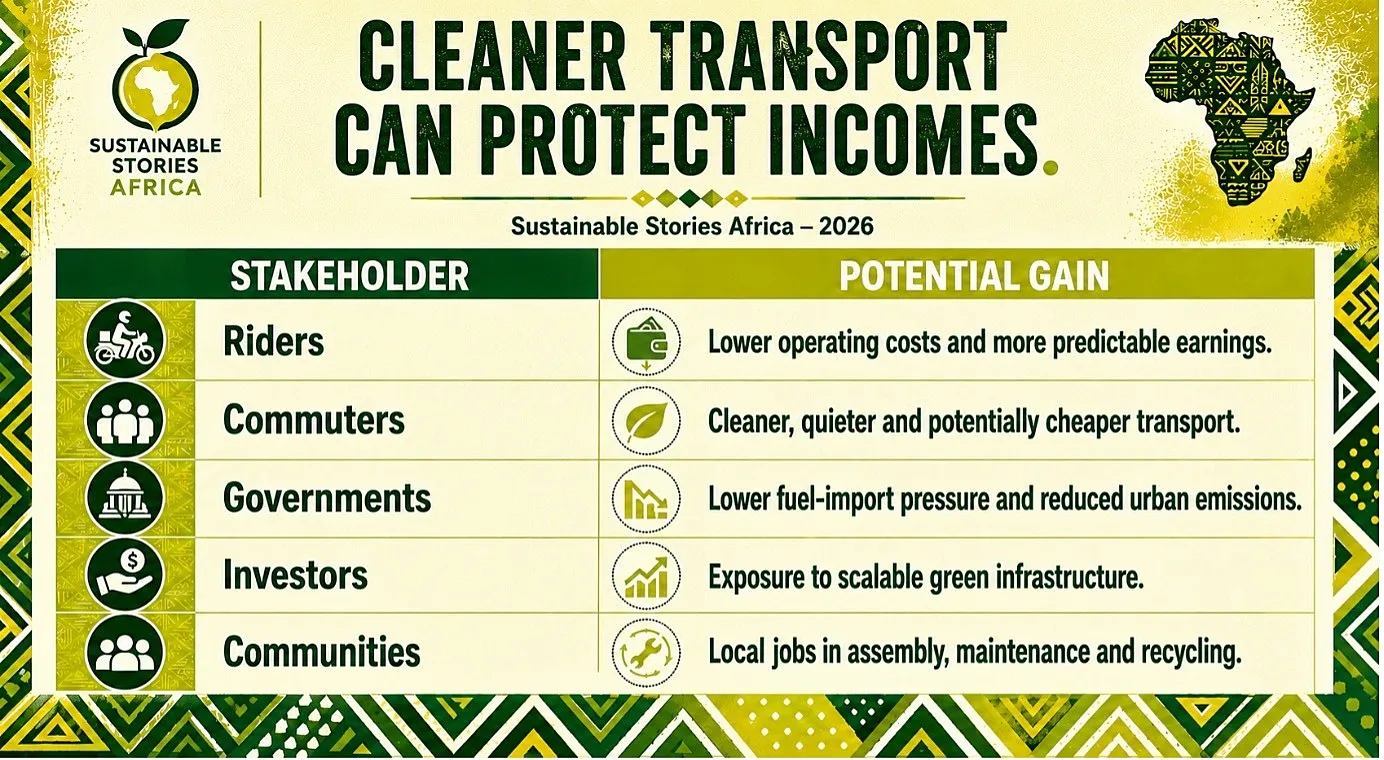
Cleaner Transport Can Protect Incomes
If Spiro’s scale-up succeeds, the benefits could move beyond corporate valuation.
- For riders, electric motorcycles can reduce exposure to volatile petrol prices.
- For cities, they can help cut noise and tailpipe emissions.
- For governments, they offer a practical route to cleaner mobility without waiting for mass adoption of private electric cars.
The risk, however, is that Africa’s electric mobility transition becomes highly dependent on imported technology with less local value creation.
To avoid that, capital must support manufacturing, technical training, recycling, safety standards and fair financing for riders.
Spiro’s footprint in manufacturing and battery recycling shows the beginning of that value-chain logic.
The next test is whether the model can deepen African participation while maintaining affordability.
Make EV Growth Inclusive
The latest funding should be read as a market signal. Investors are increasingly willing to back African clean transport when the business model solves real daily problems.
However, financing alone will not build a sustainable electric mobility ecosystem. Governments need clear standards for batteries, charging, recycling and road safety. Cities need supportive policies for clean two-wheelers.
Financial institutions need products that help riders switch without being trapped by unaffordable repayment terms.
For African markets, the opportunity is not just to import electric motorcycles. It is to build a cleaner mobility economy around them, one that includes local technicians, assembly workers, battery recyclers, software providers, financiers and riders.
Path Forward – Scale Must Build Local Value
Spiro’s $55 million raise shows that African electric mobility is attracting serious global capital.
The next priority is converting that capital into durable infrastructure, safer jobs, cleaner cities and lower transport costs.
For ESG outcomes to hold, expansion must be matched by circular battery systems, local manufacturing depth, rider protection and public policy that makes clean mobility affordable across African cities.
Culled From: https://nairametrics.com/2026/06/22/spiro-raises-additional-55-million-from-chinese-investors-newtrails-capital/