The starch-based bioplastics packaging market is projected to reach $35.40 billion by 2033.
The forecast reflects rising demand for biodegradable, lower-carbon alternatives to conventional plastic packaging.
For African markets, the opportunity sits at the intersection of agriculture, manufacturing, waste reduction and circular economy policy.
Packaging Shifts Toward Plant-Based Materials
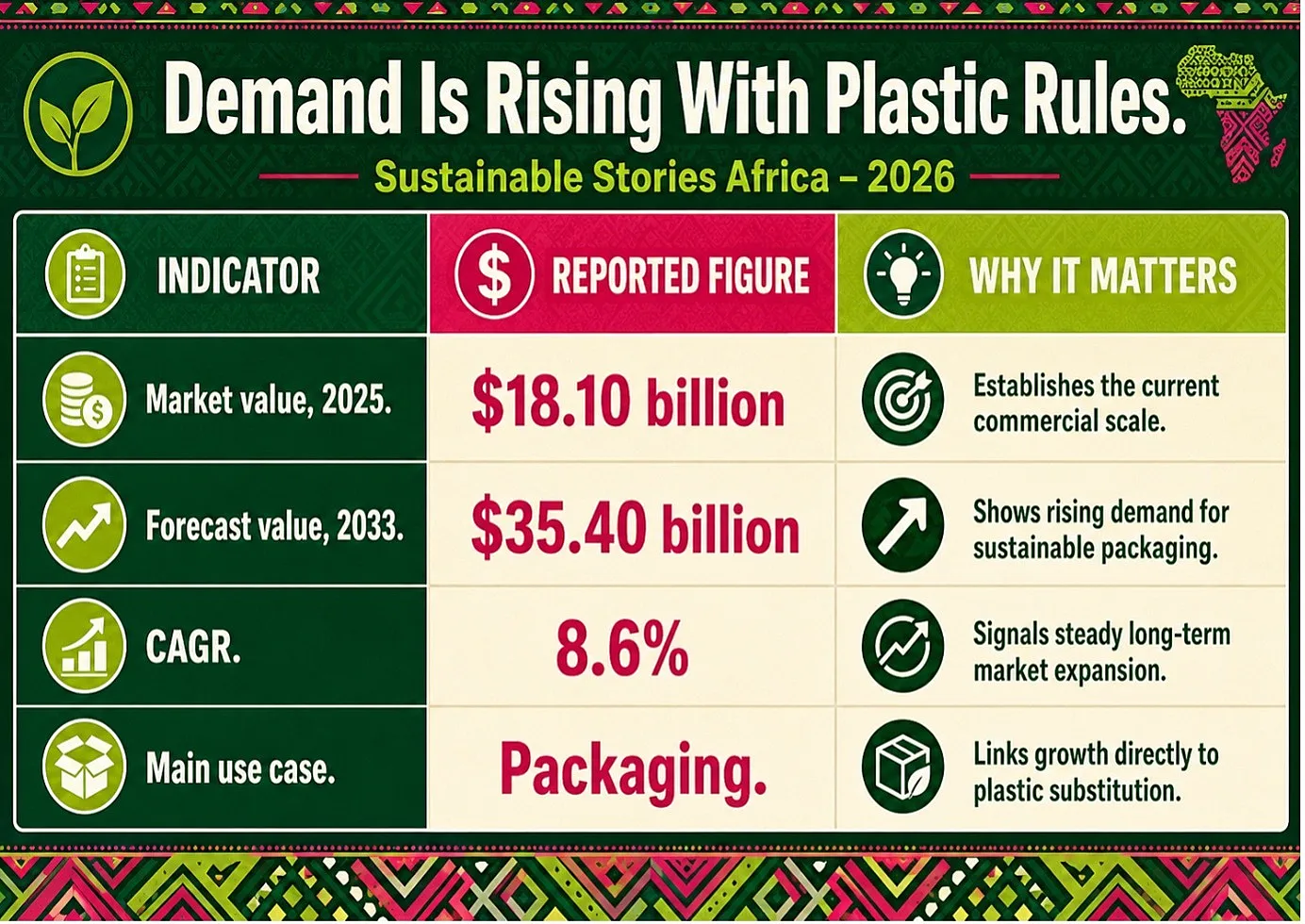
The global starch-based bioplastics packaging market is projected to grow from $18.10 billion in 2025 to $35.40 billion by 2033, expanding at an 8.6% compound annual growth rate, according to Verified Market Research data reported by GlobeNewswire.
The forecast points to a structural shift in packaging as companies, regulators and consumers seek alternatives to petroleum-based plastics.
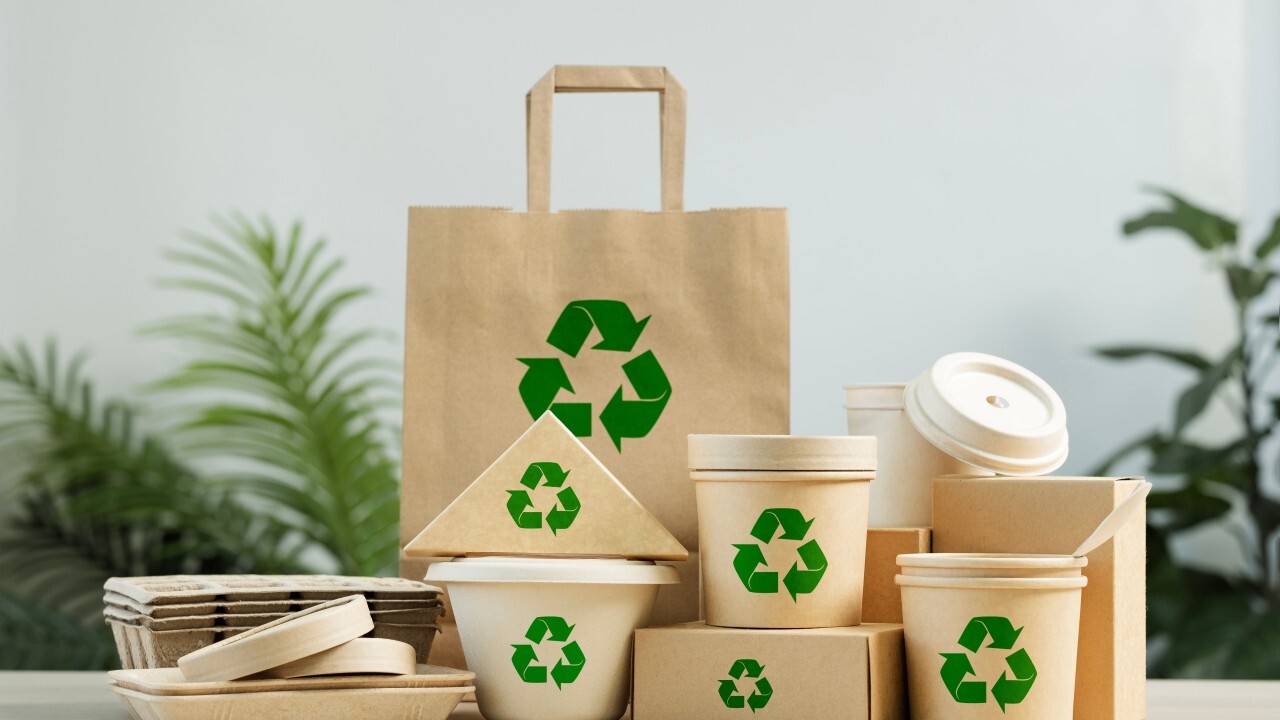
Starch-based bioplastics are produced from renewable feedstocks such as corn, potato, wheat and cassava starch, and are increasingly used in bags, films, containers and food-service packaging.
Demand Is Rising With Plastic Rules
A market driven by stricter plastic-waste rules, corporate sustainability targets, and consumer pressure for compostable and biodegradable packaging.
Verified Market Research says growth is supported by increased deployment of starch-based materials in packaging applications, improved supply reliability and better processing capacity.
The wider bioplastics market is also expanding. Grand View Research estimates the global bioplastics market at $18.41 billion in 2025, rising to $67.42 billion by 2033, driven by increased use in packaging.
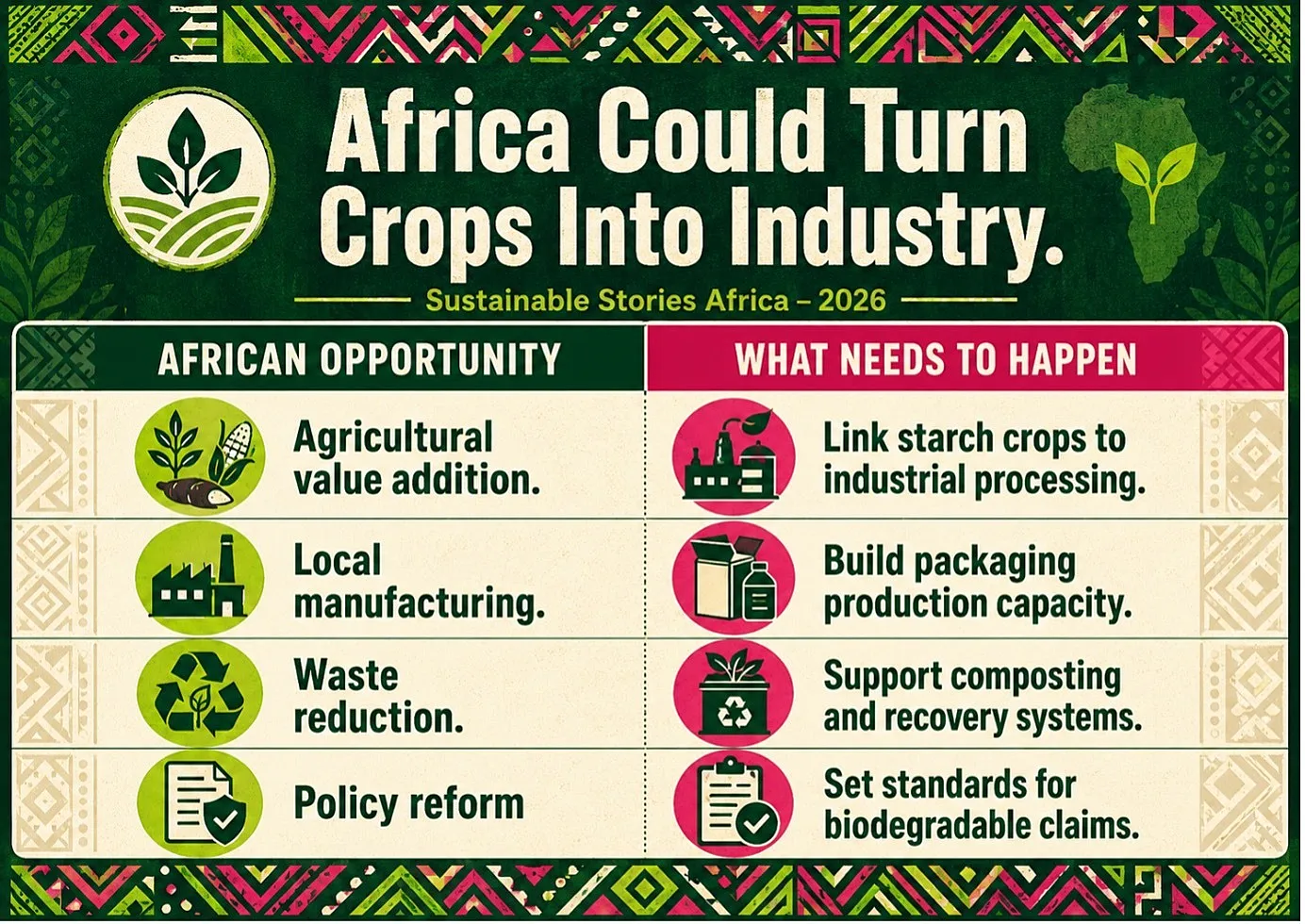
Africa Could Turn Crops Into Industry
For Africa, starch-based packaging is more than a waste story. It is an industrialisation story.
Cassava, maize and other starch-rich crops are already important across African economies.
If processing capacity, standards and investment improve, countries could move from exporting raw agricultural commodities to producing higher-value packaging inputs.
That matters for cities struggling with plastic waste, clogged drains and weak recycling systems.
In markets such as Lagos, Accra, Nairobi and Kigali, packaging reform is not abstract. It affects flooding, sanitation, food distribution and public health.
Bioplastics Need Honest Systems
The promise is strong, but not automatic. Starch-based bioplastics can reduce dependence on fossil-based plastics; however, their environmental value depends on feedstock sourcing, production energy, collection systems and whether packaging actually reaches composting or suitable disposal environments.
That is where policy matters. Without standards, weak claims can create greenwashing.
Without infrastructure, biodegradable packaging may continue to be littered. Without investment, local producers may be outcompeted by imports.
The better future is practical: farmers earn more from starch crops, manufacturers build new value chains, retailers cut plastic footprints, and cities reduce waste pressure.
Policymakers Must Build Circular Markets
African governments should treat bioplastics as part of a circular economy strategy, not just as a packaging trend.
That means clear labelling rules, product standards, incentives for local processing, public procurement for sustainable packaging and investment in composting and waste-separation systems.
Banks and development finance institutions can help by funding pilot plants, quality-testing labs and SME packaging manufacturers.
The market opportunity is growing; the policy question is whether African economies capture value locally.
Path Forward: Build Local Bioplastics Value Chains
Africa’s priority should be to connect agriculture, manufacturing and waste policy into a single circular economy pathway.
Starch-based bioplastics can support ESG goals when they are locally produced, clearly certified and backed by real waste-management systems.
The opportunity is not only cleaner packaging, but cleaner industrial growth.
Culled From: Starch-Based Bioplastics Packaging Market to Reach $35.40 Billion by 2033 at 8.6% CAGR