Starlink has suspended new residential sign-ups in seven Kenyan counties after customer demand exceeded the capacity of the satellite’s network.
The pause underscores both the popularity and infrastructure limits of low Earth orbit broadband across Africa.
For households, businesses and policymakers, the disruption highlights the urgent need to expand digital infrastructure to align with rising demand for connectivity.
Kenya's Digital Appetite Outgrows Network Capacity
Success has created an unexpected challenge for Starlink in one of Africa's fastest-growing broadband markets.
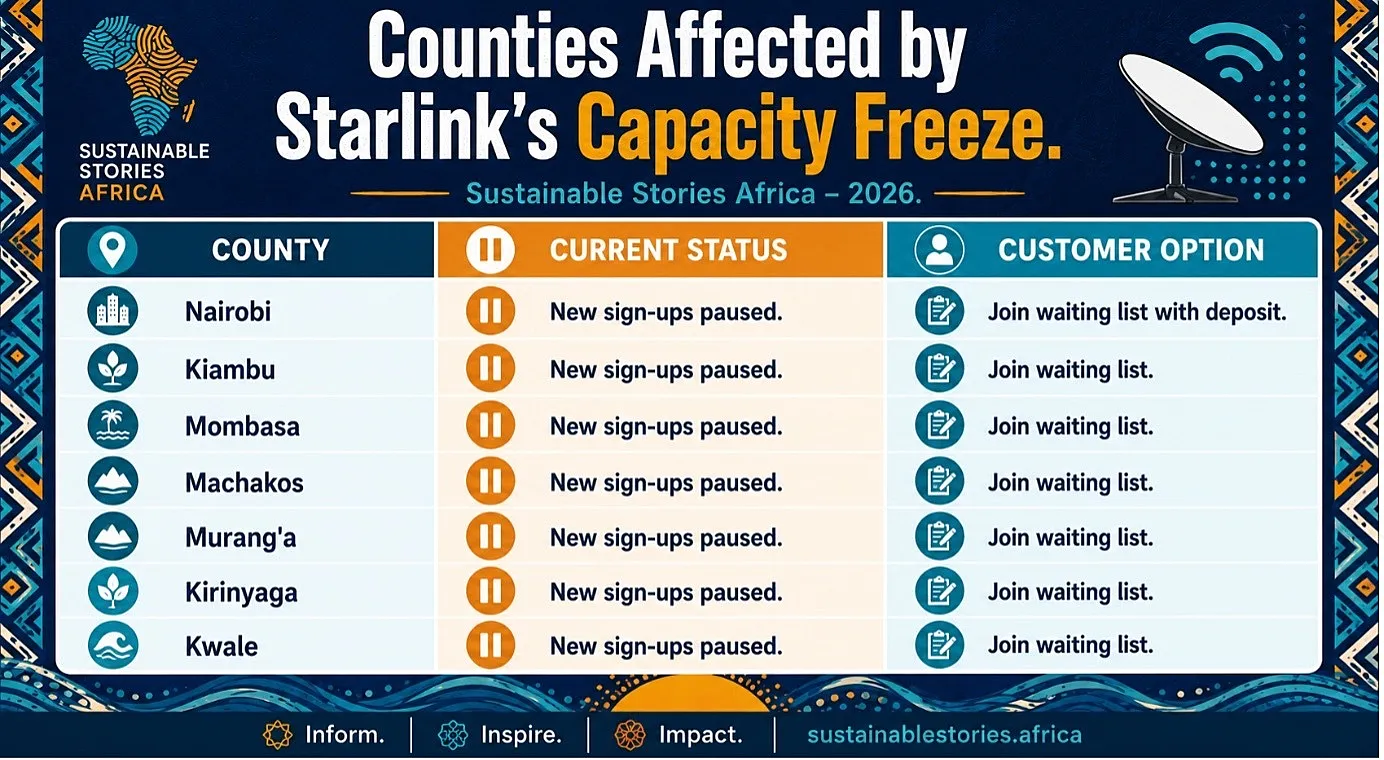
The satellite internet provider has suspended new residential subscriptions in seven Kenyan counties, including Nairobi, Kiambu, Mombasa, Machakos, Murang'a, Kirinyaga and Kwale, after customer demand exceeded available network capacity.
Prospective customers attempting to subscribe are now redirected to a waiting list, with Starlink stating that it is working to add capacity but cannot provide a timeline for reopening new orders.
Existing subscribers remain connected, but the freeze marks a significant milestone for a service that has rapidly expanded across Kenya since its launch in 2023.
Rather than signalling weakening demand, the restrictions reveal the opposite: satellite broadband adoption is growing much quicker than the infrastructure supporting it.
Popularity Exposes Infrastructure Constraints
The counties affected represent some of Kenya's largest economic and population centres, where demand for reliable broadband has surged among households, remote workers, startups and small businesses seeking alternatives to traditional fixed-line and mobile internet services.
Customers attempting to subscribe now receive a notice stating that service is "currently at capacity" in their area.
They may pay a deposit to secure a place on a waiting list while Starlink expands network resources.
The pause is not unprecedented. Starlink temporarily halted new subscriptions in parts of Kenya in 2024 after experiencing similar congestion, although the current suspension extends to additional counties, including coastal markets such as Mombasa and Kwale.
Analysts say this demonstrates that demand pressures are spreading beyond Nairobi into broader regional economic hubs.
Communications Authority of Kenya data cited in industry reports indicate that Starlink had 24,999 active subscribers at the end of March 2026, up from 22,282 three months earlier, reflecting continued rapid growth despite previous capacity challenges.
Rising Demand Signals Africa's Digital Opportunity
While the temporary freeze may frustrate prospective customers, it also reflects a deeper transformation taking place across Africa's digital economy.
Demand for reliable, high-speed internet continues to accelerate as businesses embrace cloud computing, digital payments, artificial intelligence, online education and remote work.
Satellite broadband has become particularly valuable in locations underserved by fibre infrastructure, helping bridge connectivity gaps that have historically limited economic participation.
The challenge now is to scale infrastructure quickly enough to match that demand.
If providers successfully expand capacity, satellite connectivity can complement terrestrial networks, improve digital resilience and strengthen access for underserved communities.
Failure to keep pace, however, risks slowing digital inclusion precisely when Africa's technology ecosystem is expanding most rapidly.
Digital Infrastructure Must Scale With Demand
Starlink's capacity constraints reinforce an important lesson for policymakers and industry alike: connectivity investment cannot stop once services launch.
Governments, regulators and private operators must continue investing in spectrum management, terrestrial backhaul, satellite capacity and complementary fibre infrastructure to ensure growing digital demand translates into reliable service rather than congestion.
At the same time, transparent regulation and continued competition across internet markets will remain essential to ensuring consumers benefit from greater choice, improved service quality and affordable broadband access.
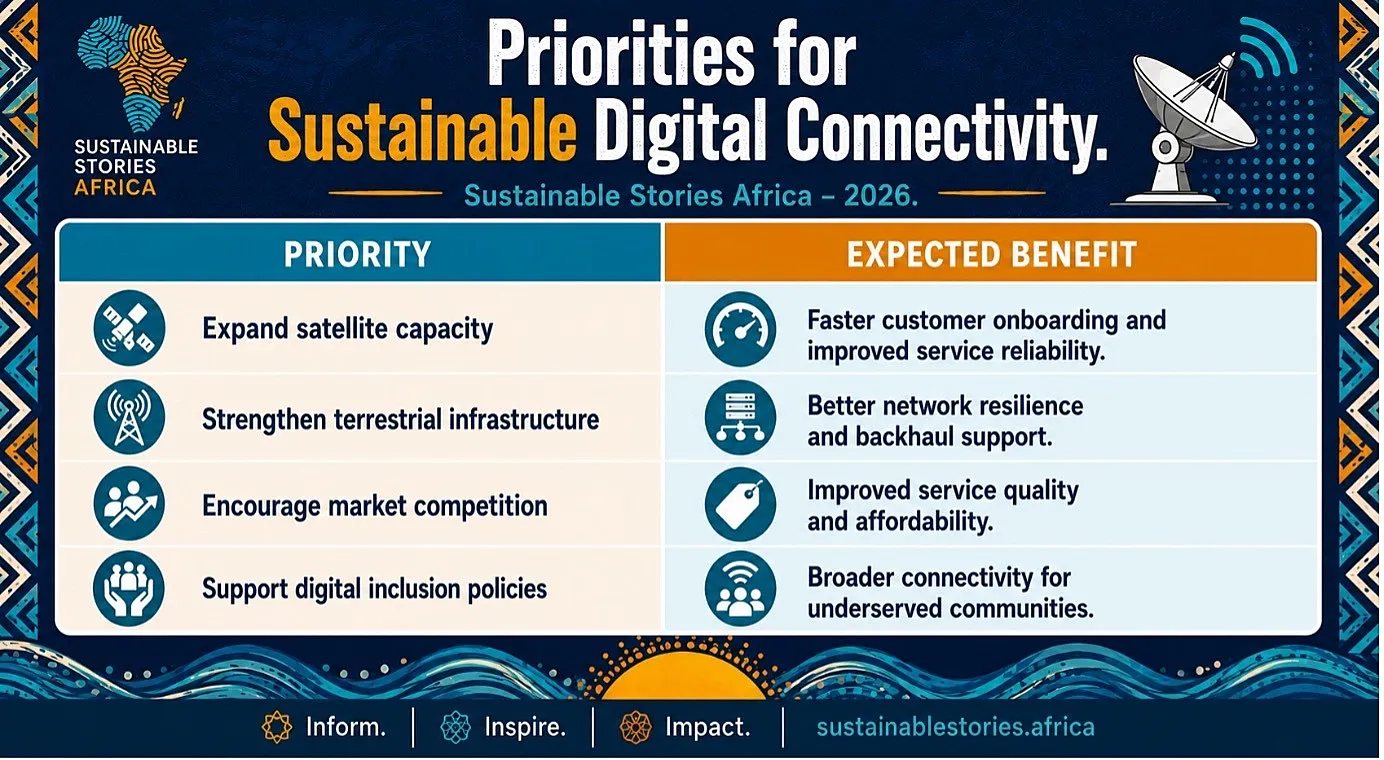
Path Forward – Expanding Capacity Will Sustain Digital Growth
Kenya's Starlink pause is less a setback than a reminder that Africa's digital transformation is advancing faster than many anticipated. Strong consumer demand is creating new opportunities; however, it is also exposing infrastructure gaps that require continued investment.
Expanding satellite capacity, strengthening terrestrial networks, and maintaining supportive regulatory environments will be critical to ensuring Africa's growing appetite for digital connectivity translates into long-term economic inclusion, innovation and sustainable development.
Culled From: Starlink freezes new sign-ups in seven Kenyan counties