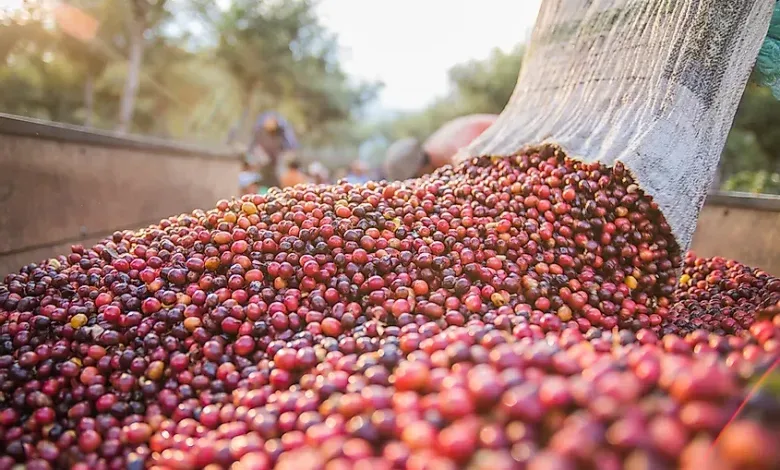
Tanzania is expected to produce a record 96,000 tonnes of coffee in the 2026–27 season.
The forecast signals how higher prices, favourable weather and expanding farmland are reshaping one of East Africa’s key export crops.
For smallholder farmers, the boom could mean higher incomes, if quality, climate resilience and market access keep pace.
Coffee Boom Signals Rural Opportunity
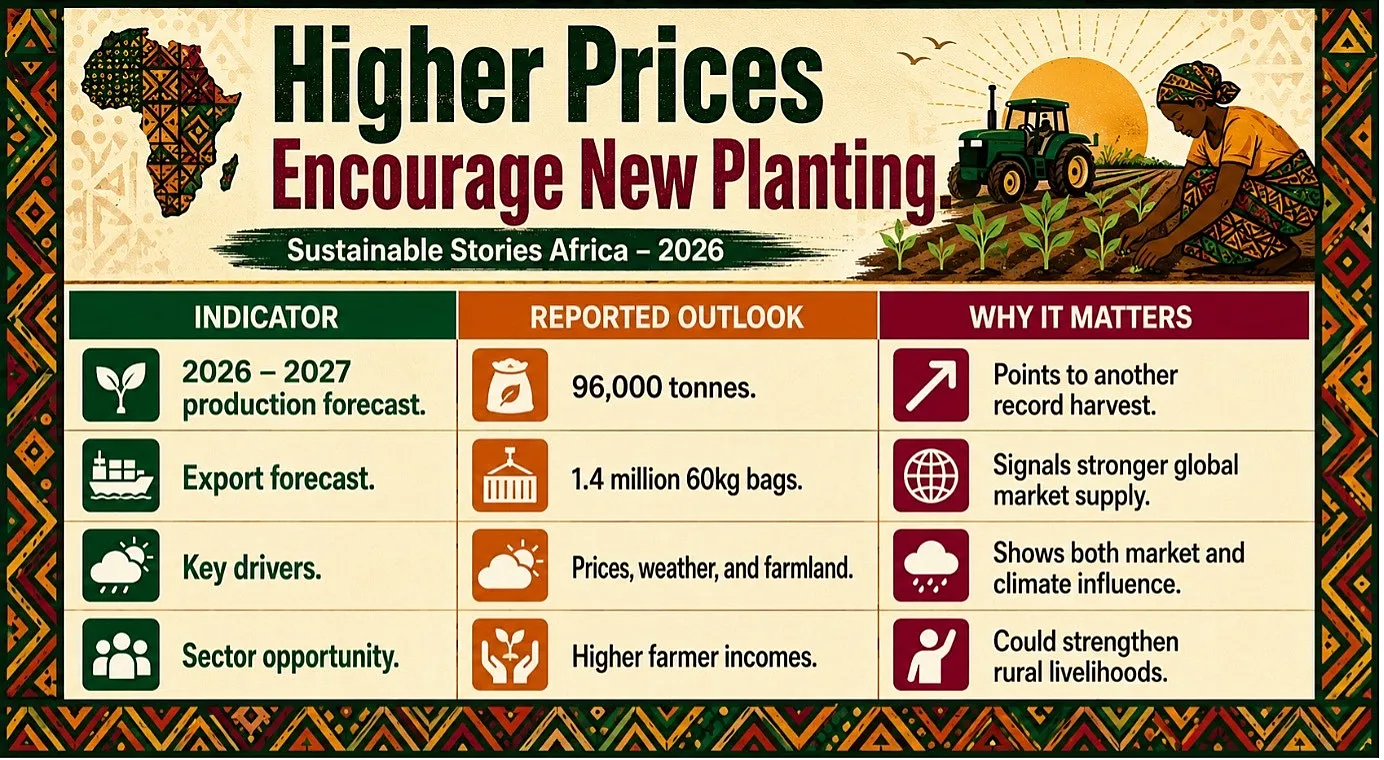
Tanzania’s coffee industry is heading toward another record season, with production projected to reach 96,000 tonnes in 2026 – 2027, according to Ecofin Agency.
Higher coffee prices, favourable weather, and the expansion of cultivated land are believed to be responsible for this surge.
The forecast matters because coffee is not just an export commodity. In Tanzania’s northern and southern growing zones, it is a household income engine, a foreign-exchange earner and a test of whether African agriculture can convert global price momentum into durable rural prosperity.
USDA’s Foreign Agricultural Service also projects Tanzania’s green coffee exports to increase from 1.36 million 60-kg bags in 2025 – 2026 to 1.4 million bags in 2026 – 2027, reinforcing expectations of stronger supply and export performance.
Interest: Higher Prices Encourage New Planting
The coffee story begins at the farm level. When prices rise, growers have a stronger reason to prune trees, apply inputs, expand acreage and deliver beans through formal market channels. That is what appears to be happening in Tanzania.
Tanzania’s coffee economy is built around both Arabica and Robusta, with smallholder farmers forming the backbone of production.
A strong harvest can raise household earnings, support cooperatives, improve local processing and increase demand for transport, warehousing and export services.
However, the same growth also brings pressure. More farmland can lift output, but it must be balanced with soil health, forest protection and climate-smart farming.
A record crop is good news only if farmers can maintain quality, avoid post-harvest losses and receive fair prices.
Record Harvest Can Build Resilience
If managed well, Tanzania’s coffee expansion can become a model for sustainable agricultural growth.
Higher output can help farmers invest in better seedlings, irrigation, storage and processing.
It can also help Tanzania compete more strongly in speciality and certified coffee markets, where quality and traceability matter.
The opportunity is especially important for young people in rural communities. Coffee value chains need nursery operators, extension workers, processors, logistics providers, exporters and digital market platforms.
A stronger harvest can therefore create more than farm income; it can support greater rural enterprise.
Still, the sector must avoid a familiar African commodity trap: producing more without capturing more value.
Tanzania’s next leap should include local processing, stronger branding, cooperative finance and climate adaptation.
Action: Turn Harvest Gains Into Value
The key policy question is what happens after the record. Tanzania needs to convert production growth into better farmer margins, resilient landscapes and higher-value exports.
That means investing in climate-smart extension services, disease-resistant seedlings, transparent auctions, farmer finance and processing infrastructure. It also means helping producers meet sustainability standards as global buyers demand more proof on traceability, labour practices and environmental impact.
- For financiers, the signal is clear: Tanzania’s coffee sector is becoming more investable.
- For policymakers, the task is to make sure the benefits reach growers, not only traders.
- For farmers, the priority is quality, consistency and stronger bargaining power.
Path Forward – Make Coffee Growth More Inclusive
Tanzania’s record coffee outlook should now be matched with investments in farmer finance, processing, traceability and climate-smart production.
Well done, the sector can advance ESG goals by raising rural incomes, improving land stewardship, expanding responsible exports and building a more resilient agricultural economy.
Culled From: Tanzania’s Coffee Industry Targets Another Record Harvest in 2026-27 - Ecofin Agency