Global clean-energy trade climbed to $479 billion in 2025, BloombergNEF says, reversing a 2024 decline despite tariffs and geopolitical disruption.
The rebound matters because countries are treating solar, batteries, electric vehicles and grid equipment as energy-security tools, not just climate assets.
For African and other fuel-importing economies, the shift could shape power costs, industrial policy and access to cleaner technology.
Clean Trade Defies Global Headwinds
Global clean-energy trade rebounded to $479 billion in 2025, rising 1% across clean technology, battery metals and grid equipment, according to BloombergNEF’s Energy Transition Supply Chains 2026 report.
The increase may look modest, but its significance lies in timing. It came after trade volumes fell 7% between 2023 and 2024, despite a more hostile global trading environment marked by revised US tariffs, rising protectionism, conflict in the Middle East and renewed concern over fossil-fuel supply shocks.
For households in Lagos, Accra or Karachi, the story is not abstract. Clean-energy trade determines whether solar panels arrive cheaply enough for rooftops, whether batteries can stabilise weak grids, and whether electric mobility remains a distant ambition or becomes an affordable transport option.
BloombergNEF said the rebound shows that tariffs have not stopped global demand for products central to the energy transition.
Instead, energy security is becoming a stronger driver of clean-tech adoption, especially in countries exposed to the volatility of imported oil and gas prices.
Energy Security Is Reshaping Demand
Clean energy deployment is shifting from a policy-driven agenda to a market-driven imperative, as economies seek to reduce dependence on volatile fossil-fuel supply chains.
BloombergNEF reports that Middle-East geopolitical tensions have elevated fuel prices, with Asian and African net importers bearing the greatest burden.
Solar modules, batteries and electric vehicles are increasingly positioned as resilience tools in these markets.
Pakistan exemplifies this transition. Following the fuel-price shock triggered by Russia's invasion of Ukraine, solar module imports surged 189% to $1 billion in 2022.
By 2025, small-scale solar capacity reached 18.3 GW, driven by high power tariffs, expensive LNG imports and chronic power outages.
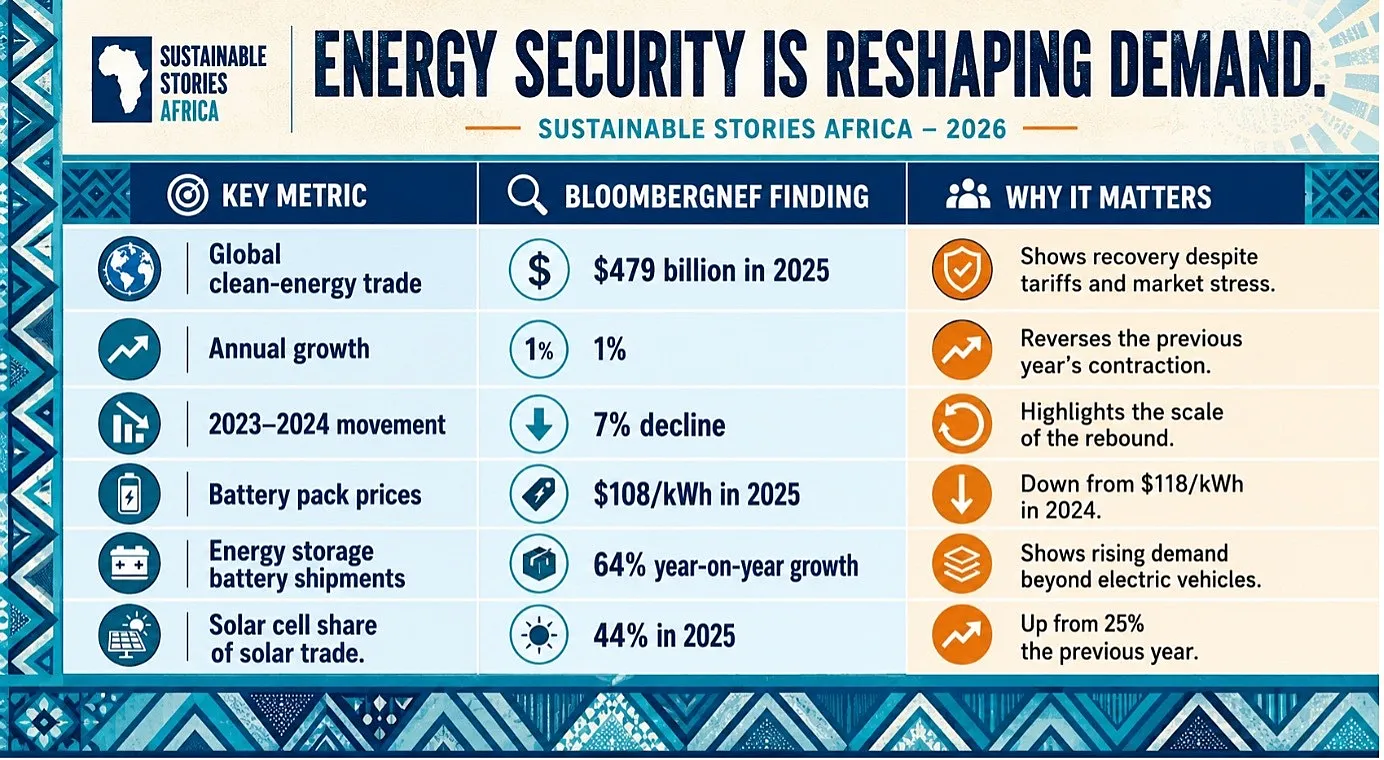
However, structural challenges persist. Global clean-tech manufacturing capacity now exceed 200% of actual demand, largely due to Chinese overinvestment, compressing margins across solar, batteries and electric vehicles.
While buyers benefit from falling prices, manufacturers face thin margins, with solar and battery price declines slowing in 2025 due to rising silver and battery-metal costs.
Desire: Affordable Technology Can Unlock Resilience
For African markets, the opportunity is direct. Cheaper clean-energy goods can help reduce dependence on imported diesel, lower the cost of distributed power, and support factories that need reliable electricity to remain competitive.
In communities where power cuts disrupt cold storage, clinics, schools and small businesses, a cheaper battery or solar module can change economics daily.
- A tailor can work longer hours.
- A clinic can preserve vaccines.
- A grain processor can reduce diesel spending.
- A household can charge phones, fans and lights without waiting for the grid.
The rebound also shows that emerging economies are not just passive recipients of technology. BloombergNEF identified Southeast Asia, India and Turkey as growing solar manufacturing hubs, while Egypt and Ethiopia are emerging as budding clean-tech manufacturing economies.
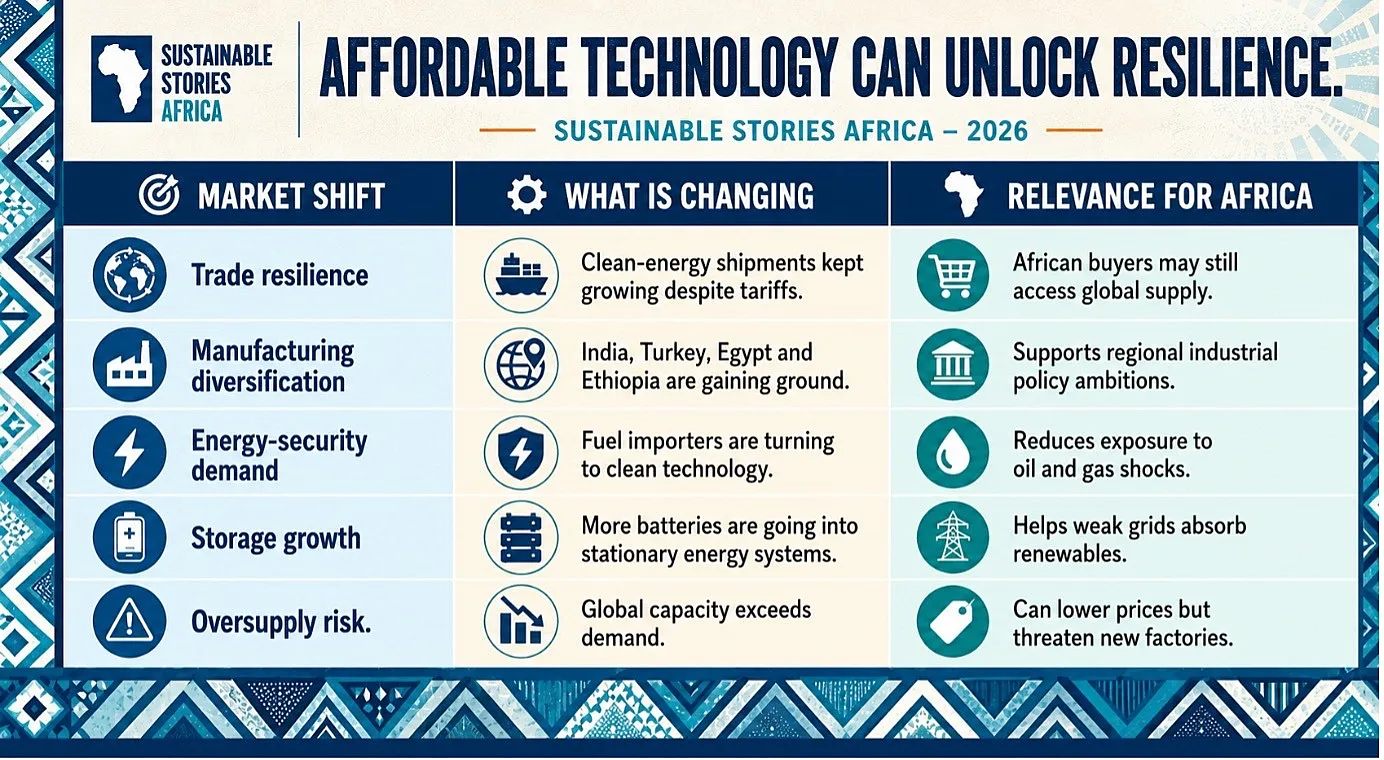
The gain is clear: if countries plan well, clean-energy trade can strengthen resilience, create industrial opportunities and reduce long-term energy costs.
The loss is equally clear: without policy discipline, Africa could remain mainly an import market, missing out on the manufacturing, skills and value-chain benefits of the transition.
Turn Imports Into Industrial Strategy
The next step is not simply to buy more solar panels, batteries or grid equipment.
Governments and investors need to turn clean-energy imports into a broader economic strategy.
- That means improving customs systems, reducing avoidable import bottlenecks, supporting quality standards, expanding grid investment, and designing incentives that help local firms participate in installation, maintenance, assembly and manufacturing.
For financiers, the signal is that clean technology remains resilient even in a fragmented world.
For policymakers, it is a warning that tariffs alone will not build competitive industries.
Countries need demand, skills, infrastructure, stable rules and access to affordable capital.
Africa’s clean-energy opportunity will depend on whether governments can link trade to jobs, industrial parks, power reliability and climate resilience.
The market is moving. The question is whether policy can move with it.
Path Forward – Build Resilient Clean-Energy Markets
African countries should use the rebound in clean-energy trade to strengthen energy security, reduce diesel dependence, and build local value chains.
Imports should support skills, standards, assembly, maintenance and grid readiness.
The priority is practical: finance reliable, clean power; attract credible manufacturers; protect consumers from poor-quality products; and align trade policy with ESG goals.
Clean-energy trade is now a resilience strategy, not just a climate story.
Culled From: Global Clean-Energy Trade Rebounds to $479 Billion in 2025 Despite Tariffs and Geopolitical Turmoil: BloombergNEF