Nigeria stands at a critical juncture in its innovation journey. While the country's research institutions brim with groundbreaking ideas, the absence of a structured technology assessment system threatens to stall the translation of scientific ingenuity into market-ready products.
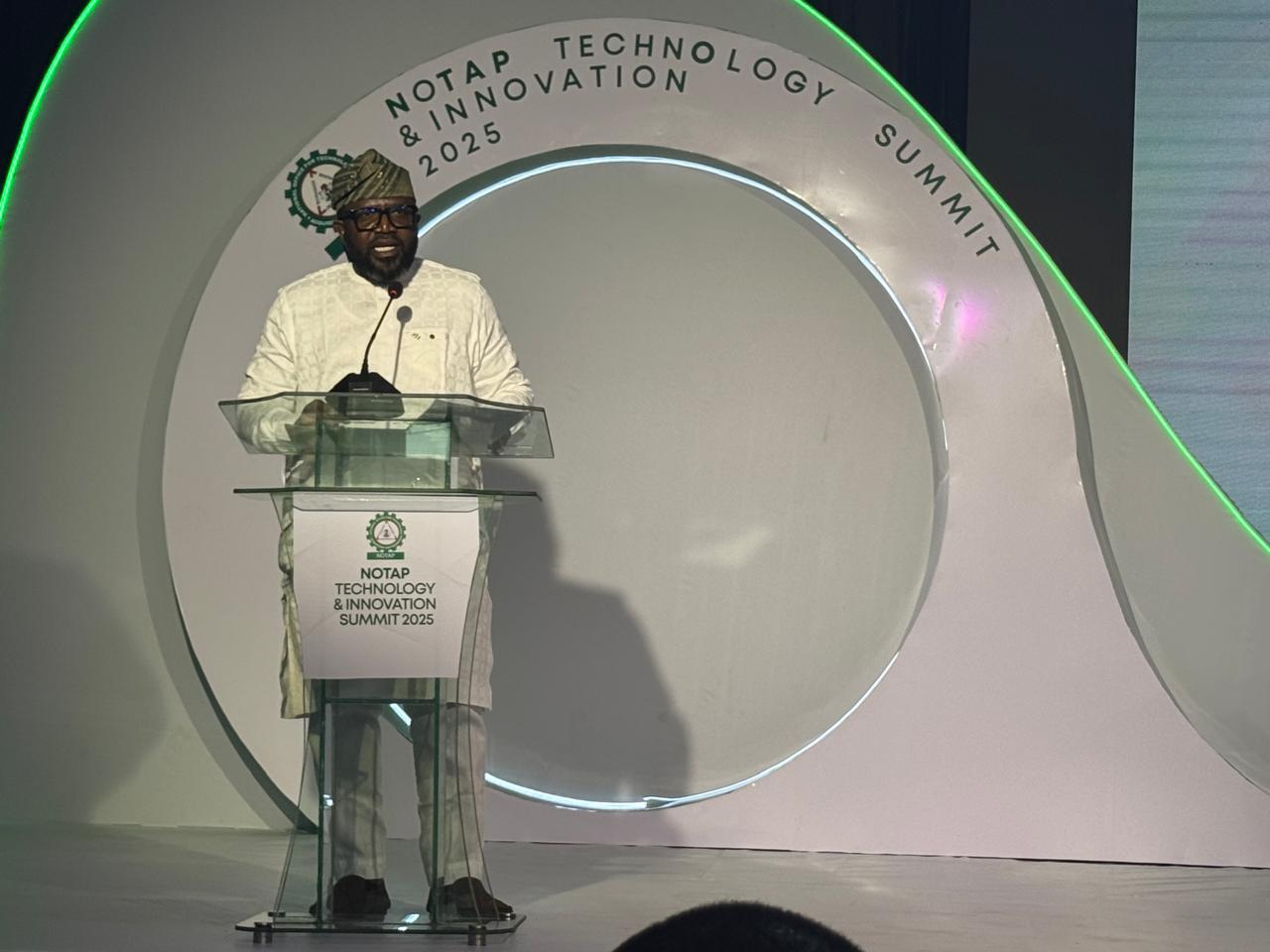
At the NOTAP Technology and Innovation Summit, holding in Lagos today, the CEO Nigeria Climate Innovation Centre (NCIC) Bankole Oloruntoba, made a resounding call for Nigeria to institutionalize a National Technology Assessment Framework, as an urgent reform seen as pivotal to de-risking innovation, attracting investment, and bridging the gap between research and commercialization.
Nigeria's Innovation Dilemma – A Missing Link in the Tech Value Chain
Nigeria's innovation engine is running, but without a roadmap. The nation's science and technology ecosystem is rich in invention but poor in commercialization. At the NOTAP Technology and Innovation Summit, Bankole Oloruntoba, CEO of the Nigeria Climate Innovation Center (NCIC), sounded an urgent call: "We have invention, but we often lack the mechanism for effective innovation."
He argued that to bridge the divide between laboratory prototypes and commercial success, Nigeria must institutionalize a National Technology Assessment (TA) System, as a strategic tool towards catching up with advanced economies to evaluate the viability, risks, and socio-economic impact of emerging technologies before deployment.
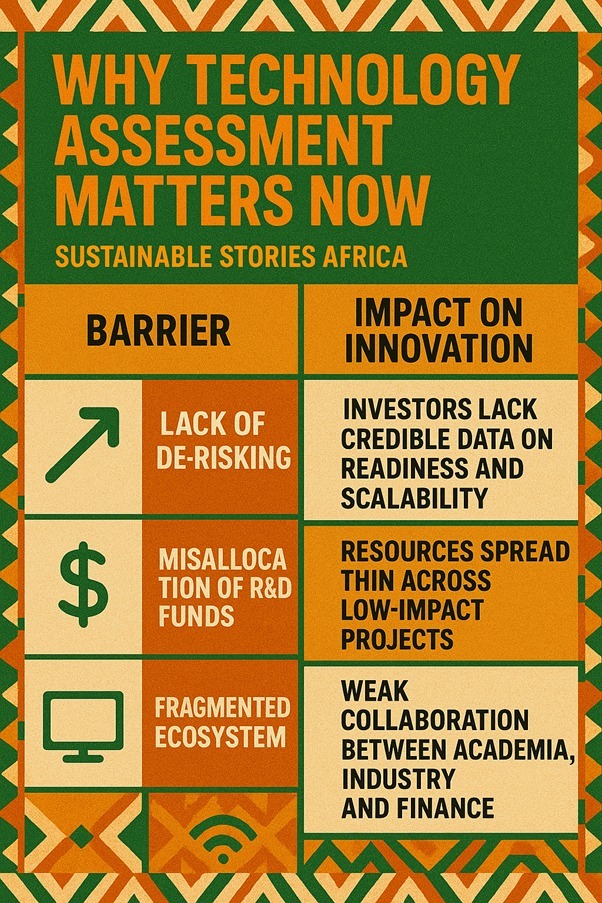
Why Technology Assessment Matters Now
Without structured evaluation, Nigerian R&D remains a high-risk proposition for investors. Oloruntoba outlined three systemic challenges:
| Barrier | Impact on Innovation |
|---|---|
| Lack of De-risking | Investors lack credible data on readiness and scalability |
| Misallocation of R&D Funds | Resources spread thin across low-impact projects |
| Fragmented Ecosystem | Weak collaboration between academia, industry, and finance |
He emphasized that a TA-certified innovation could become a "bankable asset," attracting both local and international capital.
Models from the United States of America (US), European Union (EU) - Germany, and India show how assessment frameworks de-risk technologies and drive commercialization.
He explained the example of how the US NASA-developed Technology Readiness Levels (TRL), which now guide billions in defense and energy funding.
Similarly, India's TIFAC identifies commercial opportunities from R&D, guiding strategic investments. Nigeria, he said, must evolve from ad-hoc evaluation to systemic institutionalization.
Charting Nigeria's Course for STI Maturity
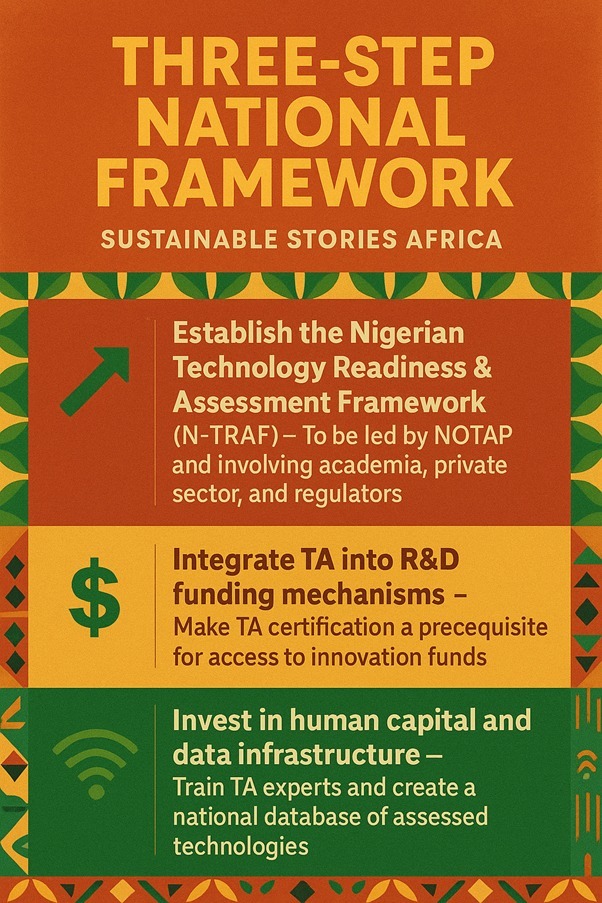
Oloruntoba proposed a three-step national framework, towards managing Nigeria's Science, Technology and Innovation sectors:
- Establish the Nigerian Technology Readiness & Assessment Framework (N-TRAF) – To be led by NOTAP and involving academia, private sector, and regulators.
- Integrate TA into R&D funding mechanisms – Make TA certification a prerequisite for access to innovation funds.
- Invest in human capital and data infrastructure – Train TA experts and create a national database of assessed technologies.
"A TA-certified system," he said, "isn't red tape; it's an accelerator. It turns prototypes into products and ideas into industries."
Turning Assessment into Economic Acceleration
Bankole emphasized that TA is not a bureaucratic checklist but a national competitiveness instrument. It can unlock billions in venture capital, guide industrial policy, and attract climate-tech financing.
At the policy level, integrating TA into Nigeria's innovation agenda could help align national R&D spending with real market needs, while reducing reliance on imports and building local capacity.
Path Forward – The Next Leap for Nigerian Innovation
Nigeria's innovation ecosystem is ready; however, it requires structure and trust.
The summit called for NOTAP to lead the immediate establishment of a National TA System, linking science, policy, and private capital.
The goal: turn Nigeria's intellectual capital into investable, scalable technologies that drive sustainable industrialization.
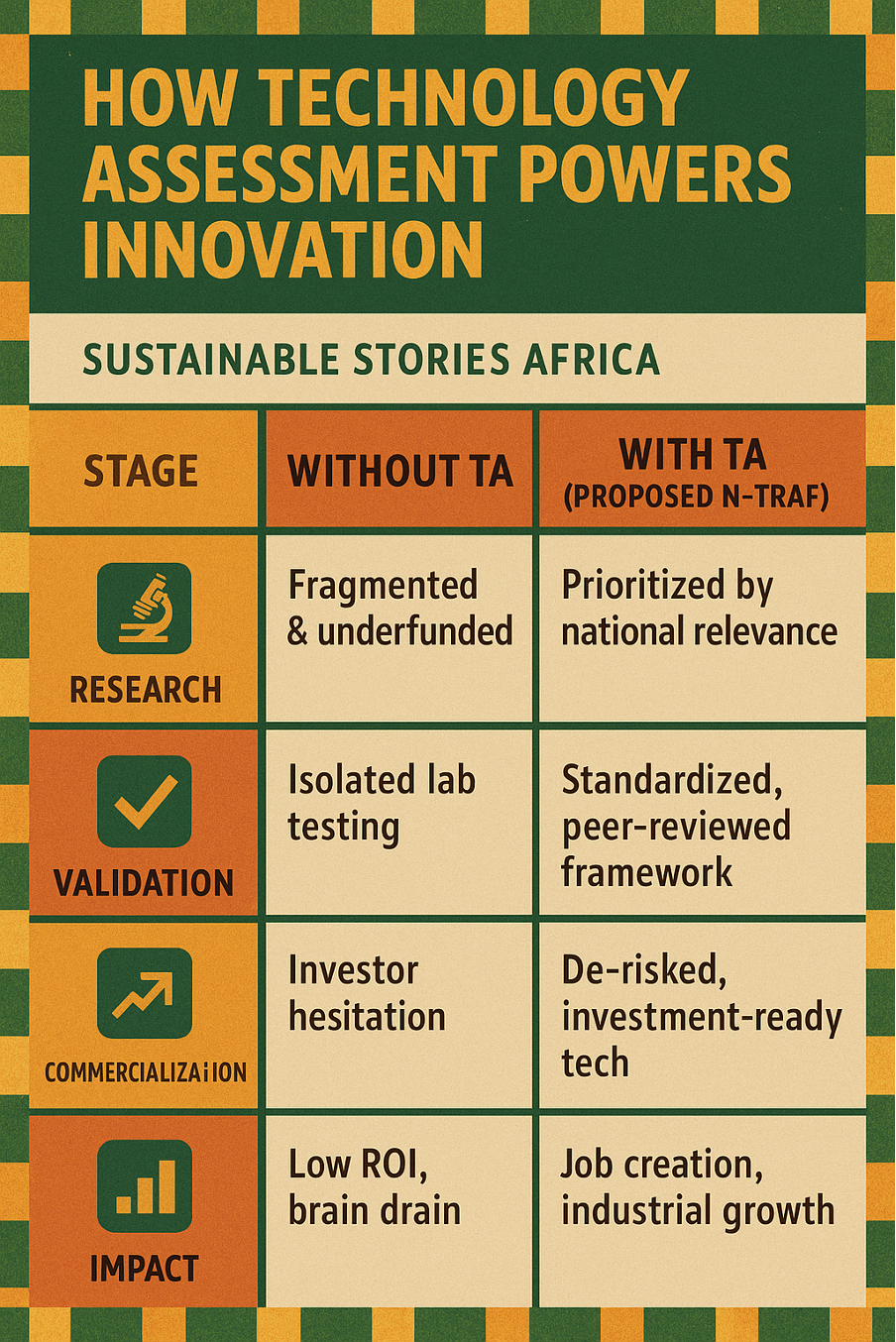
Infographic: How Technology Assessment Powers Innovation
| Stage | Without TA | With TA (Proposed N-TRAF) |
|---|---|---|
| Research | Fragmented & underfunded | Prioritized by national relevance |
| Validation | Isolated lab testing | Standardized, peer-reviewed framework |
| Commercialization | Investor hesitation | De-risked, investment-ready tech |
| Impact | Low ROI, brain drain | Job creation, industrial growth |