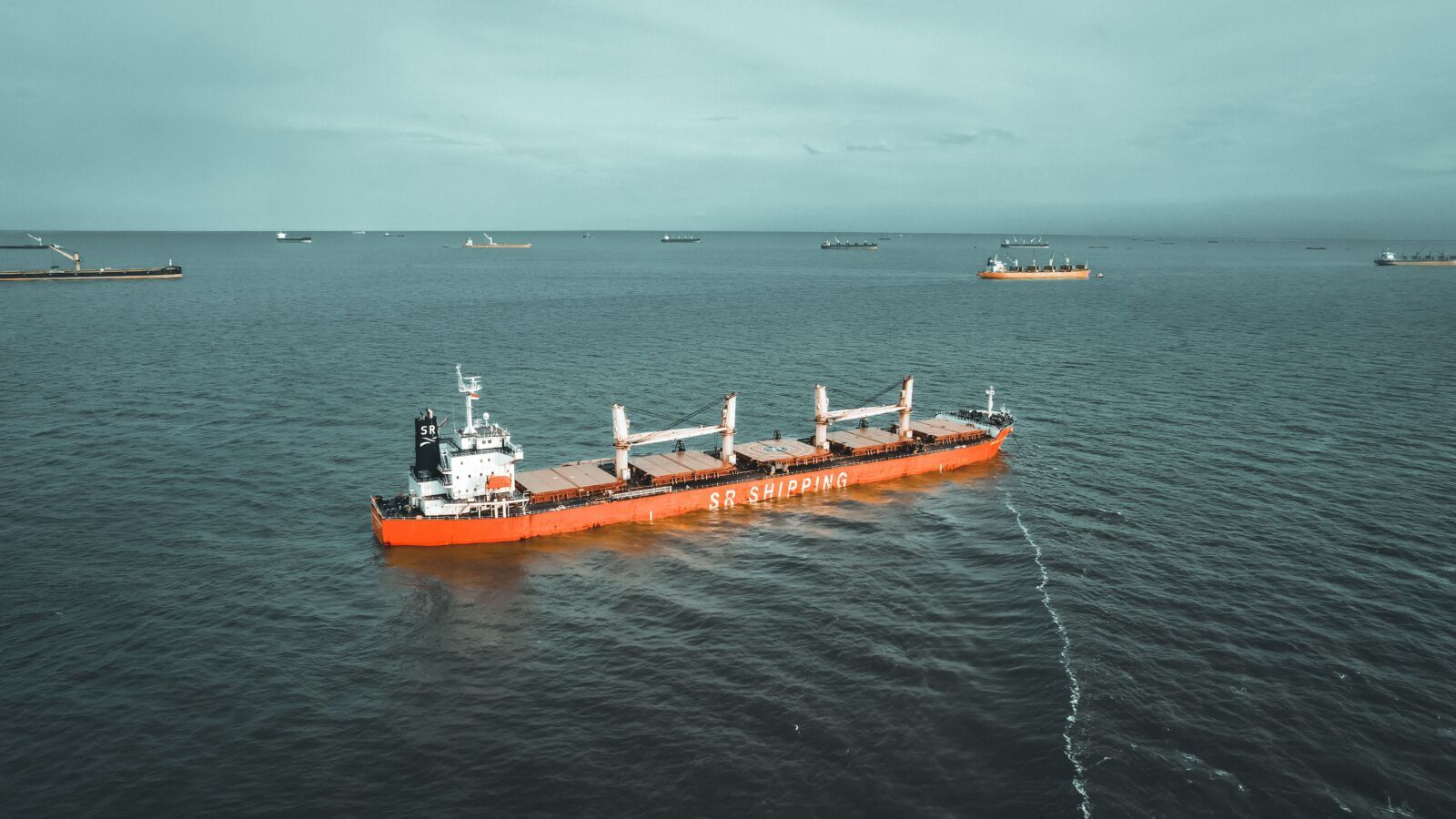
The world's ocean economy generates $2.6 to $5.1 trillion in gross value annually, supporting billions of livelihoods and carrying over 80% of global trade by volume.
However, these systems are degrading faster than they can recover.
A landmark WEF Insight Report, published in June 2026, warns that sustaining the status quo is no longer enough; only a full transition to a regenerative blue economy can succeed.
For Africa, where marine ecosystems underpin food security, tourism, and trade, this blueprint offers four practical levers governments can apply now.
The Ocean Economy Is Growing While the Ocean Is Dying
The world's most valuable natural system is being systematically undermined by the same industries that depend on it.
The World Economic Forum's June 2026 Insight Report, The Regenerative Blue Economy: Pathways to Prosperity, discloses that incremental sustainability measures have failed, and that regeneration, not preservation, is now the only viable strategy.
The report, produced by the WEF's Global Future Council on the Regenerative Blue Economy and co-chaired by Helle Herk-Hansen of Vattenfall and Professor U. Rashid Sumaila of the University of British Columbia, synthesises the work of dozens of leading experts across private and public sectors, civil society, and academia.
It arrives at a moment of acute tension: ocean industries are expanding even as the ecological foundations that sustain them deteriorate. The share of overfished stocks has nearly quadrupled since 1974. Some 70% – 90% of the world's coral reefs are predicted to disappear within two decades. Coastal flood exposure could double by 2100, threatening 10% of the global population.
The Contradiction of the Heart of the Blue Economy
The WEF's framing is clear: the current ocean economy is drawing down the natural capital on which it depends, a self-defeating contradiction that cannot continue.
The sustainable blue economy, which emerged about a decade ago, helped reduce harm caused by illegal fishing, destructive gear, and fossil fuel exploration.
However, most ocean health metrics have continued to decline, and progress towards SDG 14 – Life Below Water – is stalled or regressing.
"Maintaining the status quo means accepting an already degraded ocean as well as an ongoing process of managed decline," the report states.
"A more ambitious framing, the regenerative blue economy, demands net-positive ecological and social outcomes, not merely reduced harm."
The distinction matters enormously for Africa.
The continent is home to some of the world's most biodiverse and most threatened marine and coastal ecosystems, from the coral-rich coasts of the Western Indian Ocean to the mangrove systems of the Niger Delta and the large marine ecosystems of the Gulf of Guinea and Benguela Current.
These are not background scenery; they are economic infrastructure, and they are under accelerating pressure.
Three Sectors, One Trajectory
The WEF structures the ocean economy as a portfolio of three sector types, each with distinct roles and regenerative potential.
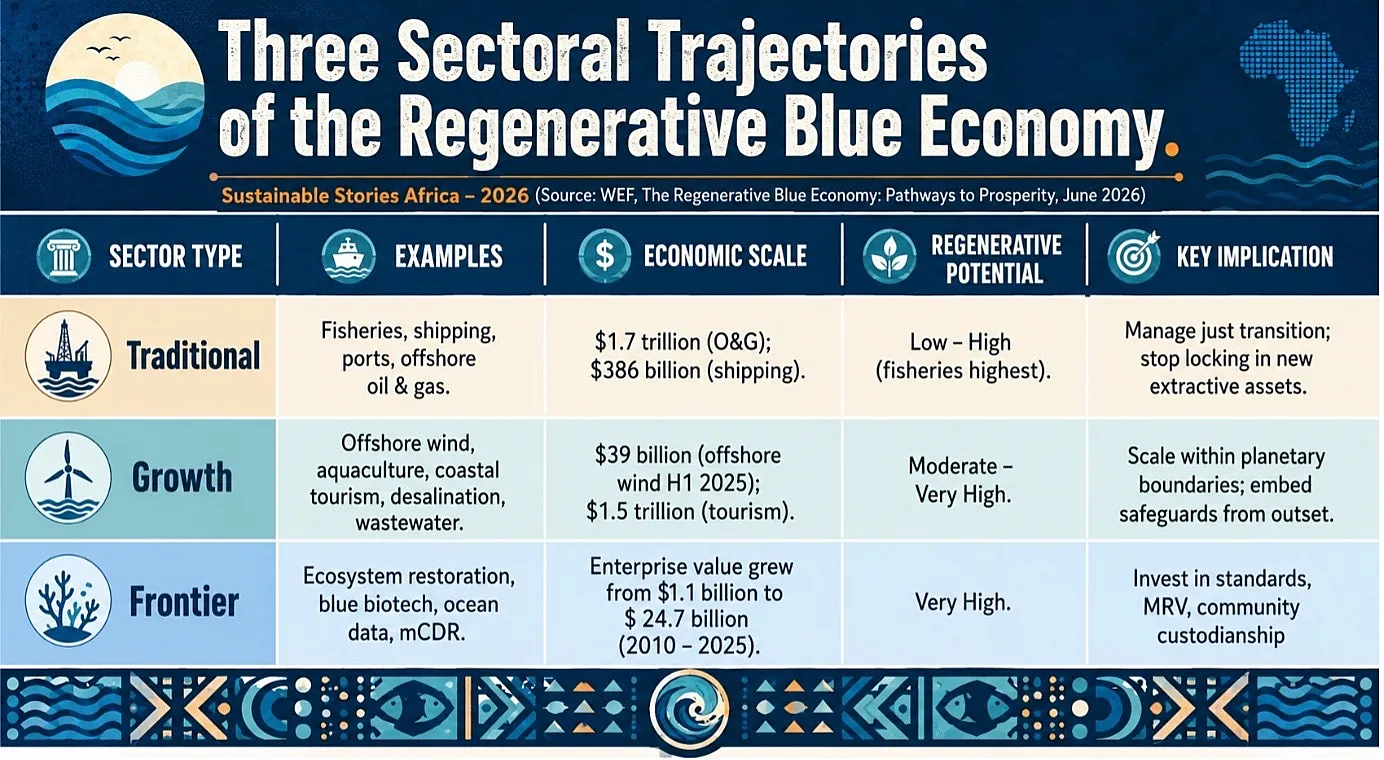 | 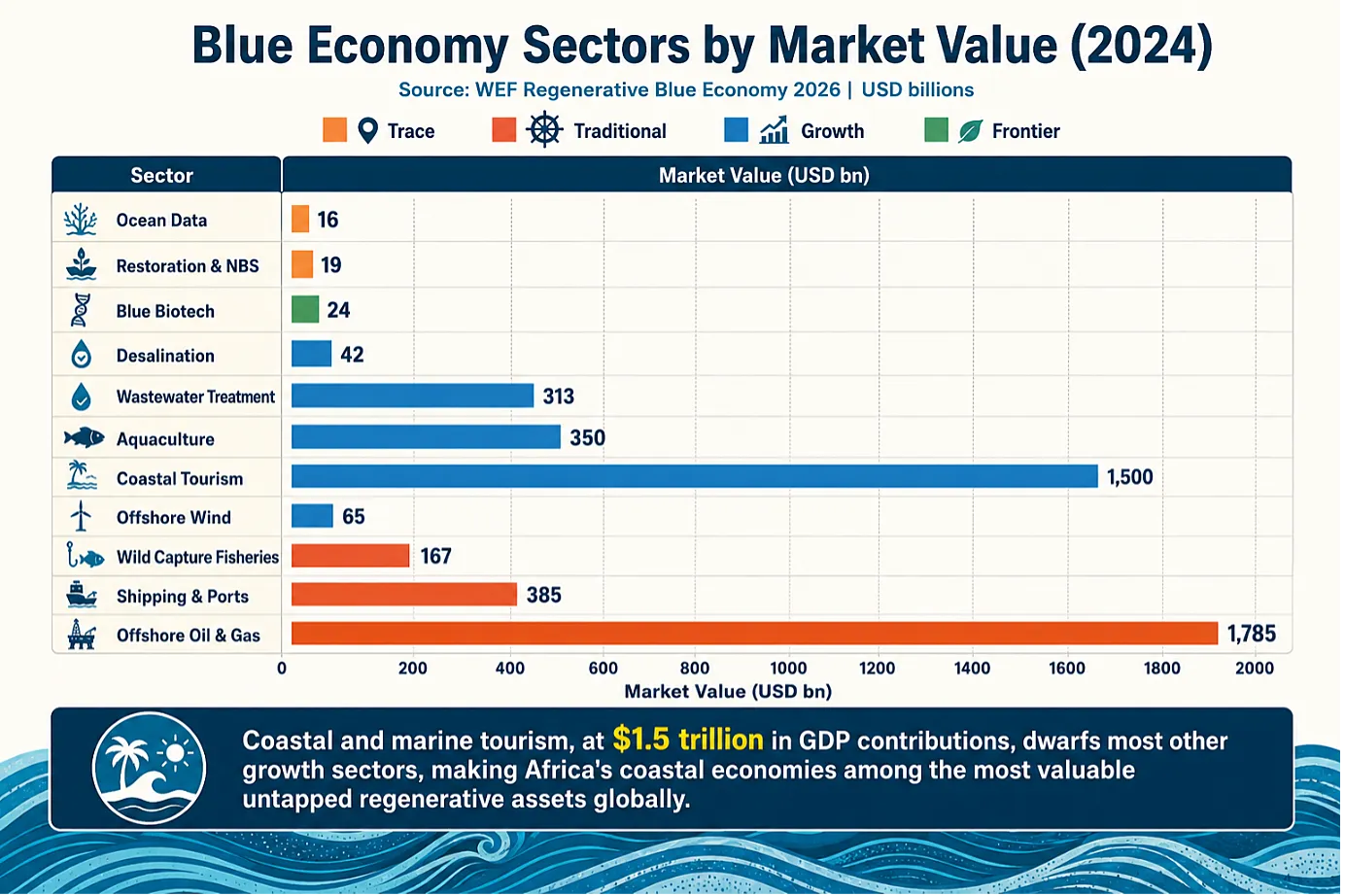 |
Four Levers to Unlock Regeneration
The WEF report proposes four interdependent system levers: governance, finance, human capacity, and technology & AI, none of which is sufficient by itself, but which together can deliver systemic transformation.
Critically, the report emphasises that less than 1% of the ocean economy's annual gross value added has been invested in sustainable ocean projects over the past decade, while vastly larger flows continue to support nature-negative activities, including harmful public subsidies.
The financial architecture to change this already exists; it requires coordinated political will and institutional alignment to deploy it.
What Must Happen Now
The WEF issues clear calls to all stakeholders.
- Governments must embed regeneration into national ocean strategies, align fiscal systems with existing commitments, including the Global Biodiversity Framework and SDG 14, and reduce fragmentation across ministries.
- Investors and financial institutions must integrate a regenerative approach into decision-making, redirect capital flows, and develop innovative financing mechanisms that reward restoration over extraction.
- Ocean industries must redesign business models towards net-positive ecological and social outcomes, preserving and enhancing their long-term value rather than consuming it.
Path Forward – Africa's Regenerative Opportunity
Africa's coastal nations face the same systemic choice the WEF describes: continue the managed decline of the ocean systems on which their economies depend, or invest in the governance, finance, and capacity frameworks that can turn marine ecosystems from liabilities into regenerative engines of long-term prosperity.
The tools exist. The evidence is growing. The WEF has written the blueprint. Africa's task now is to translate it into national ocean strategies, regional governance frameworks, and investment pipelines that make regeneration the logic of the economy itself.