
Artificial intelligence is moving from experimental tools into the systems that run modern businesses.
The World Economic Forum says companies now need trusted data, auditable workflows and stronger governance if AI is to deliver value at scale.
For African businesses, the message is urgent: AI can improve productivity, reporting and risk oversight, but only if trust is built into the platform, not added after the damage is done.
Trust Is Now AI’s Business Test
Artificial intelligence is no longer being judged by speed alone. The real test is whether organisations can trust AI enough to embed it inside the workflows where decisions are made, risks are managed, and customers are served.
That is the central argument in a World Economic Forum article by Workiva CIO Kim Huffman, published on June 3, 2026, which argues that companies seeking AI at scale must build trust into their processes, beginning with data.
The timing is critical. Across boardrooms, banks, energy firms and public institutions, AI pilots are multiplying.
However, many organisations still operate with scattered data, disconnected tools and governance frameworks that sit outside the work they are meant to protect.
The risk is direct: AI fed unreliable or fragmented information does not simply produce faster output; it produces faster mistakes.
From Quick Tasks To Trusted Workflows
The real value of AI is not speed; it is integration. A World Economic Forum article by Workiva CIO Kim Huffman draws a sharp distinction between using AI for isolated productivity and embedding it as part of an enterprise operating system.
When AI-generated outputs move into ungoverned desktop files or email chains, work loses context, becomes outdated and exposes organisations to compounding human error.
The alternative is AI connected to trusted data, organisational standards and governance mechanisms, operating within secure, cloud-based platforms where workflow, approval, auditability and accountability remain linked.
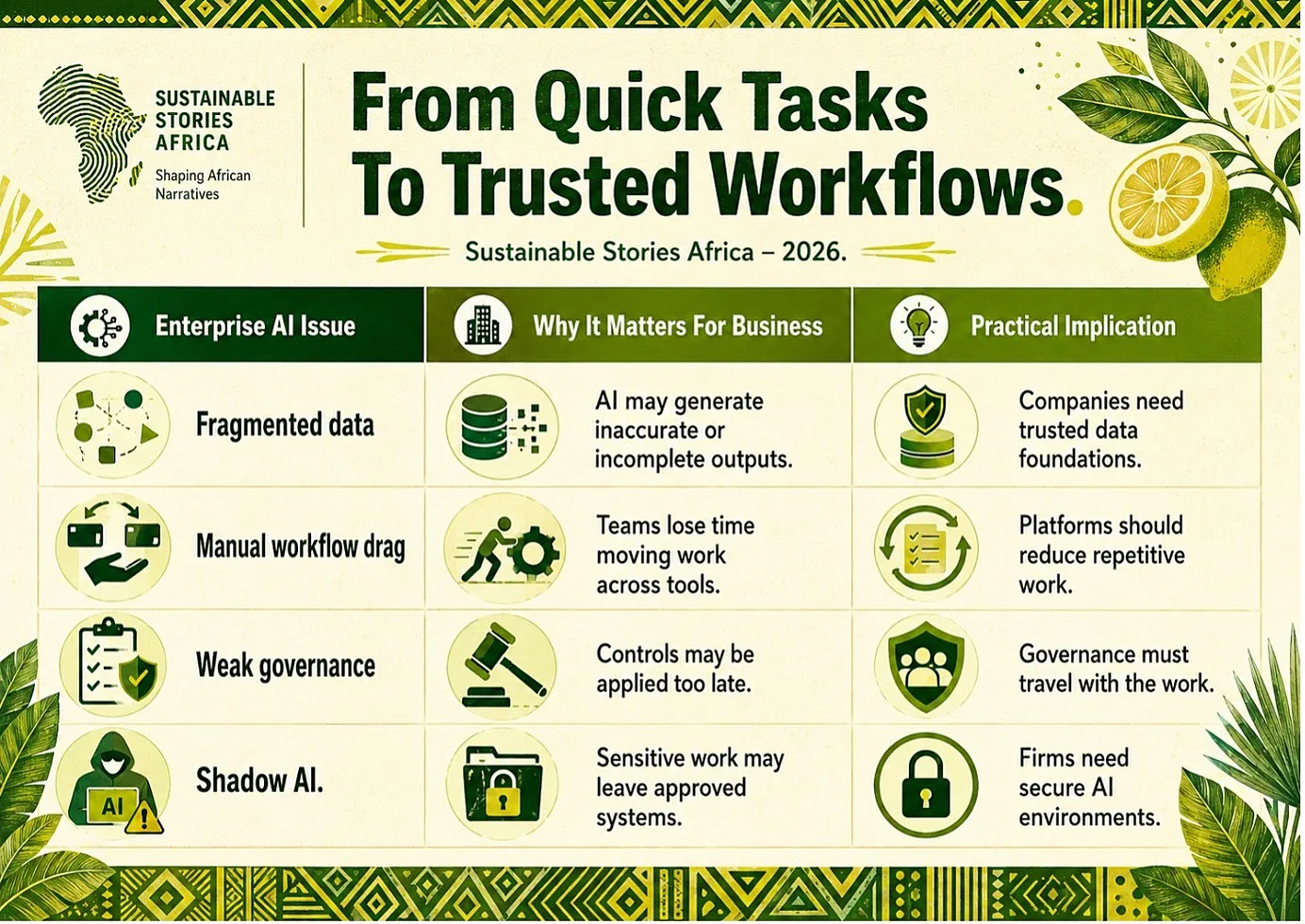
The WEF article identifies four ways AI-powered platforms can support corporate trust:
- They give AI business context.
- Reduce manual drag.
- Make governance operational
- Protect customers and employees from the risks of unapproved AI use.
It also points to an important data signal: fewer than one in five organisations consider themselves data-ready for AI.
Workiva’s 2026 Executive Benchmark Survey also found that 79% of business leaders are prioritising data automation and governance to close enterprise-wide data gaps.
Better AI Could Build Better Institutions
When AI is governed well, it becomes more than a productivity tool; it becomes a trust infrastructure.
- For governance, risk and compliance teams, the benefits are immediate: faster internal audits, cleaner ESG reporting, stronger board packs and more reliable compliance documentation with outputs traceable back to source data.
- For African markets, where companies face growing pressure to meet global investor, sustainability and reporting standards, governed AI could meaningfully narrow the trust gap, helping local firms compete more confidently in climate finance, capital markets and cross-border supply chains.
However, the reverse is equally true. AI adoption without trusted data and governance creates a new class of operational and reputational risk.
Shadow AI, unmanaged data movement and untraceable outputs could quietly undermine the very confidence that technology is supposed to build.
Action: Boards Must Govern AI Before Scale
The next move belongs to boards, executives, regulators and technology leaders.
Businesses should stop treating AI as a side experiment owned only by IT teams. AI governance now belongs in enterprise risk management, internal control, cybersecurity, data governance, ESG reporting and workforce strategy.
The question is no longer whether staff will use AI. The question is whether they will use it inside trusted systems or outside them.
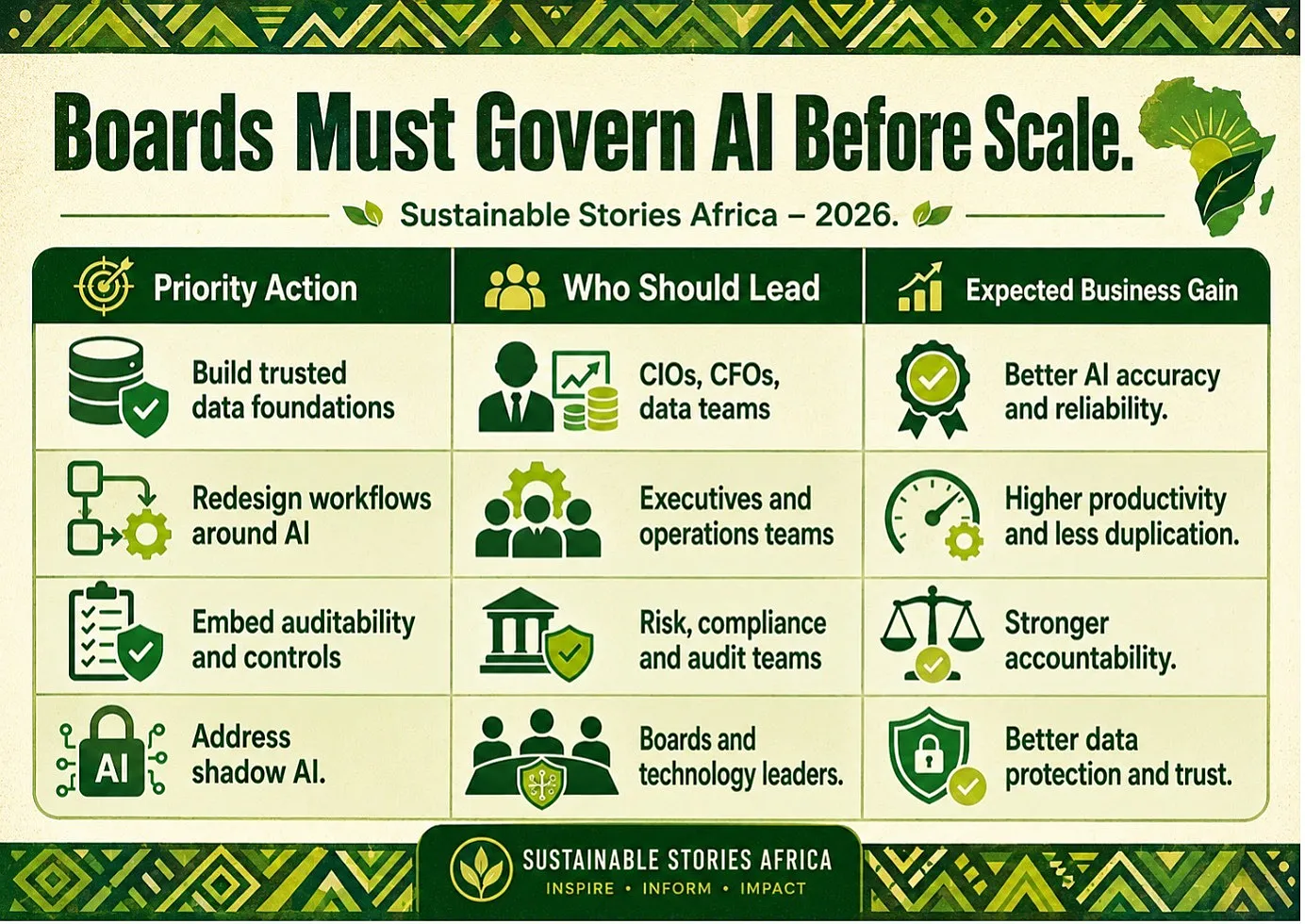
African firms should begin with practical steps: map critical data sources, identify high-risk workflows, define approved AI use cases, train teams on responsible use, and ensure outputs remain auditable.
Regulators and industry bodies also have a role to play by setting clear expectations for data protection, transparency and accountability.
The companies that move fastest will not simply be those that buy the most advanced tools. They will be those who redesign work around trust.
Path Forward – Build Trust Before Scaling AI
AI adoption must now move from experimentation to accountable execution.
African businesses should prioritise trusted data, secure platforms, workforce readiness and board-level governance before scaling AI across sensitive functions.
The sustainability opportunity is clear. Governed AI can strengthen transparency, reduce operational waste, improve ESG reporting and support better decisions.
However, trust must be designed into the workflow from the start.
Culled From: Building trust-based AI-powered platforms for businesses | World Economic Forum