
The United Kingdom will introduce mandatory due diligence rules requiring businesses to prove that key commodities are not linked to illegal deforestation.
The proposals deliberately align with the European Union Deforestation Regulation (EUDR), reducing regulatory fragmentation and strengthening global supply chain accountability.
For African exporters, the reforms could unlock more resilient market access; however, only if traceability, transparency and governance improve quickly.
Britain Signals Tougher Rules For Global Forest Supply Chains
The United Kingdom has announced mandatory due diligence requirements for businesses trading forest-risk commodities, marking its most significant sustainability policy shift since Brexit.
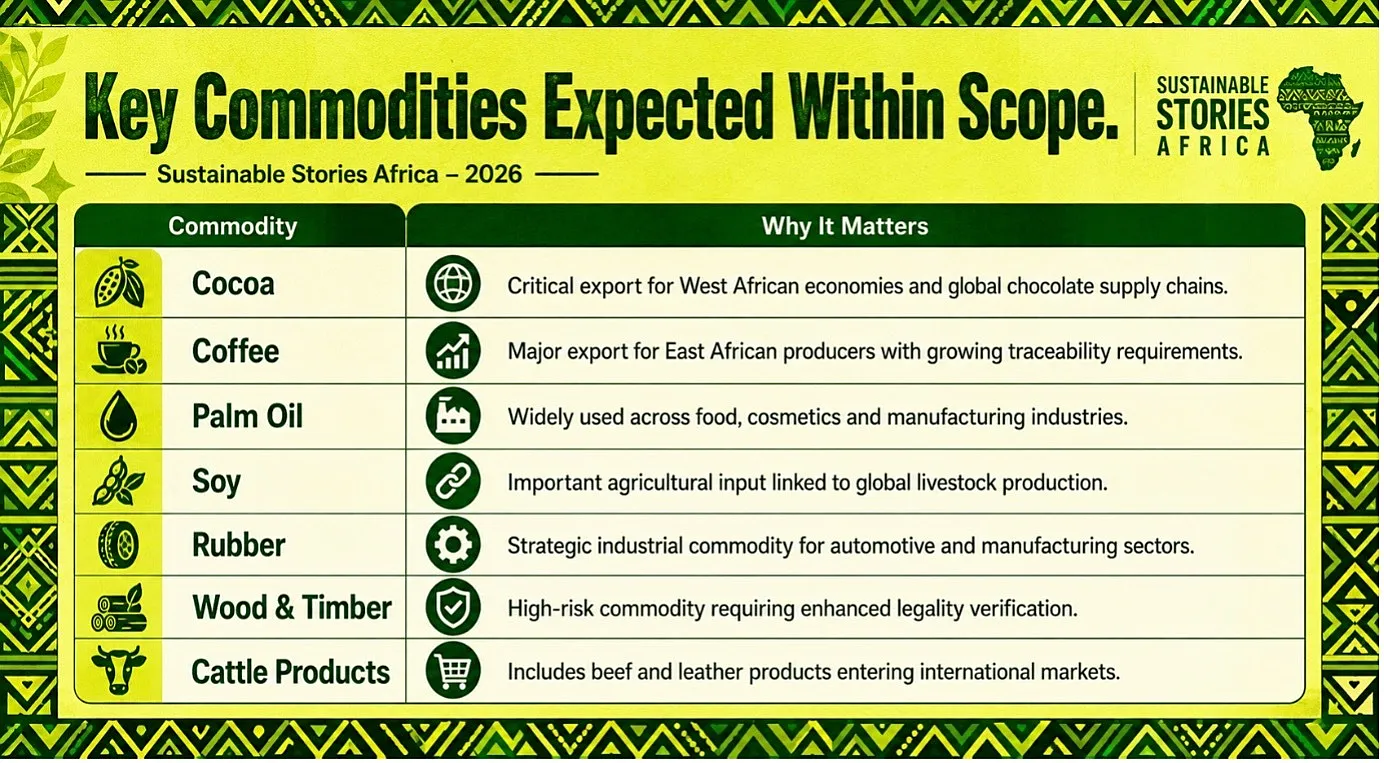
Unveiled during London Climate Action Week, the proposals target cocoa, coffee, palm oil, soy, cattle products, rubber, and wood, requiring businesses to prove their supply chains comply with local laws and are free from illegal deforestation.
Crucially, the UK has deliberately aligned its framework with the European Union Deforestation Regulation (EUDR), reducing the compliance burden for businesses operating across both markets.
The implications for Africa are direct. The continent supplies significant volumes of cocoa, coffee, timber, rubber, and palm products to the UK and EU markets.
As sustainability regulations grow increasingly interconnected, African exporters that invest early in traceability and supply chain governance stand to gain a competitive advantage; those that delay risk losing critical market access.
African Supply Chains Face Their Next Governance Test
The proposed UK framework builds upon powers contained within the Environment Act while strengthening existing timber regulations.
Government officials say voluntary corporate commitments have helped improve supply chain transparency but have not delivered sufficient protection for forests, biodiversity and climate resilience.
Mandatory regulation, they argue, is now necessary.
The consultation, expected later this year, will seek input from businesses, civil society organisations and international partners before secondary legislation is finalised.
The long-term ambition extends beyond preventing illegal deforestation towards creating genuinely deforestation-free supply chains.
For African economies, the implications are particularly significant.
- West Africa produces roughly two-thirds of the world's cocoa
- East Africa remains an important coffee exporter.
- Central and Southern Africa, timber, rubber and agricultural commodities form major sources of export earnings.
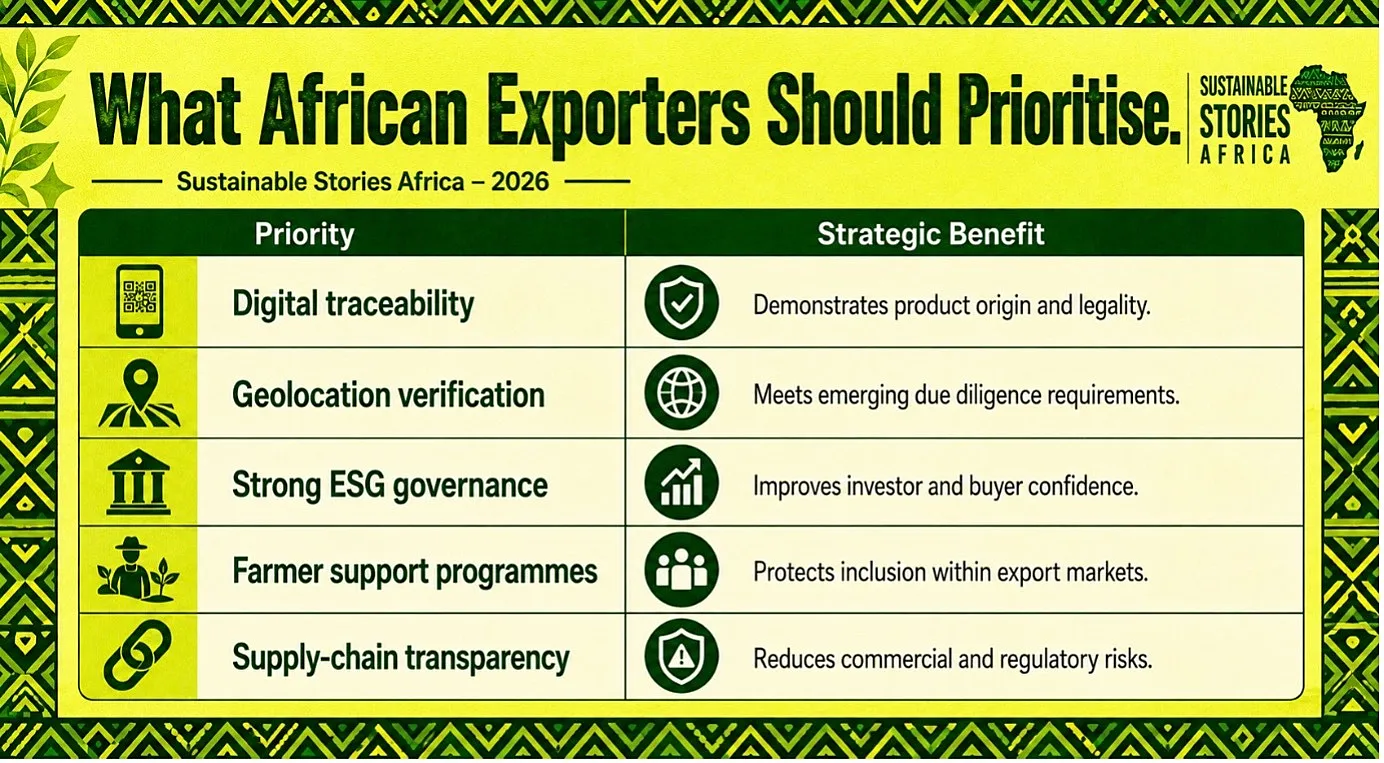
As buyers increasingly demand verified origin data, satellite mapping, geolocation records and digital traceability systems are becoming commercial necessities rather than sustainability ambitions.
Nature Minister Mary Creagh described the reforms as both an environmental and economic priority, arguing that eliminating products linked to illegal deforestation protects ecosystems while strengthening long-term resilience and prosperity.
Better Governance Can Become Africa's Competitive Advantage
Rather than viewing the regulations solely as another compliance burden, many African businesses may find an opportunity to reposition themselves within premium global markets.
- Supply chains supported by digital traceability, transparent governance and verified sourcing increasingly attract international investment, lower financing risk and strengthen long-term buyer relationships.
- Investors are also placing greater emphasis on environmental integrity when allocating capital, meaning companies with credible sustainability systems often enjoy improved commercial resilience.
The UK's decision to broadly align with the EUDR could simplify compliance for exporters serving both markets.
Instead of managing multiple regulatory systems, businesses may increasingly operate a single integrated approach to supply chain governance.
For smallholder farmers, however, success will depend upon meaningful support. Without investment in mapping technologies, farmer registration, digital record-keeping and verification infrastructure, smaller producers risk being excluded from premium international markets despite contributing responsibly to sustainable agriculture.
Compliance Must Become A Development Strategy
Governments, financial institutions, commodity associations and development partners now share responsibility.
Building traceability systems cannot remain the responsibility of exporters alone.
- National governments should strengthen land governance, digital agricultural records and forest monitoring.
- Financial institutions should expand green finance that enables producers to invest in compliance technologies.
- Development agencies can help smallholder farmers meet emerging international standards without undermining livelihoods.
As the UK consultation progresses, businesses that begin preparing now will likely face lower transition costs than those waiting for legislation to become mandatory.
Path Forward – Building Transparent Trade Through Shared Responsibility
Britain's proposed reforms demonstrate that sustainable trade is increasingly becoming a market expectation rather than a voluntary commitment.
Alignment with the EUDR signals growing convergence across international environmental regulation.
For African exporters, the priority is clear: invest in traceability, strengthen governance and support producers through the transition.
Those that embed transparency today will be better positioned to compete in tomorrow's sustainability-driven global economy.
Culled From: UK Plans Mandatory Deforestation Due Diligence Rules Aligned with EUDR