World Cup soccer fans are more likely than the general public to choose sustainable products and responsible brands, new GlobeScan research shows.
The findings arrive as the 2026 FIFA World Cup becomes a major commercial stage for sponsors, retailers and consumer companies.
For African markets, the signal is clear: sport can move sustainability from policy language into everyday choices, fan identity and brand loyalty.
Football Fans Are Buying Differently
The next major sustainability battleground may not begin in a boardroom, climate summit or regulatory filing.
It may begin in the crowded fan zone, the match-day shop, the supermarket aisle and the jersey queue.
New GlobeScan research shows that self-identified FIFA World Cup soccer fans are more likely than the general public to make sustainable consumer choices, including buying from responsible companies, choosing natural or organic products, and selecting reusable or refillable packaging.
The findings, published ahead of the 2026 FIFA World Cup, are based on a representative online survey of 31,960 people conducted in July and August 2025.
GlobeScan compared 11,042 self-identified World Cup fans with the global average to understand how football audiences behave as consumers.
The result is a powerful commercial signal. World Cup fans are not only watching the game.
They may already be more willing to reward brands that make sustainability visible, convenient and credible.
The Numbers Behind Fan Behaviour
World Cup fans are among the most sustainability-conscious consumers globally.
Approximately 47% buy natural or organic products, compared with 38% globally, while 46% actively seek out environmentally and socially responsible brands, versus 35% of the general public.
Almost the same share, 47%, choose returnable, reusable or refillable packaging most or all of the time.
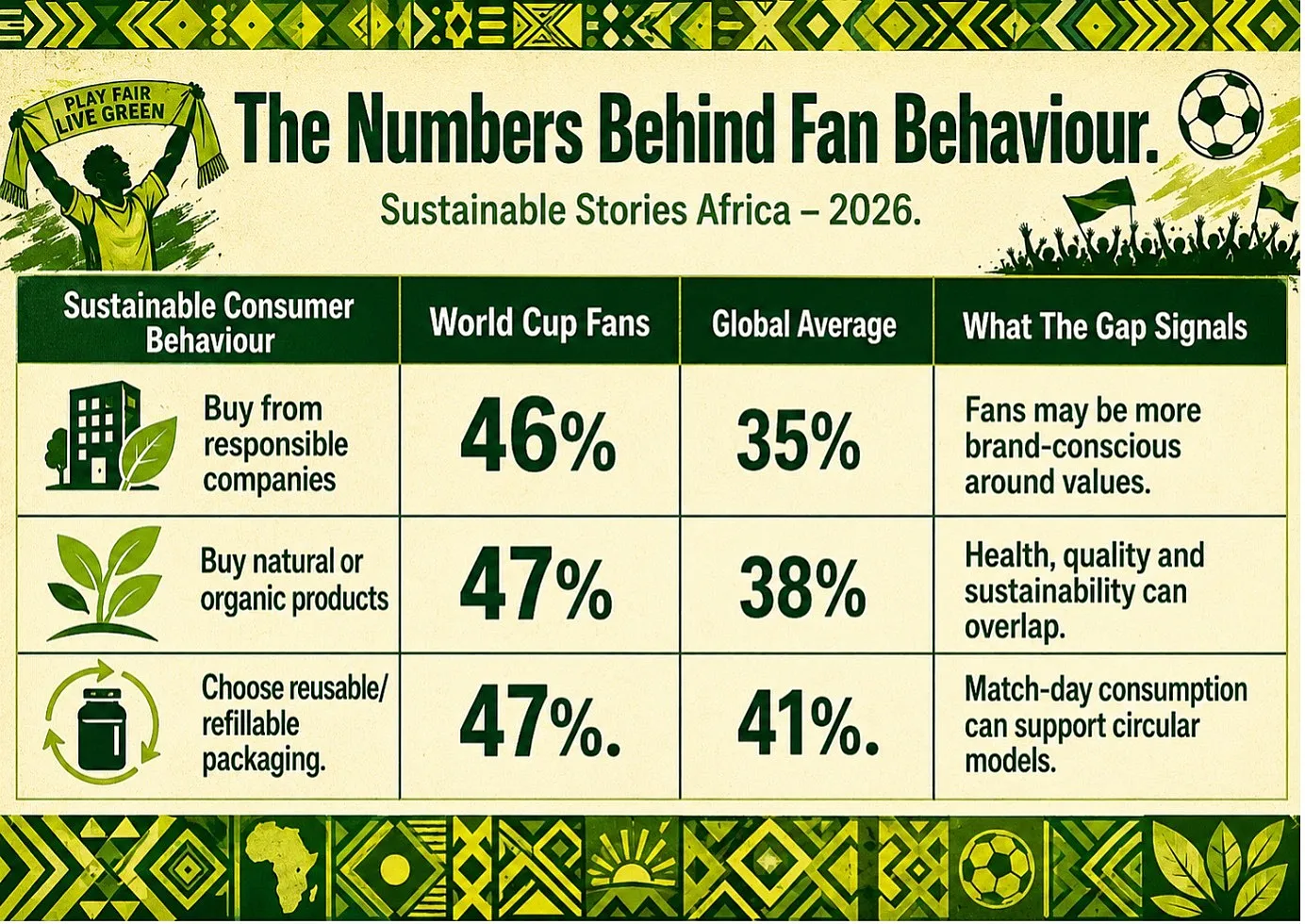
The gap is sharpest in the United States, host for the 2026 World Cup. American soccer fans are nearly twice as likely as the national average to buy from responsible companies, 61% versus 32%, and significantly over-index on organic products and reusable packaging.
For brands, this reframes sports sponsorship entirely. The World Cup is not simply a global media platform; it is a cultural moment where identity, emotion, consumption and community converge.
In African markets, that convergence runs deep. From Lagos to Nairobi, fans consume the rituals around the match, food, drinks, fashion, mobile data and community gatherings.
GlobeScan's data suggest that sustainable choices that play naturally inside those rituals can find genuinely receptive audiences.
A Better Fan Economy Is Possible
The opportunity is not to preach sustainability to football fans; it is to make better choices easier.
A reusable cup at a viewing centre, a refill station at a stadium, a responsibly sourced jersey or a low-waste food vendor are small decisions that show that millions of fans become market signals.
For consumer goods companies, breweries, telcos, retailers and event organisers, the message is direct: sustainability cannot live only in annual reports. It must appear where customers celebrate and spend.
The gains are real: deeper trust, reduced waste and stronger youth appeal. But the risk is equally clear.
Brands using sustainability only as tournament-season marketing may damage the trust they seek to build.
Green claims without credible sourcing, fair labour or measurable waste reduction will not survive fan scrutiny.
Brands Must Move Beyond Messaging
The lesson for business is clear: the World Cup should not be treated as a short-term advertising rush.
It should be treated as a live test of whether brands can turn sustainability into an everyday customer experience.
Sponsors, retailers and venue operators should design fan journeys that make sustainable choices visible, affordable and rewarding.
That means refillable packaging, responsible merchandise, waste-sorting systems, lower-impact logistics, and clear sustainability information that avoids vague claims.
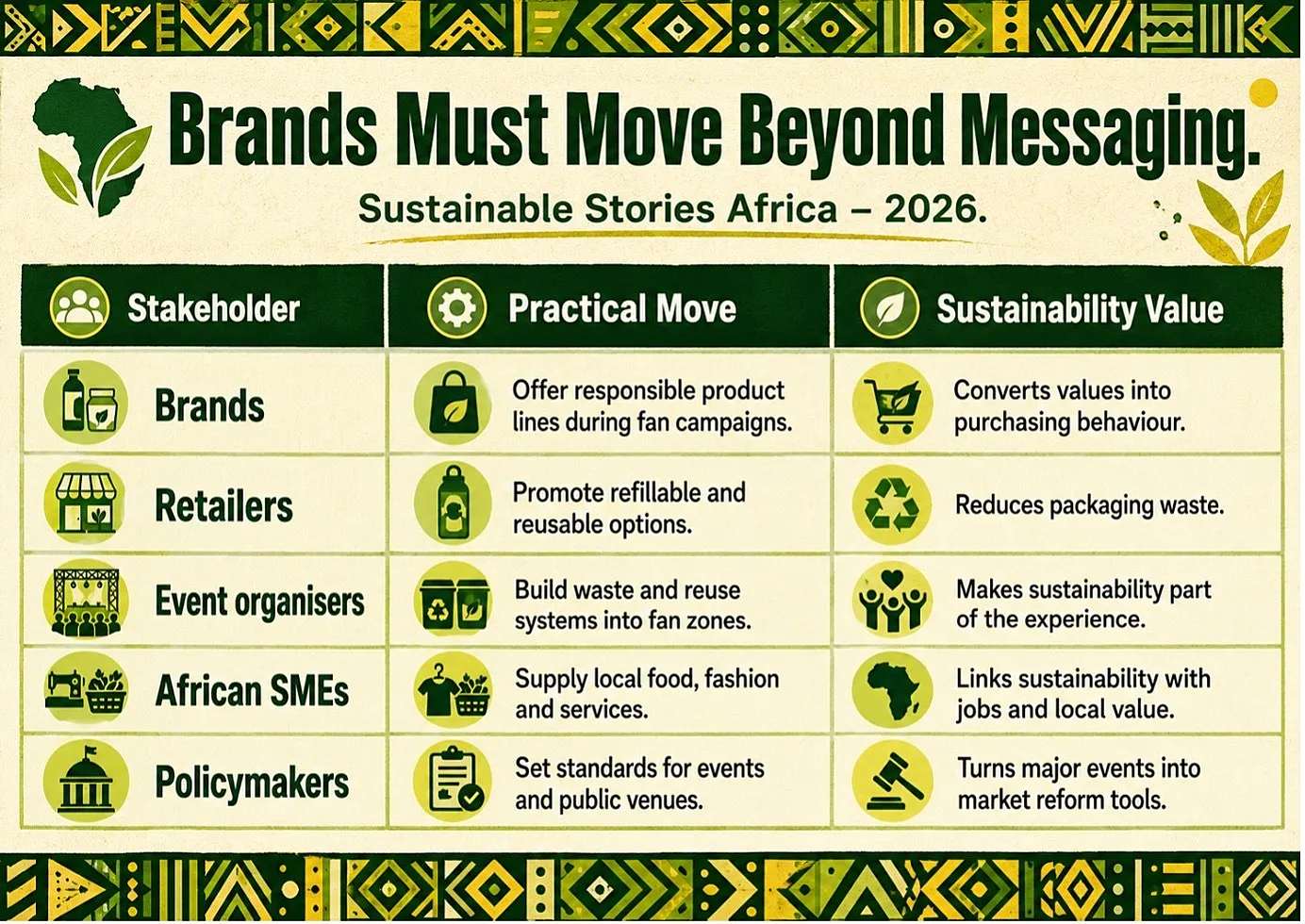
For Africa, this is also an enterprise opportunity. Local businesses can provide sustainable packaging, recycled materials, low-waste catering, clean-energy viewing centres, digital fan engagement and locally made merchandise.
The World Cup may be global, but the consumption ecosystem around it is deeply local.
The companies that win will be those that understand the fan not just as a spectator, but as a citizen, customer and community member.
Path Forward – Make Sustainable Choices Matchday Normal
The priority now is execution. Brands should use football’s cultural power to make sustainable products easier to find, trust and afford.
For African markets, the World Cup can support ESG goals by connecting responsible consumption to local enterprise, youth culture, circular packaging and credible brand behaviour. Sustainability will scale faster when it feels normal, social and part of the celebration.
Culled From: World Cup Soccer Fans Are More Likely than the General Public to Choose More Sustainable Products and Brands