The world’s largest sovereign wealth fund is sharpening its expectations of companies on climate, nature, governance, human rights and long-term value creation.
For African firms seeking global capital, these expectations are no longer distant investor language. They are becoming market signals.
The message is clear: companies that understand sustainability risks may protect value better than those treating ESG as compliance theatre.
A Giant Investor Sets The Bar
When a single investor owns shares in thousands of companies across global markets, its expectations become difficult to ignore.
Norges Bank Investment Management, manager of Norway’s Government Pension Fund Global, has become one of the most influential voices in corporate stewardship. With assets built from Norway’s oil and gas revenues and invested for future generations, the fund’s mandate is simple but demanding: generate long-term returns with acceptable risk.
That mission now places sustainability, governance and market integrity at the centre of how companies are assessed.
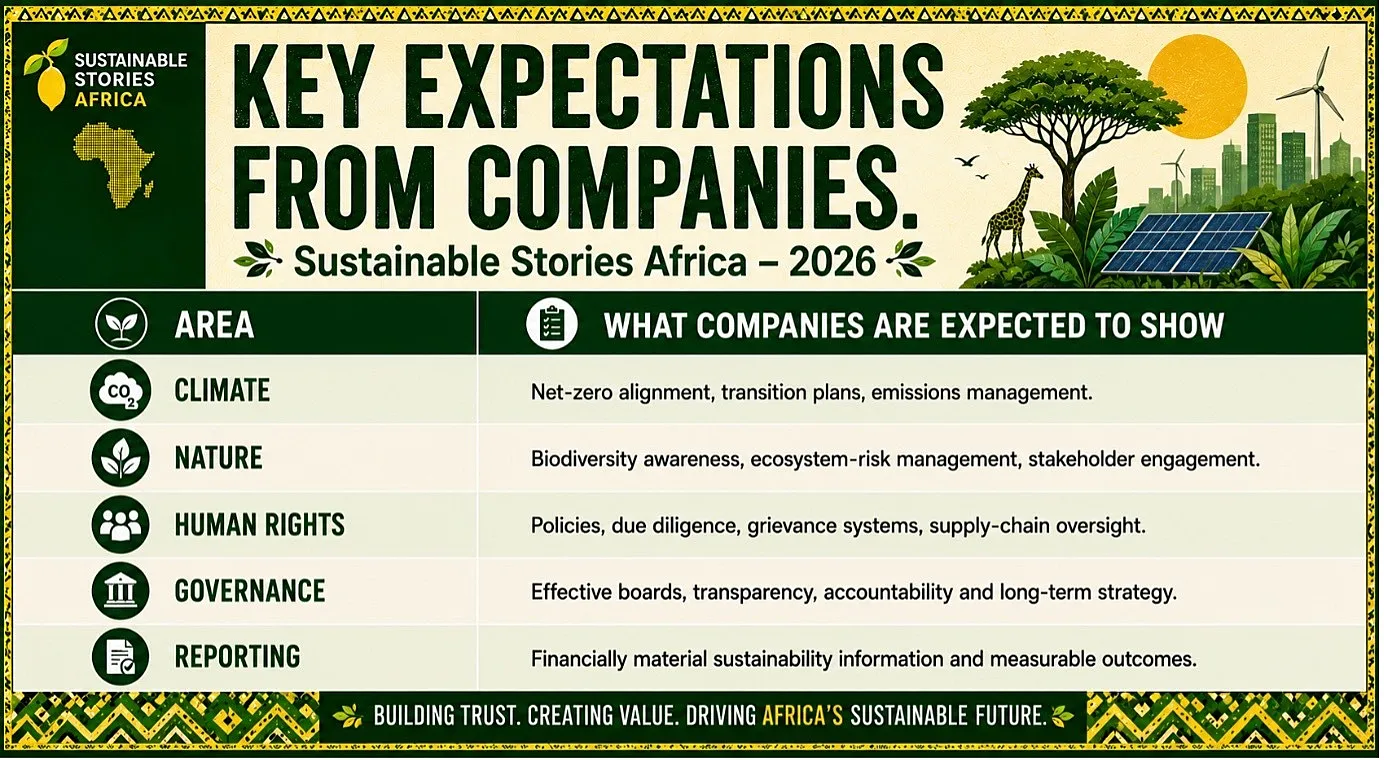
The fund expects boards to understand the environmental and social consequences of company operations, report financially material information to investors, and manage risks that could affect long-term value. In practical terms, this means climate transition plans, respect for human rights, stronger governance, nature-risk awareness, credible reporting and responsible corporate conduct.
For African companies, the signal is important. Access to long-term capital will increasingly depend not only on growth prospects, but also on whether companies can prove they are resilient, transparent and responsibly governed.
Why The Fund’s Voice Matters
NBIM is not a regulator. It does not pass laws. However, its influence can feel regulatory because of its size, voting power and public expectations.
The fund invests across equities, fixed income, real estate and renewable energy infrastructure.
At the end of 2025, equities accounted for more than 70% of its portfolio, giving it ownership exposure to about 7,200 companies.
That makes its engagement agenda relevant to boardrooms from New York and London to Lagos, Johannesburg, Nairobi and Cairo.
Its expectations cover several major areas. On climate, the fund wants companies to align with a net-zero pathway by 2050, supported by credible targets and transition plans.
- Concerning nature, it expects companies to understand dependencies on ecosystems and manage biodiversity-related risks.
- On people, it expects respect for human rights, children’s rights, human capital and consumer-related risks.
Also,
- For a listed African manufacturer, this may mean explaining energy sourcing, supply chain labour practices and water use.
- For a bank, it could mean assessing the climate and human-rights exposure of its lending portfolio.
- For a mining firm, it may involve community consultation, land-use impact and rehabilitation plans.
Better Companies Can Attract Better Capital
The upside is significant.
Companies that respond early can strengthen investor confidence, lower perceived risk and improve access to patient capital.
They can also prepare for stricter disclosure regimes, shifting consumer expectations and supply-chain demands from global partners.
This is especially relevant for Africa, where businesses are trying to scale in markets shaped by infrastructure gaps, climate vulnerability, currency pressure and rising governance scrutiny.
A credible sustainability strategy can no longer sit in a glossy report alone. It must show up in board minutes, capital allocation, procurement policies, executive incentives and risk systems.
For citizens, the impact is more human.
Better corporate conduct can mean safer workplaces, cleaner communities, stronger supply chains and fewer projects that damage livelihoods.
- For investors, it means fewer hidden liabilities.
- For governments, it supports more credible market development.
African Boards Need To Move Early
African companies should treat NBIM’s expectations as a preview of where global capital markets are heading.
Boards need to ask tougher questions.
- Are climate risks integrated into strategy?
- Are human-rights risks mapped across suppliers and communities?
- Are biodiversity impacts understood?
- Is sustainability reporting decision-useful, or merely promotional?
- Can management explain how ESG risks affect cash flows, reputation and long-term value?
Regulators and stock exchanges also have a role to play. Stronger sustainability disclosure standards, board training, assurance frameworks and stewardship codes can help African markets attract responsible capital without turning ESG into a box-ticking exercise.
The companies that move first will not only meet investor expectations. They may define the next standard for African corporate competitiveness.
Path Forward – Build Trust Before Capital Demands It
The world’s largest sovereign wealth fund is telling companies that long-term value depends on credible governance, climate resilience, awareness of nature and respect for people.
African firms should respond now by strengthening board oversight, improving reporting quality and embedding sustainability into strategy. The opportunity is not just compliance.
It is building companies that global investors can trust, communities can live with, and markets can reward.
Culled From: What the World’s Largest Sovereign Wealth Fund Expects From Companies