
UNECA says youth-led enterprises must sit at the centre of Africa’s value chain transformation.
The call comes as AfCFTA implementation shifts from trade policy to job creation and industrial delivery.
For young entrepreneurs, the opportunity is clear: access regional markets, scale production and move from survival businesses to growth engines.
Africa’s Youth Hold the Value Chain Key
Africa’s value chain revolution will not succeed unless youth-led enterprises are deliberately placed at its centre, the United Nations Economic Commission for Africa has warned, framing young entrepreneurs as both the continent’s biggest opportunity and one of its most urgent policy tests.
The message was delivered during a pre-Africa Development Impact Forum webinar on “Unlocking Regional Value Chains: Empowering Youth-Led Enterprises in Africa to Thrive Under AfCFTA.”
The session brought together policymakers, private-sector actors, youth organisations, entrepreneurs and development partners to examine how the African Continental Free Trade Area can become a practical engine for youth entrepreneurship, industrialisation and job creation.
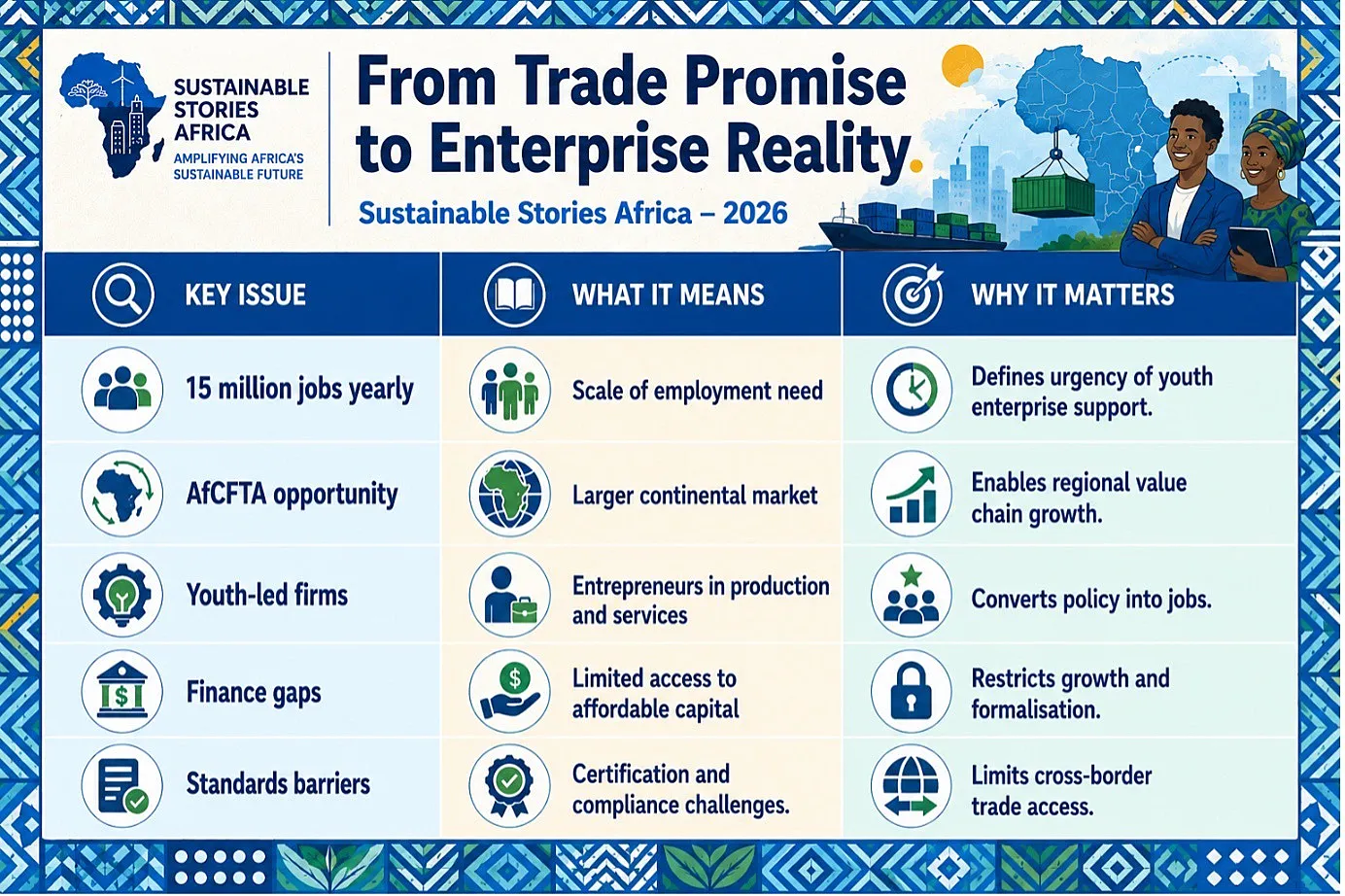
At the heart of the conversation was a simple reality: Africa must create about 15 million jobs every year to harness its demographic dividend.
Without youth-led firms in manufacturing, agribusiness, logistics, digital trade and services, regional value chains risk becoming another policy promise that bypasses the people meant to benefit most.
From Trade Promise to Enterprise Reality
The AfCFTA gives Africa a historic opening to move beyond fragmented markets and commodity dependence.
However, market access alone does not build competitive firms. Young entrepreneurs still face weak finance, limited production capacity, poor infrastructure, costly logistics, standards barriers and information gaps.
- For a young food processor in Lusaka, the opportunity may be a regional supermarket supply chain.
- For a digital logistics founder in Lagos, it may be cross-border delivery.
- For a textile entrepreneur in Addis Ababa, it may be access to buyers across the continent.
However, without affordable credit, certification support, reliable power and trade facilitation, those opportunities can remain out of reach.
UNECA officials stressed that the Africa Development Impact Forum is designed to focus on implementation, measurable results and scalable development solutions.
That shift matters because Africa’s youth challenge is not only about employment numbers.
It is about enterprise quality: whether young people can build firms that process raw materials, add value locally and compete across borders.
Youth Enterprise Can Transform Markets
If Africa gets this right, youth-led enterprises could become the connective tissue of the continent’s industrial future.
They can turn agricultural produce into packaged food, minerals into inputs, textiles into brands, and digital tools into market infrastructure.
The benefits would be greater business growth. Stronger youth enterprises can create jobs, raise household incomes, reduce irregular migration pressures and deepen local manufacturing.
They can also help women and informal entrepreneurs move into more productive, visible and bankable sectors.
However, the risk of inaction is serious. If young people remain trapped in low-margin survival businesses, Africa’s demographic advantage could become a source of frustration rather than transformation.
The AfCFTA would still exist on paper; however, its gains would be captured by firms already strong enough to compete.
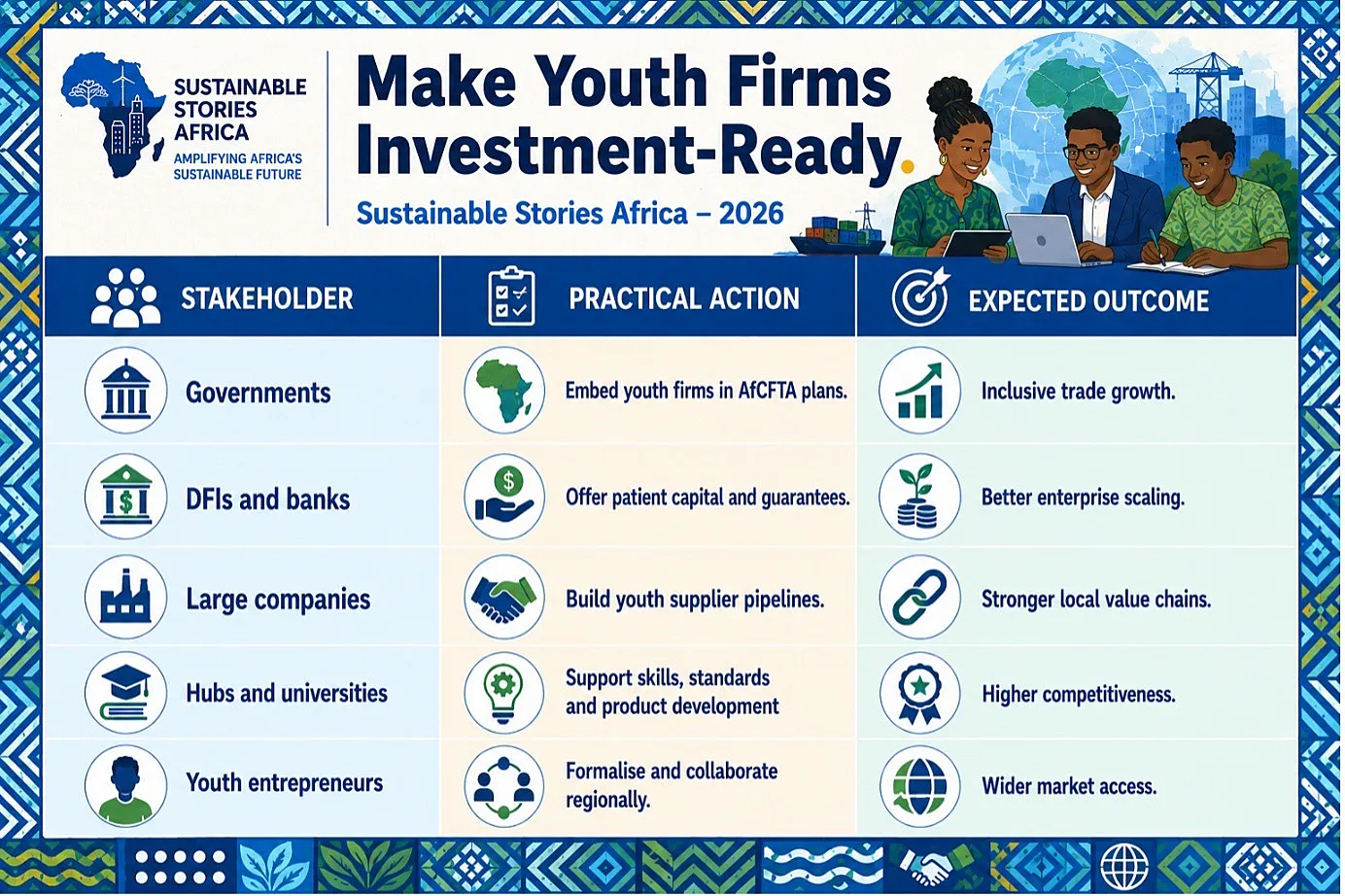
Make Youth Firms Investment-Ready
The next step is to move from advocacy to execution.
- Governments should integrate youth-led enterprises into national AfCFTA strategies, procurement systems, industrial parks and export-readiness programmes.
- Development finance institutions should design instruments that match the realities of young firms: smaller ticket sizes, patient capital, guarantees and technical support.
- Private companies also have a role. Large manufacturers, retailers and logistics platforms can create supplier-development programmes that bring young businesses into regional value chains.
- Universities and innovation hubs can support product development, standards compliance and market intelligence.
For youth entrepreneurs, the call is equally direct: organise, formalise, build partnerships and target regional opportunities.
The market is opening; however, readiness will determine who benefits.
Path Forward – Put Young Firms First
Africa’s value chain revolution must be built around young entrepreneurs, not added to them later.
That means finance, standards, infrastructure and market access must be designed for youth-led firms from the beginning.
The promise is practical: stronger enterprises, deeper regional trade, more jobs and a more resilient AfCFTA.
If Africa wants transformation that reaches households, youth enterprise is where delivery must start.