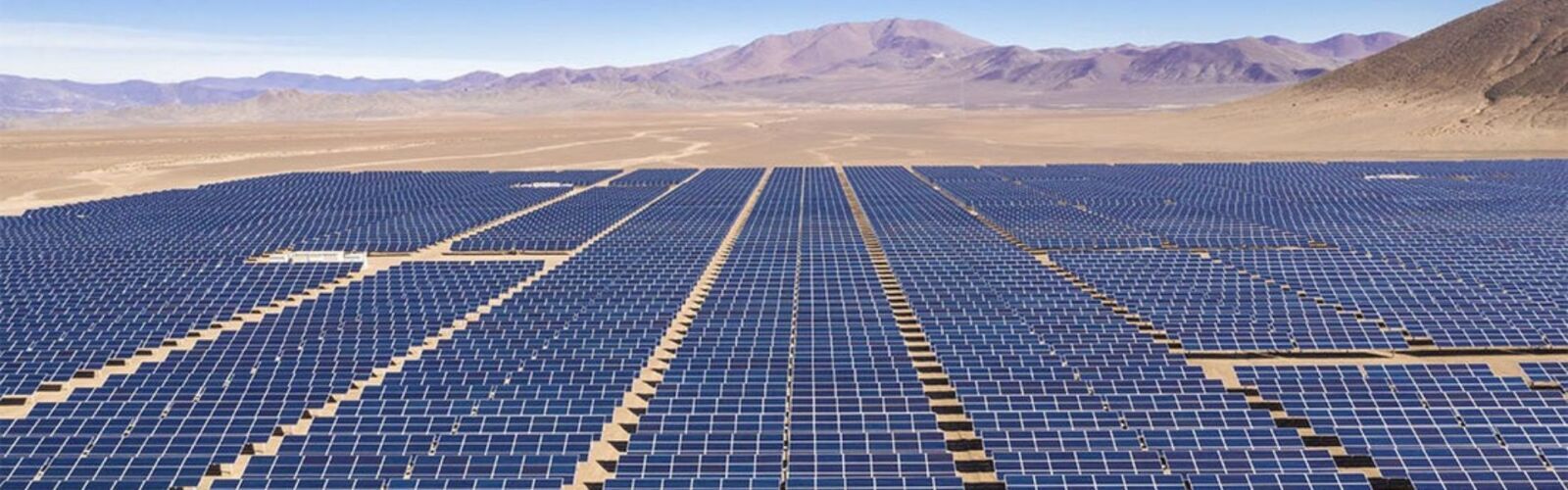
A new $176 million blended-finance platform has launched to back distributed renewable energy companies across sub-Saharan Africa.
The vehicle, Zafiri, is designed to unlock long-term equity for mini-grids, solar home systems, productive-use power and clean cooking.
For communities still waiting for reliable electricity, the promise is practical: lights for homes, power for businesses, safer cooking and stronger local economies.
Patient Capital Enters Africa’s Energy Race
Distributed renewable energy in Africa has received a $176 million boost after the commercial launch of Zafiri, a blended permanent-capital platform created to accelerate electricity access through private-sector investment.
Announced at the Africa Energy Forum in Cape Town, Zafiri will channel long-term equity into companies delivering mini-grids, solar home systems, productive-use energy solutions and clean cooking services across sub-Saharan Africa.
The platform is managed by Inspired Evolution and backed by a coalition that includes IFC, the African Development Bank Group, the Sustainable Energy Fund for Africa, The Rockefeller Foundation, TDB Group, Nordic Development Fund, MacArthur Foundation and FirstRand.
The timing is critical. Nearly 600 million people in Africa still live without electricity, limiting access to education, healthcare, enterprise and digital inclusion. Zafiri enters the market as part of the wider Mission 300 push to connect 300 million people in sub-Saharan Africa to electricity by 2030.
Why Distributed Energy Now Matters
For millions of African households and small businesses, the grid is not simply unreliable; in many places, it does not exist.
- Rural clinics need cold storage for vaccines.
- Tailors need steady power.
- Farmers need irrigation, milling and refrigeration to move from subsistence to income.
Distributed renewable energy is becoming the practical answer. Unlike large power plants that depend on transmission expansion, distributed systems can be built closer to users, scaled in phases and adapted to local demand, serving homes, schools, clinics and small manufacturers that cannot wait years for grid extensions.
However, many distributed energy companies do not fail for lack of demand. They struggle to acquire patient equity before attracting debt or expanding into difficult markets.
IFC Vice President Ethiopis Tafara described the Zafiri launch as mobilising "equity at scale" for this critical financing gap.
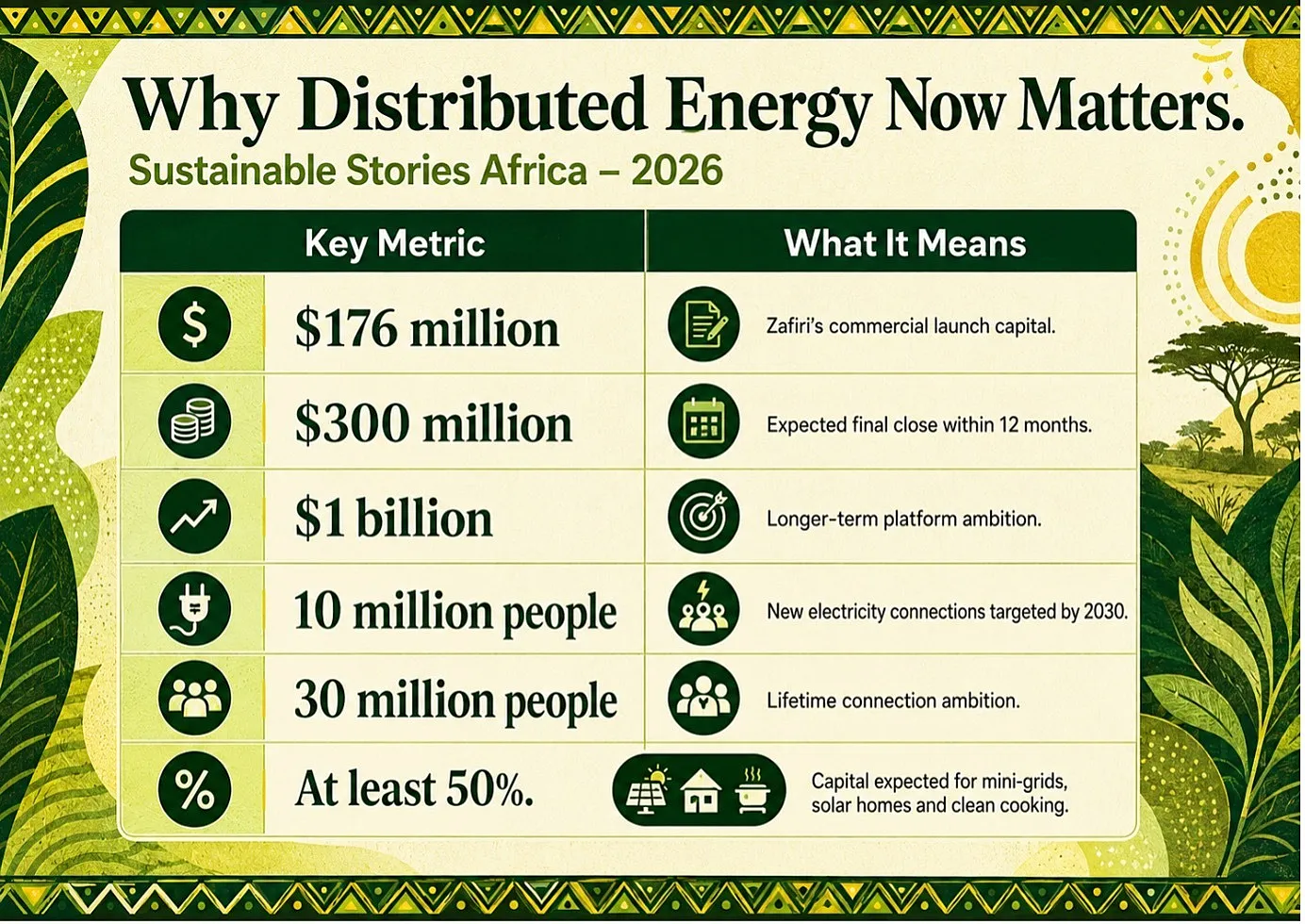
The African Development Bank reinforces the urgency: mini-grids and standalone solar systems are expected to deliver at least half of all new electricity connections across Africa by 2030.
What Communities And Markets Could Gain
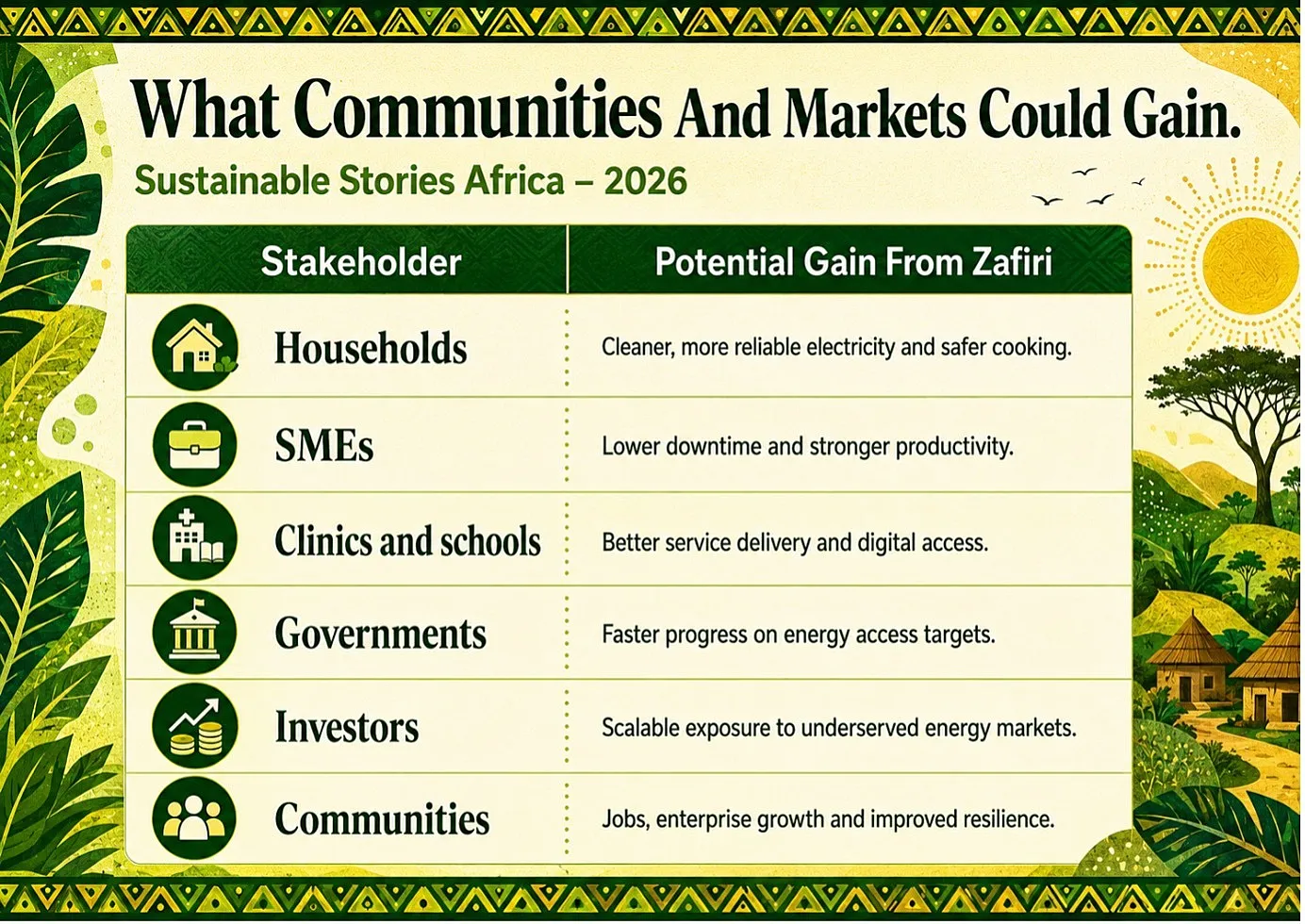
If Zafiri succeeds, the effect will be measured in more than megawatts. It could mean longer business hours for market traders, better storage for medicines, more reliable digital learning, cleaner cooking options and new jobs in installation, maintenance and customer service.
- For investors, the platform also helps test whether blended finance can move distributed energy from a fragmented development story into a scalable infrastructure market.
- For governments, it offers a way to complement national grids without waiting for every transmission constraint to be solved first.
The real value is productive power. Electricity access becomes more transformative when it supports income-generating activity: irrigation pumps, cold rooms, grain mills, welding shops, telecom towers and small factories.
That is how energy becomes more than a household service. It becomes a local economic engine.
Capital Must Meet Local Delivery
Zafiri's $176 million launch is significant, but capital alone will not close Africa's energy access gap.
- Governments must strengthen energy-access planning, improve mini-grid licensing, support fair cost-reflective tariffs and reduce barriers for companies operating in rural and peri-urban markets.
- Development finance institutions must stay focused on de-risking early-stage markets, rather than funding projects already easy to finance.
- Commercial investors must treat distributed energy as core infrastructure, not a niche development experiment.
For communities, inclusion is the priority. Energy projects must be designed around real demand, affordability, gender impact, local jobs and long-term service quality.
- A mini-grid that excludes productive users falls short.
- A solar system that lights a room but cannot support an enterprise solves only part of the problem.
Zafiri's launch sends a clear signal: Africa's energy future will be built not only through national grids, but through smaller, smarter, cleaner systems that reach people where they are.
Path Forward – Patient Capital Must Power Inclusive Growth
Zafiri’s promise now depends on disciplined deployment, strong local partnerships and transparent impact measurement. The platform must show that distributed energy can deliver access, jobs and climate-aligned growth at scale.
For African markets, the path forward is clear: combine patient capital, better regulation, and community-centred delivery so clean power becomes a foundation for enterprise, resilience and sustainable development.
Culled From: Distributed energy gets $176m boost