Zambia is attracting a new wave of energy investment as solar, grid and mining-linked projects gather momentum.
The shift matters now because drought, load-shedding and rising copper demand have exposed the cost of power insecurity.
For households, mines and small businesses, the promise is simple: more reliable electricity could turn crisis into inclusive growth.
Zambia’s Power Shortage Becomes Investment Magnet
Zambia's energy crisis is becoming an investment story.
After years of hydropower dependence, drought-driven shortages and pressure from a fast-expanding mining sector, the country is drawing fresh capital into solar generation, grid resilience and energy infrastructure, placing it among Southern Africa's most closely watched power markets.
Recent developments signal a broader market reset.
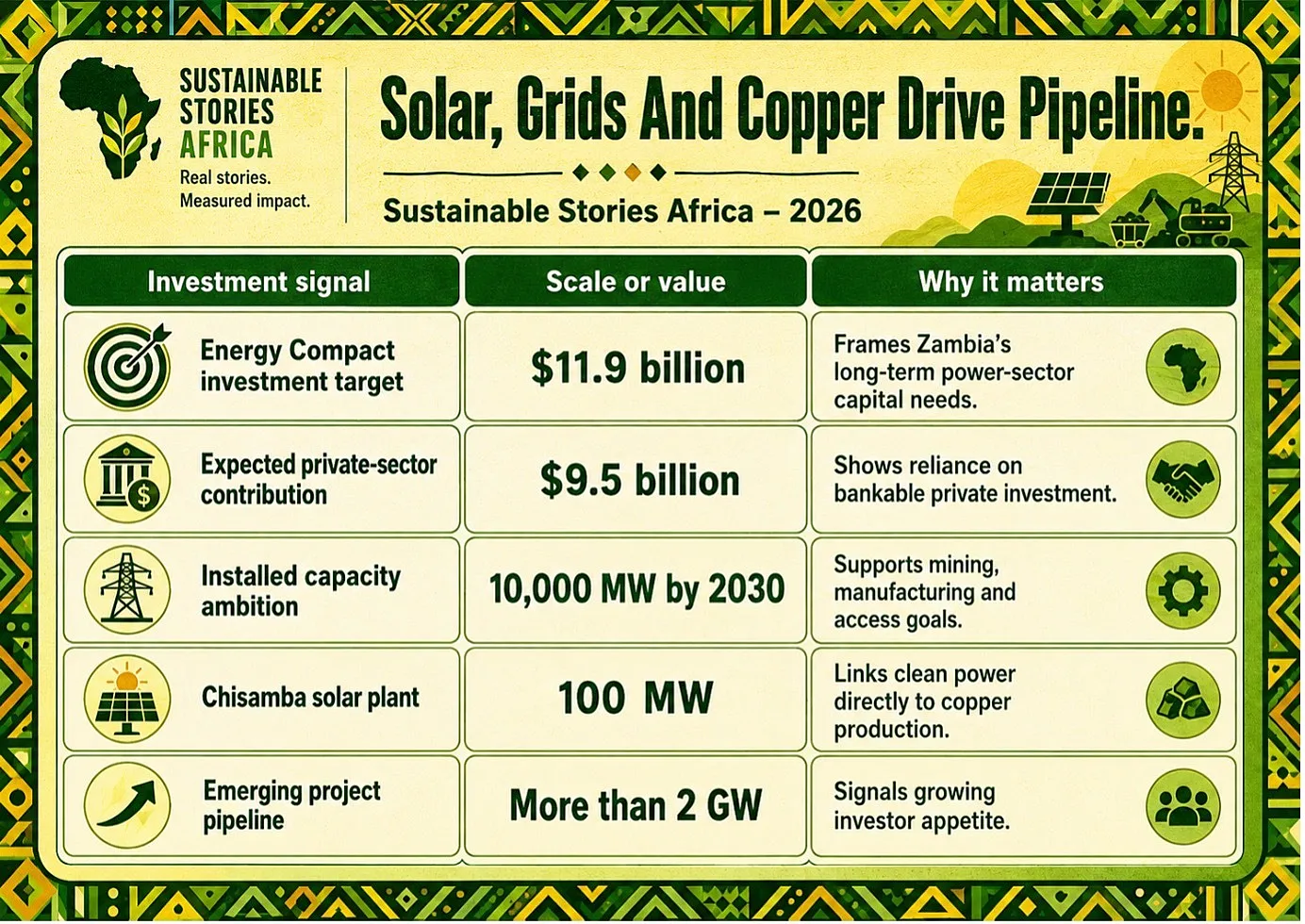
A proposed 500 MW solar project by South Korea's KS Eco Solutions, a 16 MW local solar plant and a $275 million Grid Resilience Programme, funded through debt-repurchase savings, have pushed the energy pipeline beyond 2 GW.
For a country where mines alone require at least 1.6 GW, this investment wave is not optional. It is central to economic survival.
The story is also deeply human. From Lusaka's cold rooms to Copperbelt mines and rural clinics, Zambia's energy transition is ultimately about livelihoods, industrial confidence and long-term resilience.
Solar, Grids, and Copper Drive Pipeline
Zambia's power challenge is structural. Long-term dependence on hydropower, compounded by recent droughts and electricity rationing, has pushed government, utilities and investors toward a more diversified energy mix.
The 100 MW Chisamba solar plant, launched to supply First Quantum Minerals, illustrates how mining demand is reshaping power investment.
The project reduces reliance on electricity imports from South Africa and Mozambique while establishing a new model: large industrial users securing dedicated clean power to protect production and relieve grid pressure.
Zambia's National Energy Compact sharpens the policy architecture, targeting $11.9 billion in total energy investment, including US$9.5 billion from the private sector, and 10,000 MW of installed capacity by 2030.
Underpinning this ambition is copper.
Zambia's plan to more than triple output to 3 million metric tonnes by 2031 means reliable power, transmission infrastructure and storage are not supporting elements; they are the foundation.
Reliable Power Could Rebuild Everyday Confidence
If Zambia gets this right, energy investment becomes a national competitiveness strategy.
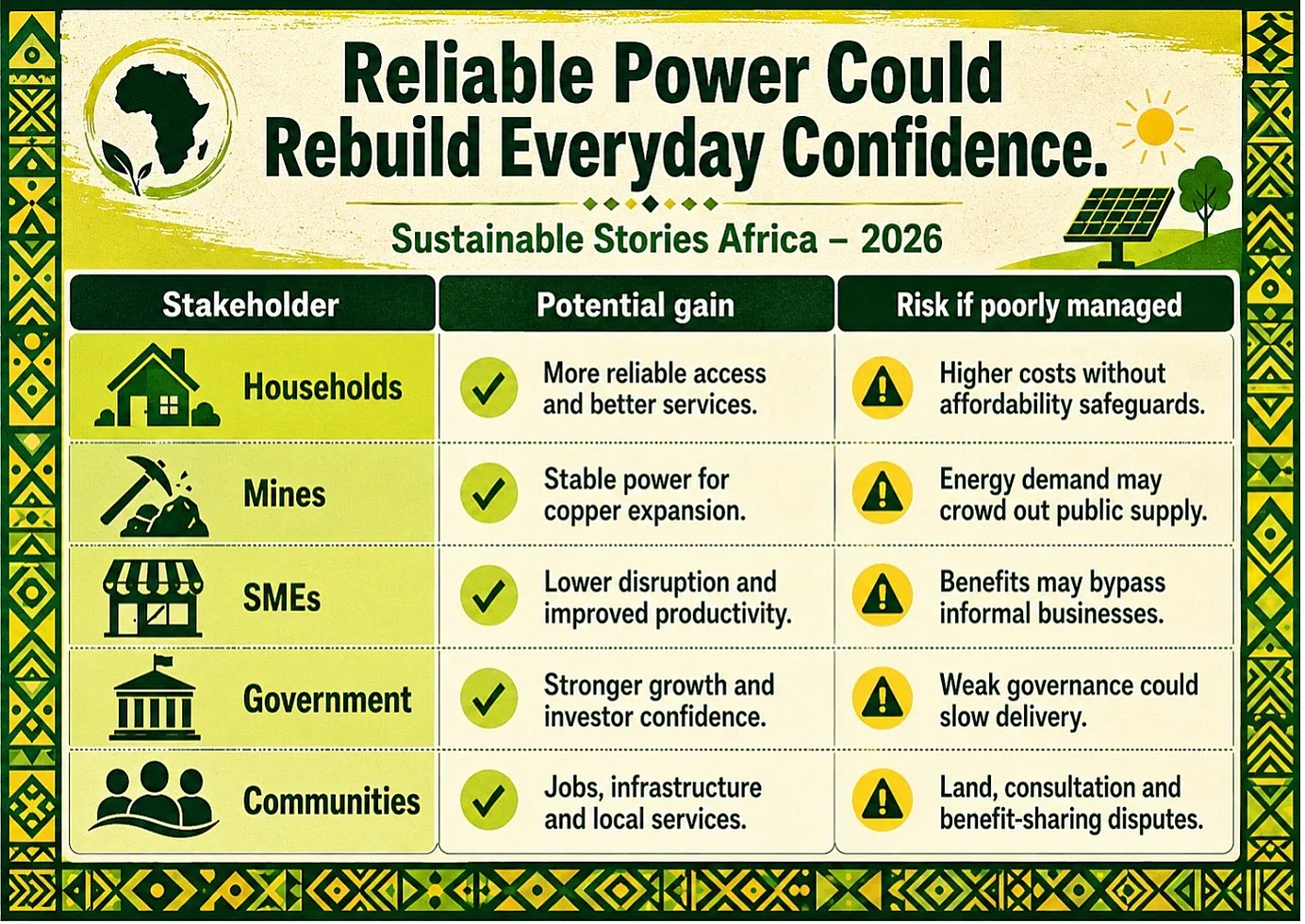
- For mining companies, reliable power means fewer production interruptions.
- For manufacturers, it reduces dependence on diesel
- For households and small businesses, it means longer operating hours, safer streets and broader access to digital and economic services.
The wider prize is diversification. Copper can finance growth, but electricity determines whether Zambia can process minerals locally, expand agribusiness, attract data centres and build manufacturing capacity.
Energy security is equally climate security; a balanced mix of solar, hydro, storage and regional power trade reduces dangerous exposure to drought shocks.
However, risks remain.
- If new projects serve only large industrial users, citizens may see investment without access.
- If tariffs rise without household protections, reform loses public trust.
- If grid upgrades lag behind generation, new solar capacity could sit constrained by weak transmission.
Reform Must Match Investment Speed
Zambia’s next task is to convert investor interest into delivered power.
That means faster permitting, transparent procurement, bankable power purchase agreements and stronger grid planning.
It also means making ZESCO financially healthier without turning affordability into a casualty of reform. Investors need predictable tariffs and payment discipline; citizens need fairness, access and protection from sudden cost shocks.
The government should also align energy investment with the Lobito Corridor and critical minerals strategy.
The recent decision to expand the use of a $491 million Millennium Challenge Corporation grant for critical-minerals infrastructure shows how energy, transport and mining are becoming part of a single economic system.
If Zambia links mines, roads, rail, power and communities well, the energy transition can support national development rather than extractive growth alone.
Development finance institutions, commercial banks and private developers should prioritise projects that deliver both electricity and social value.
The best projects will not only add megawatts. They will create local jobs, strengthen skills, reduce emissions, protect communities and expand productive use of power.
Path Forward – Turn Investment Into Inclusive Energy Resilience
Zambia’s energy investment wave must now move from announcements to execution.
The priority is bankable clean power, stronger transmission, fair tariffs, reliable offtake and community-centred development.
If reforms hold, Zambia can turn drought vulnerability into energy resilience. The country’s opportunity is to power copper growth while expanding access, supporting SMEs and building a cleaner, more inclusive industrial future.
Culled From: Zambia attracts a wave of energy investment