Zimbabwe is moving gender-responsive pedagogy from policy language into classroom practice, placing teachers at the centre of inclusive education reform.
The Brookings analysis shows why this matters now: laws and policies alone cannot change learning outcomes if classroom interaction still reinforces exclusion.
For girls, boys, teachers, and communities, the shift could determine whether schools become engines of opportunity or places where inequality quietly continues.
Policy Ambition Meets Classroom Reality
Zimbabwe has built a credible policy foundation for inclusive education, through constitutional commitments, the amended Education Act of 2020 and the National Gender Policy of 2025.
The real test now is whether that framework reaches the classroom.
A Brookings analysis by Faith Nkala makes the case for gender-responsive pedagogy as the critical bridge.
GRP asks teachers to recognise ways in which girls and boys experience learning differently, how they adjust to language, task allocation, participation methods and classroom management accordingly.
The approach matters because educational inequality is often shaped by subtle daily signals, who gets called on, who is trusted with leadership, who is encouraged in science and who quietly disappears from learning.
Strong policy frameworks cannot do that work alone. Classroom behaviour must follow.
Teachers Sit At Reform’s Centre
Across African education systems, the teacher remains the most critical bridge between national policy and lived experience.
In Zimbabwe, gendered barriers arrive before children even reach the classroom, girls pushed out by early marriage, care burdens or poverty; boys disengaged by pressure to earn income.
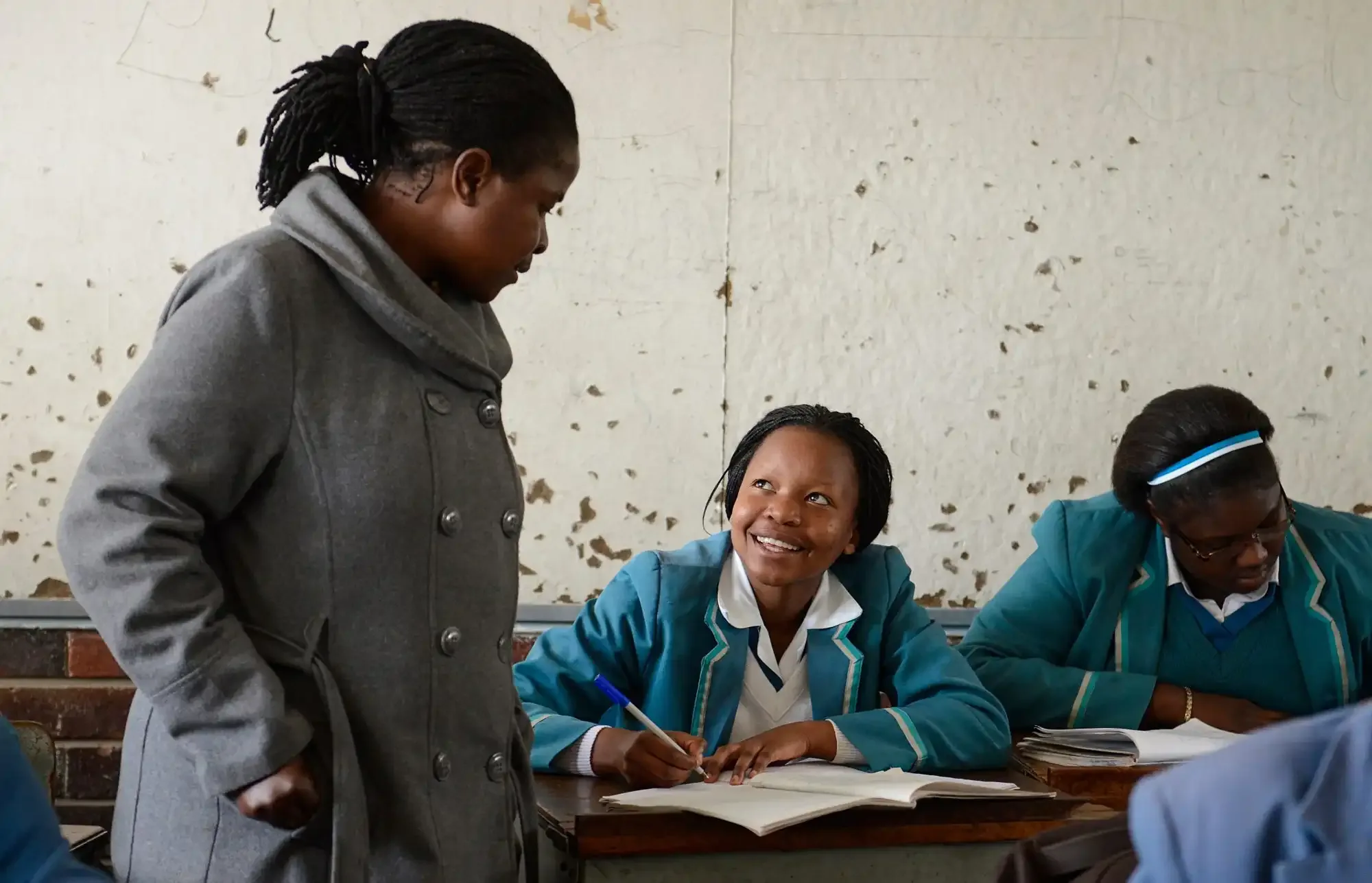
Gender-responsive pedagogy addresses this directly. Trained teachers use gender-neutral language, rotate responsibilities fairly, challenge stereotypes in lesson examples and create safer spaces for participation across technical and literacy subjects alike.
Brookings' fieldwork covers 189 teachers, 18 school leaders, 29 parent groups and six pupil groups across nine districts, points to one clear finding: structured, continuous training makes the difference.
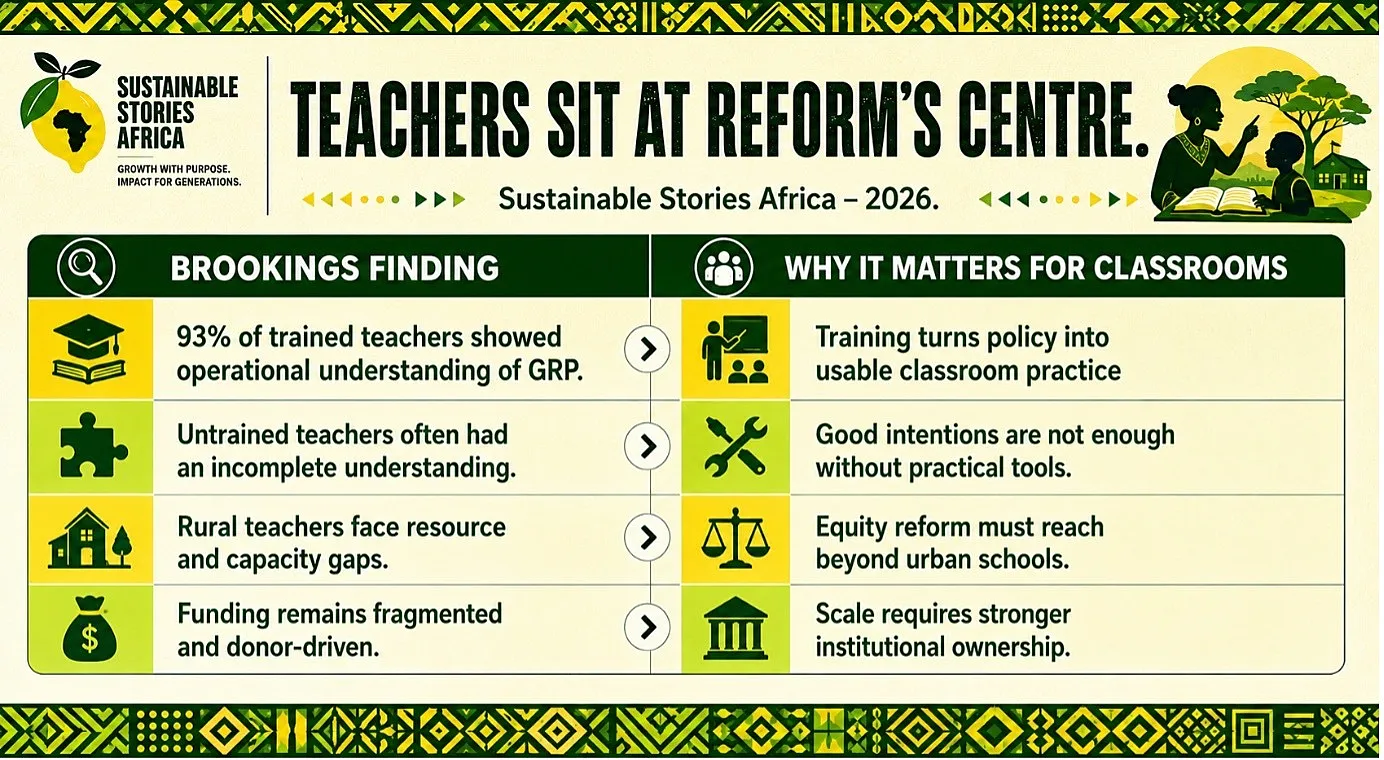
The human stakes are equally clear. One teacher's choices can determine whether a girl imagines herself as an engineer or whether a child facing poverty still feels seen.
Better Teaching Can Shift Futures
The case for gender-responsive pedagogy in Zimbabwe extends well beyond equity.
Properly scaled, GRP can strengthen learning outcomes, reduce dropout risks, build confidence, deepen social inclusion and widen the pipeline of young people ready for higher education and employment.
Its strongest argument is that it is not a "girls only" intervention; it is a quality education strategy that reshapes how teachers understand learners, distribute classroom attention and challenge stereotypes that constrain both girls and boys.
Critically, trained teachers move beyond policy language into practical action.
A gender policy can declare that every child belongs; a trained teacher makes that belonging visible in the lesson itself.
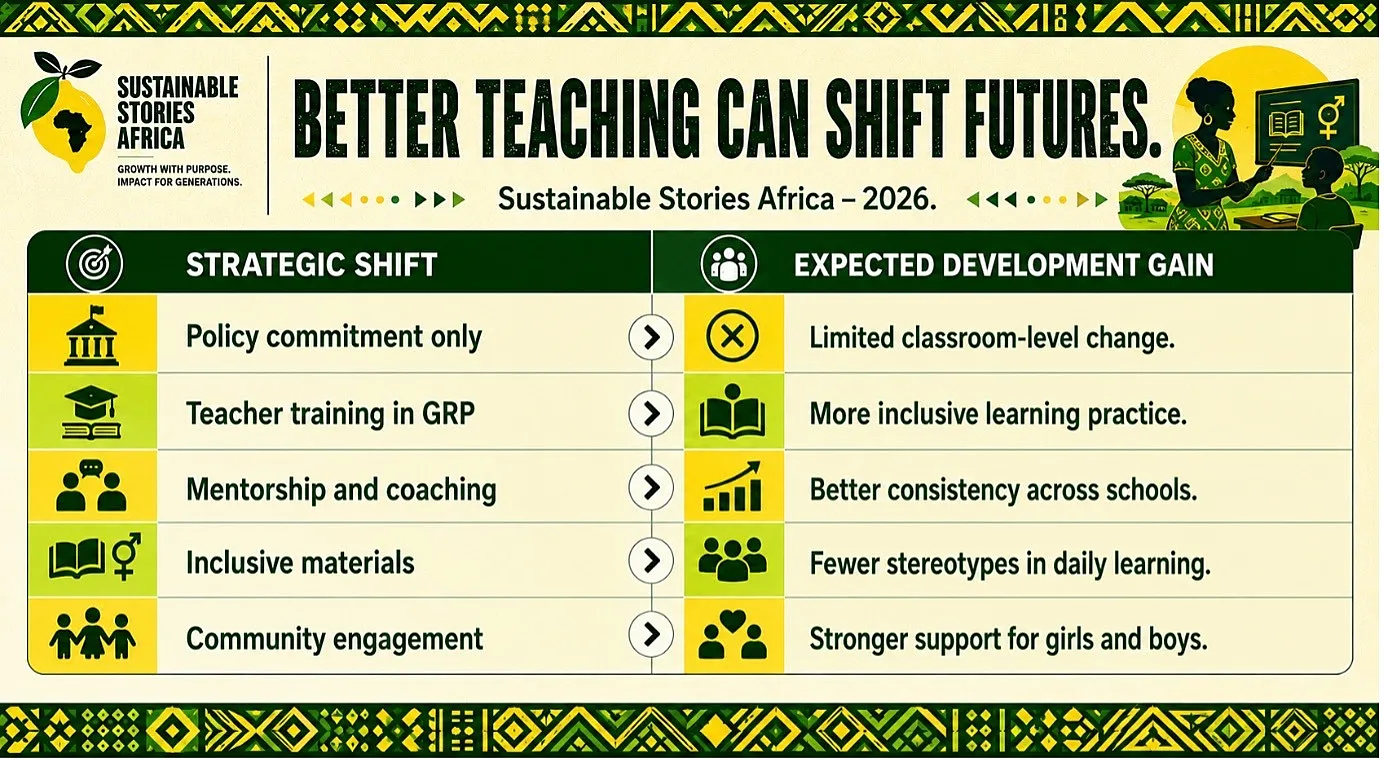
Without investment, Zimbabwe faces a familiar gap: strong commitments on paper, uneven transformation in practice.
Training Must Become Systemwide Practice
The next step is not to create another policy statement. It is to embed GRP into the machinery of education delivery.
Brookings recommends integrating GRP modules into pre-service teacher education, scaling in-service training through continuous professional development, strengthening mentorship and coaching, improving inclusive curriculum materials, and mobilising communities to support gender equity.
- For the government, this means financing implementation and making GRP part of teacher standards, inspection, school leadership, and professional development.
- For teacher training colleges, it means preparing new teachers to identify bias before they reproduce it.
- For school leaders, it means building cultures where equality is observed in timetables, discipline, subject participation, and classroom roles.
- For development partners, the priority is to support national systems rather than isolated projects.
Donor-backed pilots can prove what works, but lasting change requires domestic ownership, budgets, monitoring, and scale.
Zimbabwe’s opportunity is to treat gender-responsive pedagogy not as an add-on, but as core education infrastructure.
The classroom is where policy either becomes real or remains rhetorical.
Path Forward – Make Equity Daily Classroom Practice
Zimbabwe’s gender responsive pedagogy agenda now needs scale, financing, teacher mentorship, and national ownership.
The policy base exists; the implementation challenge is to make an inclusive teaching routine in every school.
Well done, GRP can advance SDG 4 and SDG 5 together by improving learning quality and gender equality.
The next measure of success should be simple: whether every learner feels seen, supported, and expected to succeed.
Culled From: From policy to practice: How gender responsive pedagogy can transform classrooms in Zimbabwe | Brookings