The WEF's June 2026 report makes a compelling case: treating plastic pollution and biodiversity loss as a single interconnected challenge is the only approach capable of delivering the scale and speed both crises demand.
Separating them has been a governance mistake, costing decades and trillions in lost ecosystem value.
For Africa, the stakes are acute. It is among the world's most biodiverse regions and most exposed to plastic mismanagement.
The question isn't whether Africa adopts an integrated approach, but how quickly, and on whose terms.
One Crisis, One Strategy – The Case for Joint Action
The world has spent decades treating plastic pollution and biodiversity loss as separate problems, funding different budgets, establishing different ministries, and negotiating different treaties.
A landmark WEF report argues this fragmentation has been a fundamental policy error and that joint action can simultaneously multiply returns across economic sectors, governance systems, and communities.
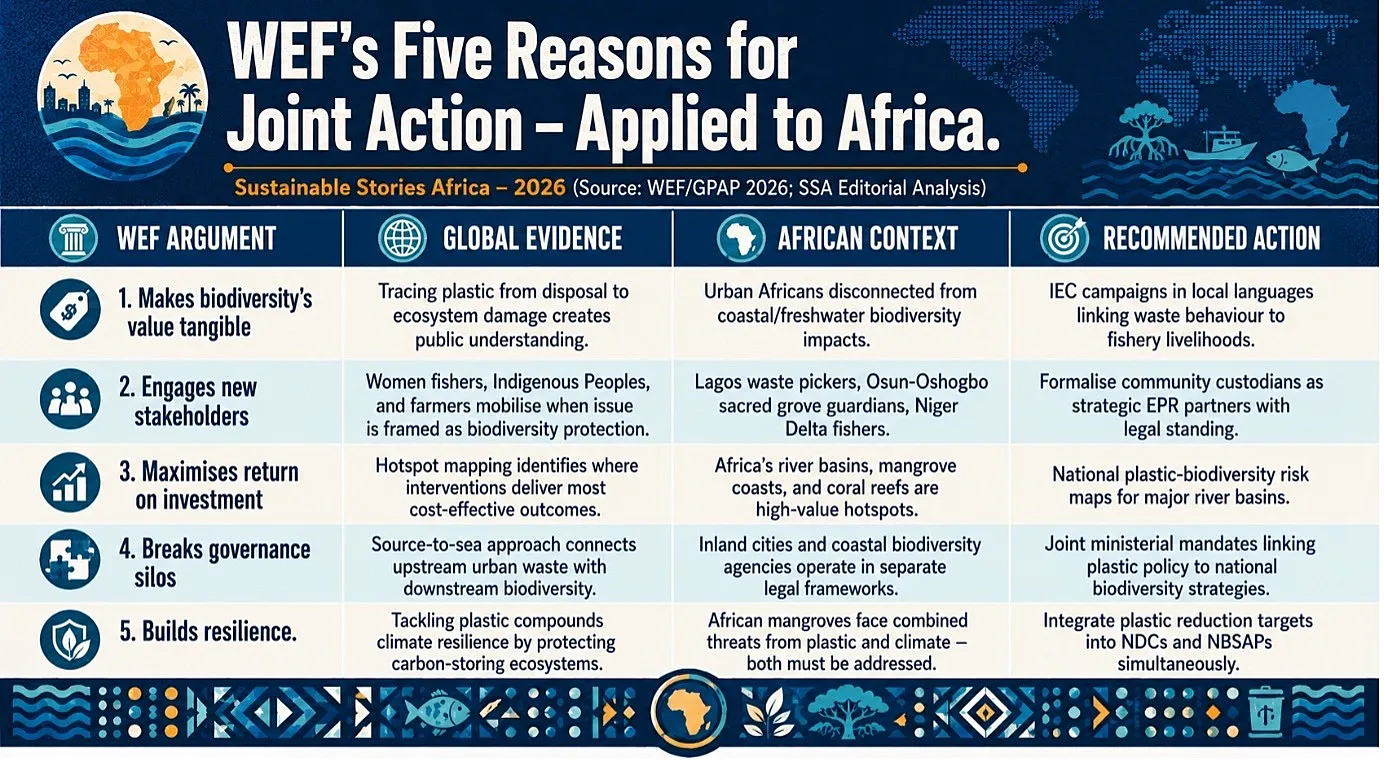
Chapter 5 of the WEF GPAP Insight Report, Plastic Pollution and Biodiversity: A Global Overview (June 2026), presents five distinct and mutually reinforcing reasons why integrated action on plastic waste and biodiversity loss delivers better outcomes than addressing either challenge in isolation.
Together, they constitute a strategic framework that African governments, businesses, and civil society organisations should adopt immediately.
The Governance Failure That Is Costing Africa
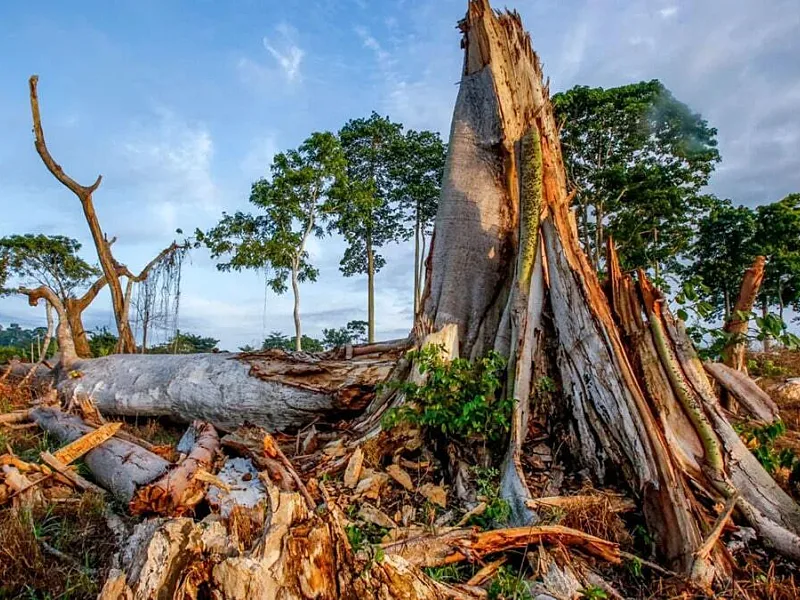
Biodiversity loss and ecosystem collapse are now the second-most severe global risk over the next 10 years, according to the WEF Global Risks Report 2026, ranked above artificial intelligence risks and cyber warfare, behind only extreme weather events.
However, in Viet Nam, a country with numerous biodiversity and waste laws, no instrument systematically links the two as an integrated problem. The result is that nature reserve managers can arrest poachers but cannot legally address plastic waste that is destroying the same habitat.
Africa has the same governance gap, compounded. Nigeria, Ghana, Kenya, and most African nations manage plastic waste through environment and sanitation ministries.
Biodiversity conservation is in a separate department or ministry, which uses different metrics, funding streams, and legal frameworks.
Meanwhile, $7.3 trillion in global finance flows in 2023 had directly negative impacts on nature, while just $220 billion, approximately 3% of that total, went to conservation and restoration.
This is not a resource problem. It is a structural and strategic failure, one that integrated action can begin to correct immediately.
What the Field Research Shows
The WEF's nine country studies are not theoretical; they are field-validated evidence of what integrated action can achieve.
The Costa Rica case is instructive:
- A partnership between Dole, Del Monte, and Grupo Montecristo created Recyplast, a company that processes plastic waste from 150 fruit farms using 22 collection centres managed primarily by women, ensuring that agricultural plastics do not reach the coral reefs and sea turtle nesting sites of the Caribbean coast.
- A standard waste management lens would not have created this intervention; the biodiversity lens made it necessary and commercially viable.
In Colombia's Amazon:
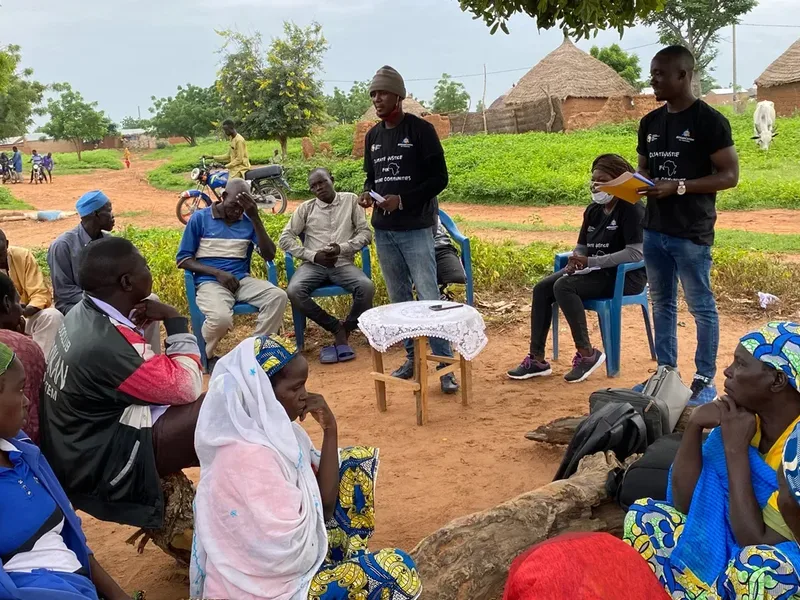
- Indigenous and community leaders transformed waste sorting into an income stream only after they recognised plastic pollution as a threat to the rivers, forests, and lakes on which their cultural identity and livelihoods depend.
- The framing changed the behaviour.
- These groups only mobilised when the issue was presented as a biodiversity and territorial concern, rather than a waste management problem.
For Nigeria:
- Osun-Oshogbo sacred grove is a UNESCO World Heritage Site explicitly identified in the WEF report as at risk from plastic pollution and biodiversity loss; the community custodianship model is already present in local governance traditions.
- The WEF's evidence shows that integrating those traditions into formal EPR systems, plastic monitoring, and biodiversity stewardship programmes delivers outcomes that purely regulatory approaches cannot replicate.
What Africa Stands to Gain from Integration
The integrated approach not only reduces plastic's damage to biodiversity, but it also creates new economic value.
The WEF calculates that by 2040, a systematic transition to reuse models could create 8.6 million new jobs globally, with a disproportionate share accruing to developing economies where reuse and repair systems are already culturally embedded.
Indonesia, a direct comparator for Nigeria's coastal economy, demonstrates the return on investment for integrated action: marine plastic leakage costs $8 to $16 billion per year, and a national integrated waste management system costing $18 billion over the next 15 years could unlock $10 billion per year in circular economy value by 2040.
Applied to Africa's coastal economies, such as Nigeria, Ghana, Kenya, Mozambique, Tanzania, and South Africa, the scale of value creation is significant.
Africa's mangroves store four times more carbon per hectare than tropical forests and sequester carbon at 10 times the rate.
By treating plastic pollution as a direct threat to these ecosystems and acting accordingly, African governments can simultaneously advance climate commitments under the Paris Agreement, protect fisheries livelihoods, and develop carbon credit markets from restored mangrove systems.
Five Integrated Policy Priorities for Africa
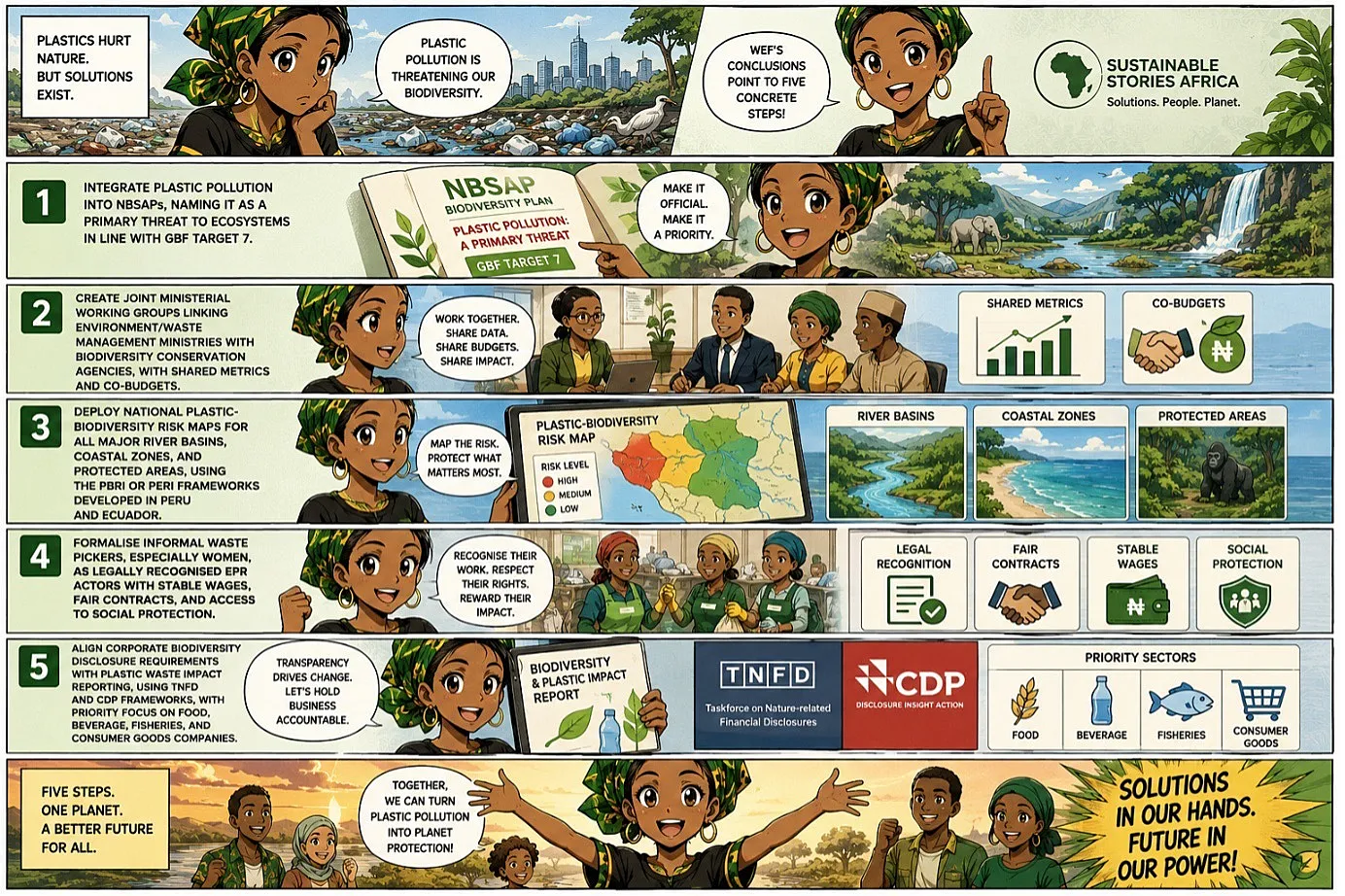
The WEF's conclusions point to five concrete steps African governments, businesses, and civil society organisations must take:
- Integrate plastic pollution explicitly into National Biodiversity Strategies and Action Plans (NBSAPs) – naming it as a primary threat to ecosystems in line with GBF Target 7.
- Create joint ministerial working groups linking environment/waste management ministries with biodiversity conservation agencies, with shared metrics and co-budgets.
- Deploy national plastic-biodiversity risk maps for all major river basins, coastal zones, and protected areas, using the PBRI or PERI frameworks developed in Peru and Ecuador.
- Formalise informal waste pickers, especially women, as legally recognised EPR actors with stable wages, fair contracts, and access to social protection.
- Align corporate biodiversity disclosure requirements with plastic waste impact reporting, using TNFD and CDP frameworks, with priority focus on food, beverage, fisheries, and consumer goods companies.
Path Forward – Integration Is Not Optional
The WEF has established an evidence base that dismantles the case for siloed action once and for all.
Plastic pollution and biodiversity loss are not competing priorities; they are co-occurring crises that share the same ecosystems, affected communities, and solutions.
Africa cannot afford to continue governing them separately. The cost of that fragmentation, measured in lost fisheries, degraded mangroves, eroded soils, and destroyed coastal tourism, is already being paid.
The five-reason framework for joint action is not a future aspiration. It is the strategy Africa needs now.