Africa contributes less than 3% of global energy-related CO₂ emissions yet bears the harshest consequences of the climate crisis.
The IEA's Africa Energy Outlook 2022 laid out a credible, costed blueprint for universal energy access by 2030. Four years on, its prescriptions remain largely unmet, not through technical failure, but through failures of political will, financial architecture and global justice.
Africa's 600 million energy-poor citizens, its 1.7 billion-strong population by 2030, and its unmatched solar and mineral endowments make the continent the world's most urgent and compelling clean energy investment frontier.
The question is no longer what must be done. It is who will move first, and fast enough.
Africa's Moment, Already Passing
The IEA's Africa Energy Outlook 2022 arrived at a moment of compounding crises. Russia's invasion of Ukraine had triggered a global food and fuel price shock. COVID-19 had pushed more than 20 African countries into debt distress.
The number of Africans without electricity had actually increased by 4% between 2019 and 2021, reversing nearly a decade of hard-won progress.
The report's Sustainable Africa Scenario was neither utopian nor vague. It was a precisely modelled pathway showing that universal electricity access, clean cooking and full NDC implementation could all be achieved by 2030.
The prescription was clear: $190 billion in annual energy investment by 2026 – 2030, two-thirds directed at clean energy. Universal access to energy alone requires just $25 billion per year, the equivalent of building one large LNG terminal.
Four years on, the scenario remains a roadmap without a driver. The data, frameworks and policy architecture are all in place.
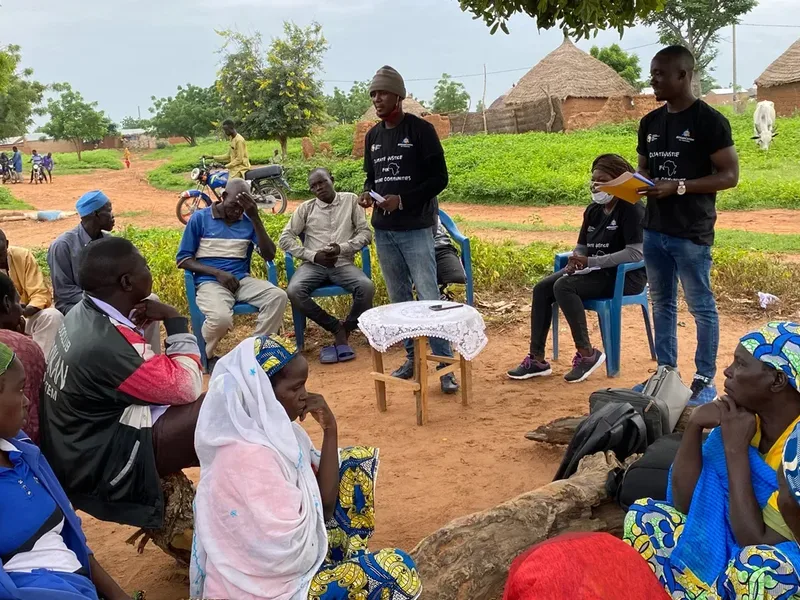
What is missing is the confluence of political will, concessional finance and institutional trust that transforms a modelled pathway into a national grid, a solar farm and a clean cookstove in the hands of a woman in rural Niger.
The Injustice in the Heart of the Crisis
Africa is the world's most energy-deprived continent and the least responsible for reasons it must transition at all.
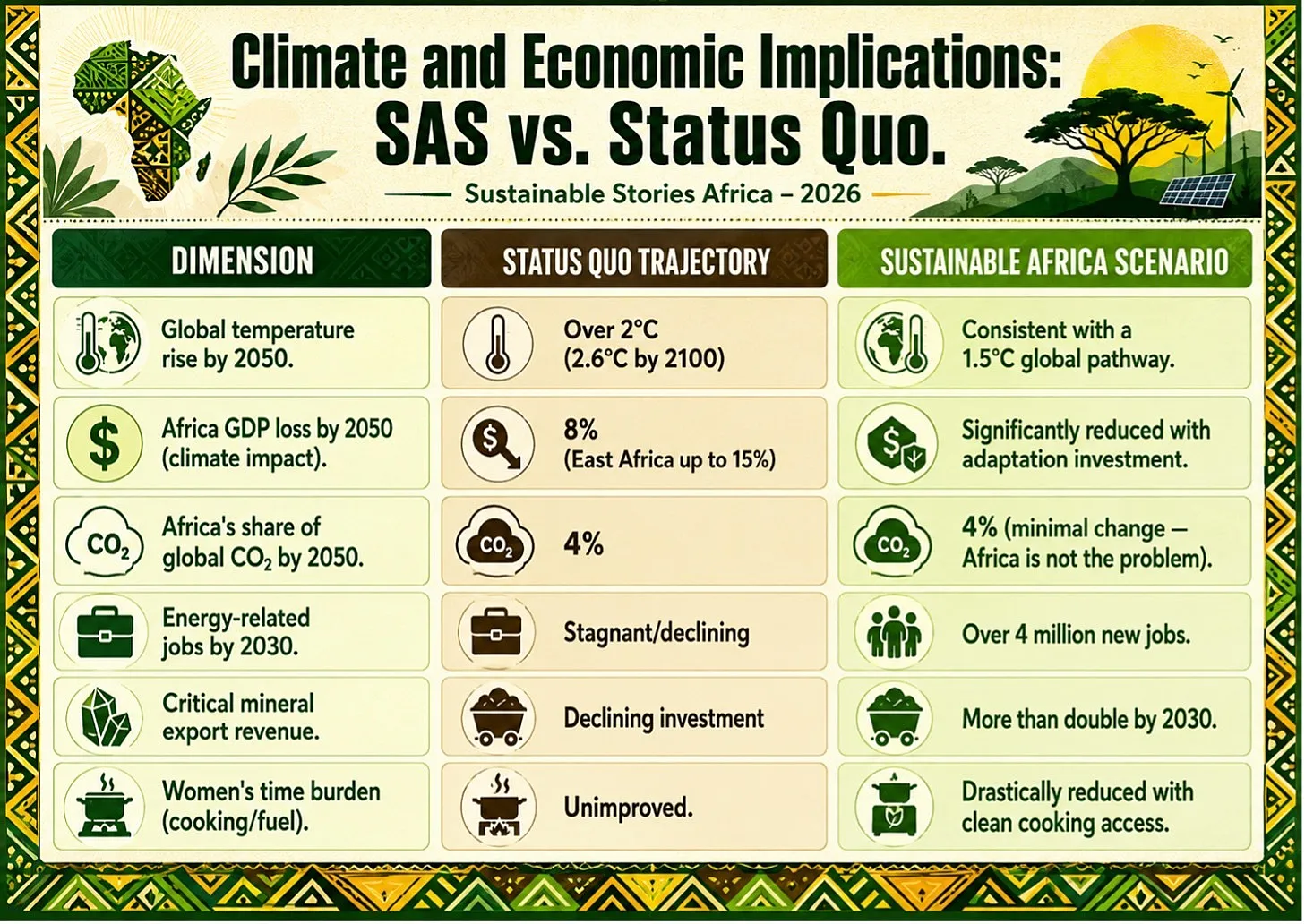
Africa holds less than 3% of the world's cumulative energy-related CO₂ emissions since 1890, yet already faces median temperature rises of 2.7°C in North Africa and GDP losses of up to 8% by 2050 under current global policy trajectories. East Africa faces losses of up to 15%.
This is the central moral contradiction of the global energy transition: Africa is being asked to build a clean energy system it never dirtied, at a cost it cannot afford, on a timeline it did not set. The IEA's Sustainable Africa Scenario argues, persuasively, that doing so remains in Africa's own economic interest — provided the rest of the world pays its fair share.
Today, 600 million Africans lack access to electricity. A further 970 million lack clean cooking fuels. Africa holds 60% of the world's best solar resources but only 1% of global installed solar PV capacity. The gap between endowment and deployment is not that of potential. It is a gap in financing, governance and geopolitical priority.
What the Data Reveals About Africa's Energy Reality
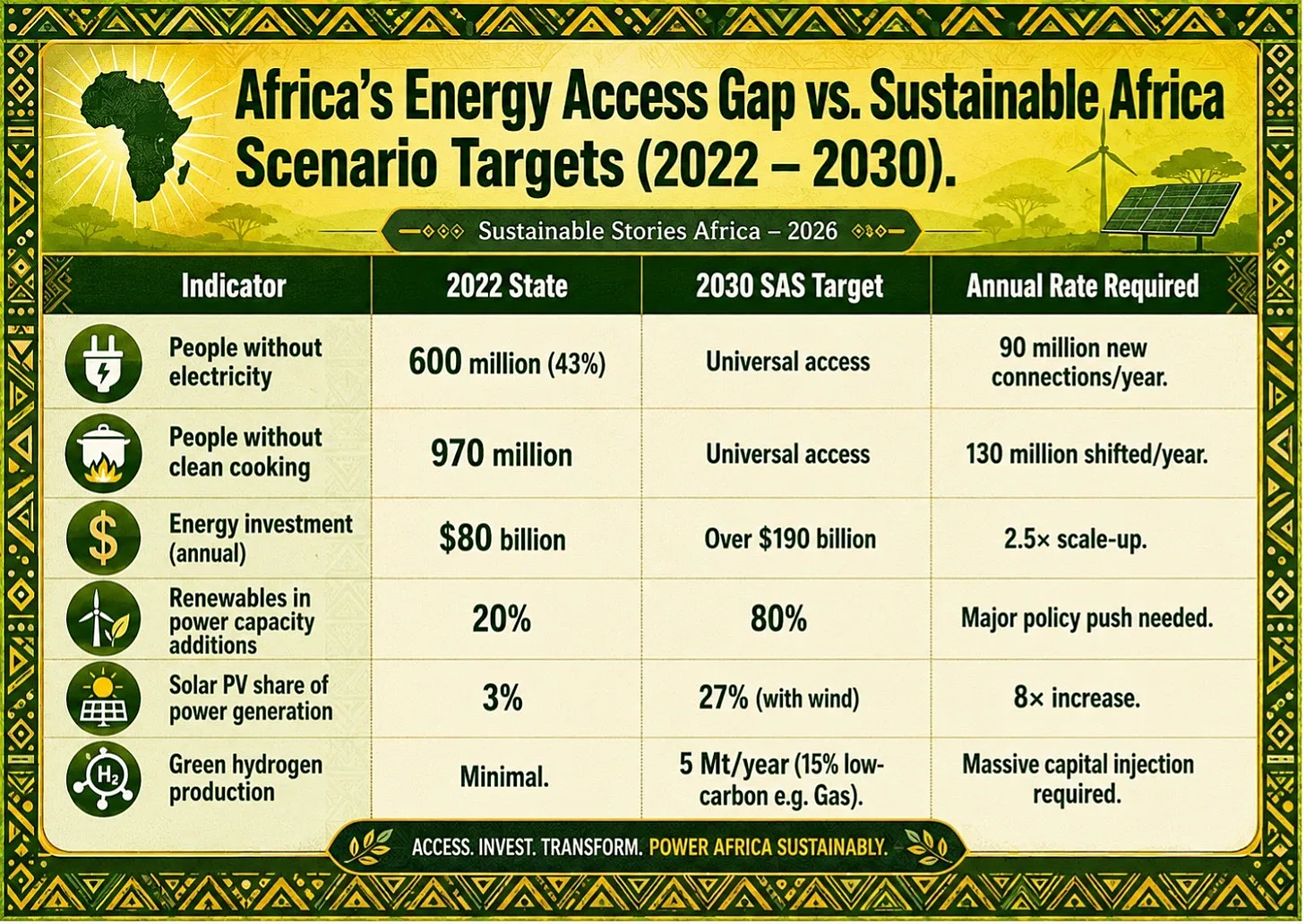
Africa's population will reach 1.7 billion by 2030, with one in two people added to global population growth this decade being African. GDP is projected to grow at 4.2% annually — above the global mean. That trajectory creates both an obligation and an opportunity: to ensure energy does not become a development bottleneck, and to build clean, distributed, locally owned systems from the outset.
The IEA's case studies make the transformation tangible:
- Ghana, Kenya and Rwanda are on track for full electricity access by 2030.
- South Africa's Just Energy Transition Partnership, backed by $8.5 billion from the EU, France, Germany, the UK and the USA, demonstrates that blended concessional finance can accelerate coal-to-clean transitions.
These remain islands of ambition in a continent-wide sea of unmet need. Africa holds over 40% of global reserves of cobalt, manganese, and platinum, the minerals underpinning batteries and hydrogen technologies driving the global clean energy transition.
Critical mineral revenues could more than double by 2030, and Africa holds potential to produce 5,000 megatonnes of hydrogen per year at under $2 per kilogramme.
These are geological and economic facts that global markets have yet to price correctly.
What Africa and the World Stand to Win
The Sustainable Africa Scenario, realised by 2030, is transformative across every dimension.
For citizens:
- Universal electricity access means children studying by reliable light, cold chains preserving food and irrigation replacing diesel generators in agriculture, a sector representing one-fifth of Africa's GDP.
- Eradicating dirty cooking fuels alone would prevent approximately 500,000 premature deaths annually, while freeing hundreds of millions of women from biomass collection, unlocking time, education and economic participation.
For markets and investors:
- The SAS projects 4 million additional energy-related jobs by 2030.
- Green hydrogen projects in Egypt, Morocco, Namibia, Mauritania and South Africa position Africa as Europe's premier clean hydrogen supplier by mid-decade.
For the global climate:
- Africa's cumulative emissions by 2050 remain under 4% of the global total even under ambitious growth scenarios.
- Enabling Africa to build clean from the start makes net zero by 2050 globally achievable, not merely equitable.
The cost of inaction is stark. Global temperatures are projected to exceed 1.5°C around 2030, rising to 2.6°C by 2100.
Three-fifths of Africa's thermal power plants already face high water stress risk. Africa's under-25 majority, the richest demographic dividend on earth, is squandered for want of a socket and a stove.
A Clear Agenda for Decision-Makers
The Sustainable Africa Scenario is not a wish list. It is a costed, sequenced action architecture. The 2026 context demands its urgent implementation across five actor groups.
African Governments and the African Union:
- Publish national energy access strategies; only 25 African countries currently have them.
- Accelerate electricity pricing reforms already under discussion in 24 countries.
- Adopt building energy codes and appliance efficiency standards that collectively reduce electricity demand by 30%.
- Commit to no new unabated coal capacity and champion AfCFTA as an energy market instrument.
Multilateral Development Banks and DFIs:
- Increase concessional finance strategically to crowd in private capital.
- The 48 African countries requesting over $1.2 trillion to implement their NDCs deserve a structured, time-bound response.
- Direct at least $30 – $50 billion annually toward climate adaptation by 2030, up from $7.8 billion in 2019.
Private Finance and the Energy Industry:
- Redirect capital from cancelled coal projects toward solar PV, the IEA calculates that this alone could fund over half of all solar additions needed by 2025.
- Scale investment in critical minerals governance and ESG-compliant extraction.
Regulators and Policymakers:
- Design carbon credit frameworks that direct real financial flows to African climate projects.
- Implement African Green Hydrogen Alliance commitments across Egypt, Morocco, South Africa, Namibia, Mauritania and Kenya.
Citizens and Civil Society:
- Demand accountability on climate finance pledges.
- Developed economies missed the $100 billion annual target in 2020, delivering only &79.6 billion, with only a marginal share reaching Africa.
These gaps must become electoral and diplomatic priorities.
Path Forward – Agency, Not Aid – Africa Builds, the World Backs
Africa does not need charity. It needs financial, institutional and political architecture that matches the scale of what is possible.
The IEA's Sustainable Africa Scenario has demonstrated, with rigorous modelling, that universal clean energy access by 2030 is achievable at a cost the global community can comfortably afford.
Africa holds 60% of the world's best solar resources, 40% of its critical mineral reserves and one in two of the world's next generation.
The question is not whether Africa's energy future is sustainable. The question is whether the global financial system will move fast enough to be part of it.
Sustainable Stories Africa is an independent editorial platform covering sustainability, climate, and development across the African continent. This opinion piece draws on the IEA Africa Energy Outlook 2022, produced in cooperation with the African Union Commission and the United Nations Economic Commission for Africa.