Africa's informal economy is not a parallel universe running alongside real commerce; it is the real commerce for over 600 million workers across the continent.
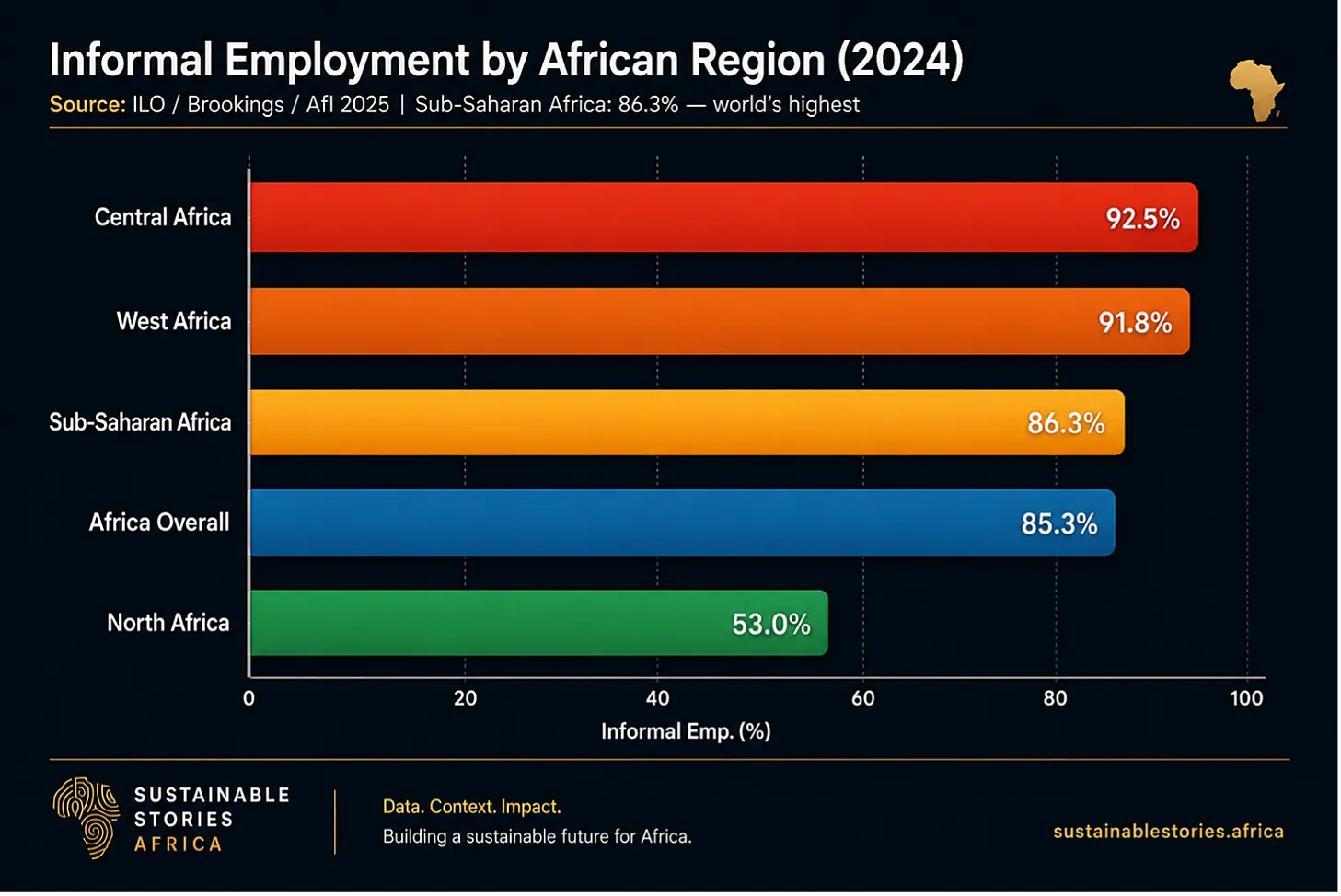
With informal employment accounting for 85.3% of Africa's total labour force in 2024, the question is no longer whether to acknowledge the informal sector but whether African governments, multilateral institutions, and investors have the political will to unlock its transformative potential.
The central argument here is urgent and unambiguous: treating Africa's informal markets as aberrations to be corrected, taxed into compliance, or demolished in the name of "urban order" misreads the continent’s entire economic architecture.
The path to shared prosperity runs through the informal economy, not around it.
Africa's Largest Market Has No Address
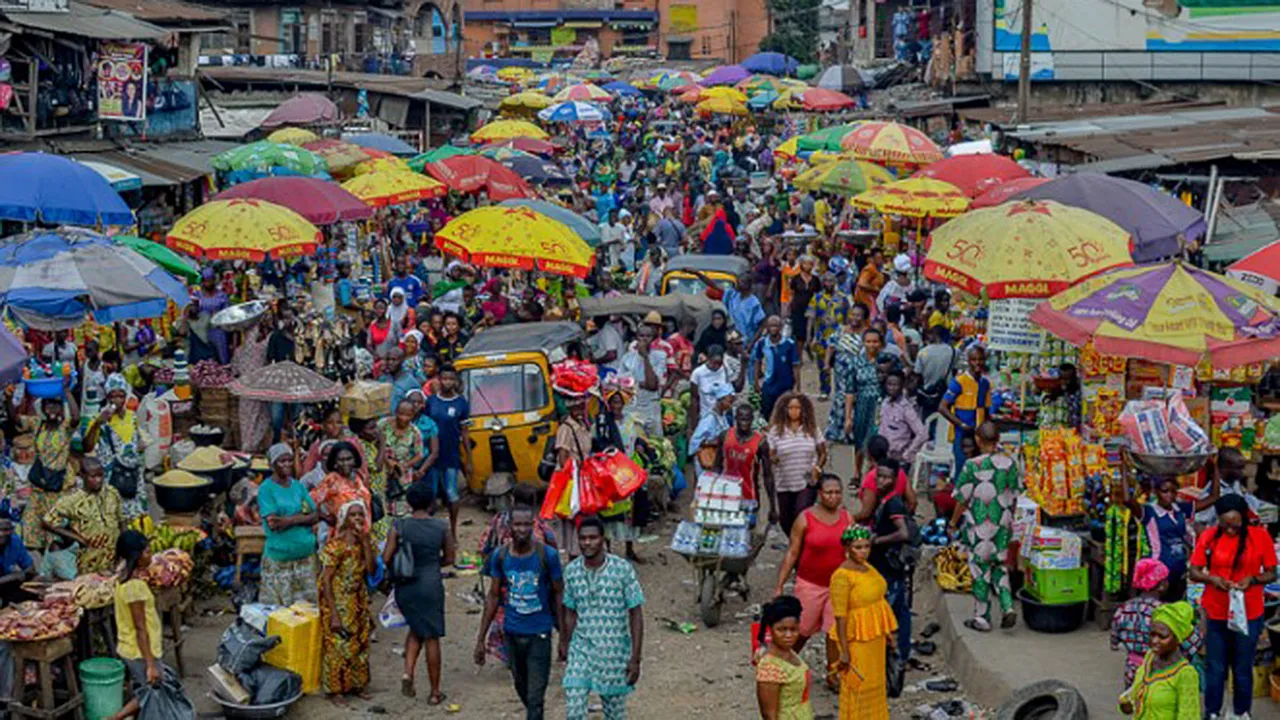
Africa's informal economy has always been visible to those who chose to look. From the roadside traders of Abidjan who pay municipal taxes on market stalls but receive no legal protection, to the Lagos artisan supplying a formal manufacturer without a contract, to the Nairobi food vendor who survived a pandemic without a single government transfer, the informal economy is not a symptom of underdevelopment.
It is, as the Brookings Institution argued in May 2026, "the dominant mode of economic organisation" across the continent.
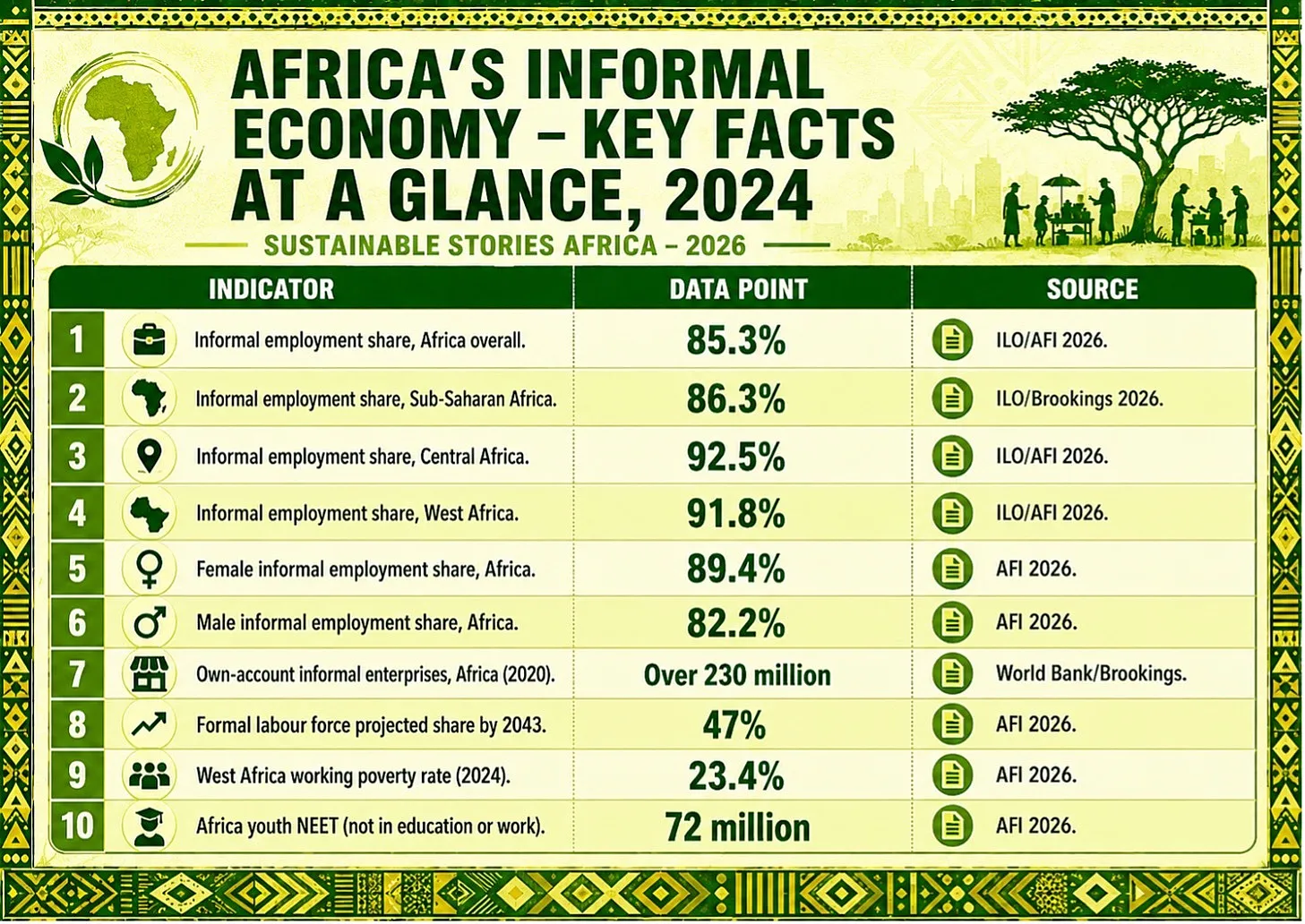
The facts demand that we abandon comfortable myths. The International Labour Organisation's 2024 data confirms that informal employment accounts for 86.3% of all jobs in Sub-Saharan Africa, the highest proportion of any region in the world, with Central Africa at 92.5% and West Africa at 91.8%. Women bear the greatest exposure: 89.4% of Africa's female workers are informally employed, against 82.2% of male workers.
These are not statistics at the margins of African economic life. They describe Africa's economic life.
The debate has moved beyond whether informality is large. The critical question for 2026 and beyond is whether African policy, ESG frameworks, and investment strategies are ready to respond to what they are actually dealing with.
The Wrong Diagnosis Has Cost Africa Decades – Africa cannot afford another decade of misdiagnosis.
For too long, the informal economy has been framed in one of two pejorative ways: as a poverty trap that will eventually dissolve once formal development takes hold, or as a tax-evasion vehicle populated by "bad actors" avoiding their obligations to the state.
Both framings are wrong, and their policy consequences have been devastating.
The theoretical roots of this mistake run deep. Writing in 1954, Nobel laureate W. Arthur Lewis predicted that economic development in the Global South would eventually absorb informal "traditional sector" labour into a growing modern economy, the so-called Lewis Turning Point.
However, Africa never reached that turning point on any meaningful scale. Instead, the informal economy expanded alongside, and because of structural adjustment programmes, globalisation, and jobless growth cycles that shed formal workers faster than the formal sector could re-absorb them.
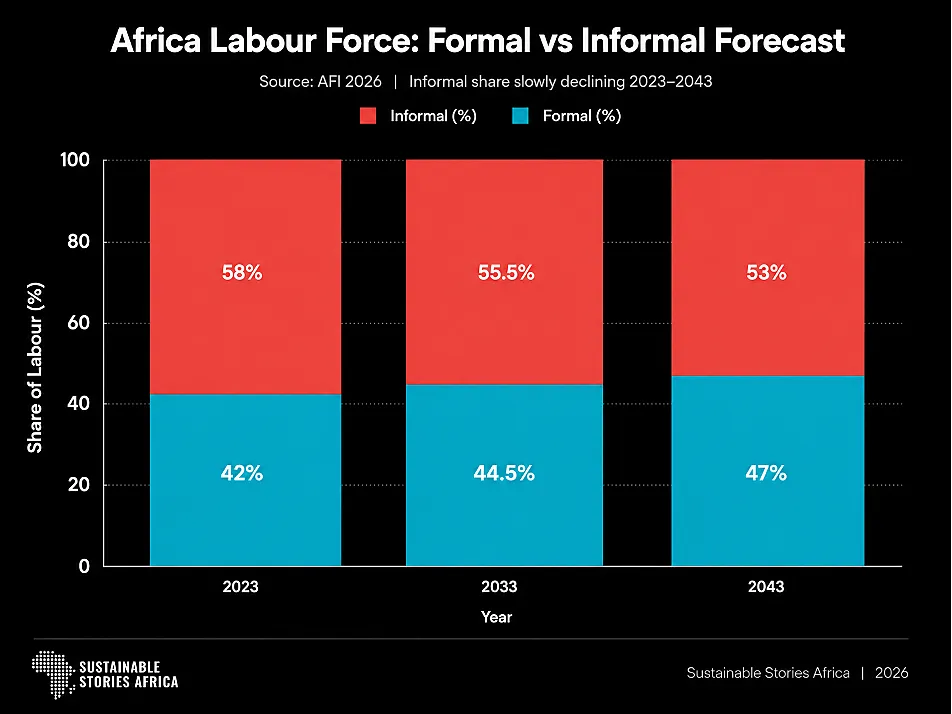
The African Futures and Innovation Programme's 2026 employment forecast projects that Africa's formal labour force will grow from 242 million people (42% of the total) in 2023 to 470 million people (47%) by 2043. That is meaningful progress.
However, it also means that, two decades from now, more than half of Africa's workers will remain informally employed. Planning for Africa's economic future by designing policies for the 47% while ignoring the 53% is not a development strategy; it is an abandonment.
A Continent Working Without a Safety Net
The lived reality of Africa's informal workers is a paradox of extraordinary productivity with extreme institutional disadvantage.
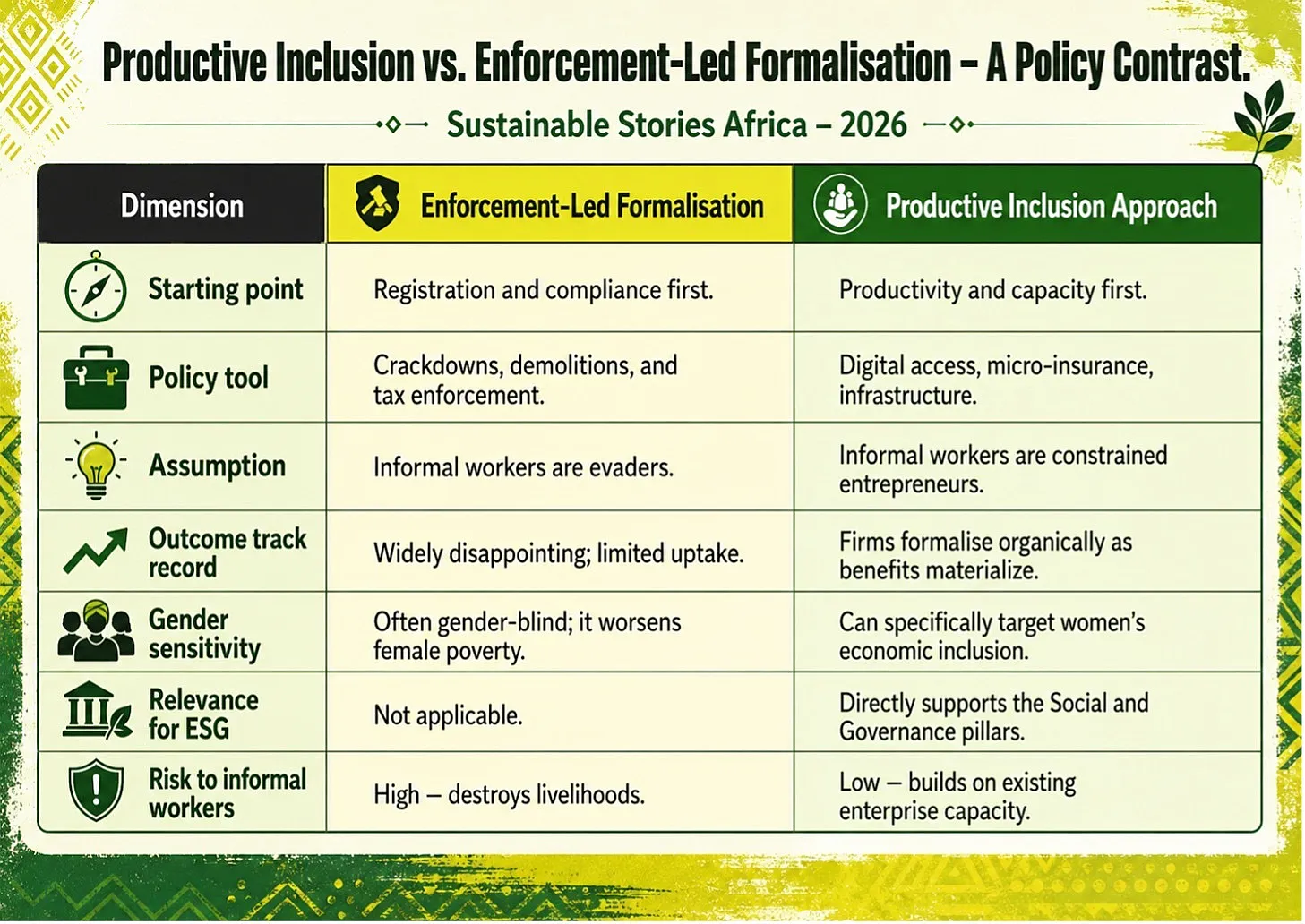
In Abidjan, traders who pay municipal market taxes have watched their stalls demolished in anti-disorder campaigns. Across West African cities, similar crackdowns erase livelihoods overnight, without compensation, without notice, without alternative commercial space.
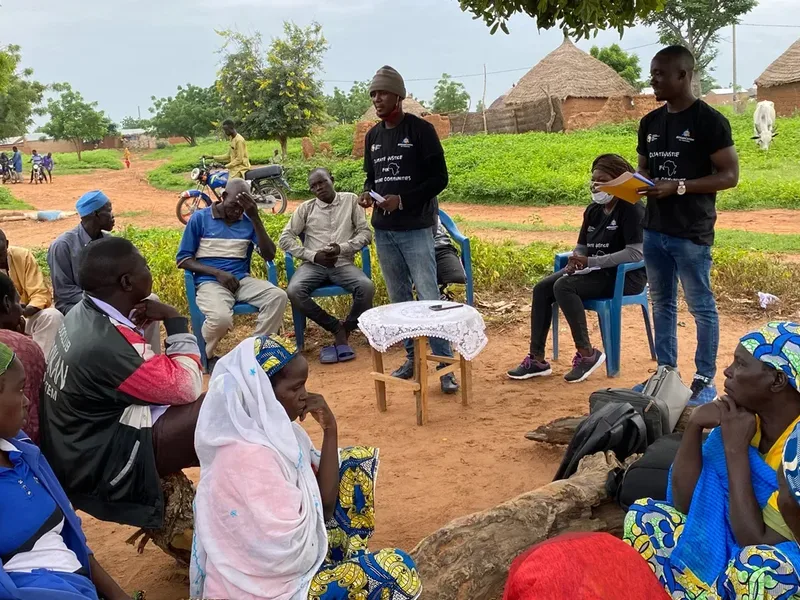
The systemic vulnerability is structural. Africa's informal workers have no access to health insurance, unemployment insurance or paid leave. Most are self-employed, working daily to cover basic household expenses. COVID-19 exposed this precarity acutely; lockdown restrictions devastated informal livelihoods with no social safety net to absorb the fallout.
Afrobarometer's Round 9 survey across 39 countries confirmed unemployment as the leading policy priority for African youth aged 18 to 35, ranking significantly above economic management and health concerns.
What policy consistently misses is the heterogeneity within informality. Brookings Institution's May 2026 analysis describes what West African researchers call "constrained gazelles", high-potential informal firms that remain small not because of lack of ambition, but due to systemic barriers, limited access to capital, thin insurance markets, inadequate infrastructure, weak contract enforcement and large information gaps.
These are not marginal operators. World Bank estimates place over 230 million own-account enterprises across Africa, with approximately 73% of multi-worker firms operating informally, a productive base that formal policy frameworks continue to underserve.
What a Reimagined Informal Economy Could Deliver
The street vendor in Lagos whose cash flows are daily and irregular.
The Abidjan market trader whose decade of municipal tax payments remains invisible to financial institutions. The seamstress collective in Accra is supplying formal retailers as an unrecognised subcontractor. These are not edge cases; they are the structural reality of Africa's economy.
The Brookings Institution's 2026 analysis frames the alternative as "productive inclusion", an approach centred on capacity rather than compliance, facilitation rather than regulation, and adaptation to local conditions rather than imitation of external models.
The evidence is clear: firms become more likely to formalise when formalisation offers genuine value, improved market access, financial services, legal protection and institutional support, rather than simply additional tax obligations and reporting burdens.
The pathway is concrete. Municipal tax records can translate proxies to credits. Microfinance products can be structured around irregular daily cash flows.
Informal supplier collectives can be integrated into formal supply chain ESG frameworks as legitimate economic partners.
The prize is substantial. Africa's 85.3% informal workforce, progressively empowered through digital tools, appropriate financial instruments, infrastructure investment and legal protections, would generate a fiscal and social dividend of extraordinary scale, higher productivity, broader markets, a more stable tax base and better public services feeding a virtuous cycle that no enforcement campaign has achieved.
A Clear Agenda for Five Constituencies
The case for transforming Africa's informal economy is evidence-grounded and time-bound.
Five constituencies hold the decisions that determine whether Africa's 85.3% informal workforce is progressively empowered or continues to be suppressed.
For African governments and municipal authorities:
- Halt demolition-led approaches to informal market management and replace them with transitional arrangements guaranteeing secure commercial sites in urban public space
- Reform urban planning frameworks to incorporate informal market zones as legitimate commercial districts with basic infrastructure, sanitation and legal tenure
- Adopt the 2023 ICLS revised statistical standards on informality to build accurate national data systems that underpin evidence-based policy
For multilateral institutions and development finance:
- Redesign social protection systems to extend coverage to self-employed workers, casual day labourers and home-based workers, the most precarious segments of Africa's informal workforce
- Finance electricity, transport and logistics infrastructure that specifically reduces costs for informal enterprises in underserved urban and peri-urban zones
- Fund digital platforms that reduce information frictions and improve financial access without increasing vulnerability to enforcement
For the private sector and ESG-driven investors:
- Recognise Africa's 230 million informal enterprises as supply chain partners, consumer markets and investment opportunities, rather than compliance risks
- Design financial products, such as revolving credit, micro-insurance for illness, theft and weather shocks, and irregular cash-flow payment solutions, that meet informal workers where they are
- Integrate informal sector workers into ESG supply chain audits as active stakeholders; the "S" in ESG is hollow if it excludes the majority of Africa's workforce
For journalists, analysts and ESG communicators:
- Retire the framing of informality as disorder; adopt the language of constrained productivity, adaptive enterprise and structural exclusion
- Centre the stories of women informal workers, who represent 89.4% of female informal employment in Africa, the greatest vulnerability and the greatest untapped opportunity for inclusive growth
For pan-African institutions:
- Make informal economy transformation a headline pillar of AfCFTA implementation under the African Union's Agenda 2063 framework
- Develop continental standards for informal enterprise registration that are simple, low-cost and accompanied by immediate tangible benefits, so that first contact with government is experienced as an opportunity, not a threat
Path Forward – Transform From Within – Unlocking Africa's Economy on Its Own Terms
Africa's informal economy will not disappear by 2043, nor should it. With formal employment projected to reach only 47% of the labour force over the next two decades, prosperity will be built or lost within that enduring informal majority.
The choice is not between informality and development. It is between suppressing Africa's primary economic engine through misguided enforcement or investing in the 600 million workers and 230 million enterprises already powering the continent.