The global climate finance architecture is measuring the wrong thing. As carbon pricing becomes the headline metric for evaluating national climate ambition, a new Task Force working paper reveals that non-pricing policies, the tools most African governments actually use, carry equivalent or greater emissions impact.
The finding is a wake-up call: Africa is doing more than the world gives it credit for, and the current framework is penalising it for it.
Africa Is Playing the Game, But Scoring Counts
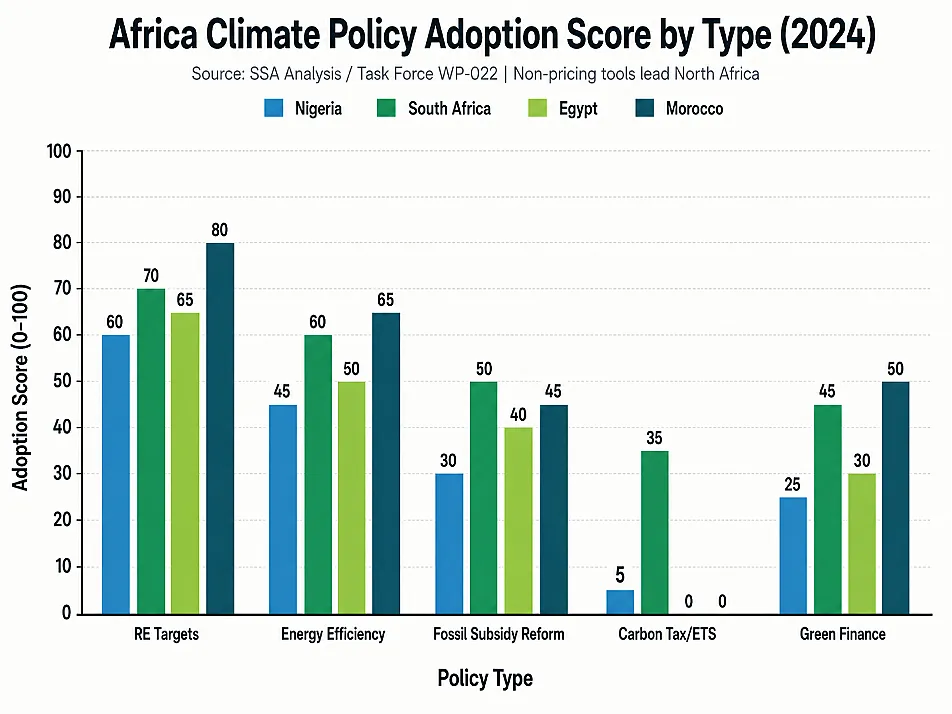
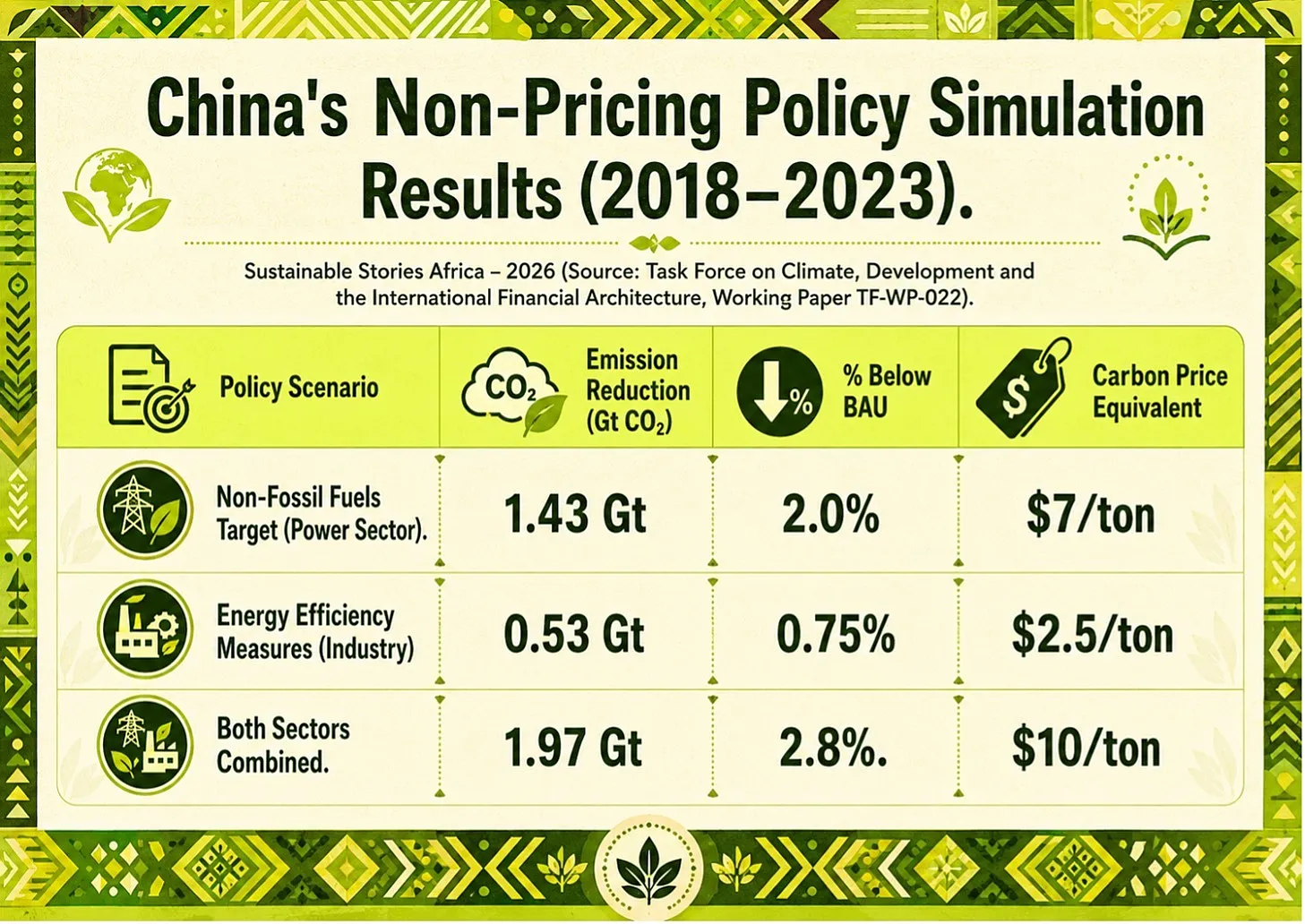
The evidence is compelling. A working paper from the Task Force on Climate, Development and the International Financial Architecture finds that China's non-pricing climate policies, renewable mandates, efficiency regulations and industrial measures deliver a carbon price equivalent of $10 per tonne of CO₂, exceeding explicit carbon prices in several G20 economies, including the United States, Japan and South Korea.
For Africa, this finding is a mirror. Nigeria, South Africa, Egypt, Morocco and dozens of other economies have spent years constructing comparable regulatory, subsidy-driven and performance-standard frameworks.
However, they remain poorly rated in global climate assessments, penalised under the EU's Carbon Border Adjustment Mechanism and undervalued in climate finance allocation, simply because they lack an explicit carbon price.
The case for reform is clear: global climate measurement must evolve. Africa has the evidence to lead that argument, not as a supplicant, but as a continent whose contributions deserve recognition.
The Metric Is Broken
The world is measuring climate action by the wrong ruler. The carbon price, whether from an emissions trading scheme or a carbon tax, has become the gold standard for judging how seriously a country takes climate change.
The EU's CBAM uses it. The IMF's proposed international carbon price floor depends on it. However, as this Task Force paper proves with rigour, a single metric captures only a fraction of the actual emissions-reduction work being done, particularly in the developing world.
China's non-pricing policies in just two sectors, power and industry, achieved a combined economy-wide emission reduction of 1.97 gigatons of CO₂ between 2018 and 2023, equivalent to a carbon price of $10 per tonne.
That is more than the average carbon price across many G20 states in the same period. The power sector alone delivered 1.43 Gt in reductions driven by renewable portfolio standards, subsidies, and feed-in tariffs.
Africa's story is structurally similar; however, it has been told as a story of climate inaction.
Africa's Real Climate Toolkit
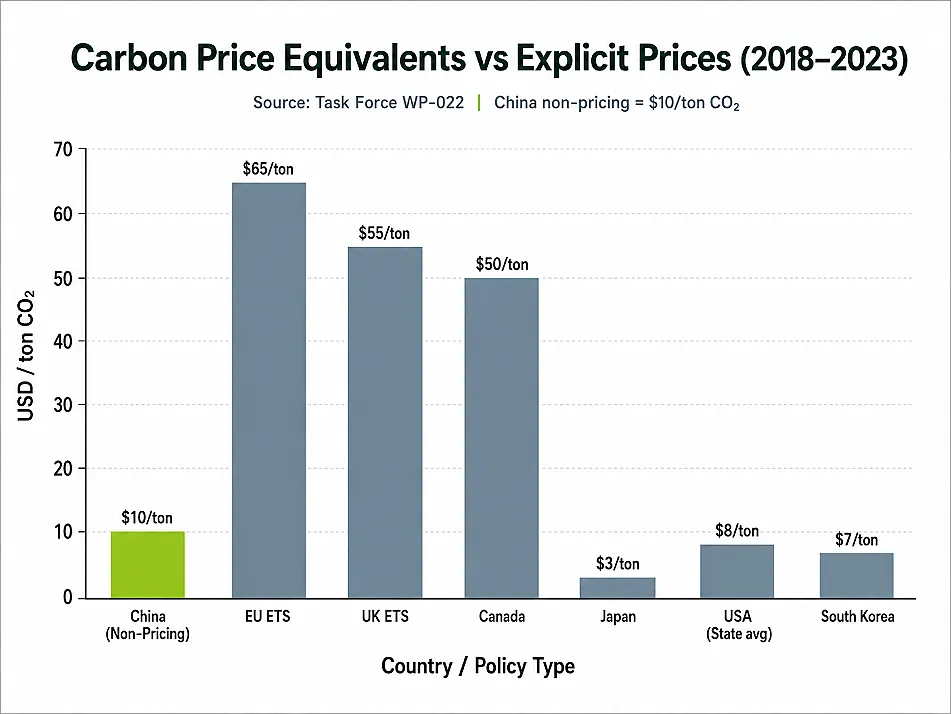
African countries have built substantial climate policy ecosystems, quietly, incrementally and largely without global recognition. The pattern is consistent across the continent's leading economies.
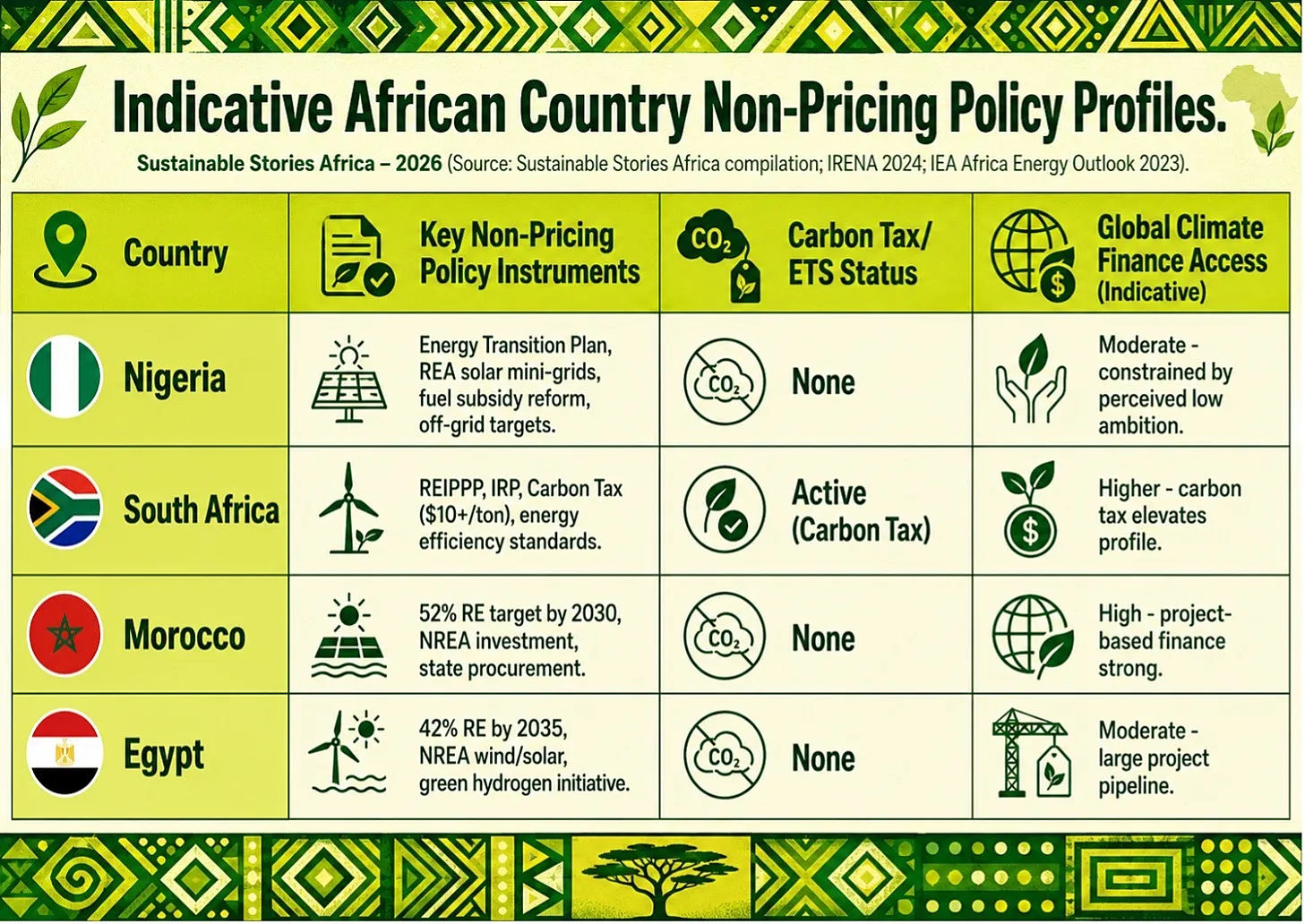
- Nigeria's Rural Electrification Agency, solar mini-grid frameworks, Energy Transition Plan and partial fuel subsidy reform represent significant non-pricing levers that affect emissions at scale. However, Nigeria holds no carbon tax or emissions trading scheme, and scores poorly in conventional rankings.
- South Africa introduced a carbon tax in 2019, but its real transition architecture rests on renewable energy procurement programmes, the Integrated Resource Plan and efficiency regulations.
- Morocco targets 52% renewables by 2030, backed by state investment and public procurement.
- Egypt has committed to 42% renewables by 2035 through active deployment — none of which registers meaningfully in carbon price comparisons.
Africa governs its climate transition through regulation, investment and industrial policy. The global measurement framework penalises it for doing so.
 |  |
What Recognition Would Unlock
If Africa's non-pricing climate policies were properly credited, the consequences would be transformative, not symbolic.
Climate finance access would widen materially. The IMF, multilateral development banks and climate funds currently weight assessments on explicit carbon price signals.
A more inclusive metric that captures regulatory, investment and performance-standard tools would see Nigeria, Egypt and Morocco score significantly higher, unlocking concessional finance that has remained inaccessible.
CBAM exposure would also shrink. African exporters in cement, aluminium and steel currently face carbon border levies calculated against domestic carbon prices. Crediting Nigeria's efficiency programmes or Morocco's renewable industrial zones with a price equivalent would directly reduce those charges, protecting manufacturing competitiveness.
Most powerfully, Africa's negotiating position would strengthen. With a climate finance gap estimated at over $277 billion annually through 2030, a verified non-pricing policy equivalent score would fundamentally shift the terms of that conversation, replacing dependency with evidence.
A Six-Point Agenda
The research is detailed, the policy gap is identifiable, and what remains is will. Six actions must follow.
- Commission equivalency studies – African Union member states, beginning with the five largest economies, should fund CGE-model assessments of existing non-pricing climate policies, creating a credible evidence base for international negotiations
- Build a continental policy index – the African Development Bank, working with the OECD's Inclusive Forum for Comparing Mitigation Approaches, should develop a continent-wide non-pricing policy stringency index, filling a gap the IFCMA has itself acknowledged
- Reform IMF and World Bank assessment frameworks – relying solely on carbon prices underestimates non-pricing efforts and undermines cooperation; African finance ministers should table this demand formally at the next Annual Meetings
- Embed non-pricing adjustments in CBAM – African exporters should not face carbon border charges calculated only against carbon tax or ETS rates; AU negotiators must push the EU to incorporate policy equivalents into CBAM's baseline methodology
- Integrate non-pricing value into green bond frameworks - national development banks and finance ministries should quantify non-pricing policy contributions in green bond prospectuses, improving investor transparency and potentially reducing borrowing costs
- Shift the public narrative – media platforms, including Sustainable Stories Africa, must move beyond what Africa lacks and make visible the policy architecture that already exists and the recognition it deserves
Path Forward – Count What Africa Has Already Built.
African economies are not waiting to become climate actors; they already are. China's non-pricing policy analysis provides the methodological template: regulatory, investment-based, and industrial policies can be measured, quantified and credited on par with carbon prices.
Africa's path forward runs through Addis Ababa, Cairo, Abuja and Pretoria as much as Brussels, Washington and Geneva.
Governments, banks and civil society must build the evidence, reform the frameworks and claim the recognition and financing that their climate work already warrants.
This opinion piece draws on the Task Force on Climate, Development and the International Financial Architecture Working Paper TF-WP-022 (June 2026), authored by He Xiaobei, Ma Jun, and Guo Fang of Peking University's National School of Development. The editorial analysis, African countries' applications, and policy recommendations are those of Sustainable Stories Africa.
© Sustainable Stories Africa | Lagos, Nigeria | June 2026