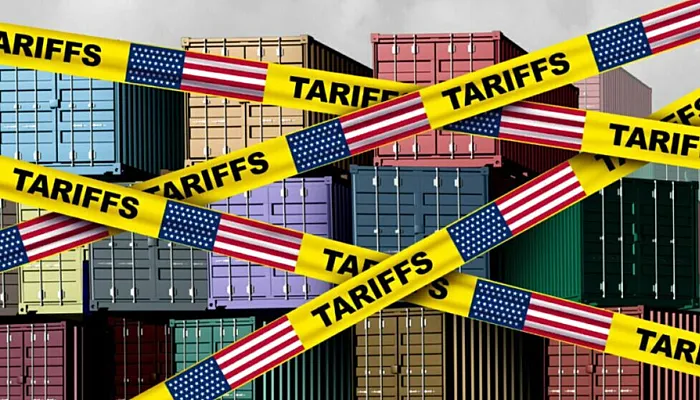
In February 2026, the US Supreme Court ruled 6-3 that President Trump's use of the International Emergency Economic Powers Act to impose sweeping tariffs on nearly all US trading partners was unconstitutional.
The decision is among the most significant constraints on executive economic power since 1952.
For Africa, a continent navigating AGOA, bilateral trade negotiations and export dependency, this ruling does not end uncertainty.
It restructures it. New tariff authorities are emerging, legal battles continue, and the landscape for global trade is now fundamentally contested in ways that demand Africa's urgent strategic attention.
America's Tariff War Enters New Territory
In early 2026, the US Supreme Court delivered a ruling that redrew the boundaries of presidential power over trade.
In Learning Resources, Inc. v. Trump (2026), a 6-3 majority held that President Trump could not unilaterally impose tariffs under the International Emergency Economic Powers Act, the authority used to levy import taxes on nearly every US trading partner.
The ruling is historic. Legal analysts describe it as the most significant check on executive economic authority since the Supreme Court rejected President Truman's attempt to seize steel plants during the Korean War in 1952.
However, it has not ended the tariff wars; it has merely relocated them to new legal terrain.
For African exporters, development policymakers and trade negotiators, the implications are profound.
Africa's preferential trade access to the US, including through the African Growth and Opportunity Act (AGOA), now sits within a trade policy environment that is simultaneously more constitutionally constrained and more legally uncertain than at any point in recent memory.
A Ruling That Reshapes the Trade Landscape
The Supreme Court's decision is significant, but it is not a resolution.
Following the ruling, the Trump administration announced a 10% global tariff under a different statutory authority, with increases to 15% reportedly under consideration.
More than 60 countries face new Section 301 investigations by the US Trade Representative, targeting alleged discriminatory trade practices and structural trade imbalances.
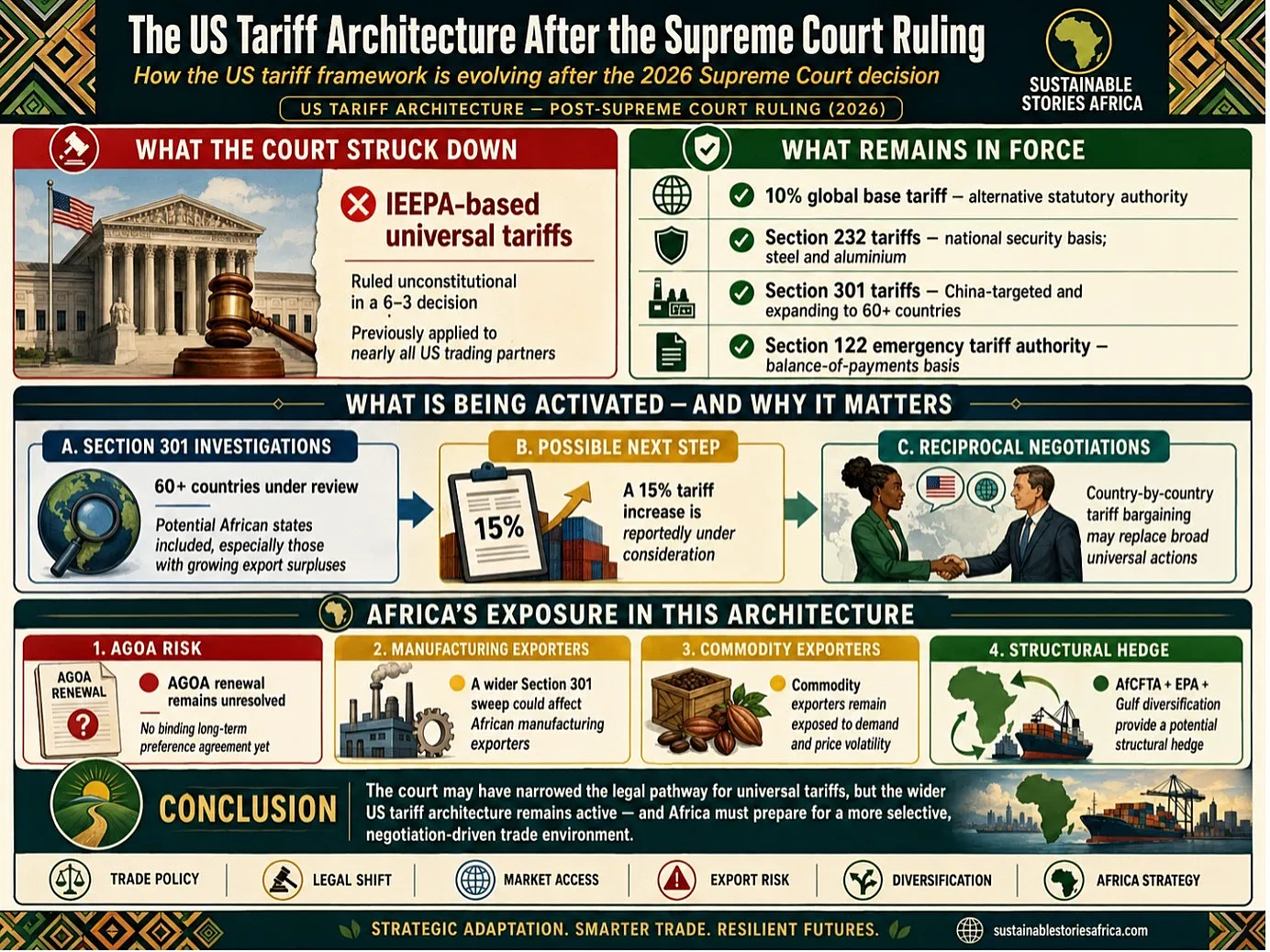
As Brent Skorup of the Cato Institute observed, government lawyers themselves described "higher tariffs as one of the most important foreign policy priorities of the administration."
The constitutional route to tariffs via IEEPA has been closed. But Section 122, Section 232, and Section 301 pathways remain available and are being actively explored.
For African economies, this means the US trade risk environment has not diminished. It has become more complex.
Africa's Exposure to the US Trade Realignment
Africa's trade relationship with the United States is substantial and structured. AGOA, first enacted in 2000 and periodically renewed, provides duty-free access to US markets for eligible goods from sub-Saharan African countries, including textiles and apparel, agricultural products, automotive components and other manufacturing goods.
In 2023, AGOA-related exports to the US totalled approximately $8.7 billion.
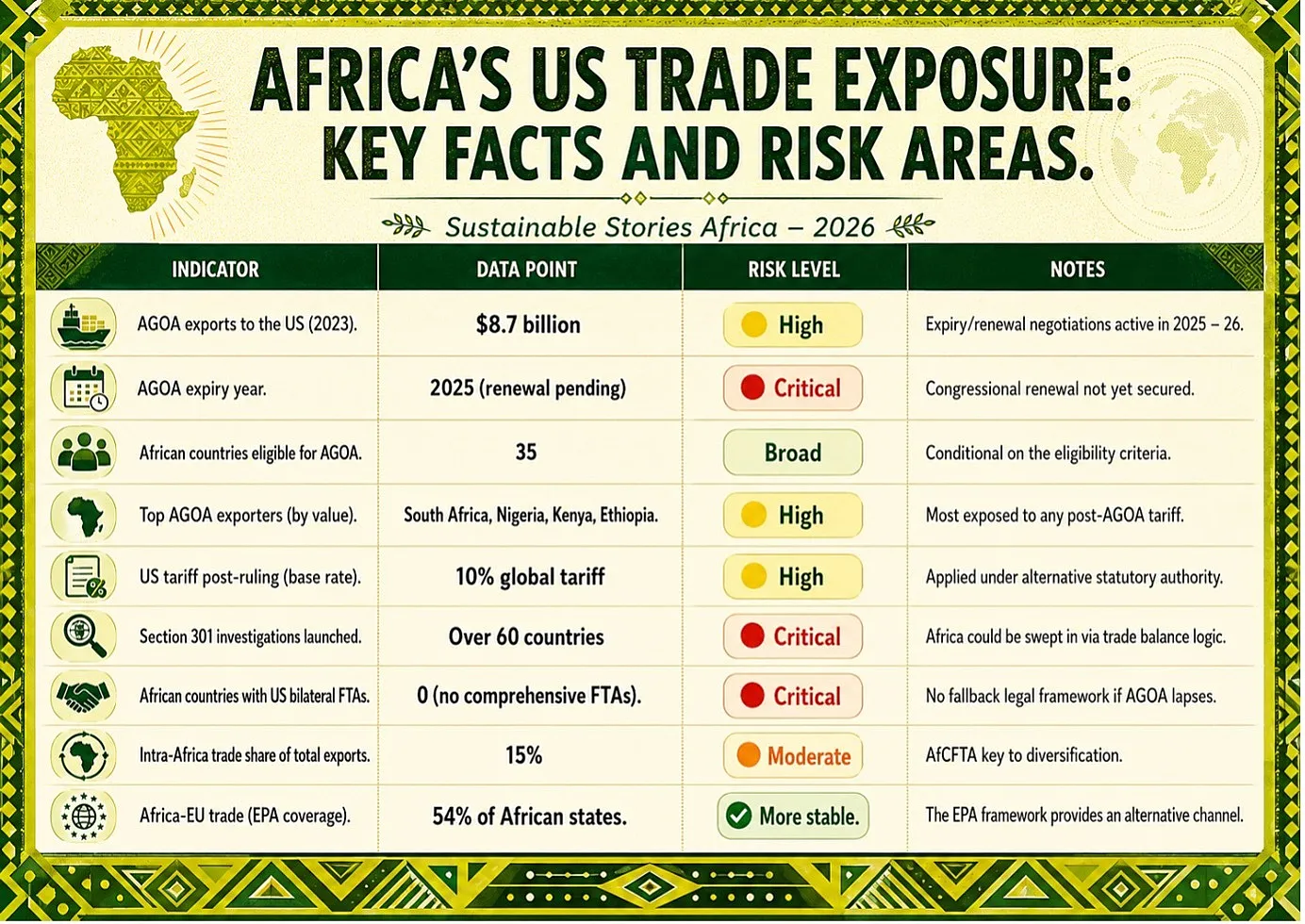
However, AGOA expired in 2025, and its renewal remains a subject of active negotiation.
The tariff ruling has introduced a new layer of uncertainty into these talks. If the administration pursues Section 301 tariffs targeting countries with persistent trade surpluses, a model explicitly cited by administration lawyers, African nations with growing export profiles could find themselves in the crosshairs.
The broader geopolitical logic is also relevant. The tariff regime that preceded the ruling reflected an administration view that "these countries export more than they consume" and are "threatening US competitiveness."
Several African economies, including Ethiopia, South Africa, Morocco and Kenya, have been investing heavily in export-oriented manufacturing and agro-processing.
If this trajectory is viewed as contributing to trade imbalances, the risk of targeted trade action is real.
Beyond the bilateral exposure, the US-China trade tensions that underlie much of the current tariff architecture create indirect risks for Africa.
Supply chain rerouting, demand disruption and commodity price volatility all contribute to US-China frictions in African export markets, including oil, minerals, agricultural commodities and manufactured goods.
What a Stable, Rules-Based Trade Order Would Unlock
The argument for a stable, predictable and rules-based international trade order is not abstract for Africa. It is developmental.
The continent's industrialisation ambitions, built on the African Continental Free Trade Area (AfCFTA), AGOA and a growing set of bilateral trade agreements, depend on a global trading environment where market access is predictable, tariff exposure is manageable and legal frameworks are credible.
An Africa that has successfully navigated AGOA's renewal, built credible export platforms in textiles, automotive, agriculture and digital services, and reduced its dependence on raw commodity export is an Africa that can capture greater value from the global trading system, regardless of which political administration occupies the White House.
However, this requires a proactive strategy, not passive hope. The US tariff ruling and its aftermath are a reminder that African trade policy cannot be predicated on the permanence of any particular global trade architecture.
Africa's Trade Strategy Must Diversify and Deepen
The strategic response to US trade unpredictability is clear:
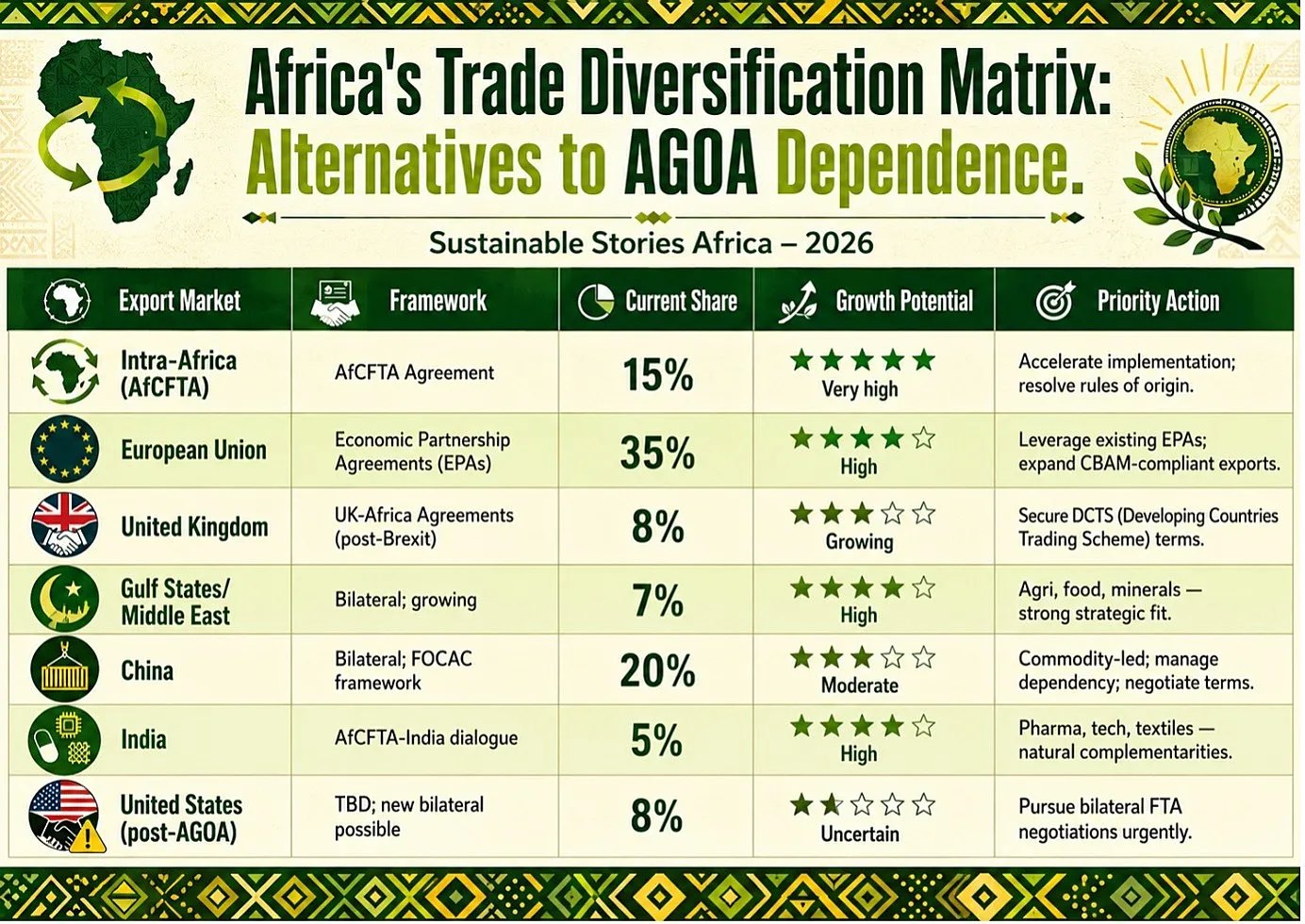
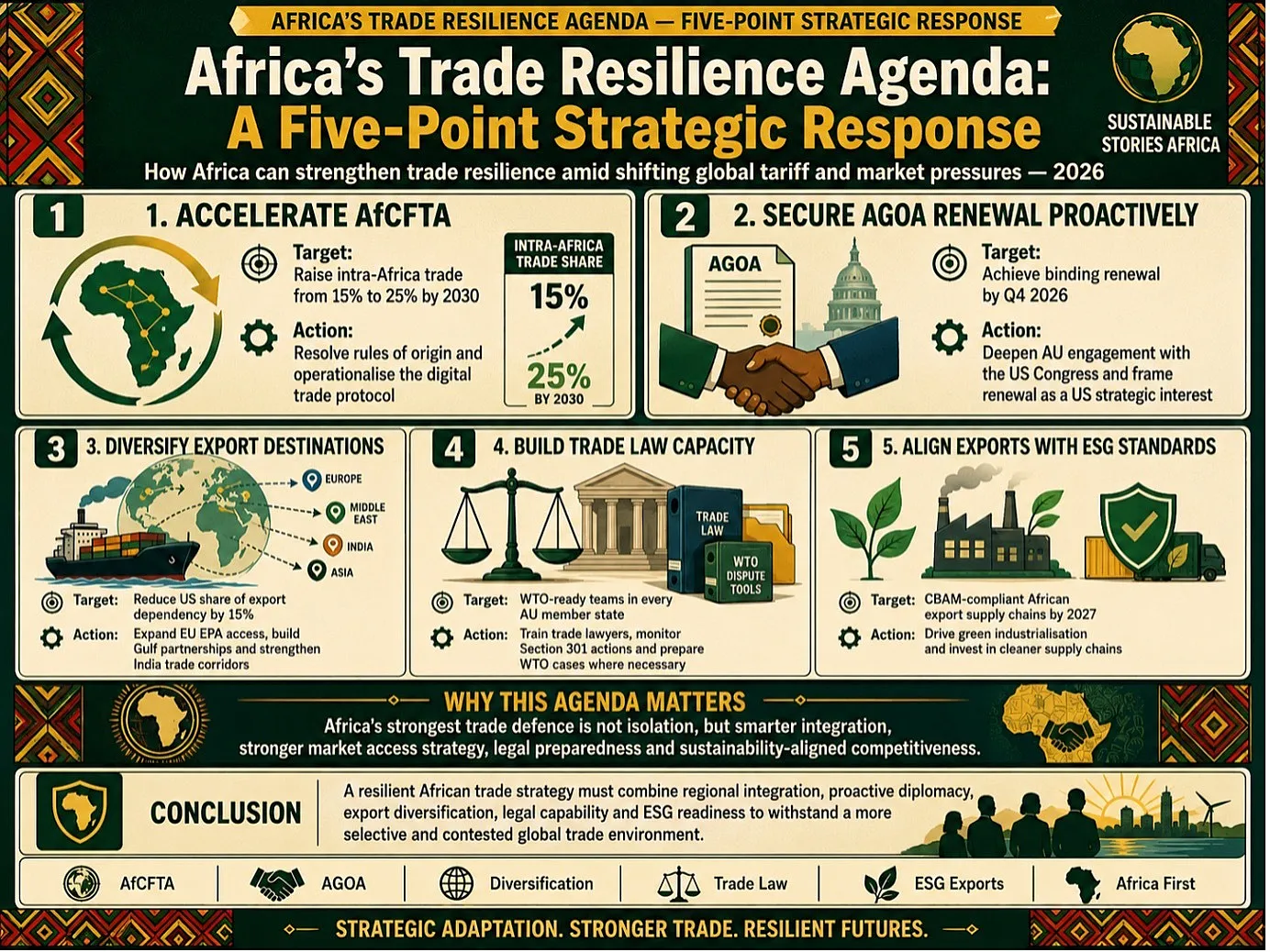
- Accelerate AfCFTA implementation. Intra-African trade, currently at approximately 15% of total African exports, must grow. The AfCFTA Secretariat, AU member states and private sector must treat 2026 as a year of decisive implementation, resolving rules-of-origin disputes, advancing tariff liberalisation schedules and operationalising the digital trade protocol.
- Diversify export destinations. African exporters should accelerate market diversification toward the EU (under the Economic Partnership Agreements), the UK (post-Brexit trade frameworks), the Gulf states, India and China, reducing concentration risk in the US market.
- Secure AGOA renewal terms proactively. African trade ministers and the AU should engage the US Congress directly on AGOA renewal, framing the case in terms of US strategic interests in Africa, from critical minerals to counter-terrorism to investment returns, rather than purely development arguments.
- Build trade dispute capacity. As US trade policy becomes more litigious, African governments need international trade law expertise, at government and private-sector levels, to monitor, respond to and challenge measures that breach WTO commitments.
- Align trade and ESG strategy. EU carbon border adjustment mechanisms, US clean energy supply chain requirements and UK modern slavery reporting obligations are all reshaping market access. African exporters that align their supply chains with these standards will maintain access; those that don't will be progressively excluded.
Path Forward – Africa Must Write Its Own Trade Narrative
The US Supreme Court's tariff ruling does not resolve America's trade policy turbulence; it merely moves it to new legal ground.
Africa cannot afford to wait for US policy stability before building trade resilience.
AfCFTA, export diversification and proactive AGOA engagement are the continent's own tools.
The time to use them decisively is now, rather than when the next trade shock arrives.