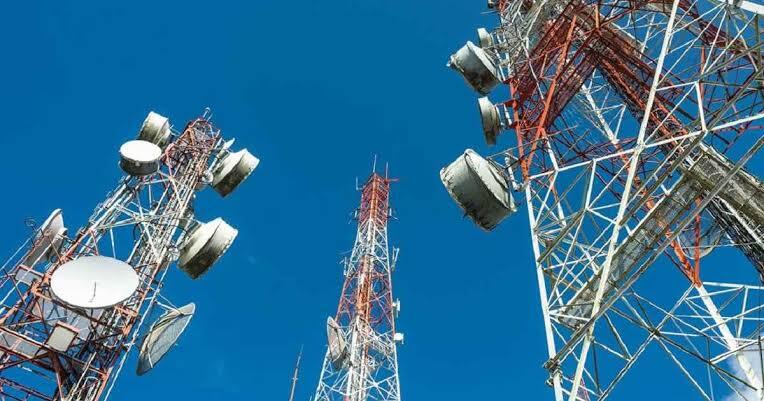
Nigeria’s telecoms and media markets are entering a decisive regulatory phase, as broadband expansion, spectrum reform, platform oversight and digital broadcasting converge on a single question: can access grow without weakening consumer protection, competition and trust?
A May 2026 insight shows a sector moving from licence control to system governance, in which data, cybersecurity, local content and affordability now shape the country’s digital development story.
Nigeria’s Digital Rules Enter Faster Phase
Nigeria’s communications and media sectors are no longer simply about who gets a licence, who owns spectrum, or who can broadcast.
They are becoming a test of how Africa’s largest economy manages digital access, competition, local content, consumer protection and platform accountability at once.
The source document for this article is Lexology’s “Panoramic: Telecoms & Media 2026 - Nigeria,” generated on June 4, 2026, with law stated as of May 18, 2026.
The Nigeria section was contributed by Streamowers & Köhn, and it captures a regulatory landscape in motion: telecoms rules anchored by the Nigerian Communications Commission, broadcasting oversight led by the National Broadcasting Commission, and competition enforcement increasingly shaped by the Federal Competition and Consumer Protection Commission.
For citizens, the stakes are practical.
- Better broadband can improve learning, payments, healthcare access and small-business productivity.
- Better broadcasting rules can widen information access and local creative participation.
However, weak governance could deepen digital exclusion, market concentration, privacy risks and misinformation.
A Digital Economy Faces New Rules
Nigeria’s digital economy is entering a more demanding phase: regulators are trying to expand access while tightening the rules that determine it.
- Who connects
- Who broadcasts
- Who stores data
- Who controls platforms
- Who protects consumers?
The country’s communications sector remains primarily regulated by the Nigerian Communications Act 2003 and the Wireless Telegraphy Act 1966, with the Nigerian Communications Commission responsible for sector regulation.
Policy direction sits with the Minister of Communications, Innovation and Digital Economy, reflecting the sector’s wider role in national development.
The media sector operates under the National Broadcasting Commission Act and the Nigerian Broadcasting Code, with the NBC regulating broadcasting services.
At the same time, the FCCPC has become central to digital-market accountability, especially where consumer protection, competition and data governance overlap.
That overlap is now the story.
- Telecommunications is no longer just infrastructure.
- Broadcasting is no longer just television and radio.
- Online platforms are no longer neutral pipes.
Across the sector, Nigeria is building a governance model for a converged economy in which telecoms, media, data, advertising, streaming, fintech, cloud services and social platforms increasingly meet.
Licensing, Spectrum, and Data Now Converge
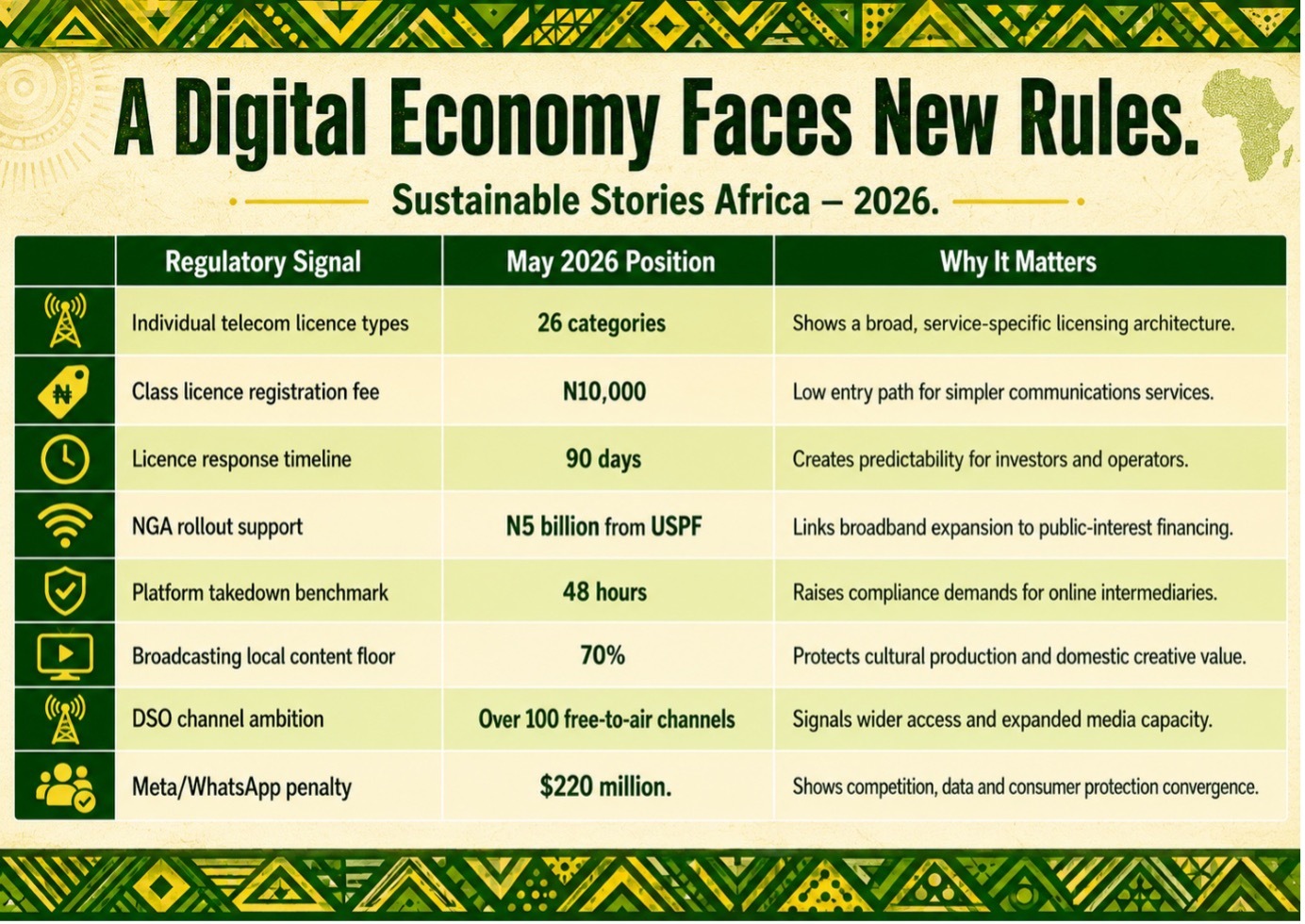
Nigeria's telecoms licensing framework operates on two tracks. Individual licences govern specific high-value services, such as internet, fixed wireless, international gateway and cable landing.
In particular, class licences cover lighter-touch activities such as cybercafés, cabling and payphone operations, that require only a N10,000 registration fee.
Licence durations range from five years for internet service providers to 20 years for national carriers.
However, the framework is actively modernising. In January 2026, the NCC introduced a General Authorisation Framework to accommodate innovative services outside traditional classifications, covering regulatory sandboxes, proof-of-concept trials and interim authorisations, with a mandatory N250,000 administrative fee.
It creates a structured pathway for market testing before products scale, balancing innovation with regulatory oversight.
Spectrum trading is also attracting flexibility, raising important questions about market concentration and fair access.
Data governance now anchors the entire system. The Nigeria Data Protection Act 2023, the GAИД 2025, and a February 2026 NDPC-NCC memorandum of understanding collectively establish that consumer data protection is no longer peripheral to telecoms regulation; it is central to it.
Inclusion Can Turn Regulation Into Value
Nigeria's telecoms and media sectors hold significant development potential; however, only if regulation actively drives investment, inclusion and consumer trust simultaneously.
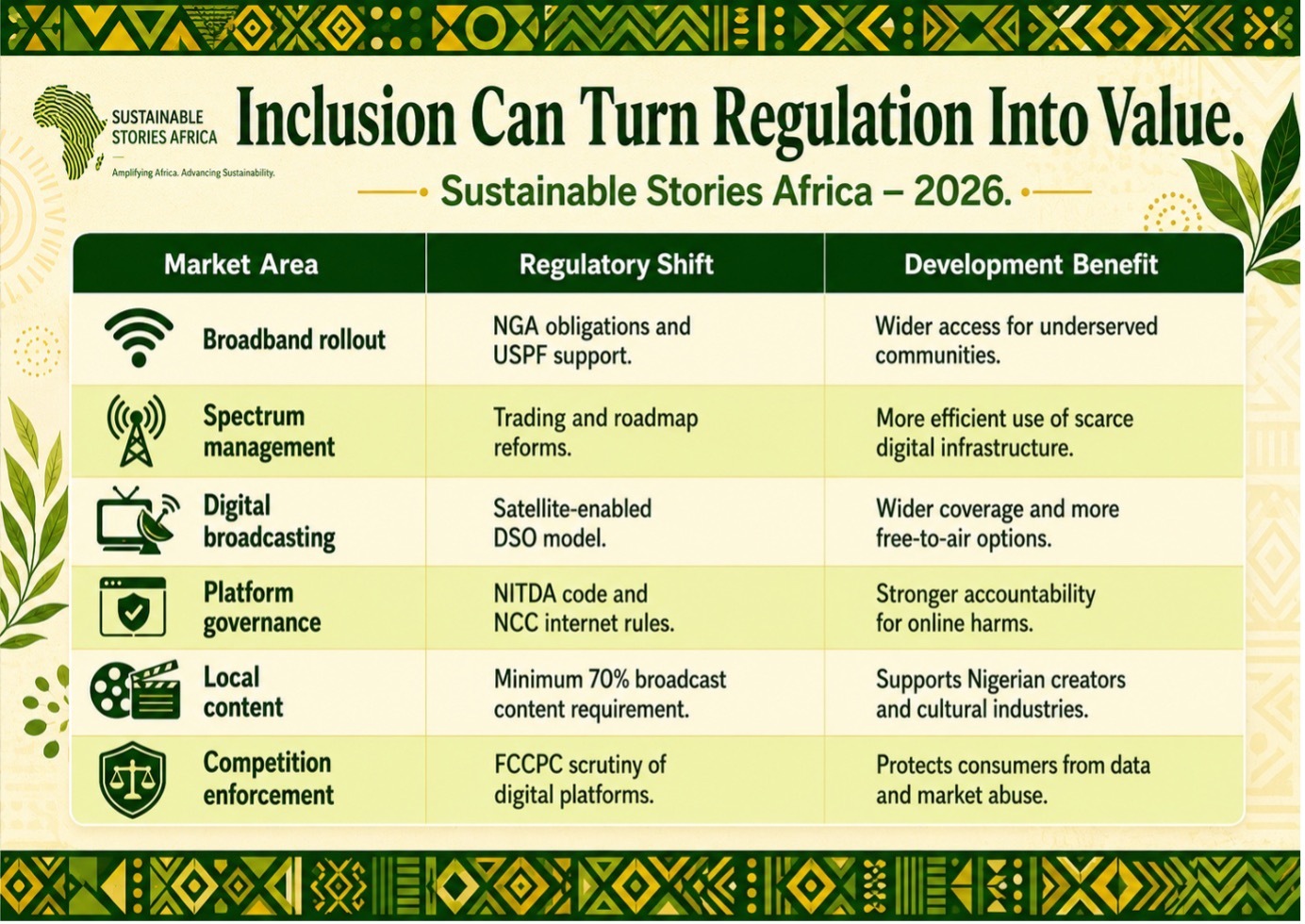
On broadband, next-generation-access obligations are structured to extend reach beyond commercial logic.
Wholesale wireless licensees must phase rollouts across state capitals and local government headquarters, with the Universal Service Provision Fund offering up to N5 billion in one-off support, as milestones are met.
The principle is deliberate: where private capital stalls, public-interest financing bridges the gap.
In the media, the digital switchover remains the defining test. Since its 2016 launch in Jos, Nigeria's DSO programme has moved incrementally.
A May 2026 policy direction signals renewed national momentum, backed by NIGCOMSAT-1R satellite infrastructure, promising over 100 free-to-air channels, high-definition broadcasting and spectrum release for telecoms use.
The ambition is real. Execution will determine whether connectivity becomes genuine public infrastructure or remains an unfulfilled policy aspiration.
Regulators And Markets Must Move Together
Nigeria's regulatory challenge is not a lack of rules; it is coordination, enforcement quality and implementation credibility across a rapidly converging digital landscape.
Five priorities define the path forward.
- Regulators NCC, NBC and FCCPC must clarify overlapping jurisdiction as digital services increasingly cut across traditional boundaries.
- Broadband expansion must be treated as development infrastructure, with Project BRIDGE and fibre initiatives designed around open access, underserved communities and measurable affordability targets.
- Platform regulation must protect users without suppressing legitimate expression. NITDA's Code of Practice sets firm benchmarks, including 48-hour takedowns, but enforcement must remain transparent and rights-aware.
- Data protection must move from policy citation to board-level operational practice, with consent systems, breach protocols and vendor-risk management embedded across operators.
Media reform must actively defend plurality as pay television consolidates and global streaming platforms expand.
The Meta/WhatsApp enforcement case, a US$220 million FCCPC penalty upheld in April 2025, signals the clear direction: privacy, competition, and consumer protection are now inseparable regulatory questions in Nigeria's digital economy.
Path Forward – Build Trust Before The Next Leap
Nigeria’s telecoms and media reforms should now focus on access, affordability, transparent enforcement, data protection and fair competition.
The goal is not regulation for its own sake, but a digital market where citizens are safer, investors have certainty, and innovation reaches underserved communities.
The next phase requires coordinated regulators, accountable platforms, resilient broadband infrastructure and a credible digital switchover.
Well done, Nigeria can turn telecoms and media governance into a foundation for inclusion, creativity and sustainable economic growth.