Africa is sharpening its green-economy ambitions. With a $5 billion project pipeline in view, policymakers, investors and developers are converging to accelerate sustainable infrastructure across the continent.
The return of the Green Economy Summit for its fourth edition reflects growing momentum behind climate-aligned investment, clean energy, and green industrialisation.
The challenge now is turning pledges into bankable projects that deliver jobs, resilience, and inclusive growth.
Africa's $5bn Green Investment Moment
Africa is positioning itself for a major green economy investment push, with stakeholders targeting a $5 billion pipeline of sustainable projects as the Green Economy Summit returns for its fourth edition.
The summit, which brings together government leaders, financiers, climate experts and private-sector players, is designed to unlock capital for renewable energy, green infrastructure, climate-smart agriculture and circular-economy initiatives.
Organisers say the goal is to move beyond dialogue and accelerate project delivery across African markets.
With climate risks intensifying and infrastructure needs rising, Africa's green-economy agenda is increasingly framed as both an environmental and economic imperative.
Why the Green Economy Matters Now
Africa faces a dual challenge: rapid development needs and growing climate vulnerability. Floods, droughts and energy insecurity are already disrupting food systems, urban infrastructure and economic productivity.
At the same time, the continent holds vast renewable-energy resources, mineral wealth for clean-tech supply chains, and a youthful workforce capable of supporting green industrialisation.
The Green Economy Summit aims to bridge the gap between policy ambition and investment execution, focusing on projects that can attract blended finance, reduce emissions, and create jobs.
Priority sectors include:
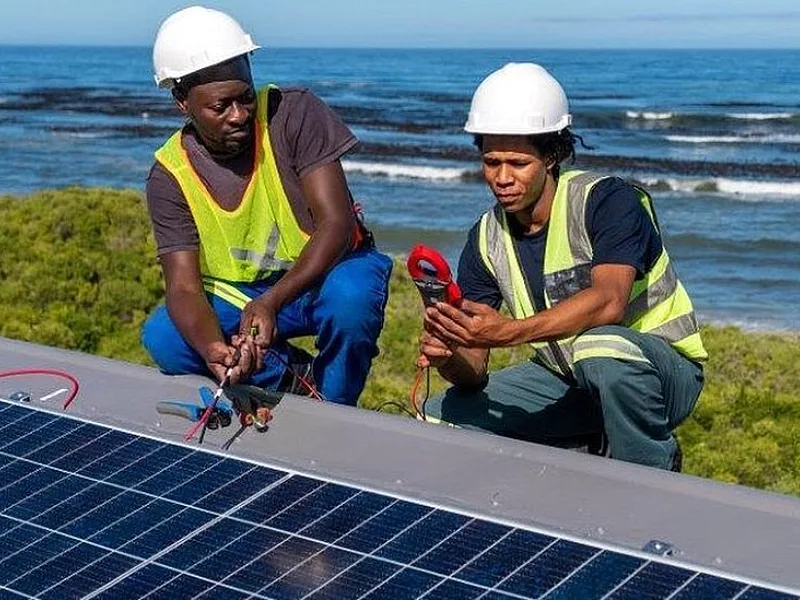
- Renewable energy and storage
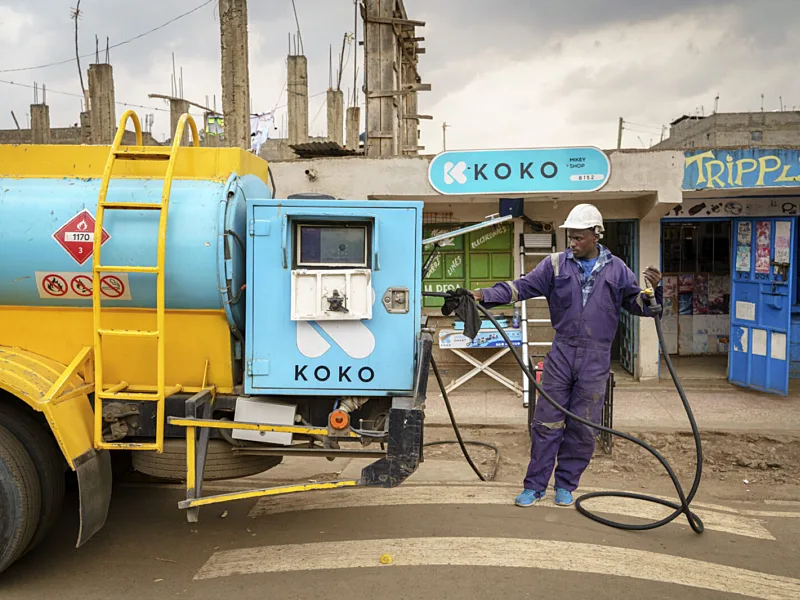
- Green transport and mobility
- Climate-resilient infrastructure
- Waste management and circular economy
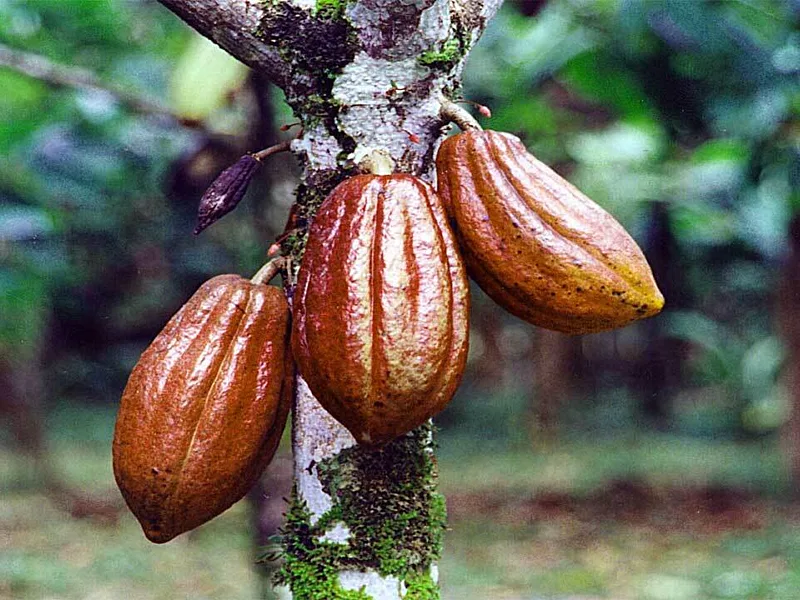
- Sustainable agriculture and water systems
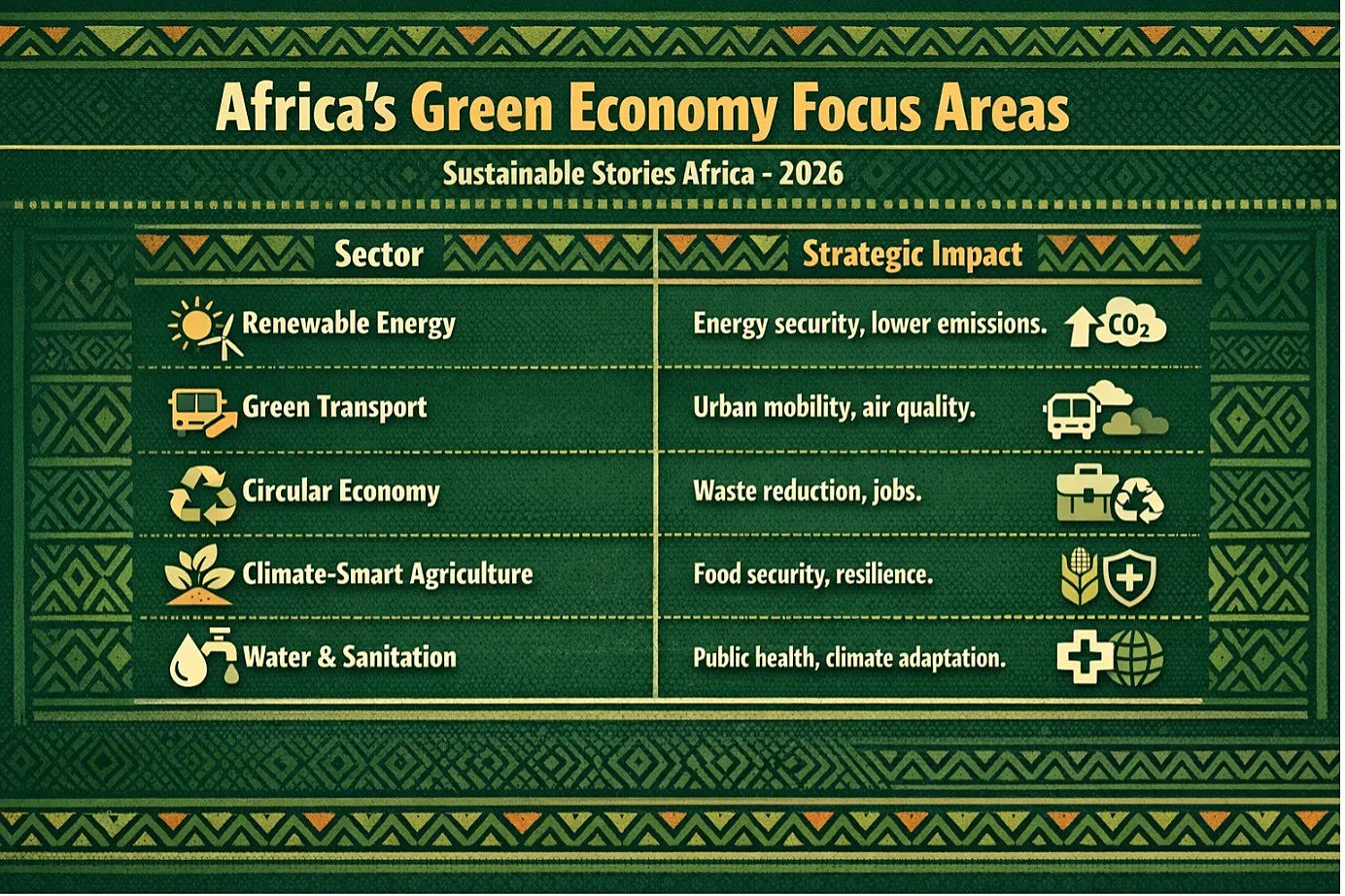
Africa's Green Economy Focus Areas
| Sector | Strategic Impact |
|---|---|
| Renewable energy | Energy security, lower emissions |
| Green transport | Urban mobility, air quality |
| Circular economy | Waste reduction, jobs |
| Climate-smart agriculture | Food security, resilience |
| Water & sanitation | Public health, climate adaptation |
For investors, these sectors represent both risk mitigation and long-term growth opportunities.
The summit's $5 billion project pipeline target reflects a growing emphasis on project readiness, thereby ensuring that proposals are technically sound, financially viable and aligned with climate-finance standards.
African governments are increasingly working with development finance institutions, export-credit agencies and private investors to de-risk green projects through:
- Public-private partnerships
- Guarantees and concessional finance
- Clearer regulatory frameworks
- Improved project preparation facilities
Countries such as South Africa, Kenya, Nigeria, Morocco and Rwanda are already advancing renewable-energy auctions, green-transport corridors and waste-to-energy initiatives.
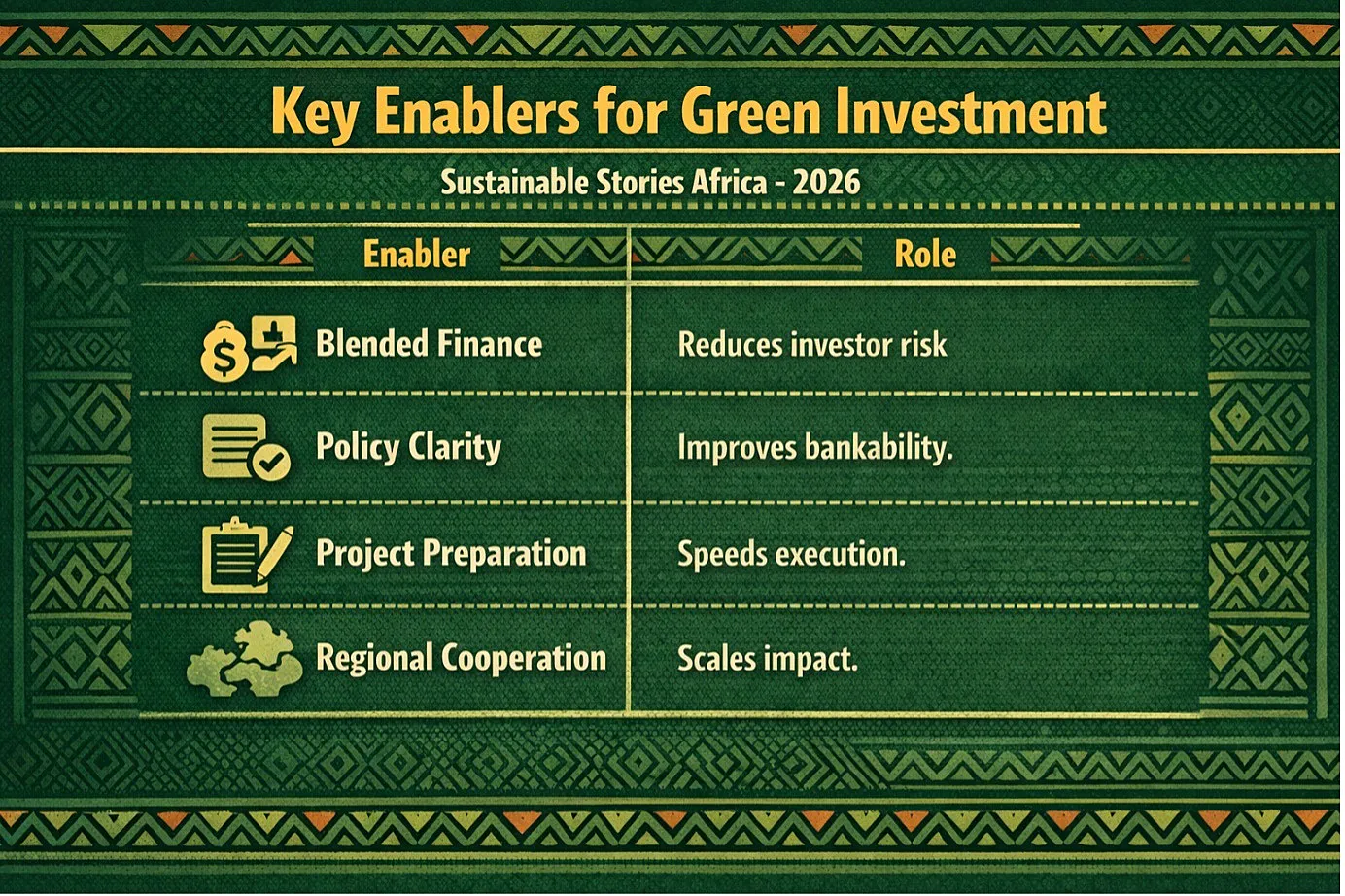
Key Enablers for Green Investment
| Enabler | Role |
|---|---|
| Blended finance | Reduces investor risk |
| Policy clarity | Improves bankability |
| Project preparation | Speeds execution |
| Regional cooperation | Scales impact |
The message from summit organisers is clear: Africa's green economy must move from concept to construction.
What Needs to Happen Next
Despite growing momentum, barriers remain.
Many African green projects still struggle with:
- Weak local currency financing
- Lengthy permitting processes
- Grid and infrastructure constraints
- Limited technical capacity
Experts argue that without faster execution, Africa risks missing the current wave of global climate finance and clean-technology investment.
The summit therefore calls for:
- Stronger public-sector leadership to fast-track approvals
- Deeper private-sector engagement in project development
- Regional collaboration on cross-border energy and transport
- Skills development for green-economy jobs
Failure to act could lock countries into carbon-intensive infrastructure and higher climate-adaptation costs.
PATH FORWARD – From Pledges to Project Delivery
Africa's $5 billion green project ambition will depend on faster project preparation, smarter financing structures and stronger policy coordination. The Green Economy Summit is positioning itself as a platform for turning climate commitments into investable opportunities.
If momentum holds, green infrastructure could become a cornerstone of Africa's growth strategy, supporting jobs, resilience and long-term economic transformation.