Africa's growth story is not stalling. It is recalibrating.
A United Nations (UN) report projects the continent's economy will remain resilient in 2026, even as global trade tensions, debt pressures and climate shocks reshape capital flows and policy priorities.
The message is cautious but clear: Africa's macroeconomic foundations are stabilising, but reform momentum must accelerate.
Africa's Growth Holds Firm Amid Global Trade Headwinds – Resilience Amid Rising Global Uncertainty
Africa's economic outlook is expected to remain solid in 2026 despite mounting trade uncertainty and geopolitical fragmentation, according to a UN assessment.
The UN projects continental growth will strengthen modestly, supported by easing inflation, improved macroeconomic management and a gradual recovery in global demand.
However, it warns that persistent external shocks driven by trade restrictions and climate-related disruptions continue to test fiscal buffers across several economies.
For policymakers and investors alike, the message is clear: resilience is holding, but structural reform cannot slow.
Stabilising Inflation, Narrowing Fiscal Pressures
The UN report indicates that inflationary pressures are easing across much of the continent after the volatility of recent years.
Several African economies have tightened monetary policy, stabilised exchange rates and strengthened domestic revenue mobilisation.
Growth in 2026 is expected to be underpinned by:
- Gradual recovery in global trade volumes
- Increased intra-African trade under the AfCFTA framework
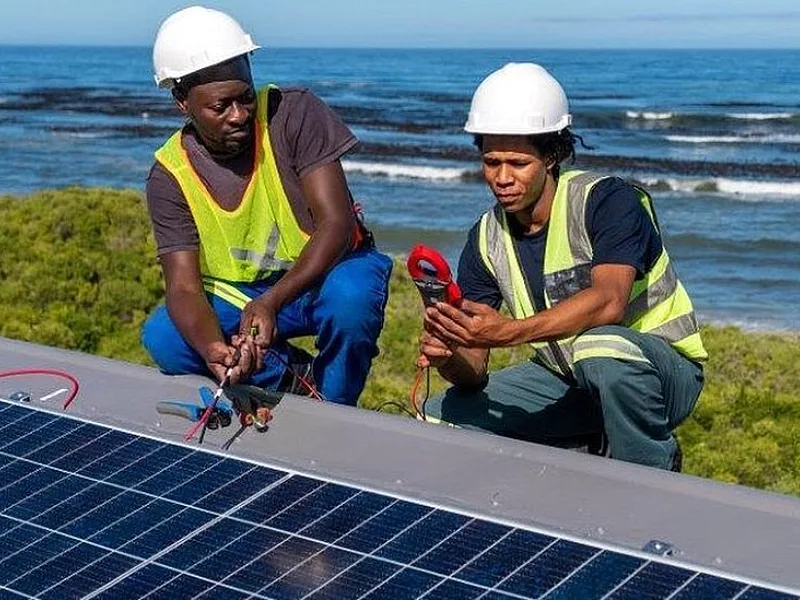
- Renewed investment momentum in infrastructure and energy
- Strengthened services and digital economy sectors
However, vulnerabilities remain uneven. Commodity-dependent economies continue to face exposure to global price swings, while debt servicing costs remain elevated in several frontier markets.
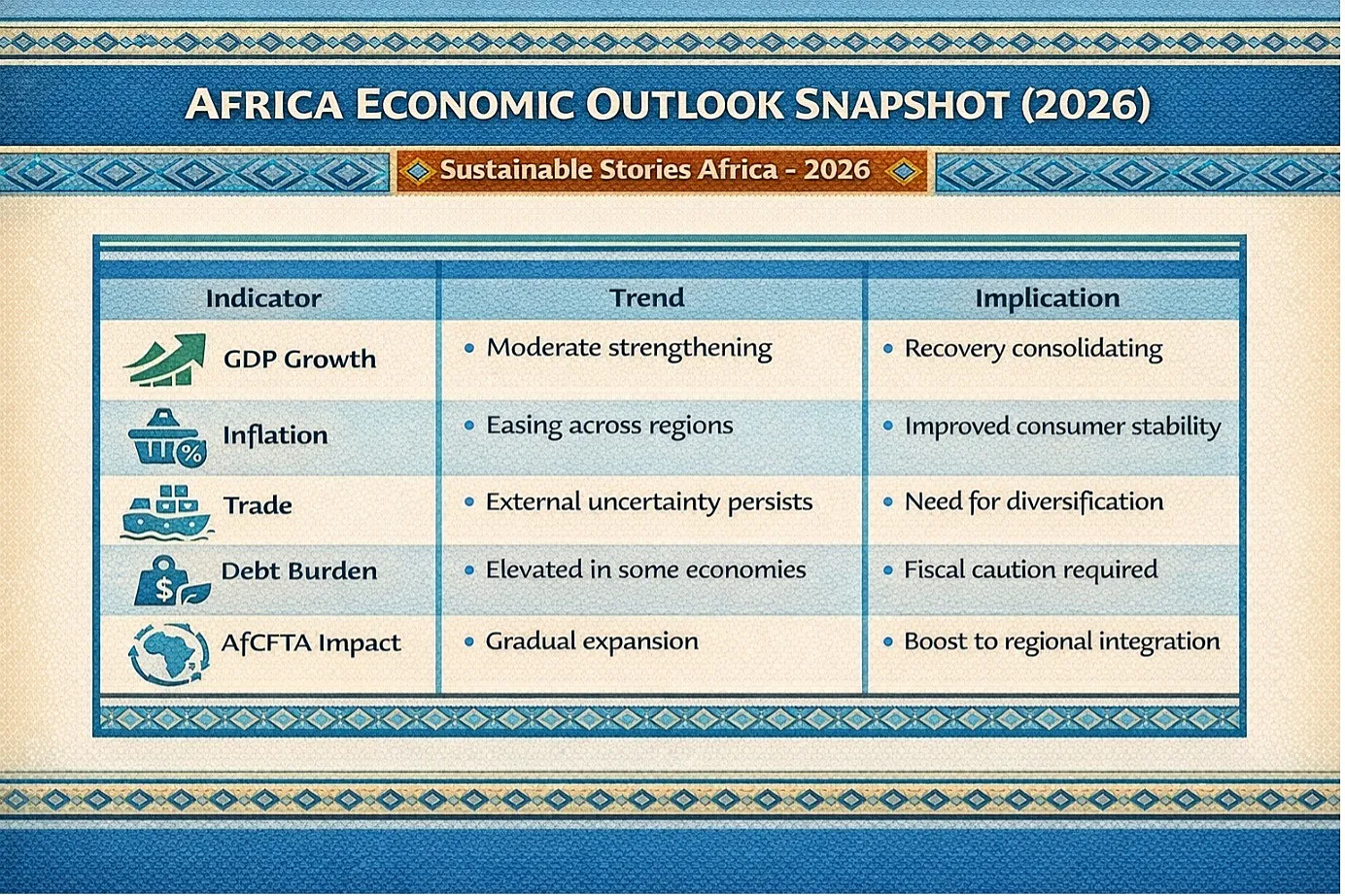
Africa Economic Outlook Snapshot (2026)
| Indicator | Trend | Implication |
|---|---|---|
| GDP Growth | Moderate strengthening | Recovery consolidating |
| Inflation | Easing across regions | Improved consumer stability |
| Trade | External uncertainty persists | Need for diversification |
| Debt Burden | Elevated in some economies | Fiscal caution required |
| AfCFTA Impact | Gradual expansion | Boost to regional integration |
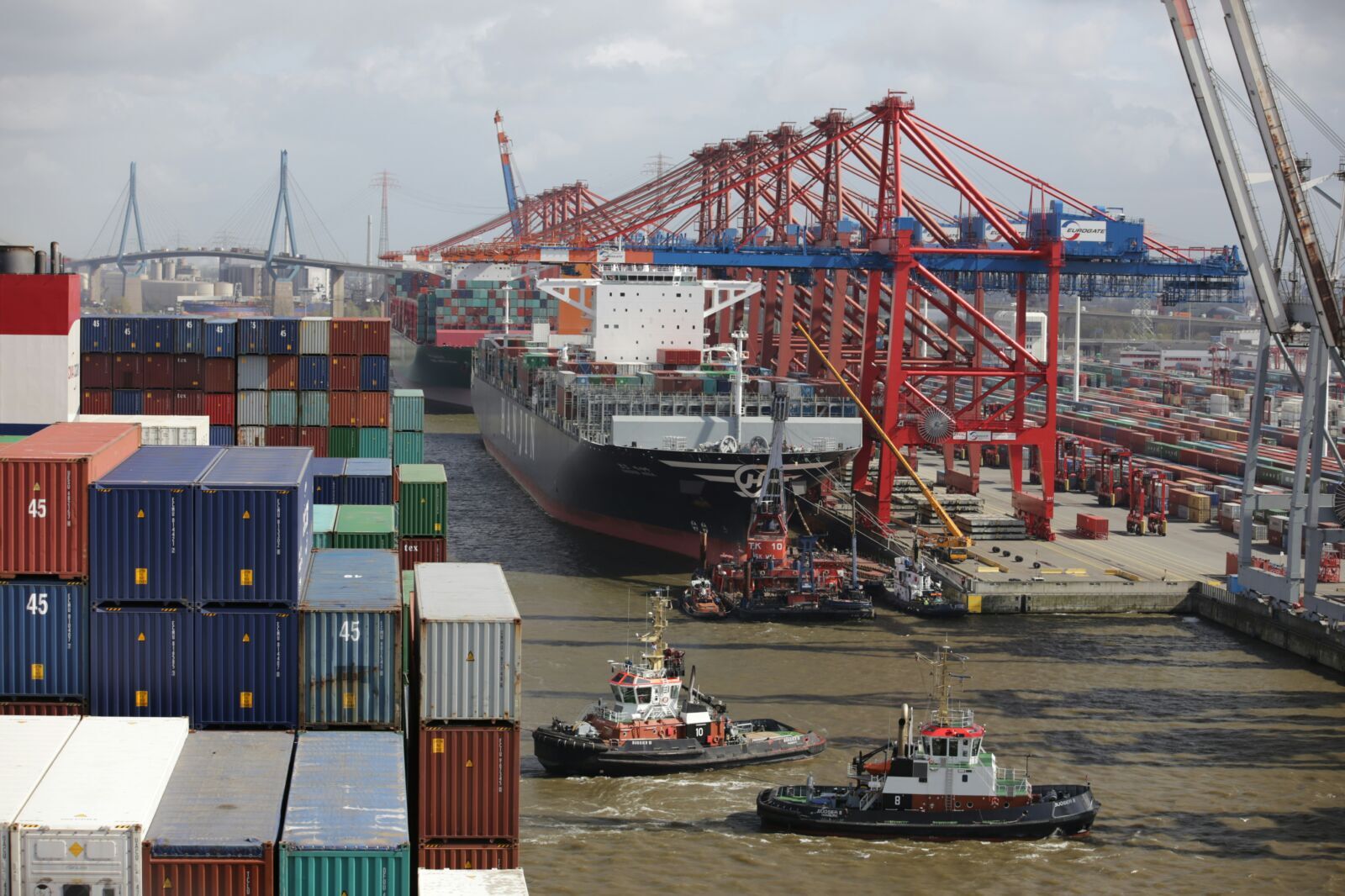
The report highlights that intra-African trade remains below potential, even as regional agreements gain traction.
Improved logistics, harmonised standards and stronger customs efficiency are viewed as critical next steps.
Reform Momentum Can Unlock Durable Growth
The continent's opportunity lies not merely in surviving volatility but in reshaping its growth architecture.
The UN highlights three areas capable of unlocking more durable expansion:
- Trade Diversification – Moving up the value chain and reducing reliance on raw commodity exports.
- Green and Climate Finance Mobilisation - Leveraging renewable energy investments and climate adaptation funding.
- Debt Sustainability and Domestic Resource Mobilisation – Strengthening tax systems and fiscal governance frameworks.
Africa's demographic dividend remains a powerful structural asset. A young population, expanding digital adoption and urbanisation trends are available to support medium-term consumption and productivity gains.
However, without sustained policy coordination, the benefits could dissipate. Climate shocks, from droughts to floods, are increasingly impacting agricultural output and the resilience of infrastructure. Financing adaptation remains critical to sustaining growth trajectories.
Key Reform Priorities Identified
| Reform Area | Strategic Focus | Expected Outcome |
|---|---|---|
| Trade Integration | AfCFTA acceleration | Expanded regional markets |
| Fiscal Management | Revenue mobilisation reforms | Reduced debt vulnerability |
| Climate Investment | Renewable energy & resilience | Sustainable growth pathway |
| Industrial Policy | Value addition & manufacturing | Job creation |
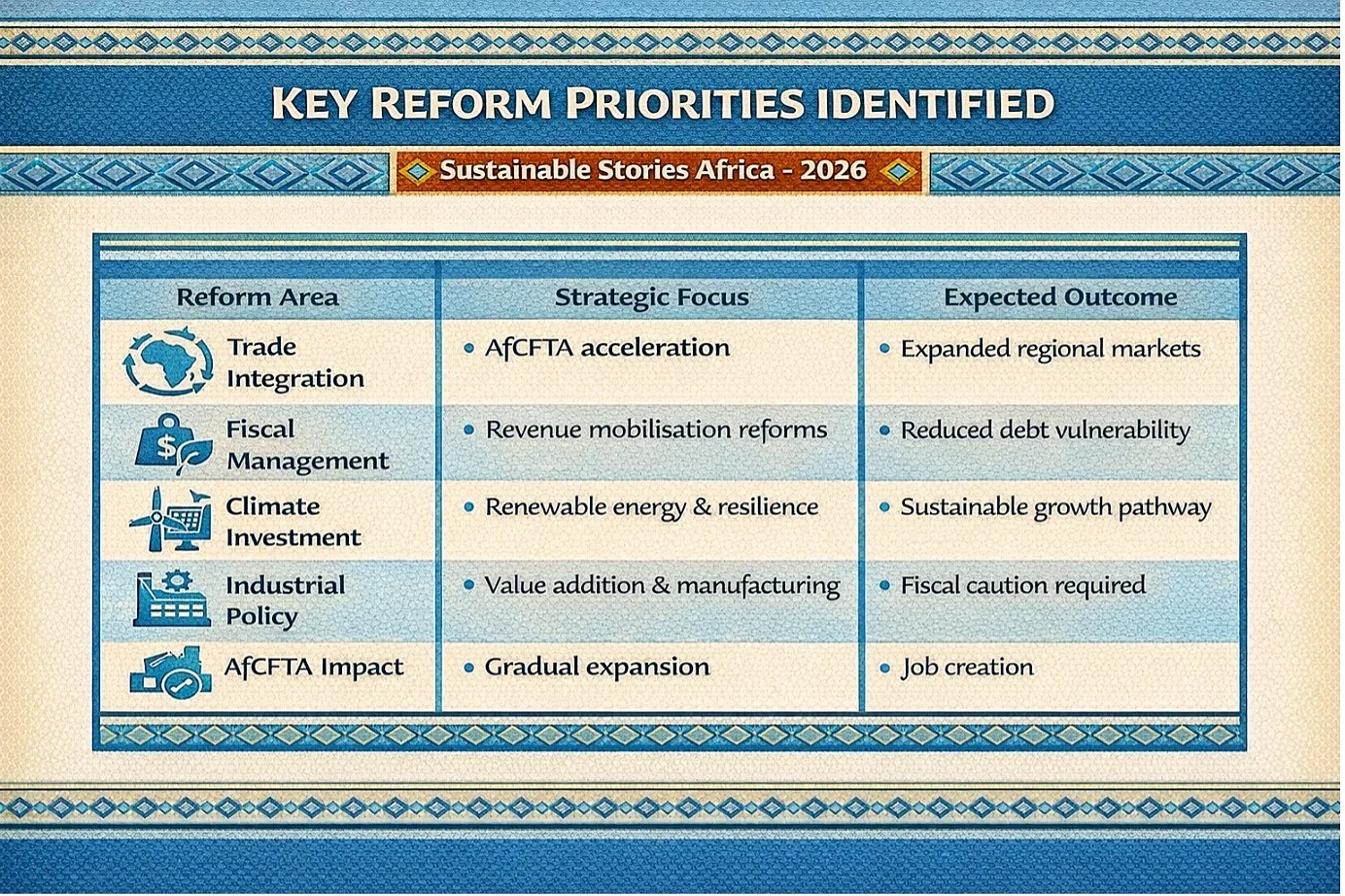
The report notes that progress across these areas would not only cushion external shocks but reposition Africa as a competitive investment destination amid shifting global supply chains.
Policy Coordination Must Deepen
The UN urges African governments to intensify macroeconomic coordination, strengthen regional trade implementation and enhance governance frameworks that improve investor confidence.
International partners are also encouraged to support debt restructuring efforts, climate finance flows and trade facilitation reforms that align with Africa's development priorities.
For investors, the outlook suggests opportunity tempered by selectivity. Markets with credible reform pathways and stable policy frameworks are likely to attract renewed capital inflows in 2026.
Path Forward – Consolidating Stability, Accelerating Structural Reform
Africa's economic resilience in 2026 will depend on sustaining fiscal discipline, expanding intra-regional trade and mobilising climate-aligned investment. Policymakers are prioritising debt sustainability and value-chain diversification to shield economies from global shocks.
The focus now shifts from recovery to transformation, integrating trade integration, green growth and governance reforms into the long-term economic strategy.