China has announced a 17% reduction in carbon intensity under its latest five-year development plan, reinforcing its climate strategy even as global momentum for emissions cuts begins to slow.
The target reflects Beijing’s attempt to balance economic expansion, energy security, and decarbonisation, while maintaining its pledge to peak emissions before 2030.
For global climate policy, the move signals that China, the world’s largest emitter, remains central to shaping the pace and credibility of the energy transition.
China Sets New Carbon Reduction Target
China has introduced a 17% carbon-intensity reduction target in its latest five-year economic and environmental development plan, reaffirming the country’s commitment to lowering emissions while sustaining economic growth.
Carbon intensity measures the amount of carbon dioxide emitted per unit of economic output.
By focusing on efficiency improvements rather than absolute emissions reductions, Beijing aims to reduce the environmental footprint of industrial expansion while maintaining strong economic performance.
The target forms part of China’s broader climate commitments, which include peaking carbon emissions before 2030 and achieving carbon neutrality by 2060.
The announcement comes at a time when global climate momentum has slowed amid geopolitical tensions, economic uncertainty, and competing energy priorities.
Balancing Climate Policy And Economic Growth
China’s approach highlights the complex balancing act faced by major economies attempting to decarbonise without undermining growth or energy security.
As the world’s largest manufacturer and energy consumer, China must simultaneously expand energy supply, maintain industrial competitiveness, and reduce emissions.
Carbon intensity targets allow policymakers to pursue these objectives by encouraging greater energy efficiency, renewable energy adoption, and technological innovation across industries.
In recent years, China has rapidly expanded solar, wind, and battery manufacturing capacity, positioning itself as a global leader in clean-technology production.
However, analysts note that the country still relies heavily on coal for electricity generation, underscoring the scale of the transition required to achieve long-term climate goals.
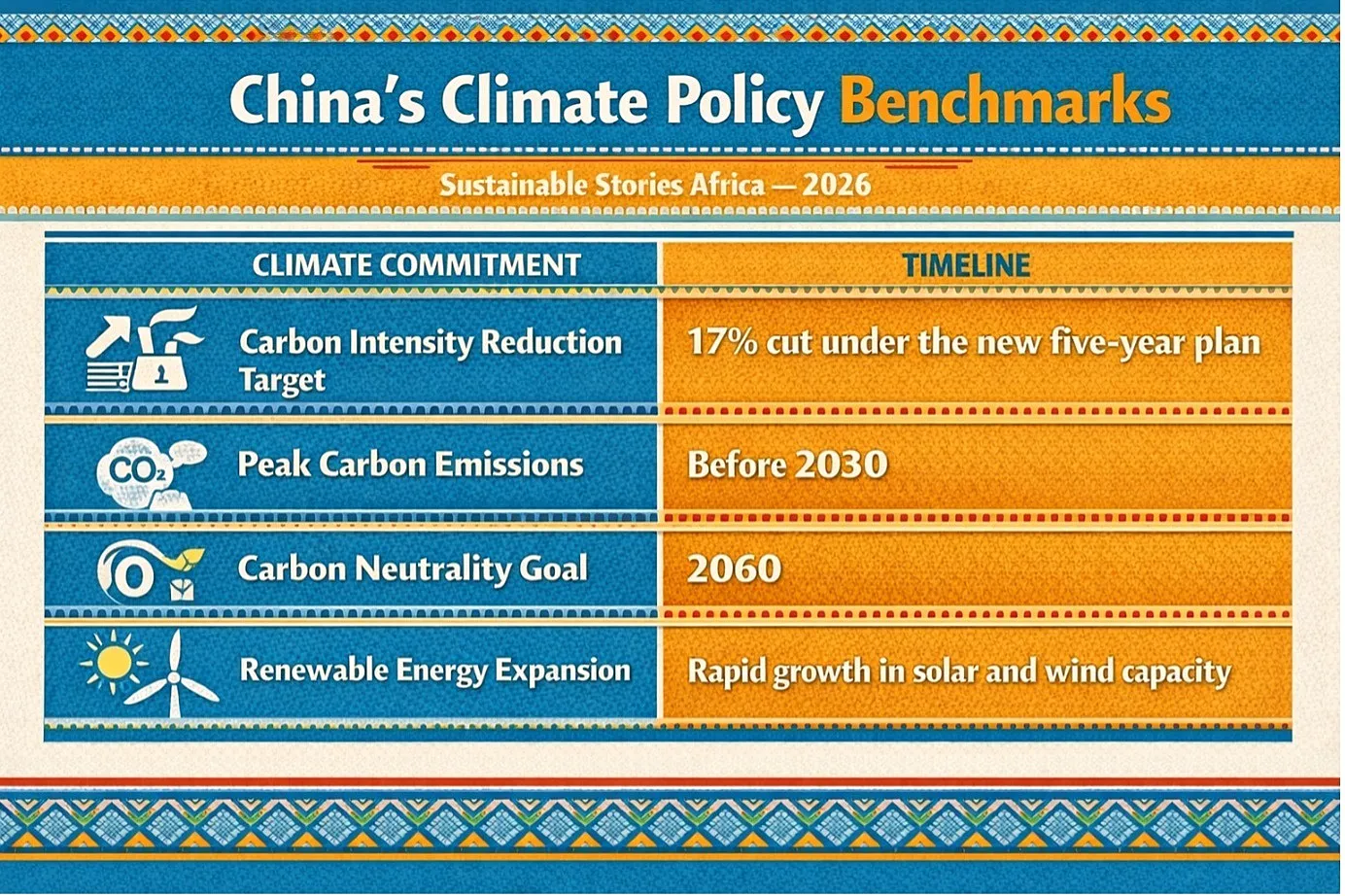
China’s Climate Policy Benchmarks
Climate Commitment | Timeline |
|---|---|
Carbon intensity reduction target | 17% cut under the new five-year plan |
Peak carbon emissions | Before 2030 |
Carbon neutrality goal | 2060 |
Renewable energy expansion | Rapid growth in solar and wind capacity |
Energy Transition Accelerates Through Technology
China’s decarbonisation strategy increasingly relies on large-scale investments in renewable energy, electric vehicles, battery storage, and grid modernisation.
The country has already become the world’s largest producer of solar panels, electric vehicles, and lithium-ion batteries, industries that are central to global clean-energy supply chains.
These investments not only support domestic climate goals but also shape global energy markets by lowering the cost of renewable technologies.
However, the transition remains uneven. Rapid industrial growth and rising electricity demand continue to drive coal consumption in some regions, making emissions reductions highly dependent on technological innovation and policy enforcement.
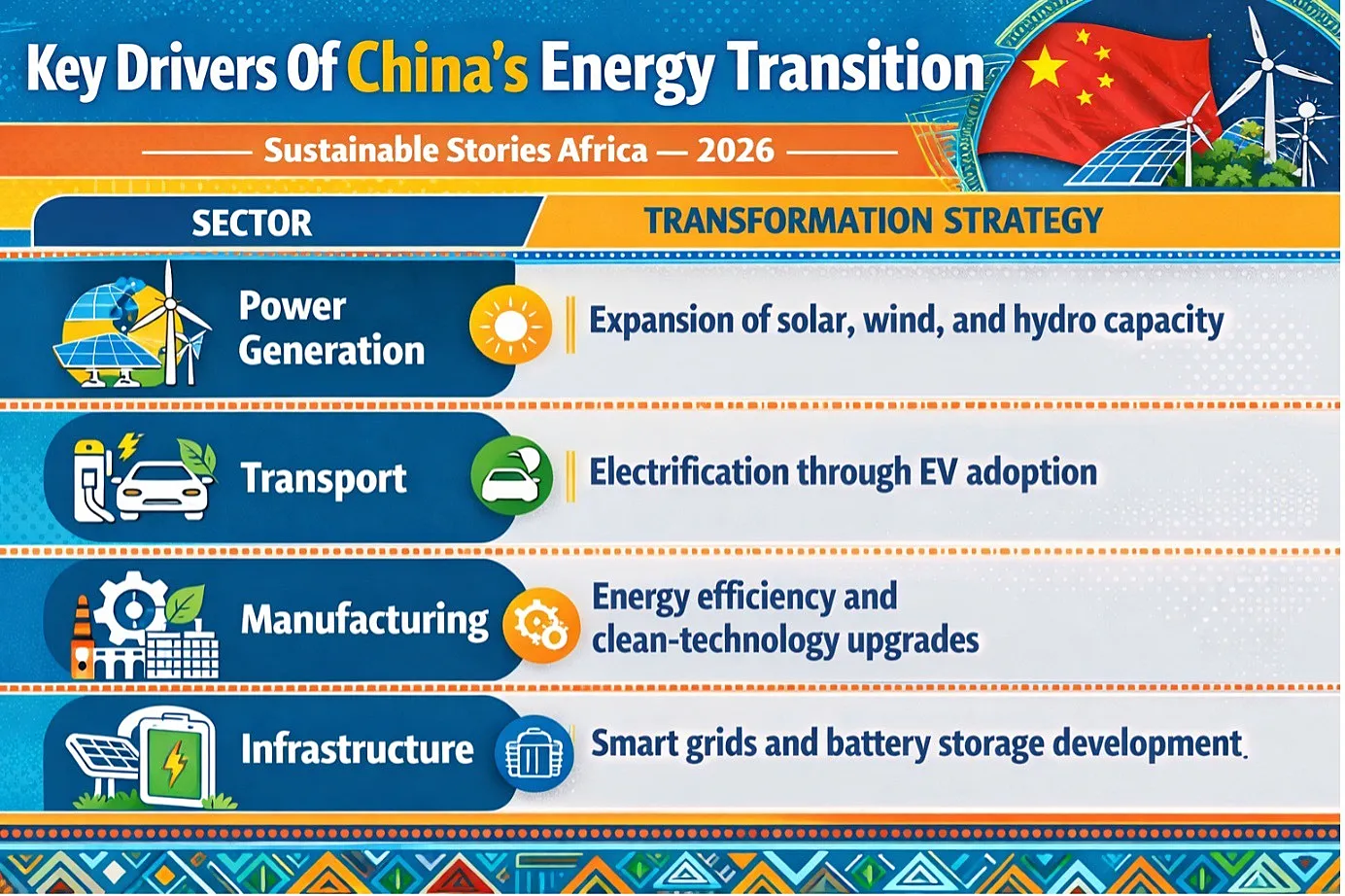
Key Drivers Of China’s Energy Transition
Sector | Transformation Strategy |
|---|---|
Power generation | Expansion of solar, wind, and hydro capacity |
Transport | Electrification through EV adoption |
Manufacturing | Energy efficiency and clean-technology upgrades |
Infrastructure | Smart grids and battery storage development |
Path Forward – China Navigates Growth And Decarbonisation
China’s latest carbon-intensity target reflects a pragmatic climate strategy that prioritises economic stability while advancing long-term decarbonisation goals.
By combining efficiency improvements with large-scale renewable investment, Beijing aims to maintain industrial competitiveness while steadily lowering emissions, an approach that will significantly influence global climate progress over the coming decades.
Culled From: China Sets 17% Carbon Intensity Cut in New Five-Year Plan as Global Climate Momentum Slows