
The European Bank for Reconstruction and Development (EBRD) has unveiled an ambitious plan to mobilise €150 billion in green finance by 2030, marking one of the most significant climate-aligned investment commitments among multilateral lenders.
The strategy underscores the growing role of development finance institutions in accelerating the global energy transition, particularly across emerging markets where infrastructure financing gaps remain large.
For African economies seeking climate capital, the announcement signals both opportunity and pressure: access to sustainable finance is expanding, but expectations around ESG governance, transparency, and climate accountability are also tightening.
Global Climate Finance Ambitions Accelerate Rapidly
The European Bank for Reconstruction and Development (EBRD) has set a target to mobilise €150 billion in green finance by 2030, reinforcing its strategic shift toward climate-aligned investment across emerging markets and developing economies.
The announcement reflects a broader global trend: multilateral development banks are rapidly repositioning their portfolios toward renewable energy, sustainable infrastructure, and climate resilience projects.
The EBRD has already committed to ensuring that more than half of its annual investments qualify as green finance, a threshold it achieved several years ahead of schedule.
For policymakers and investors, the move signals a growing consensus that development finance institutions will play a pivotal role in closing the climate investment gap, estimated by global institutions to exceed $4 trillion annually for emerging economies.
Development Banks Drive Emerging Market Transitions
The EBRD’s strategy focuses on scaling investments across several key sectors, including renewable energy, sustainable transport, climate-resilient infrastructure, and industrial decarbonisation.
Since launching its Green Economy Transition (GET) approach, the bank has progressively expanded climate financing across more than 30 economies spanning Eastern Europe, Central Asia, and parts of Africa.
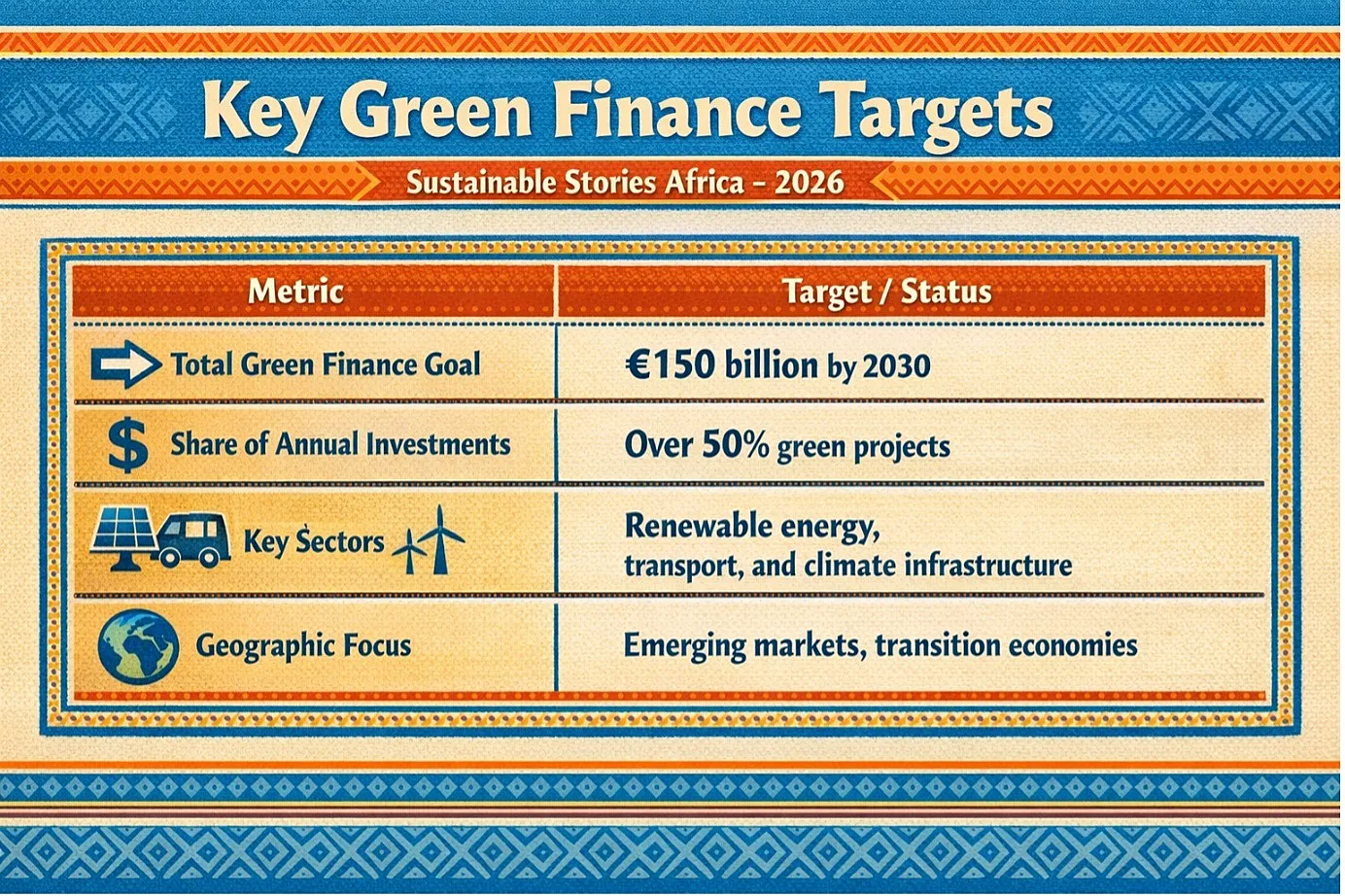
Key Green Finance Targets
Metric | Target / Status |
|---|---|
Total Green Finance Goal | €150 billion by 2030 |
Share of Annual Investments | Over 50% green projects |
Key Sectors | Renewable energy, transport, and climate infrastructure |
Geographic Focus | Emerging markets, transition economies |
The bank’s leadership emphasises that mobilising capital at scale will require blended finance models that combine public finance with private capital.
“Climate transition in emerging markets will depend heavily on crowding in private investment,” EBRD officials noted, highlighting the need for policy certainty and credible regulatory frameworks to attract long-term investors.
Climate Investment Gap Still Vast
Despite rising commitments from development banks, the global financing gap for climate action remains substantial.
Emerging and developing economies face the greatest challenges, particularly in energy infrastructure, where expanding renewable energy capacity will require trillions in new investments over the next decade.
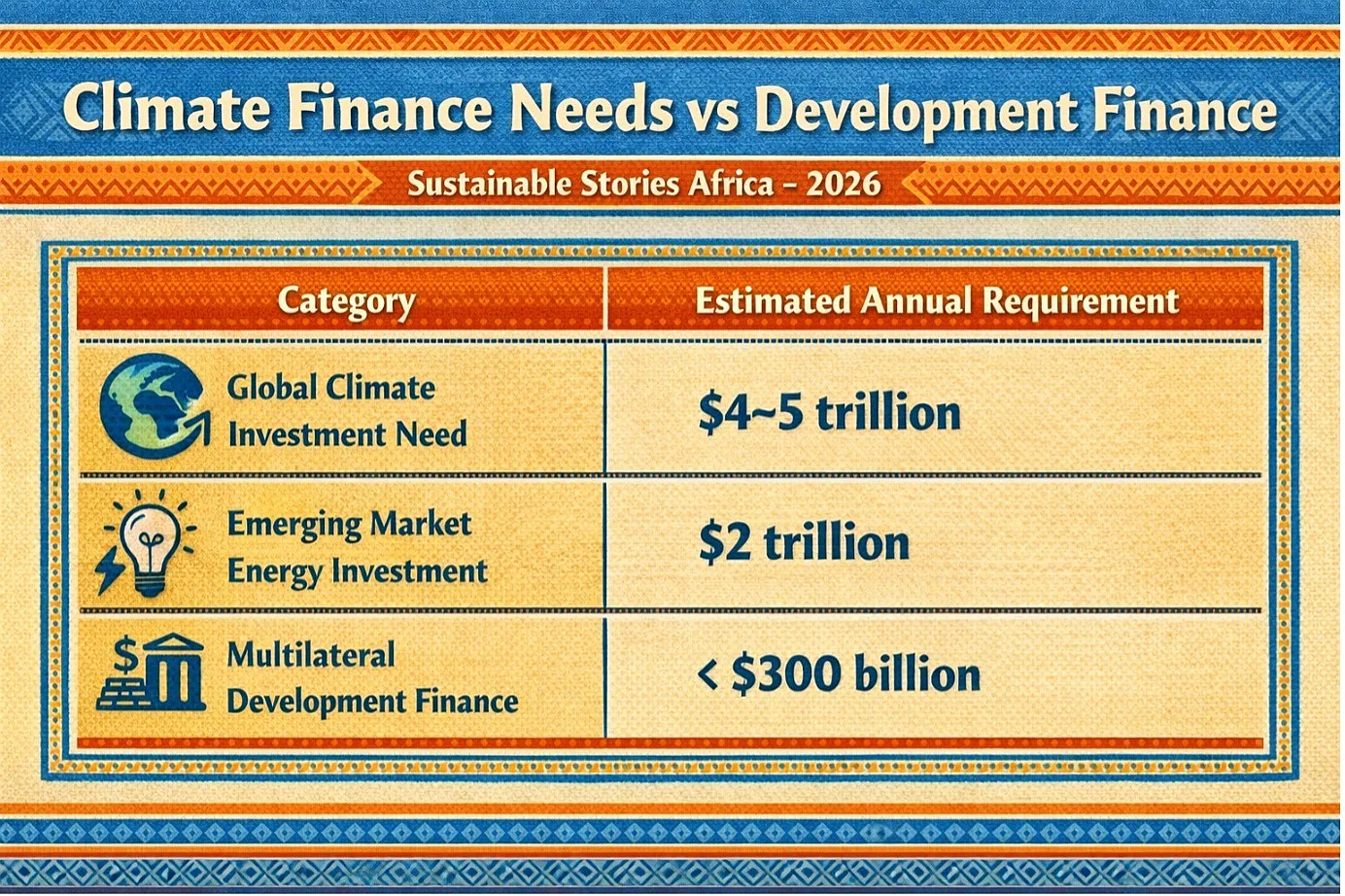
Climate Finance Needs vs Development Finance
Category | Estimated Annual Requirement |
|---|---|
Global Climate Investment Need | $4–5 trillion |
Emerging Market Energy Investment | $2 trillion |
Multilateral Development Finance | < $300 billion |
For African markets, the implications are significant. Access to concessional climate finance can accelerate energy transition pathways, but it also requires stronger ESG compliance standards and institutional governance frameworks.
As global lenders increase climate funding, corporate borrowers are facing greater scrutiny on sustainability reporting, risk management, and environmental impact measurement.
African Markets Must Strengthen ESG Frameworks
For African policymakers and corporates, the EBRD announcement reinforces a clear message: climate capital is becoming more available, but it is also becoming more conditional.
Development finance institutions increasingly require borrowers to demonstrate compliance with international ESG standards, including climate risk disclosures, sustainability reporting, and transparent governance systems.
Companies seeking to access this expanding pool of climate finance must therefore strengthen their data transparency, climate strategies, and corporate governance structures.
Without credible ESG frameworks, experts warn that many emerging markets risk missing out on the next wave of global green investment.
Path Forward – Scaling Climate Finance Through Stronger Governance
The EBRD’s €150 billion target reflects a broader shift toward development banks acting as catalysts for global climate investment. By blending public capital with private financing, the institution aims to accelerate the deployment of renewable energy and sustainable infrastructure across emerging markets.
For African economies, the opportunity lies in aligning regulatory systems, strengthening ESG reporting frameworks, and building credible investment pipelines that attract international climate finance.
Culled From: European Bank for Reconstruction and Development Targets €150 Billion In Green Finance By 2030