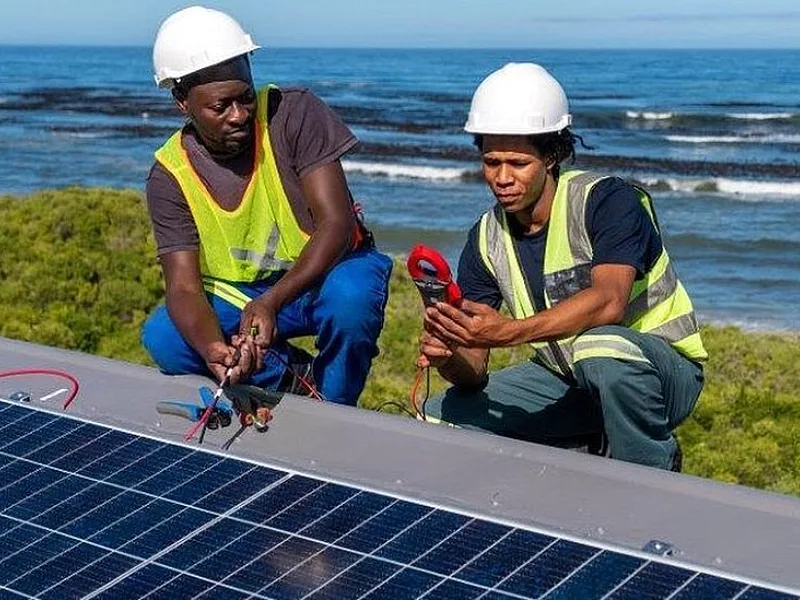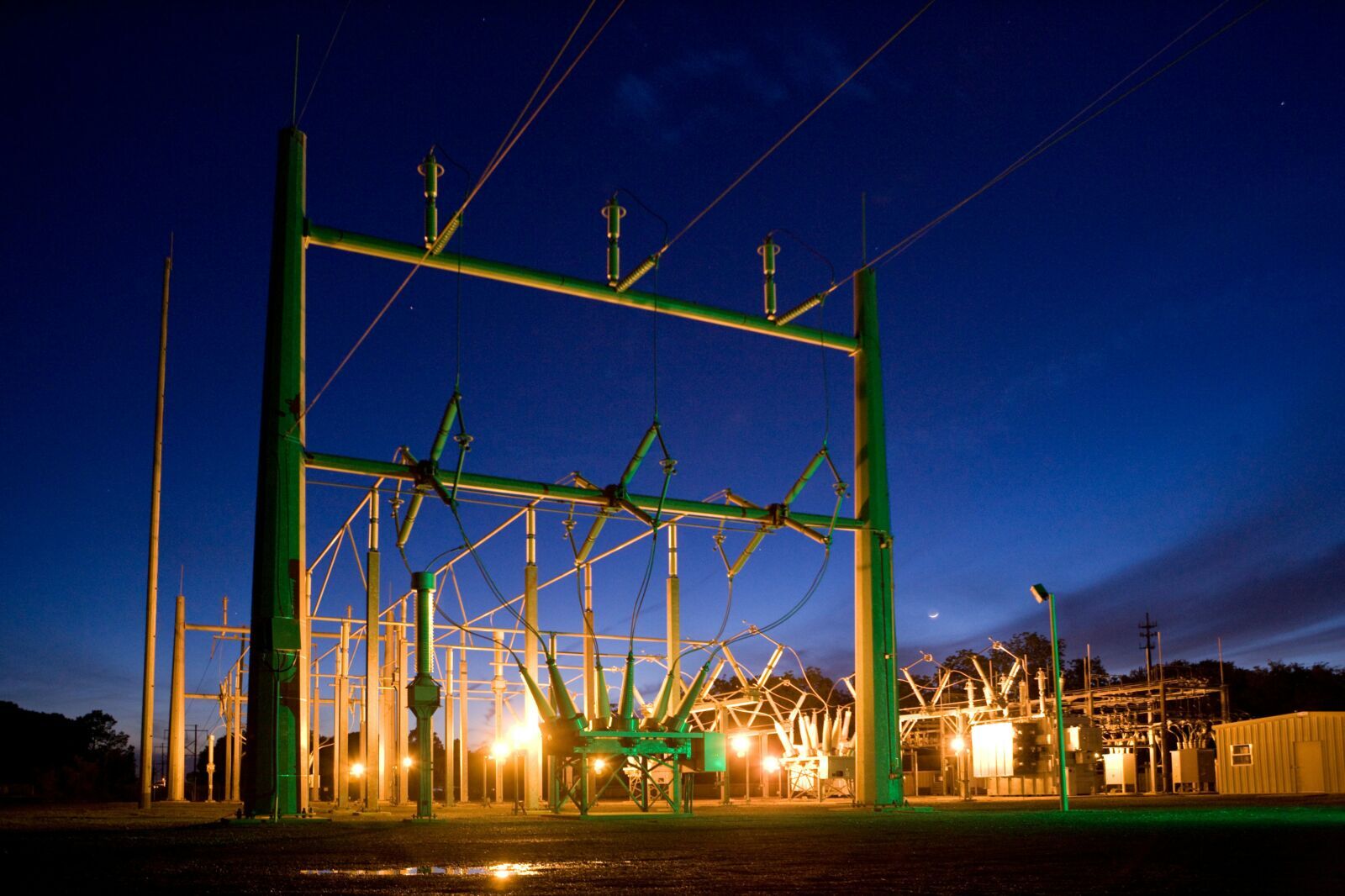
In the next decade, competitiveness will be electrified. Countries that plug in faster will grow faster.
A policy argument gaining global traction suggests that electrification of transport, industry and buildings is no longer just a climate strategy.
It is an economic one. For Africa, the stakes are particularly high.
Electrify to Compete: Why Speed Will Define Economic Winners – The Race to Electrify Economies
Global competitiveness is being redefined by electrification. From electric vehicles and green hydrogen to heat pumps and battery storage, countries accelerating their shift from fossil fuels to clean electricity are positioning themselves for industrial leadership.
The argument is clear: electrification reduces long-term energy costs, shields economies from fossil fuel volatility and attracts climate-aligned capital.
For Africa, where energy access and industrialisation remain central development goals, the transition is both an opportunity and a test.
Electrification as Industrial Strategy
Electrification is no longer limited to power generation. It encompasses transport systems, manufacturing processes, building efficiency and digital infrastructure.
Countries investing aggressively in renewables, grid upgrades and storage technologies are also capturing new value chains in electric mobility, battery production and clean manufacturing.
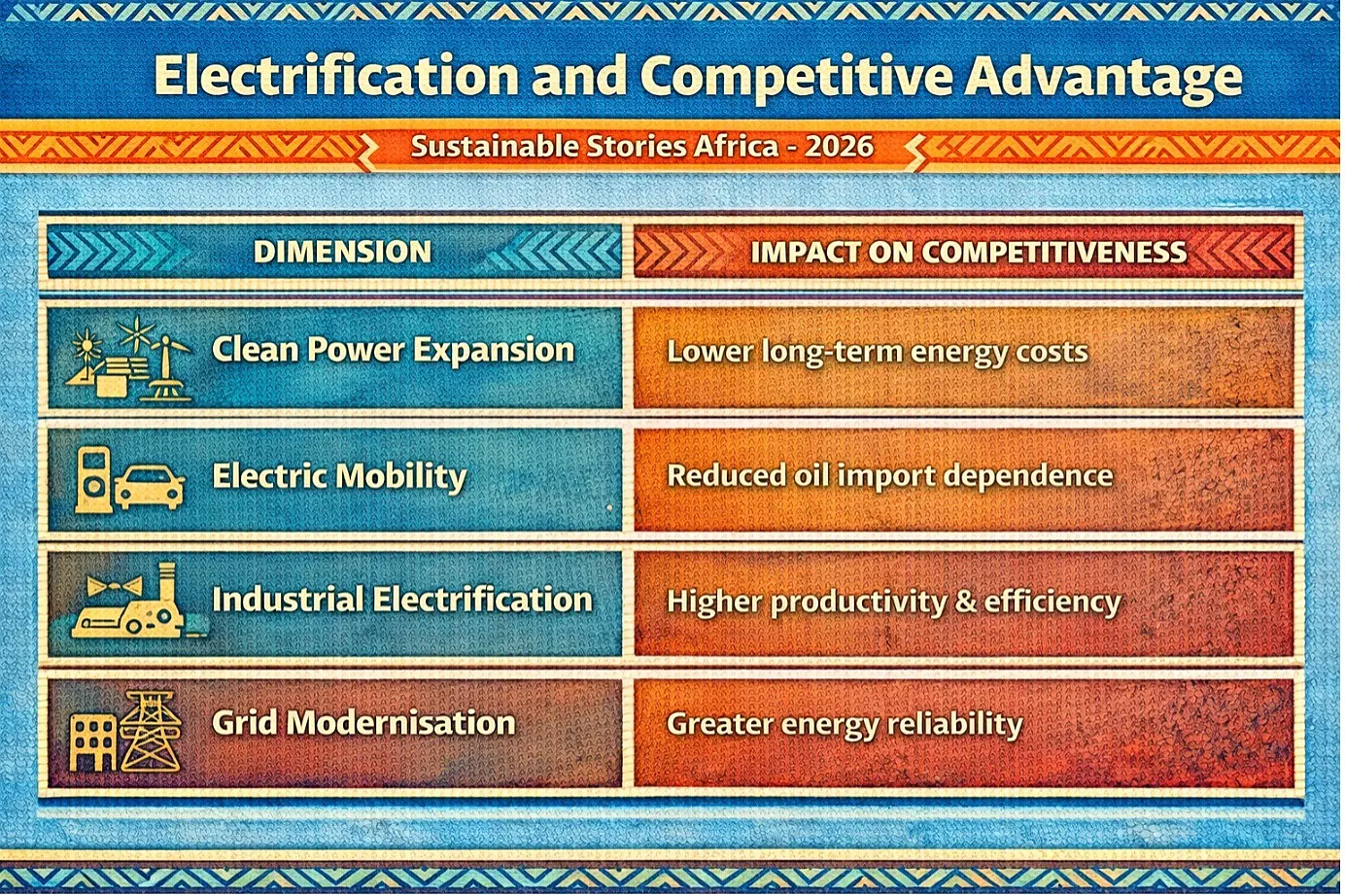
Electrification and Competitive Advantage
| Dimension | Impact on Competitiveness |
|---|---|
| Clean Power Expansion | Lower long-term energy costs |
| Electric Mobility | Reduced oil import dependence |
| Industrial Electrification | Higher productivity & efficiency |
| Grid Modernisation | Greater energy reliability |
For African economies, abundant solar and wind resources provide a natural advantage. However, slow regulatory reform and infrastructure bottlenecks risk delaying scale.
Electrification also improves macroeconomic stability. Reduced reliance on imported fossil fuels can strengthen foreign exchange reserves and limit exposure to global price shocks.
Plugging In Unlocks Growth Multipliers
Rapid electrification can unlock multiple economic multipliers.
Industries powered by clean electricity gain access to green export markets where carbon border adjustments are emerging.
Cities adopting electric transport reduce pollution-related healthcare costs. Businesses benefit from predictable energy pricing.
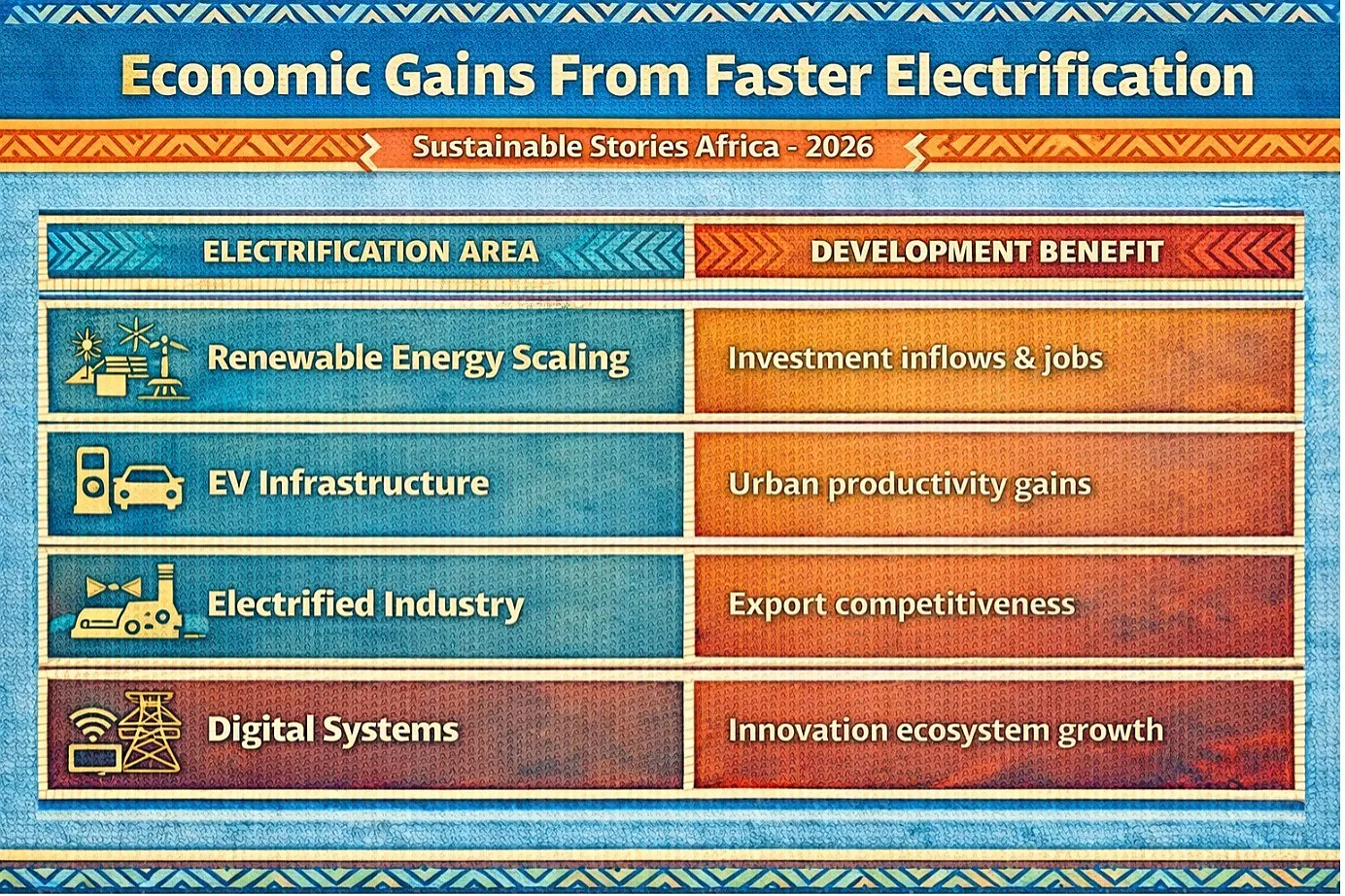
Economic Gains From Faster Electrification
| Electrification Area | Development Benefit |
|---|---|
| Renewable Energy Scaling | Investment inflows & jobs |
| EV Infrastructure | Urban productivity gains |
| Electrified Industry | Export competitiveness |
| Digital Systems | Innovation ecosystem growth |
The transition also aligns with global investor priorities. Climate-focused funds are increasingly favouring jurisdictions that demonstrate credible decarbonisation pathways.
For Africa, electrification is not only an environmental imperative; it is a pathway to leapfrogging legacy systems.
Accelerate Policy and Infrastructure Alignment
To compete, policymakers must act decisively:
Speed Regulatory Reform – Clear tariffs, grid codes and electric vehicle policies.
Invest in Transmission & Storage – Ensure the translation of renewable energy into a reliable supply.
Mobilise Blended Finance – The de-risk large-scale electrification projects.
Regional coordination under AfCFTA frameworks could also harmonise standards and expand clean energy trade corridors.
Private sector participation remains critical. Utilities, manufacturers and technology providers must align investments with long-term electrification strategies.
The next decade will reward speed, coordination and strategic clarity.
Path Forward – Accelerate Electrification to Strengthen Competitiveness
Countries that align the expansion of renewables, including industrial electrification and regulatory reform, will gain a durable economic advantage.
The speed of implementation will determine market leadership.
Africa's opportunity lies in leveraging its renewable resource base to power industry, attract capital and reduce fossil fuel dependence.
Culled From: https://www.wemeanbusinesscoalition.org/blog/electrify-to-compete-why-countries-that-plug-in-faster-win-the-next-decade/