ESG investing is facing growing criticism worldwide, yet analysts argue the problem is not the concept itself but the gap between sustainability commitments and implementation.
Corporate pledges on climate, governance and social responsibility have expanded rapidly over the past decade, but measurable results remain uneven.
Experts increasingly argue that the next phase of ESG will depend less on new pledges and more on credible execution, stronger governance, and transparent data reporting.
Global ESG Momentum Faces Implementation Challenge
Environmental, Social and Governance (ESG) investing has become a defining force shaping modern capital markets, influencing corporate governance, risk management, and investment strategies across industries.
However, the growing backlash against ESG in recent years has sparked a critical debate among investors, regulators, and policymakers: Is ESG failing, or is its execution falling short?
Many sustainability experts argue the latter. While companies have announced ambitious commitments, emerging from net-zero targets to diversity goals, translating those commitments into measurable results has proved far more complex.
The challenge is particularly visible in areas such as climate transition planning, supply chain transparency, and social impact measurement, where implementation requires structural changes to business operations.
From Sustainability Promises To Operational Reality
The ESG movement has evolved rapidly over the last decade, moving from voluntary corporate responsibility initiatives to core financial and governance considerations for global investors.
Institutional investors now use ESG metrics to evaluate long-term corporate resilience, regulatory risk exposure, and strategic sustainability performance.
However, analysts say many companies still treat ESG primarily as a reporting exercise rather than an operational strategy.
Key ESG Execution Challenges
Challenge | Impact |
|---|---|
Inconsistent ESG metrics | Difficult investor comparisons |
Weak sustainability governance | Poor accountability |
Data transparency gaps | Reduced investor trust |
Operational integration gaps | ESG is not embedded in strategy |
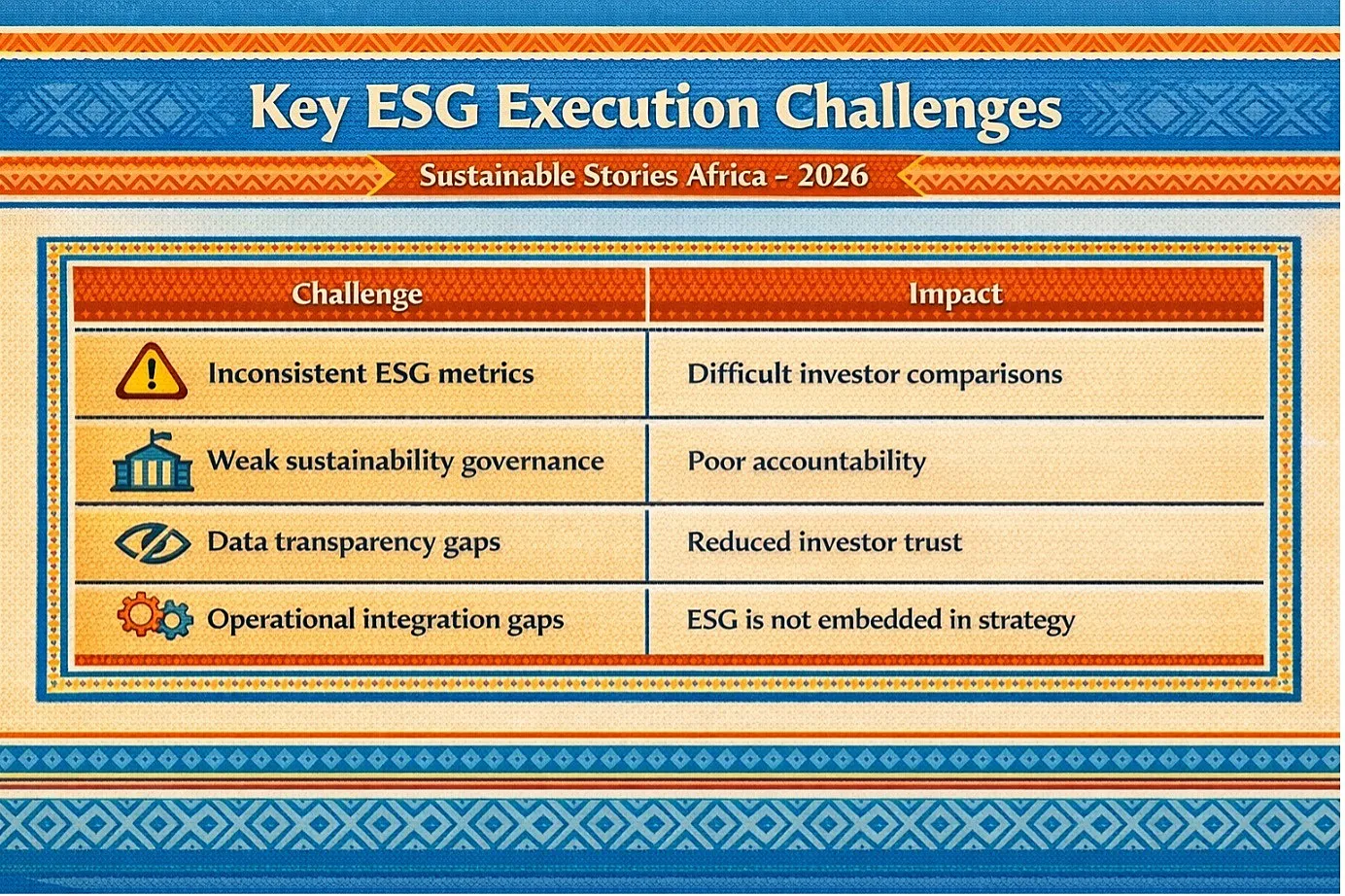
As a result, some ESG initiatives have struggled to deliver measurable improvements in environmental and social performance.
Investor Demand For Credible ESG Rising
Despite public debates about ESG, investor demand for sustainable investment strategies continues to grow.
Large asset managers, pension funds and sovereign wealth funds increasingly view ESG integration as essential for managing long-term financial risks, particularly those associated with climate change and governance failures.
Global ESG Investment Drivers
Driver | Investor Rationale |
|---|---|
Climate risk | Protect long-term asset value |
Governance standards | Improve corporate accountability |
Social impact | Strengthen stakeholder trust |
Regulatory alignment | Prepare for sustainability disclosure rules |
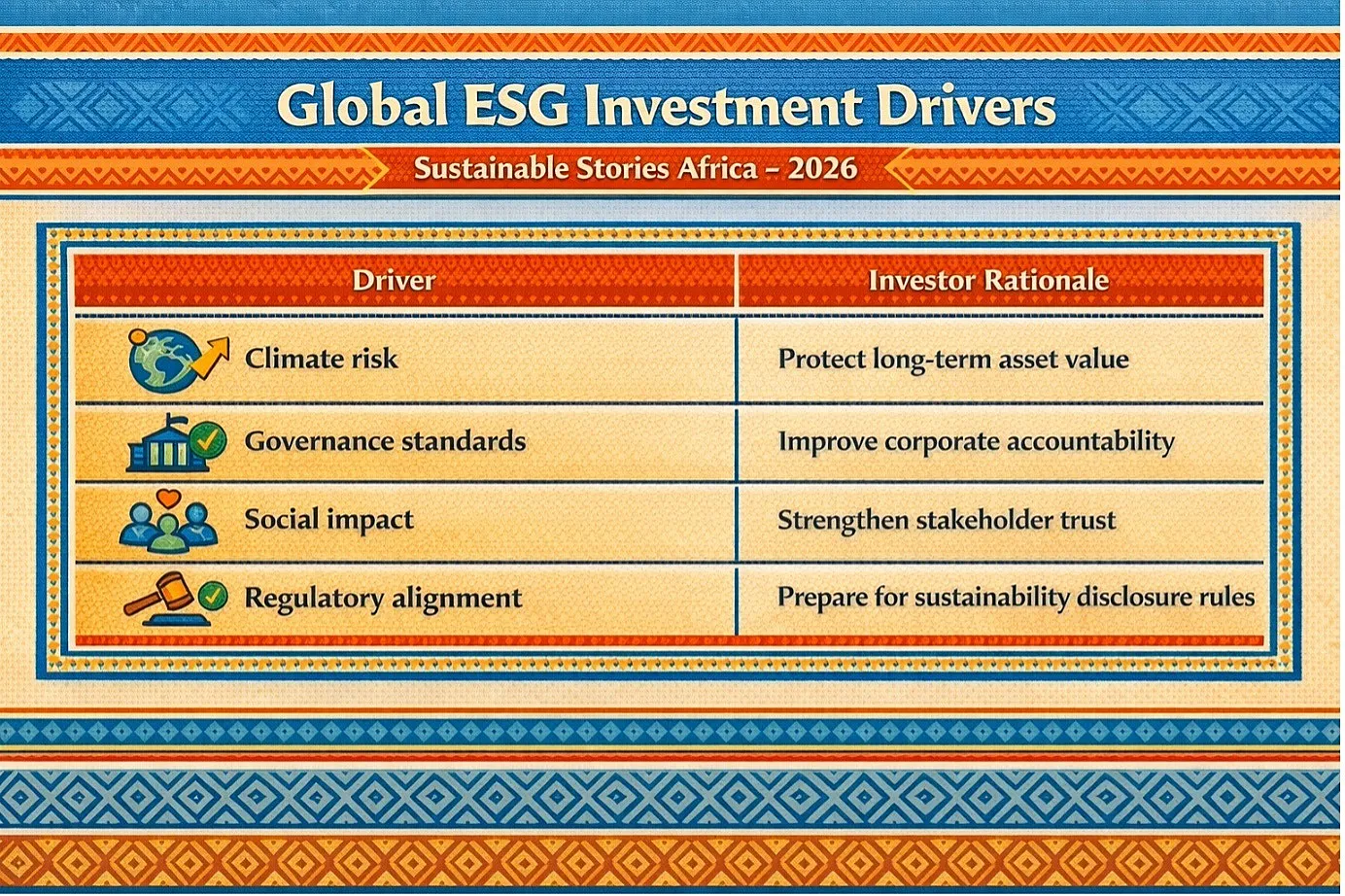
Rather than abandoning ESG, investors are calling for higher-quality data, stronger governance frameworks, and clearer impact measurement.
This shift reflects a broader maturation of sustainable finance: markets are moving from ambition to accountability.
Companies Must Move From Reporting To Delivery
For corporations, the next phase of ESG will require embedding sustainability into core business strategies, operational processes, and executive accountability systems.
Experts say companies that treat ESG as a compliance exercise risk losing credibility with investors and regulators.
Instead, successful sustainability strategies increasingly involve
- integrating climate transition planning into capital allocation
- linking executive incentives to sustainability performance
- strengthening ESG data governance
- embedding sustainability across supply chains and operations
Companies able to demonstrate real-world sustainability outcomes may gain a strategic advantage as investors increasingly prioritise credible ESG performance.
Path Forward – Execution Determines Future Credibility Of ESG
The future of ESG will likely depend not on new sustainability pledges but on companies and investors in delivering measurable outcomes.
Strengthening governance frameworks, improving ESG data transparency, and embedding sustainability into corporate strategy will be critical to maintaining investor trust and ensuring that ESG commitments translate into real environmental and social impact.
Culled From: ESG Isn’t Failing. Execution Is.