A widening gender gap in Africa’s agribusiness sector could undermine the continent’s ability to adapt to climate change, according to a new report.
Women farmers, who produce a large share of Africa’s food, continue to face limited access to finance, land and agricultural technology.
Experts warn that without stronger investment in women-led agriculture, climate resilience and food security goals across the continent could be significantly weakened.
Gender Gap Emerges As Climate Risk
Across Africa’s farmlands, women play a central role in feeding communities. Yet new research suggests that the gender imbalance in agribusiness is becoming a major obstacle to the continent’s climate adaptation efforts.
A recent report warns that persistent gender gaps in agricultural finance, land ownership and access to climate-smart technology are slowing Africa’s ability to build resilient food systems amid rising climate shocks.
Women make up a significant share of Africa’s agricultural workforce, estimated at around 40% to 60% in many countries, but continue to face structural barriers that limit productivity and investment.
As climate change intensifies droughts, floods and unpredictable weather patterns, these inequalities risk undermining efforts to strengthen food security and climate resilience.
Experts argue that closing the gender gap in agribusiness is no longer simply a social priority; it has become an economic and climate imperative for the continent.
Women Farmers Face Structural Barriers
Despite their vital role in agricultural production, women farmers across Africa often operate under constraints that limit their ability to scale operations or adopt climate-smart practices.
Limited access to land titles, financial services and agricultural inputs continues to restrict productivity.
Gender Barriers In African Agribusiness
Challenge | Impact On Women Farmers |
|---|---|
Limited land ownership rights | Reduced investment security |
Restricted access to finance | Difficulty expanding farms |
Limited training and technology access | Slower adoption of climate-smart agriculture |
Market access challenges | Lower agricultural income |
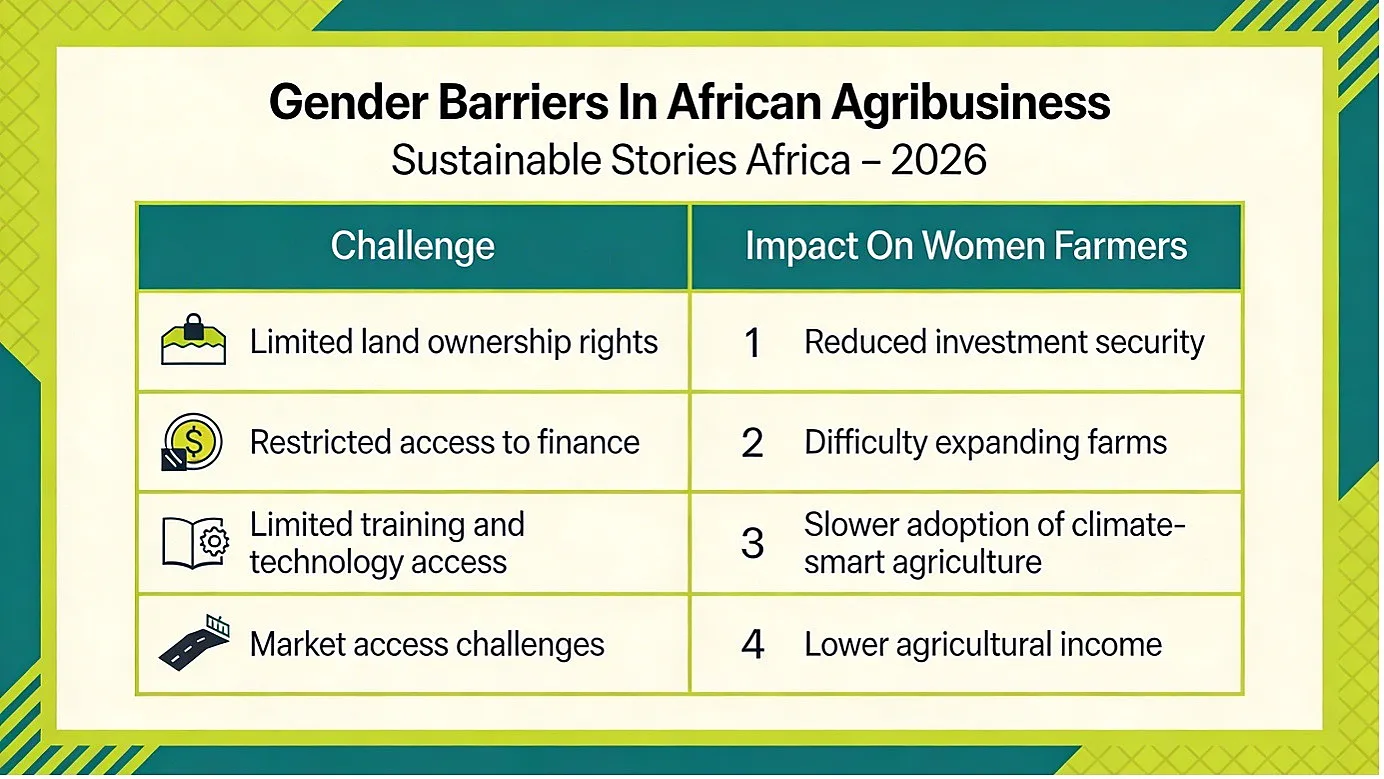
Researchers say that these barriers directly affect climate adaptation outcomes.
For example, adopting drought-resistant seeds, irrigation systems, or soil management techniques often requires upfront capital, resources that many women farmers struggle to access.
In regions already vulnerable to climate change, this gap makes millions of farms less resilient to environmental shocks.
The issue also has implications for the broader agricultural economy, as smallholder farmers produce a significant share of the continent’s food supply.
Empowering Women Could Strengthen Climate Resilience
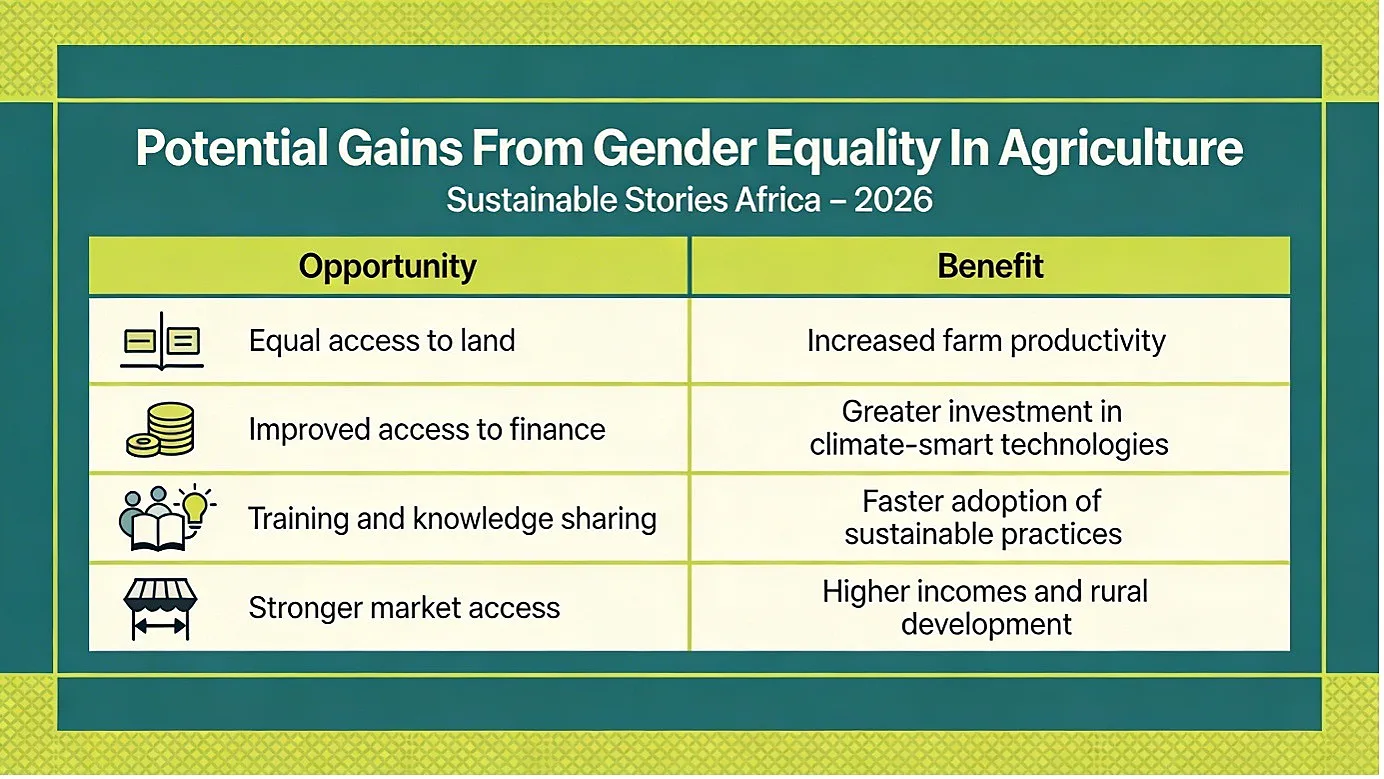
Closing the gender gap in agribusiness could unlock major economic and environmental benefits.
Studies suggest that improving women’s access to agricultural resources could significantly boost productivity while strengthening climate resilience.
Potential Gains From Gender Equality In Agriculture
Opportunity | Benefit |
|---|---|
Equal access to land | Increased farm productivity |
Improved access to finance | Greater investment in climate-smart technologies |
Training and knowledge sharing | Faster adoption of sustainable practices |
Stronger market access | Higher incomes and rural development |
Empowering women farmers also strengthens household resilience. Increased farm productivity often leads to improved food security, education outcomes and community development.
In climate-vulnerable regions, enabling women to adopt sustainable farming techniques could also help protect ecosystems and reduce environmental degradation.
Experts note that gender-responsive agricultural policies could be among the most effective strategies for advancing both climate adaptation and inclusive economic growth.
Policies Needed To Close The Gap
Addressing the gender gap in agribusiness will require coordinated action from governments, financial institutions and development partners.
Experts recommend prioritising policies that expand women’s access to land ownership, agricultural finance and climate-smart technologies.
Key areas of focus include:
- Expanding gender-responsive agricultural financing programmes
- Reforming land ownership laws and property rights
- Supporting training and extension services for women farmers
- Strengthening women-led agribusiness value chains
International development organisations are increasingly integrating gender equality into climate adaptation strategies, recognising that inclusive agricultural systems are essential for long-term resilience.
For African economies heavily dependent on agriculture, narrowing the gender gap could unlock significant productivity gains while strengthening climate resilience.
Path Forward – Inclusive Agriculture For Climate Resilience
Closing the gender gap in agribusiness is essential for strengthening Africa’s climate adaptation capacity.
By investing in women farmers, expanding access to finance and supporting climate-smart agriculture, policymakers can build more resilient food systems while advancing inclusive economic development across the continent.