Global energy financing has fallen to its lowest level on record, raising concerns about the pace of the global energy transition.
Analysts say declining investment across key infrastructure and renewable energy projects could slow efforts to expand power systems and reduce emissions.
The funding slump highlights growing uncertainty among investors navigating higher interest rates, policy shifts and evolving energy market risks.
Global Energy Financing Hits Record Low
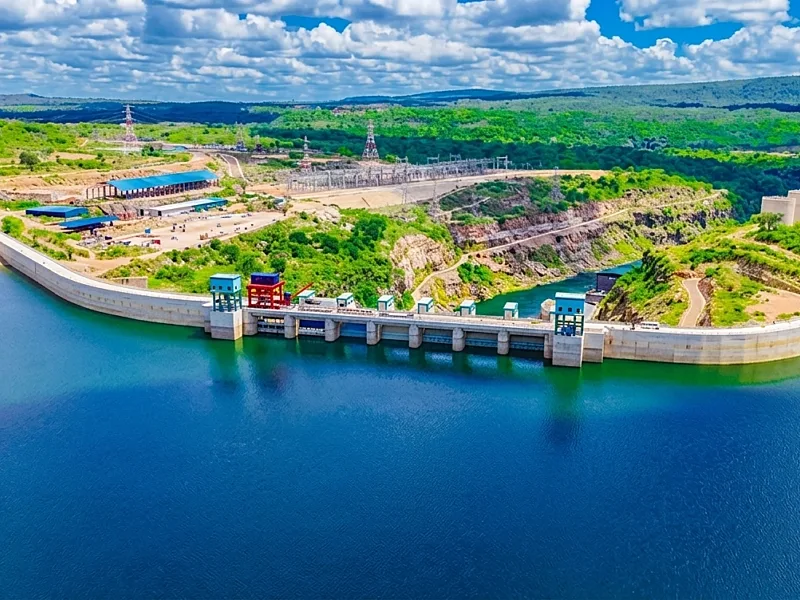
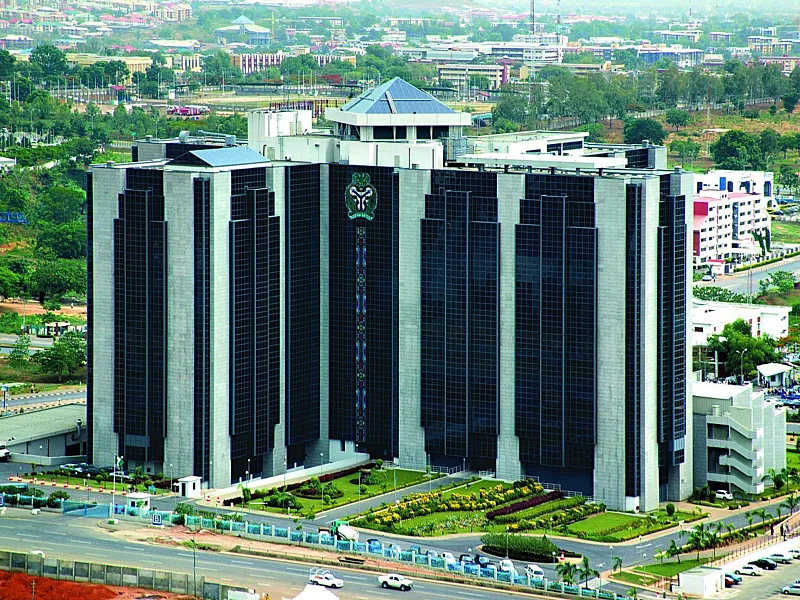
Global energy financing has dropped sharply, reaching what analysts describe as a record low in recent years, signalling rising caution among investors in the power and infrastructure sectors.
The decline reflects a combination of macroeconomic pressures, including higher borrowing costs, inflationary pressures on construction materials, and evolving regulatory environments affecting energy projects.
Energy investments have historically played a critical role in expanding electricity infrastructure, supporting industrial growth and enabling the transition toward lower-carbon power systems.
However, the current financing slowdown suggests that capital flows into new energy projects are becoming increasingly constrained.
Experts warn that the trend could delay critical investments needed to meet growing global electricity demand.
Rising Costs Reshape Energy Investment Decisions
Energy developers and financial institutions are increasingly reassessing the economics of new projects.
Higher interest rates have made large infrastructure projects more expensive to finance, while supply-chain disruptions continue to increase equipment and construction costs.
As a result, some investors are delaying or restructuring projects while waiting for improved financing conditions.
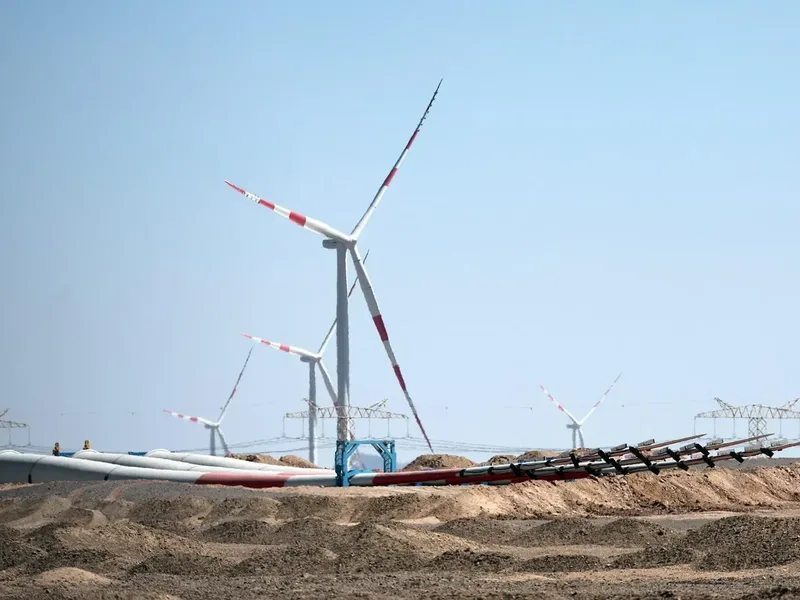
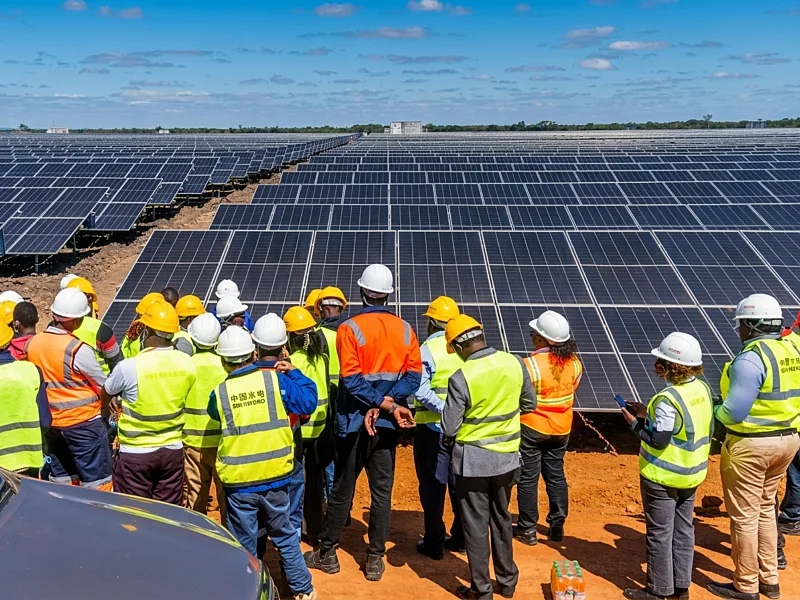
Analysts note that the funding slowdown is not limited to fossil fuel infrastructure but also affects renewable energy developments.
The shift highlights the delicate balance between expanding energy supply and maintaining financial viability in an uncertain macroeconomic environment.
Key Drivers Behind Energy Financing Decline
Driver | Impact On Energy Investment |
|---|---|
Higher interest rates | Increased project financing costs |
Inflation in materials | Rising construction and equipment expenses |
Policy uncertainty | Investors delay major infrastructure commitments |
Market volatility | Risk perceptions affecting capital flows |
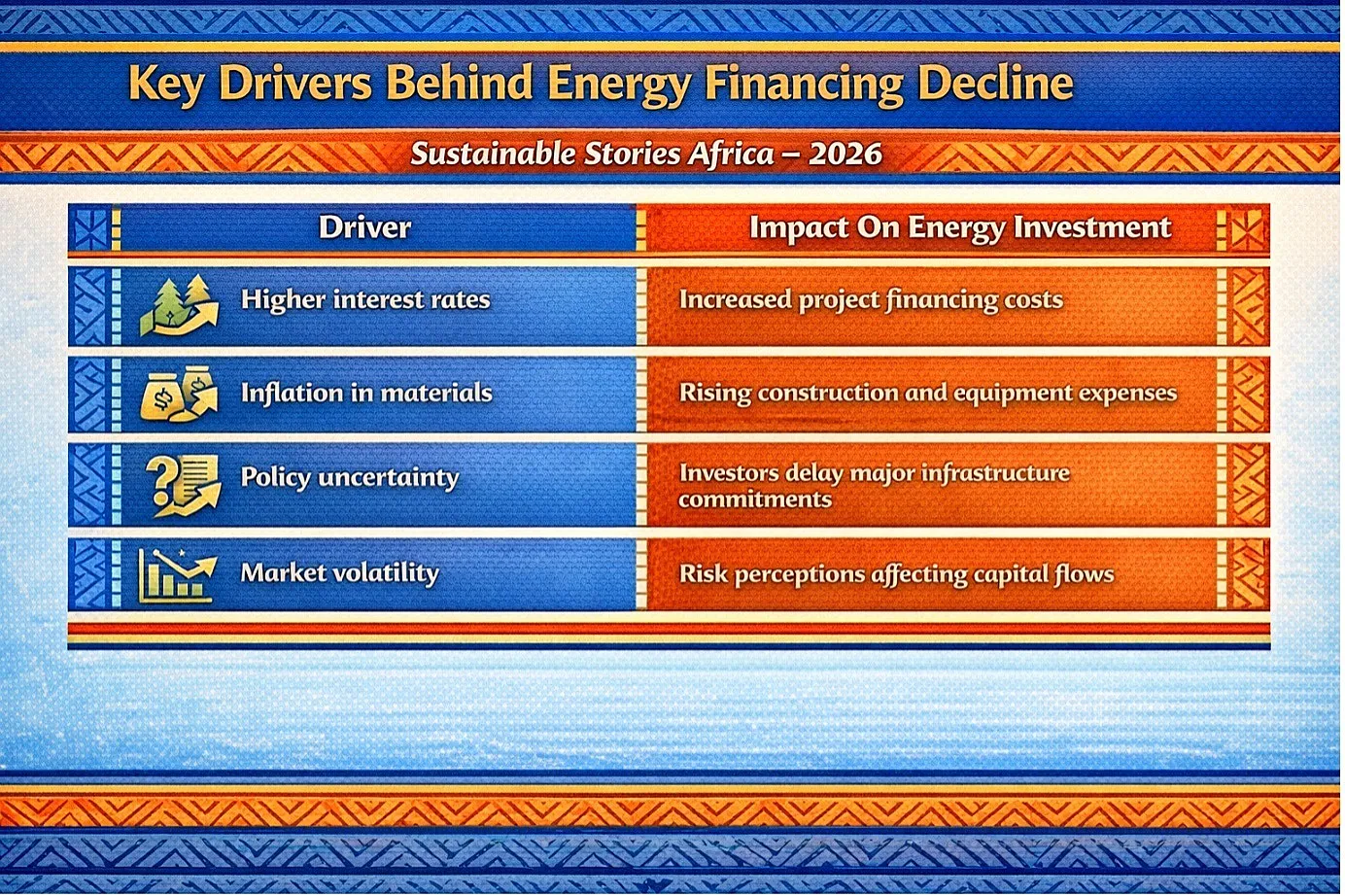
These pressures are reshaping investment strategies across the global energy sector.
Financing Slowdown Risks Energy Transition Goals
Energy investment levels are closely linked to the success of global climate targets and electrification goals.
A sustained drop in financing could slow the deployment of renewable energy infrastructure, grid upgrades and new generation capacity.
Developing economies may face the greatest risks, as limited domestic financing capacity makes them heavily dependent on international investment flows.
Experts warn that without renewed investment momentum, the pace of energy infrastructure expansion may struggle to keep up with rising global electricity demand.
Potential Implications Of Energy Financing Decline
Risk Area | Possible Consequence |
|---|---|
Renewable project delays | Slower expansion of clean power capacity |
Infrastructure gaps | Electricity supply constraints in emerging markets |
Climate targets | Increased difficulty in meeting global emissions goals |
Investor confidence | Greater caution in the energy sector capital markets |
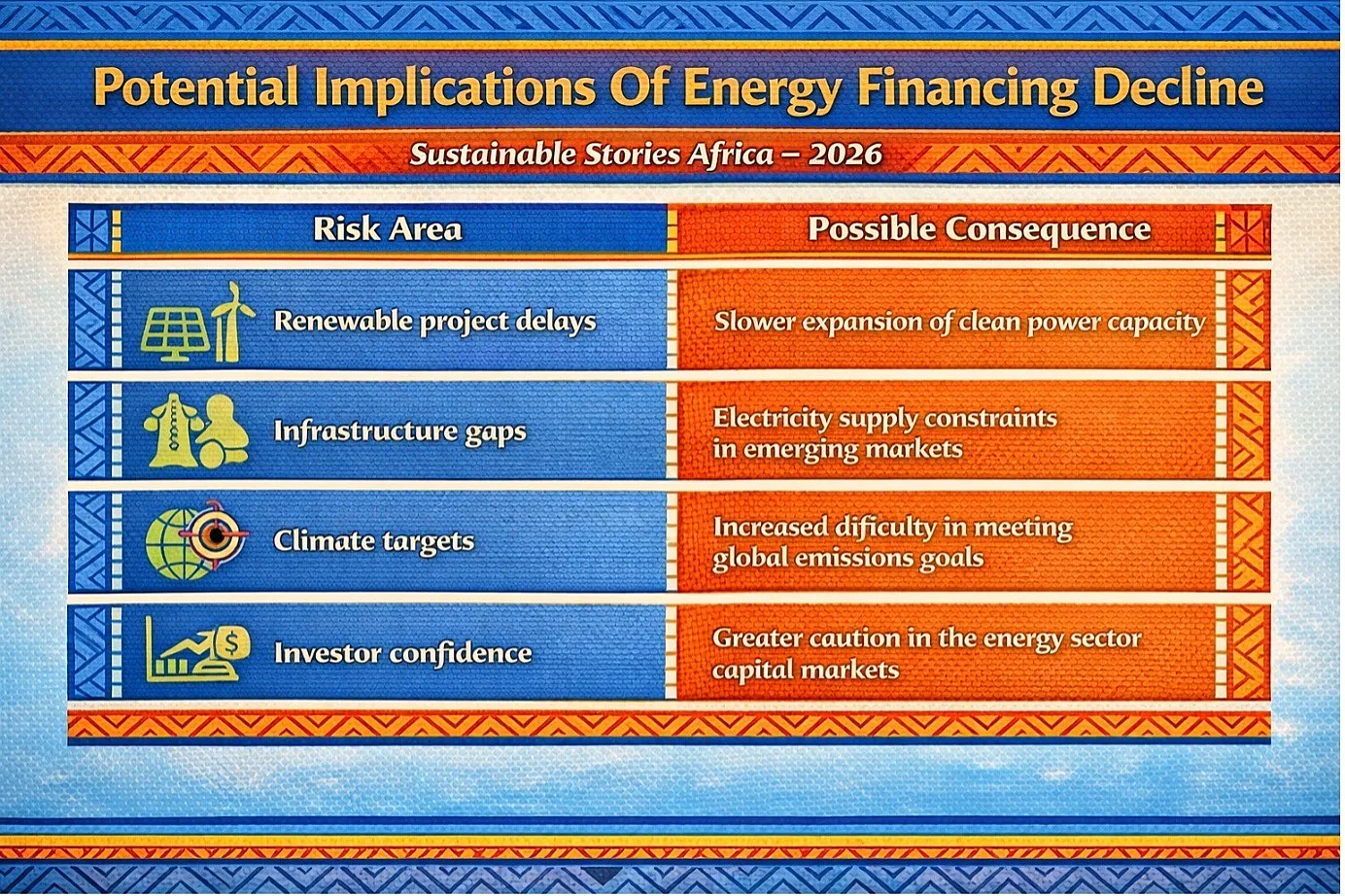
These risks highlight the importance of restoring investor confidence in long-term energy infrastructure development.
Policy Stability Critical For Investor Confidence
Industry observers say policymakers will play a crucial role in stabilising the investment environment.
Clear regulatory frameworks, long-term policy commitments and targeted financial incentives could help restore confidence among energy investors.
Public-private partnerships and multilateral financing mechanisms may also help bridge funding gaps, particularly in developing economies where energy infrastructure needs remain significant.
Experts argue that maintaining momentum in energy investment will be essential for ensuring a reliable electricity supply while advancing global climate goals.
Path Forward – Restoring Momentum In Energy Financing
Stabilising the investment environment through predictable policy frameworks and innovative financing models will be critical to restoring capital flows into energy infrastructure.
If governments, financial institutions and development partners act collaboratively, renewed investment could accelerate the deployment of sustainable energy systems while strengthening global energy security.
Culled From: Funding review: Energy finance dips to record low