A growing foreign-exchange dispute between Zimbabwe and one of the region’s largest platinum producers has moved beyond Harare’s policy circles to Pretoria’s diplomatic desks.
Impala Platinum has escalated tensions over currency conversion rules that mining firms say erode earnings and undermine investor confidence.
The case highlights a deeper dilemma confronting African resource economies: how to stabilise fragile currencies without discouraging the capital that sustains jobs, exports, and development.
Mining Dispute Escalates Across Borders
A simmering currency dispute between Zimbabwe and major mining investors has taken a regional turn after platinum producer Impala Platinum Holdings (Implats) asked South Africa’s government to intervene in a long-running foreign-exchange policy conflict with Harare.
Implats, one of the world’s largest platinum producers and majority owner of Zimbabwe’s Zimplats operations, is seeking diplomatic support from Pretoria after Zimbabwe’s central bank policies forced exporters to convert a large share of their foreign earnings into local currency.
Mining companies say the rule effectively reduces their revenue because Zimbabwe’s domestic currency has repeatedly lost value.
The issue has become more than a corporate dispute. Zimbabwe’s mining sector generates over 75% of the country’s export earnings, meaning tensions between government policy and investor expectations could influence billions of dollars in future mining investment.
By escalating the issue to Pretoria, Implats is signalling that currency policy in Zimbabwe is no longer only a domestic economic matter; it is becoming a regional business and diplomatic concern.
Currency Controls Meet Investor Realities
Zimbabwe introduced tighter foreign-exchange controls in recent years to stabilise its volatile currency and support local liquidity.
Exporters, including mining companies, are required to surrender a portion of their foreign earnings, typically 25% to 40% depending on policy adjustments, to the central bank in exchange for local currency.
Mining companies argue that the mechanism distorts their financial planning and undermines profitability because the Zimbabwe dollar frequently trades weaker in the parallel market.
For large capital-intensive operations like platinum mines, currency predictability is crucial. Mines require long-term investment planning, equipment imports, and debt servicing in hard currency.
Implats’ Zimbabwe subsidiary, Zimplats, is one of the country’s most important industrial assets.
The mine contributes significantly to platinum supply and employs thousands of workers while supporting local communities through infrastructure, schools, and health services.
Industry executives warn that uncertainty around foreign-exchange policy risks discouraging expansion projects across Zimbabwe’s mining sector, particularly in platinum, lithium, and gold.
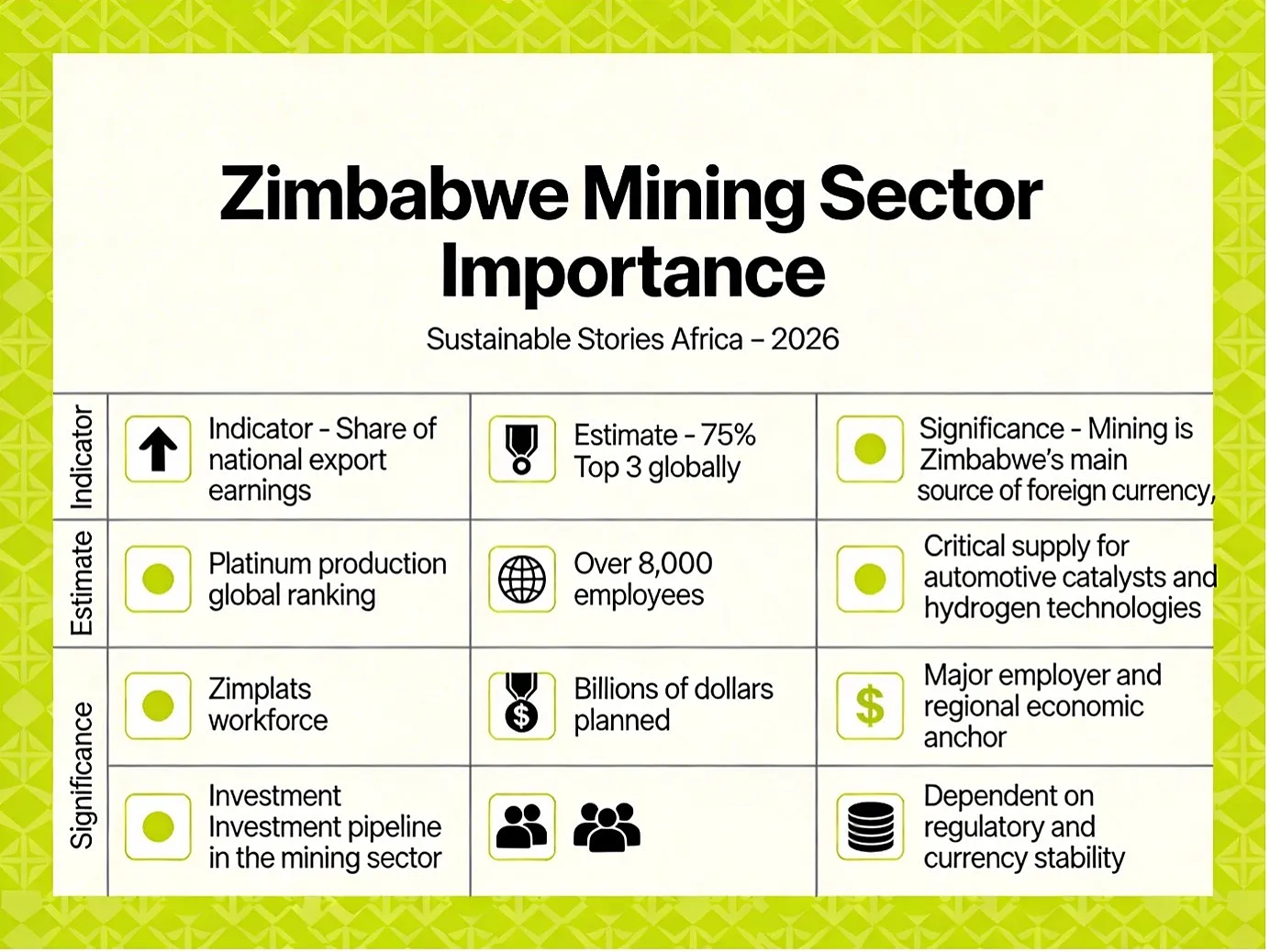
Zimbabwe Mining Sector Importance
Indicator | Estimate | Significance |
|---|---|---|
Share of national export earnings | 75% | Mining is Zimbabwe’s main source of foreign currency |
Platinum production global ranking | Top 3 globally | Critical supply for automotive catalysts and hydrogen technologies |
Zimplats workforce | Over 8,000 employees | Major employer and regional economic anchor |
Investment pipeline in the mining sector | Billions of dollars planned | Dependent on regulatory and currency stability |
For the Zimbabwean government, however, the forex surrender system is designed to keep hard currency circulating within the domestic economy.
Officials argue that without such measures, scarce foreign reserves would disappear quickly from local markets.
The dispute, therefore, reflects a deeper structural challenge common across emerging markets: balancing macroeconomic stability with investor confidence.
Stability Could Unlock Billions in Mining Investment
If currency policy and investor expectations can be aligned, Zimbabwe’s mining sector could unlock a powerful wave of new capital investment.
Platinum group metals remain essential to global industries ranging from automotive emissions technology to hydrogen fuel systems.
Demand projections suggest strong long-term growth, particularly as countries transition toward cleaner energy technologies.
Zimbabwe holds the world’s second-largest known platinum reserves after South Africa, giving the country enormous potential strategic importance in the global energy transition.
Investors say predictable currency rules would enable companies like Implats to expand production, develop new shafts, and increase the country’s export earnings.
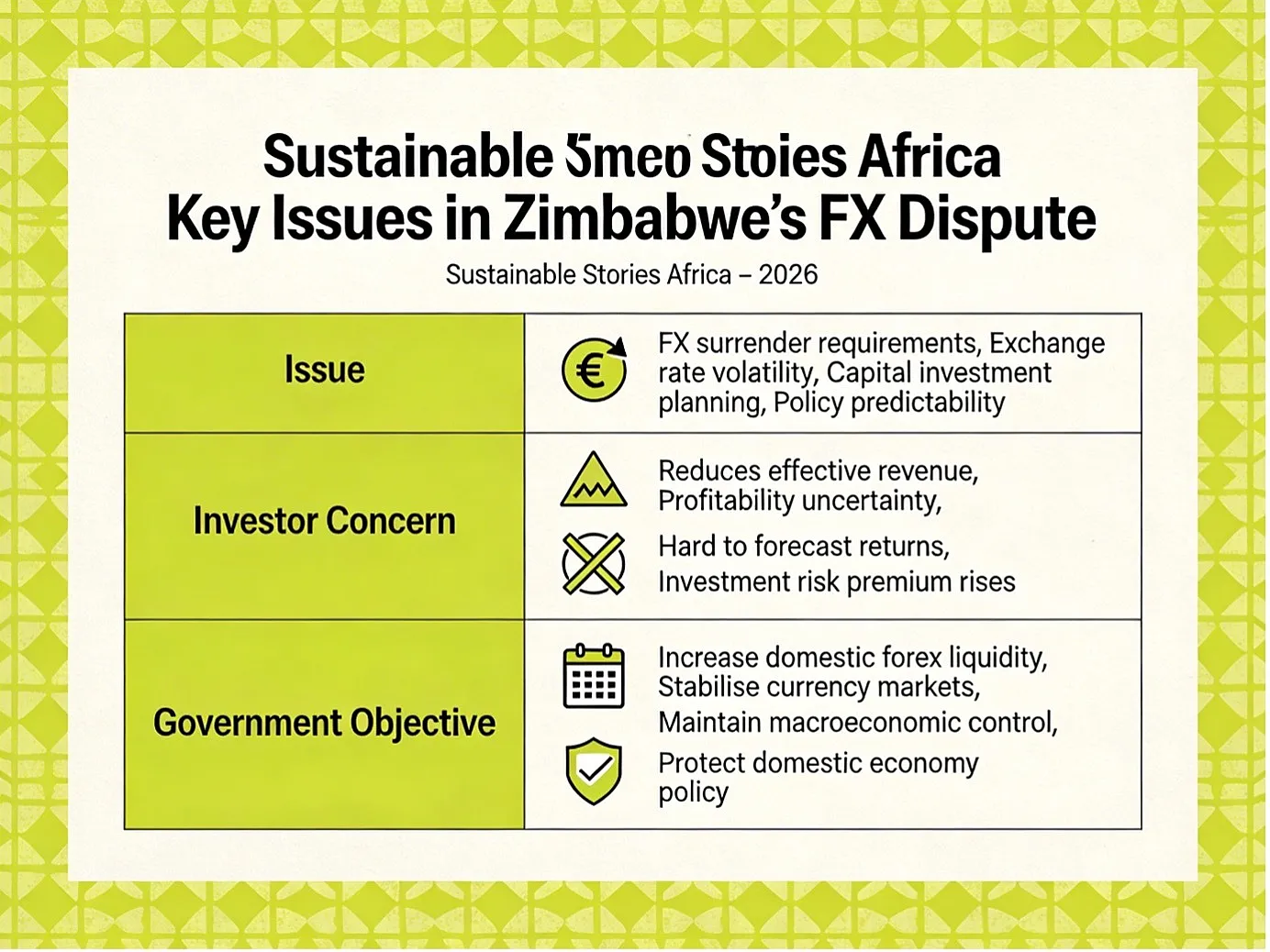
Key Issues in Zimbabwe’s FX Dispute
Issue | Investor Concern | Government Objective |
|---|---|---|
FX surrender requirements | Reduces effective revenue | Increase domestic forex liquidity |
Exchange rate volatility | Profitability uncertainty | Stabilise currency markets |
Capital investment planning | Hard to forecast returns | Maintain macroeconomic control |
Policy predictability | Investment risk premium rises | Protect the domestic economy |
When investment flows smoothly, the benefits extend beyond company balance sheets. Communities gain jobs, infrastructure improves, and governments receive tax revenue.
In this sense, resolving the dispute could strengthen both economic growth and regional supply chains.
Diplomacy and Policy Dialogue Become Crucial
By raising the issue with Pretoria, Implats is highlighting the growing intersection between business policy and regional diplomacy.
South Africa remains the headquarters for many mining companies operating across southern Africa. If disputes escalate between governments and investors, diplomatic channels often become necessary to preserve long-term economic relationships.
Policy analysts say the situation underscores the importance of transparent regulatory frameworks and consistent communication between governments and multinational investors.
Several industry groups have also called for clearer foreign-exchange mechanisms that protect domestic economies while allowing export industries to retain enough hard currency to remain globally competitive.
Without such a balance, Africa risks losing capital to competing mining jurisdictions with more predictable financial regimes.
Path Forward – Balancing Currency Stability and Investor Confidence
Zimbabwe’s mining sector remains a cornerstone of national economic resilience. Resolving currency disputes with major investors could unlock new platinum expansion projects and reinforce export growth.
Governments, investors, and regional partners must now pursue transparent foreign-exchange frameworks that stabilise currencies while preserving the investment flows essential to Africa’s resource-driven economies.
Culled From: Implats drags Zimbabwe’s FX row to Pretoria | Semafor