
Kenya is deploying artificial intelligence and smart data systems to redefine sustainable tourism management.
Officials say predictive analytics, visitor-flow modelling, and environmental monitoring tools will guide policy decisions, protect biodiversity, and optimise revenue generation.
The strategy marks a shift from reactive tourism management toward data-driven sustainability planning, positioning Kenya as a continental test case for technology-enabled conservation.
Kenya Deploys AI for Sustainable Tourism
Kenya is integrating artificial intelligence (AI) and smart data platforms into its tourism governance framework, aiming to balance conservation, revenue growth, and visitor management in one of Africa’s most iconic travel destinations.
The initiative focuses on predictive modelling, digital visitor tracking, and ecosystem monitoring to improve sustainability outcomes across national parks, coastal zones, and heritage sites.
Policymakers argue that traditional tourism planning, often reliant on lagging indicators, no longer meets the demands of climate variability and rising tourist volumes.
With tourism contributing significantly to GDP and employment, Kenya’s data-driven pivot reflects both economic and environmental urgency.
AI Rewrites Kenya’s Tourism Sustainability Playbook
Overtourism, climate stress, and biodiversity risks are reshaping global travel. Kenya’s response: algorithmic oversight.
Authorities are deploying AI systems to analyse visitor flows, predict peak congestion periods, and assess ecological pressure in conservation areas.
The goal is simple but ambitious, prevent environmental degradation before it happens.
Officials describe the shift as proactive stewardship rather than reactive conservation.
Predictive Analytics Guides Visitor Flow And Conservation Decisions
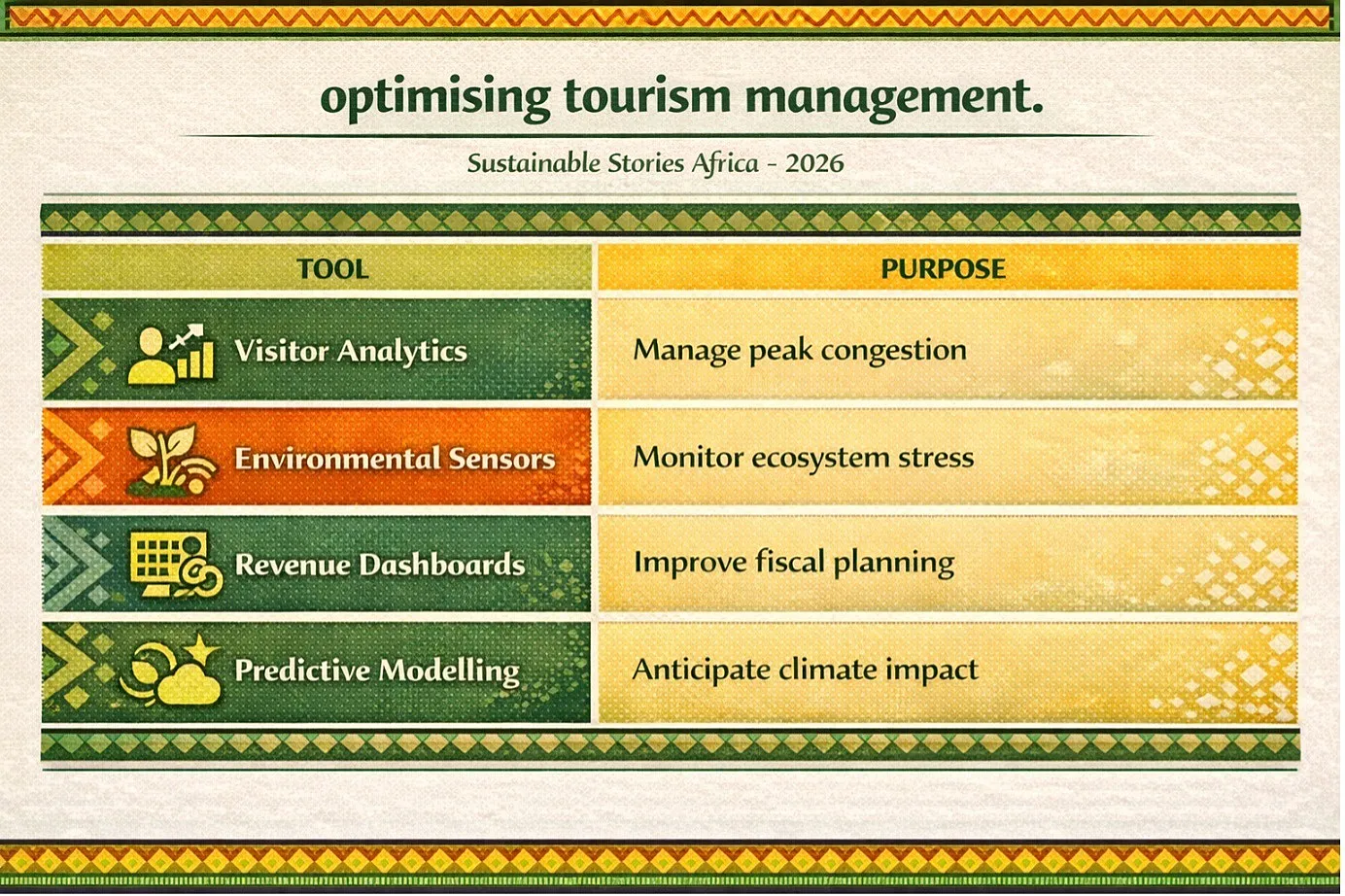
The strategy combines data from park entries, satellite imagery, climate sensors, and mobile movement patterns to optimise tourism management.
Tool | Purpose |
|---|---|
Visitor Analytics | Manage peak congestion |
Environmental Sensors | Monitor ecosystem stress |
Revenue Dashboards | Improve fiscal planning |
Predictive Modelling | Anticipate climate impact |
Tourism authorities say the data ecosystem enables smarter pricing strategies, targeted infrastructure investment, and adaptive conservation measures.
A senior tourism official noted:
“Data allows us to see pressure points before they become ecological damage.”
Kenya’s model aligns sustainability objectives with economic resilience, ensuring that conservation outcomes do not undermine fiscal stability.
Data-Driven Tourism Strengthens Economic Resilience
AI integration could deliver measurable outcomes:
- Reduced environmental degradation
- Improved visitor experience
- Increased revenue predictability
- Enhanced biodiversity protection
Tourism remains a major employer and foreign exchange earner. Climate volatility, including droughts, wildlife migration shifts, coastal erosion, poses systemic risks.
Analysts argue that predictive governance may become a competitive advantage as global travellers increasingly prioritise sustainability credentials.
Without innovation, overtourism and climate stress could erode Kenya’s natural capital base.
Institutional Capacity Determines AI Success
Experts caution that technology alone cannot guarantee sustainability. Effective deployment requires:
- Skilled data analysts
- Strong inter-agency coordination
- Transparent governance frameworks
- Continuous monitoring and recalibration
Private-sector collaboration, especially with tech providers and conservation groups, will shape implementation effectiveness.
Stakeholders are watching whether Kenya’s model becomes scalable across other African tourism economies.
Path Forward – Scale Smart Governance Across Ecosystems
Kenya’s AI-enabled tourism framework prioritises predictive management, biodiversity protection, and fiscal optimisation.
Scaling will require investment in data capacity, regulatory clarity, and public-private coordination.
If effectively implemented, smart tourism governance could strengthen resilience, protect natural assets, and position Kenya as a continental leader in sustainable travel innovation.
Culled From: Kenya Turns to AI and Smart Data to Shape the Next Phase of Sustainable Tourism