
Nigeria’s trade associations and chambers of commerce must strengthen institutional capacity to navigate economic reforms and rising governance expectations, according to Nelson Obine, CEO of the Institute of Trade Associations Management.
Speaking during the 2026 Association Industry Outlook presentation, Obine said the intersection of tax reforms, macroeconomic adjustments and the approaching election cycle will test the resilience of Nigeria’s private-sector institutions.
He argued that associations must evolve into credible intermediaries between policy and enterprise to sustain investor confidence and business stability.
Nigeria’s Association Industry Faces Reform Era
Nigeria’s network of chambers of commerce and sectoral trade associations is entering a pivotal institutional moment, as economic reforms and political developments reshape the country’s business landscape.
During his keynote address at the 2026 Association Industry Outlook, Nelson Obine highlighted how macroeconomic reforms and an evolving tax framework are redefining expectations around governance, transparency and policy engagement for organised private-sector institutions.
The timing is particularly significant. Nigeria is entering a general election cycle, a period historically associated with heightened policy uncertainty and cautious investment behaviour.
In such an environment, Obine argued, institutional actors such as chambers of commerce and industry associations play an increasingly strategic role in stabilising business confidence and supporting regulatory compliance.
Associations Becoming Economic Governance Intermediaries
Obine emphasised that trade associations should no longer be viewed merely as membership organisations or networking platforms.
Instead, they must function as economic intermediaries, bridging the gap between government policy and private enterprise.
This intermediary role is particularly important when governments introduce structural reforms such as new tax regimes, regulatory changes, and economic restructuring policies.
Strategic Roles Of Trade Associations
Institutional Role | Strategic Impact |
|---|---|
Policy mediation | Translating reforms into practical business guidance |
Compliance support | Helping members adapt to new tax and regulatory systems |
Advocacy platform | Representing private-sector interests in policymaking |
Market coordination | Strengthening sectoral collaboration and trust |
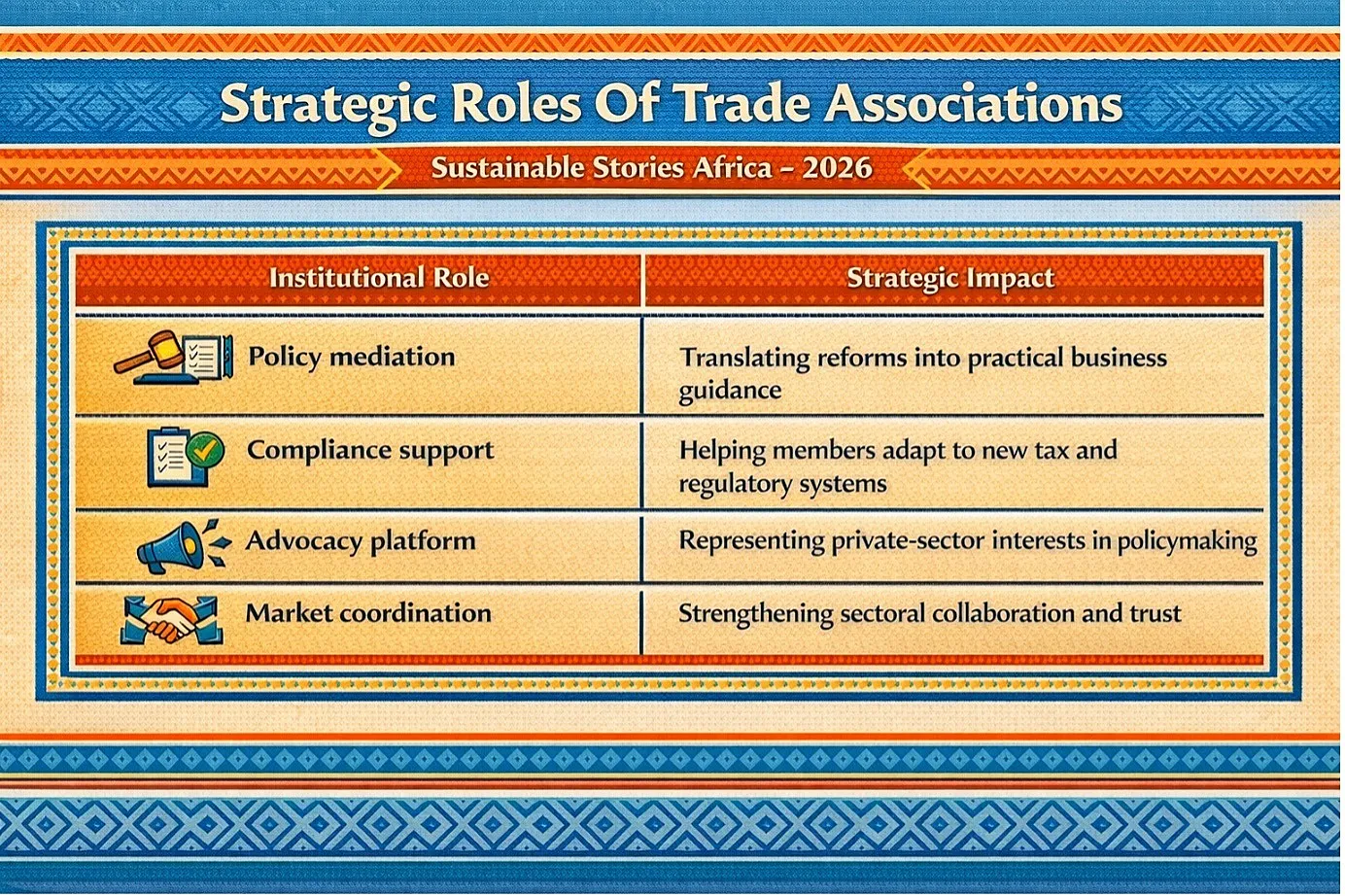
According to Obine, associations that fail to adapt to this expanded role risk becoming irrelevant in a more formalised and compliance-driven economic environment.
Macroeconomic Reforms Raising Institutional Expectations
Nigeria’s current reform cycle is reshaping how businesses interact with government institutions and regulatory frameworks.
Economic adjustments, tax policy reforms and fiscal restructuring are expected to increase the importance of structured engagement between policymakers and the organised private sector.
Key Forces Shaping Nigeria’s Association Landscape
Structural Driver | Implication |
|---|---|
Tax reform policies | Greater demand for compliance guidance |
Election cycle dynamics | Increased policy sensitivity |
Economic restructuring | Higher expectations for institutional coordination |
Business cost pressures | Need for stronger advocacy and support |
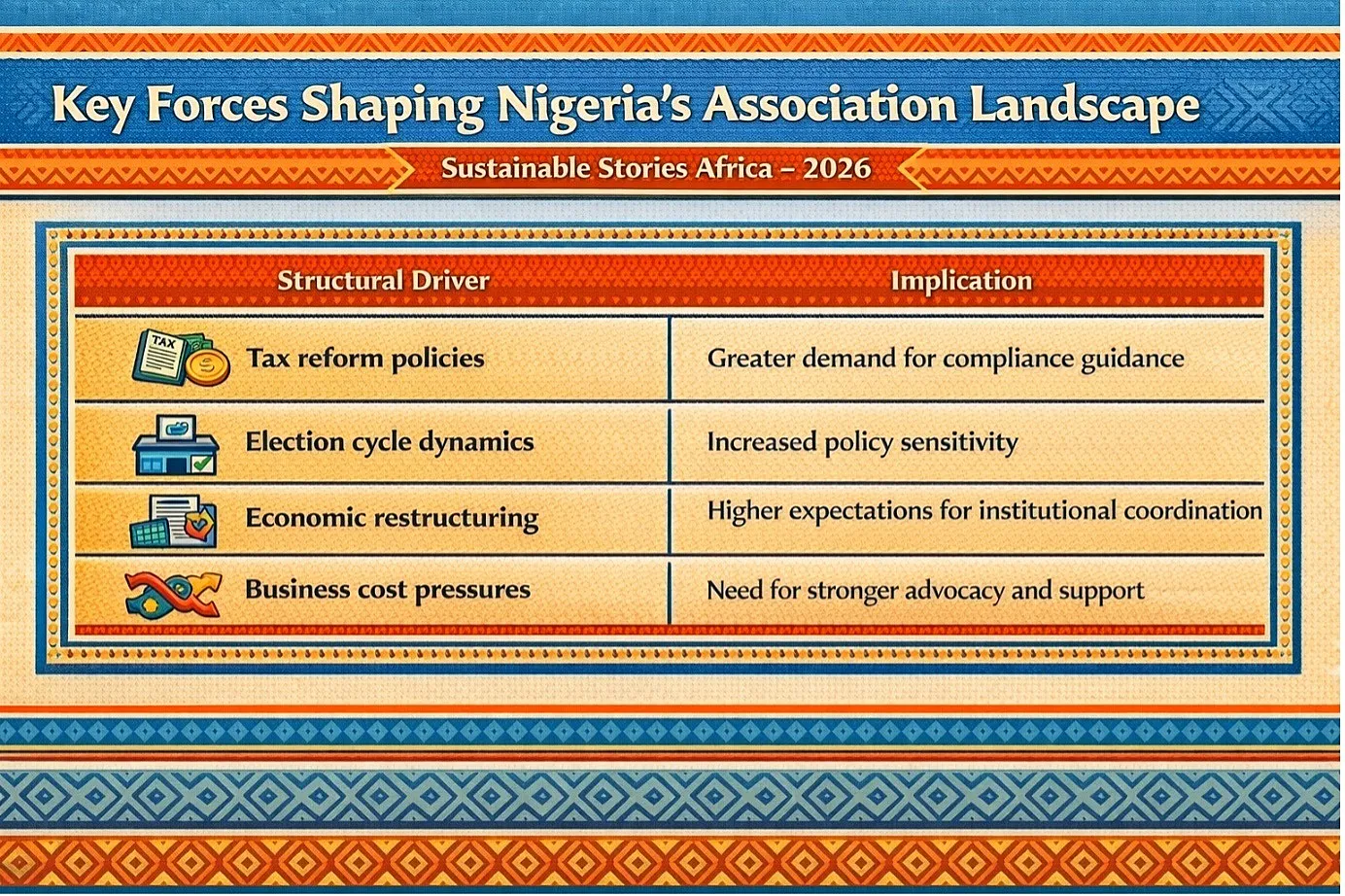
These dynamics are placing new expectations on chambers of commerce and industry associations to deliver practical value, credible advocacy and reliable economic insights for their members.
Institutional Strength Key To Private Sector Stability
Obine argued that the future relevance of Nigeria’s association ecosystem will depend on institutional strength, digital capability and member-focused value delivery.
Associations that invest in governance structures, digital engagement platforms and data-driven policy advocacy will likely become indispensable partners in Nigeria’s economic governance architecture.
Conversely, organisations that remain informal or poorly structured may struggle to maintain influence in an economy increasingly defined by formal compliance standards and regulatory accountability.
The private sector, he noted, must recognise that strong associations are not merely representative bodies; they are critical infrastructure for economic coordination and business resilience.
Path Forward – Strengthening Institutions For Nigeria’s Economic Governance
Nigeria’s trade associations must evolve into stronger institutional actors capable of supporting policy implementation, business compliance and structured engagement between government and industry.
By investing in governance systems, digital platforms and credible advocacy frameworks, chambers of commerce can strengthen their role as stabilising pillars within Nigeria’s evolving private-sector architecture.