Nigeria has launched a $750 million solar mini-grid programme to expand electricity access for underserved communities nationwide.
The initiative seeks to accelerate renewable energy deployment while reducing dependence on diesel generators.
For millions of households, clinics and small businesses, the project could unlock reliable power, economic opportunity and cleaner energy systems in Africa’s largest economy.
Nigeria’s $750 Million Bet on Solar Power
Nigeria has unveiled a $750 million solar mini-grid initiative to expand electricity access for millions of citizens and accelerate the country’s transition toward renewable energy.
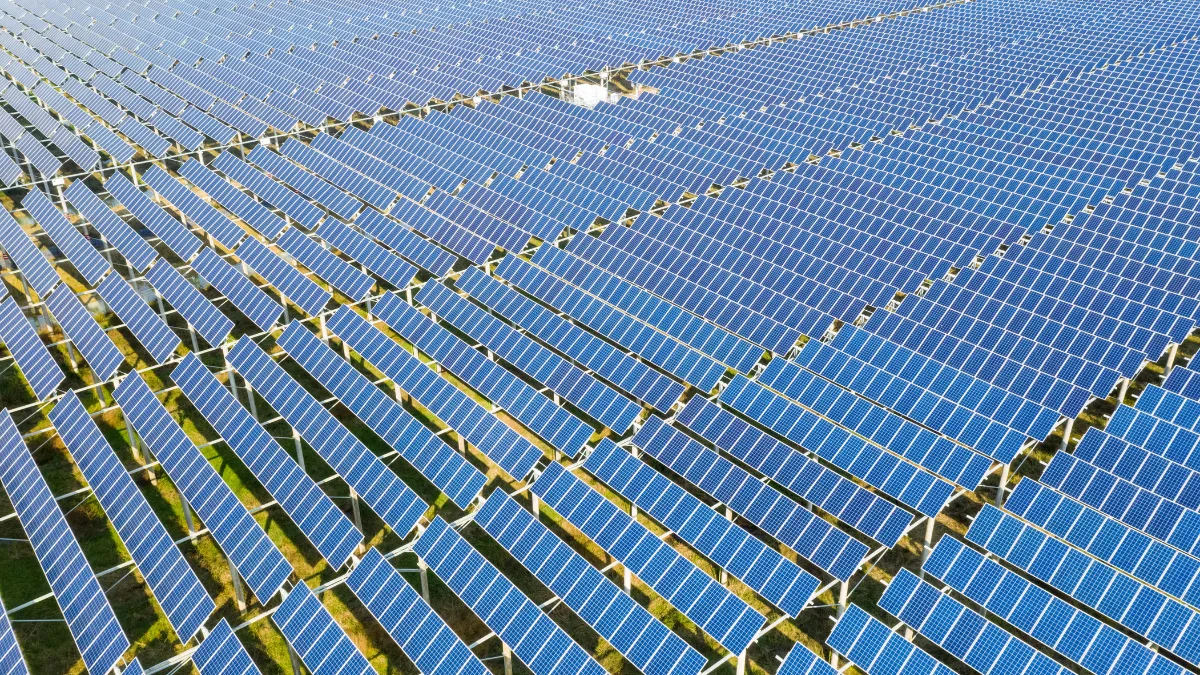
The programme will deploy distributed solar mini grids across rural and underserved communities, providing reliable electricity where grid expansion is slow or financially unviable.
Officials say the project is part of Nigeria’s broader strategy to close the country’s electricity gap while reducing reliance on fossil-fuel generators that dominate power supply for businesses and households.
Despite being Africa’s largest economy, Nigeria faces one of the world’s most persistent energy access challenges. More than 85 million Nigerians still lack reliable electricity, according to international energy estimates.
By investing in solar mini-grid infrastructure, the government hopes to reach communities beyond the national grid while supporting clean energy development, job creation and inclusive economic growth.
Why Solar Mini-Grids Are Central to Nigeria’s Energy Strategy
Mini-grid technology has become a cornerstone of energy access solutions across Africa.
Unlike traditional national grid systems that require large-scale transmission infrastructure, solar mini grids operate as localised electricity networks, generating power from solar panels and distributing it to nearby homes and businesses.
These systems are particularly suited to rural areas where population density is low and extending high-voltage transmission lines can be prohibitively expensive.
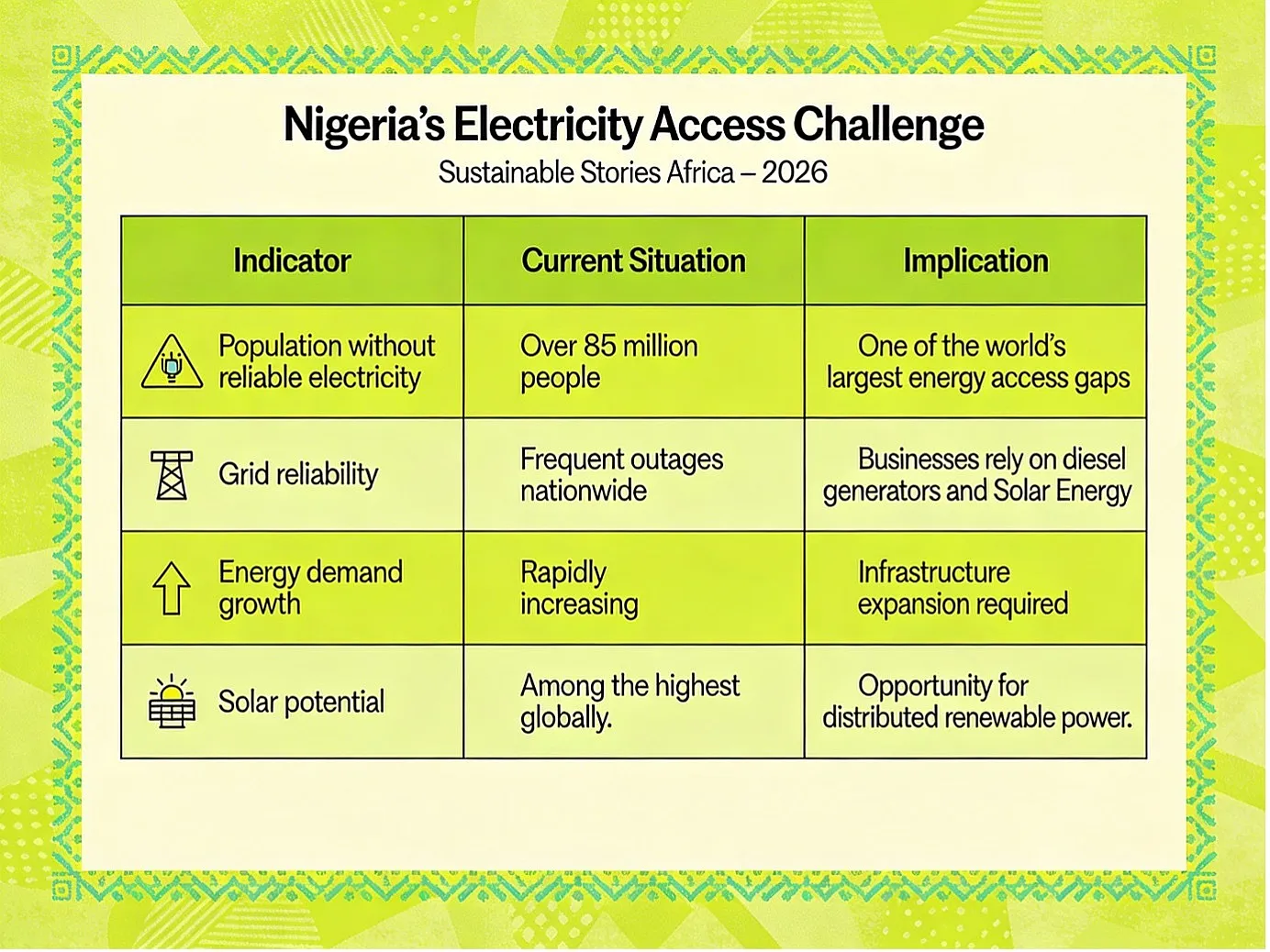
Nigeria’s Electricity Access Challenge
Indicator | Current Situation | Implication |
|---|---|---|
Population without reliable electricity | Over 85 million people | One of the world’s largest energy access gaps |
Grid reliability | Frequent outages nationwide | Businesses rely on diesel generators and solar energy |
Energy demand growth | Rapidly increasing | Infrastructure expansion required |
Solar potential | Among the highest globally | Opportunity for distributed renewable power |
The new solar mini-grid programme will finance the construction, deployment and operation of solar-powered local grids, delivering electricity to thousands of communities.
Energy analysts say such systems can power households, small enterprises, schools, and healthcare facilities, dramatically improve local productivity and standard of living.
For small business owners, from welders and cold-storage operators to digital service providers, reliable electricity often determines whether enterprises can grow or survive.
Mini grids, therefore, represent not only an energy intervention but a catalyst for rural economic development.
Clean Energy Driving Inclusive Growth
If successfully implemented, the $750 million programme could significantly transform Nigeria’s electricity landscape.
Solar mini grids provide several advantages compared with traditional energy systems:
- Faster deployment in remote communities
- Lower long-term operating costs
- Reduced reliance on diesel fuel
- Improved environmental sustainability
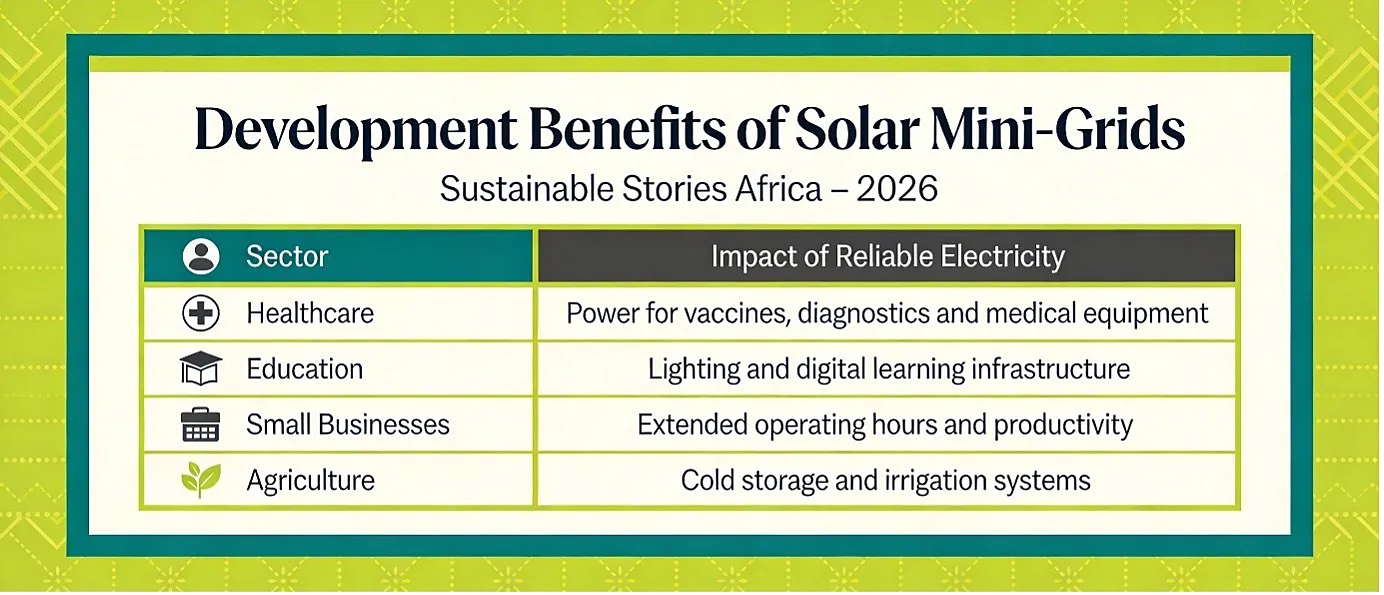
Development Benefits of Solar Mini-Grids
Sector | Impact of Reliable Electricity |
|---|---|
Healthcare | Power for vaccines, diagnostics and medical equipment |
Education | Lighting and digital learning infrastructure |
Small Businesses | Extended operating hours and productivity |
Agriculture | Cold storage and irrigation systems |
For households, reliable electricity improves quality of life, enabling lighting, phone charging, refrigeration and access to digital services.
For the environment, the transition from diesel generators to solar power reduces carbon emissions, noise pollution and fuel costs.
Nigeria already spends billions annually on diesel and petrol generators supply, particularly due to the electricity grid. Scaling solar mini grids could significantly reduce this dependency.
Mobilising Finance for Nigeria’s Energy Transition
The $750 million programme highlights how blended finance models are increasingly shaping Africa’s energy transition.
Large-scale energy access programmes typically combine funding from governments, development finance institutions, climate funds and private investors.
To achieve universal electricity access by 2030, experts estimate Nigeria will require tens of billions of dollars in new energy infrastructure investment.
Solar mini grids are expected to play a central role in reaching remote communities that national grid expansion cannot economically serve.
For policymakers, the initiative underscores the importance of:
- strengthening regulatory frameworks for mini-grid developers
- expanding financing mechanisms for renewable energy infrastructure
- supporting local energy entrepreneurs and technology providers
For investors and development partners, the project demonstrates that distributed renewable energy systems can deliver both climate impact and economic returns.
If scaled effectively, Nigeria’s mini-grid programme could become a model for large-scale rural electrification across Africa.
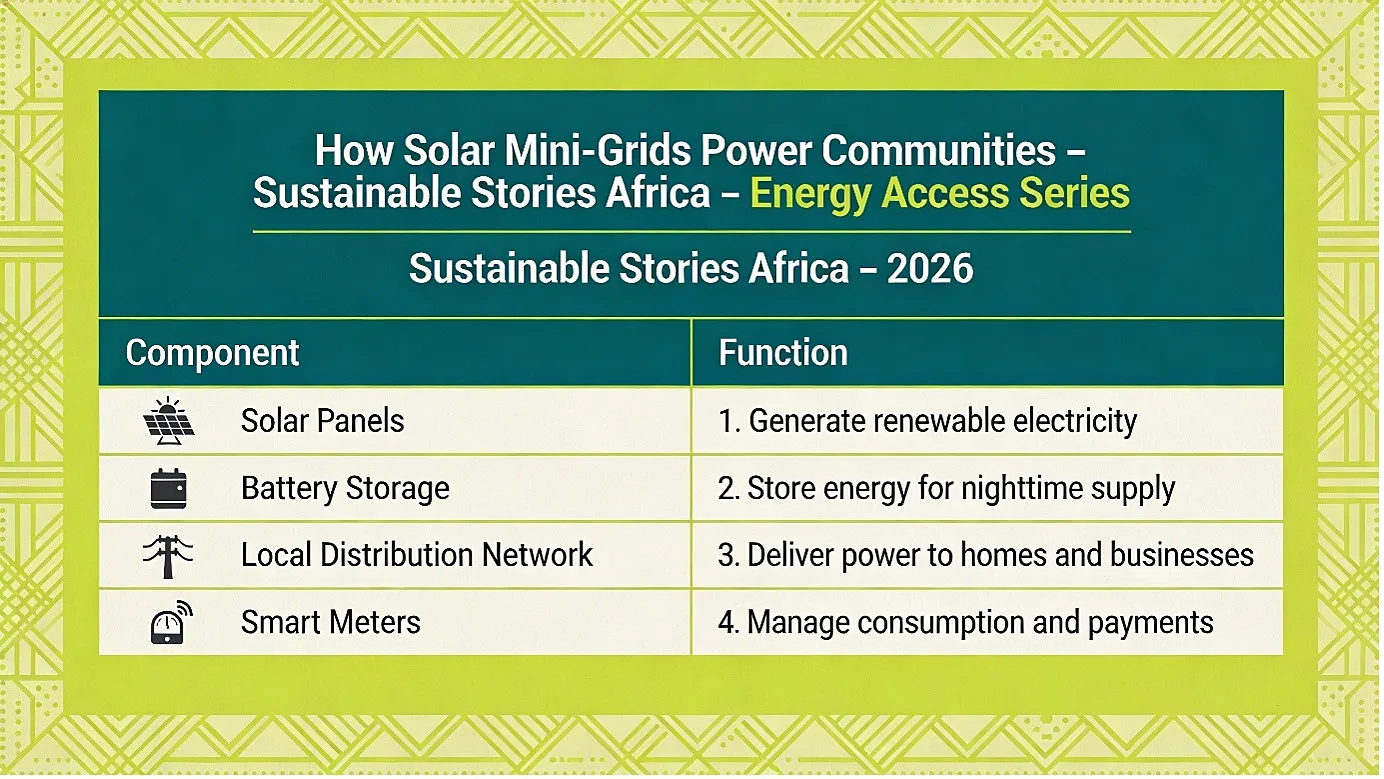
How Solar Mini-Grids Power Communities – Sustainable Stories Africa – Energy Access Series
Component | Function |
|---|---|
Solar Panels | Generate renewable electricity |
Battery Storage | Store energy for nighttime supply |
Local Distribution Network | Deliver power to homes and businesses |
Smart Meters | Manage consumption and payments |
Path Forward – Scaling Solar Infrastructure for Energy Security
Nigeria’s $750 million solar mini-grid programme represents a major step toward closing the country’s electricity access gap.
Distributed renewable energy systems are emerging as a practical pathway to power rural communities while reducing dependence on fossil-fuel generators.
Sustained policy support, investment and regulatory stability will be essential to scale mini-grid deployment.
If successfully implemented, the initiative could accelerate Nigeria’s clean energy transition while powering inclusive economic growth across underserved regions.
Culled From: Nigeria launches $750 million solar mini-grid project to expand electricity access - Energy in Africa