
Nigeria has launched a public consultation on its draft roadmap for adopting IFRS Sustainability Disclosure Standards and new national sustainability reporting guidelines.
Nigeria Moves Toward Global Sustainability Standards
The Financial Reporting Council of Nigeria (FRCN) has invited public comments on a draft roadmap for adopting the IFRS Sustainability Disclosure Standards and implementing Sustainability Reporting Guidelines No. 1 (SRG-01).
The call for feedback, issued in January 2026, covers the Draft Roadmap Report for the Adoption of IFRS Sustainability Disclosure Standards in Nigeria (2024, Amended 2025) alongside the proposed national sustainability reporting framework.
According to the FRCN, the consultation is part of efforts to align Nigeria's corporate disclosure practices with international standards on climate, environmental, social, and governance (ESG) reporting.
What the Draft Roadmap Covers
The draft roadmap outlines how Nigeria plans to phase in the ISSB-issued IFRS Sustainability Disclosure Standards, which require companies to disclose material sustainability-related risks and opportunities that affect financial performance.
The Sustainability Reporting Guidelines (SRG-01) are intended to provide practical guidance for Nigerian entities on:
- Climate-related disclosures
- Governance and risk management
- Environmental and social impacts
- Strategy and performance metrics
The FRCN stated that the roadmap reflects Nigeria's commitment to strengthening transparency, improving investor confidence, and supporting sustainable economic development.
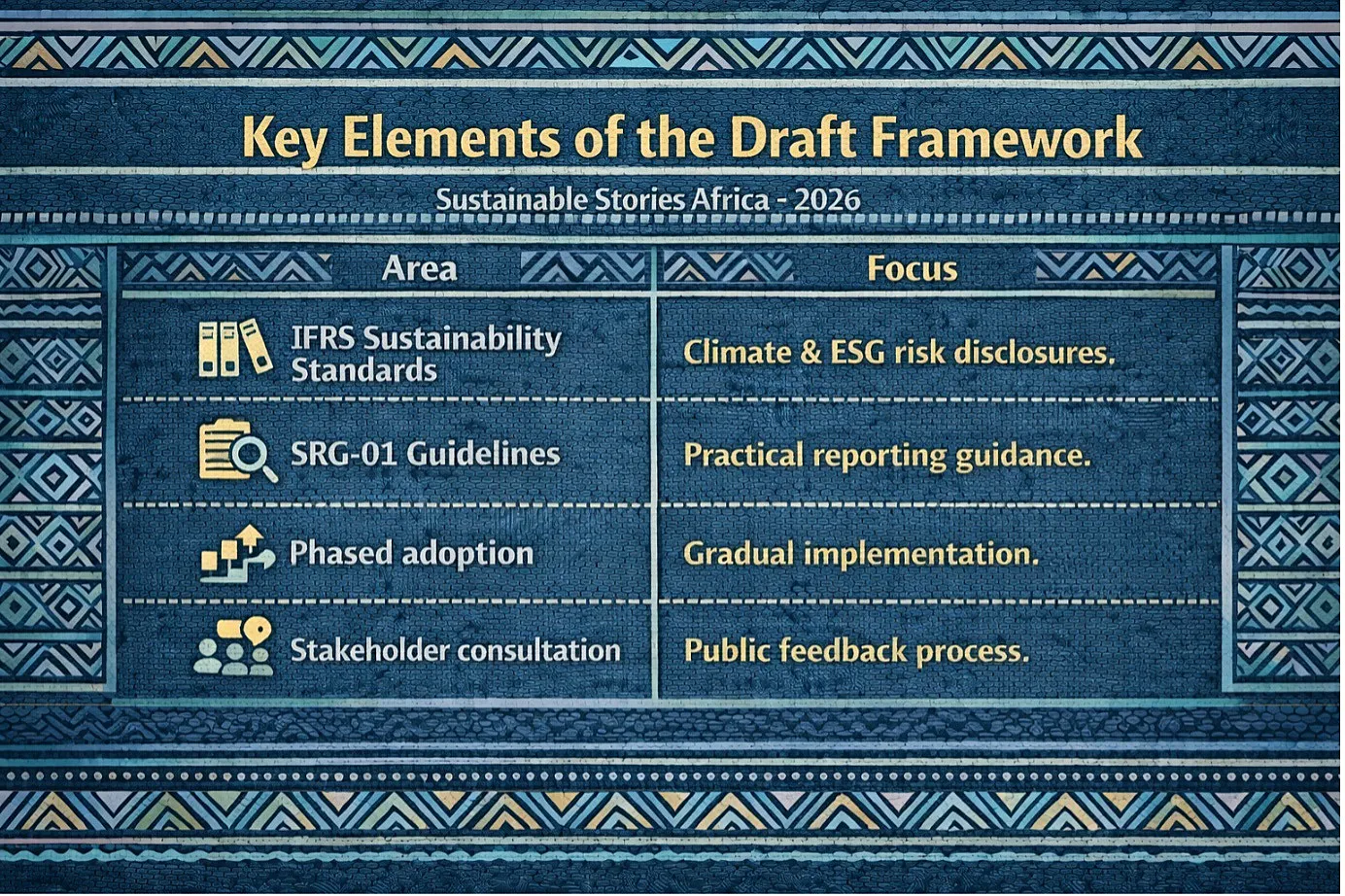
Key Elements of the Draft Framework
| Area | Focus |
|---|---|
| IFRS Sustainability Standards | Climate & ESG risk disclosures |
| SRG-01 Guidelines | Practical reporting guidance |
| Phased adoption | Gradual implementation |
| Stakeholder consultation | Public feedback process |
The consultation provides an opportunity for companies, investors, regulators, civil society, and professional bodies to review and comment on the proposals before final adoption.
Who Is Leading the Process
The initiative is being led by the Financial Reporting Council of Nigeria, the country's statutory body responsible for accounting, auditing, and corporate reporting standards.
The FRCN stated that the consultation process is designed to ensure that Nigeria's sustainability reporting framework:
- Reflects local economic realities
- Aligns with global best practices
- Supports regulatory consistency
- Enhances data quality and credibility
While the press release did not provide a detailed implementation timeline, it confirmed that the feedback phase is a key step toward formal adoption.
The council did not specify which categories of companies would be required to comply first, nor whether the standards would initially apply to listed entities, large corporates, or public-interest entities.
Why the Shift Matters for Businesses
Sustainability reporting is becoming a core requirement for access to global capital, trade, and investment partnerships.
For Nigerian companies, the move toward IFRS Sustainability Standards could mean:
- Stronger climate-risk disclosure
- Greater ESG transparency
- Improved investor comparability
- Increased reporting obligations
International investors increasingly use ESG data to assess long-term risk, particularly in climate-exposed markets such as Nigeria.
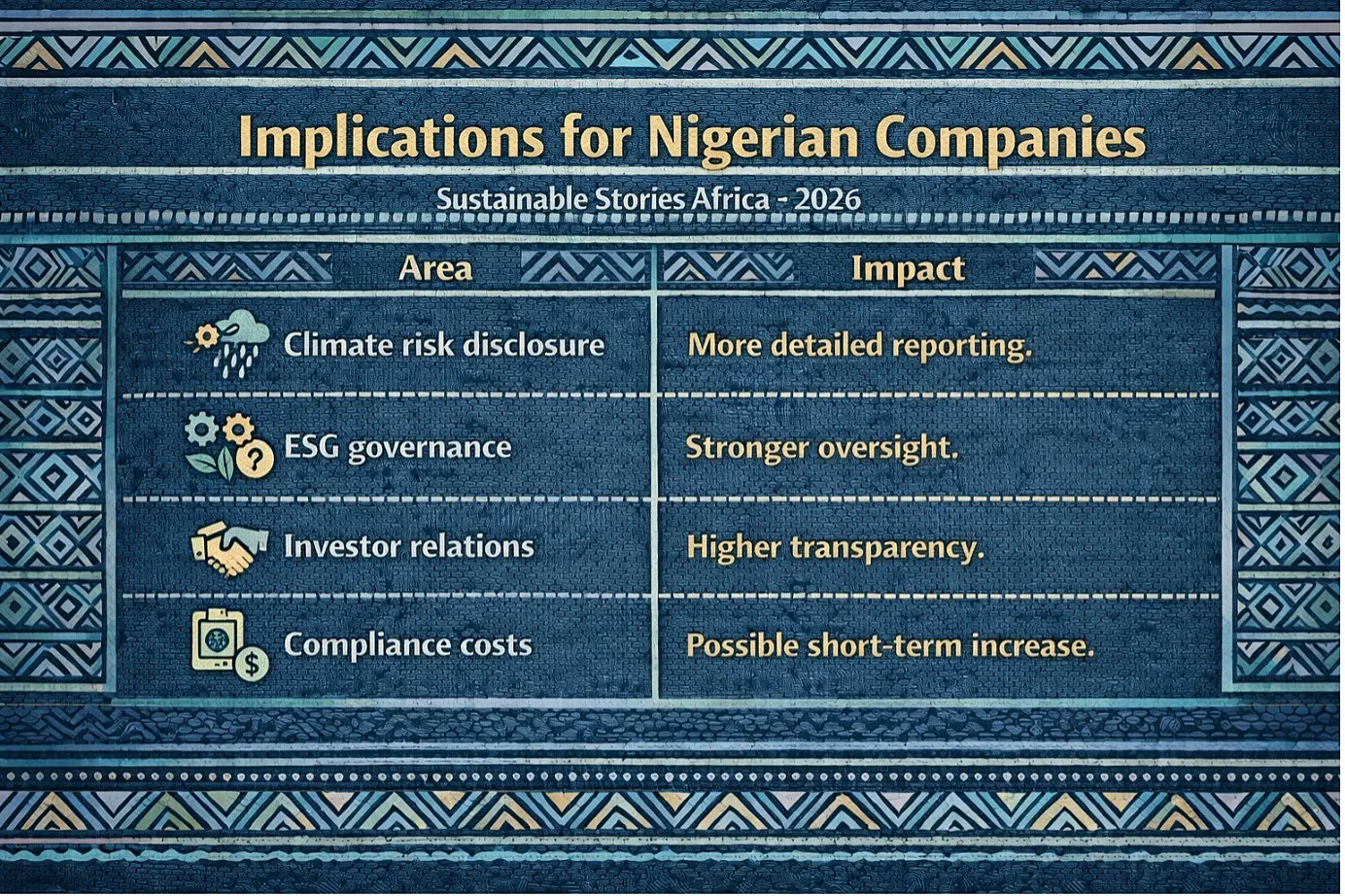
Implications for Nigerian Companies
| Area | Impact |
|---|---|
| Climate risk disclosure | More detailed reporting |
| ESG governance | Stronger oversight |
| Investor relations | Higher transparency |
| Compliance costs | Possible short-term increase |
Without alignment to global standards, Nigerian companies risk being excluded from sustainability-linked financing and international supply chains.
PATH FORWARD – From Consultation to Compliance
The FRCN's consultation marks a key step toward formalising sustainability reporting in Nigeria.
By gathering stakeholder input, regulators aim to design a framework that balances global standards with local realities.
If adopted, the IFRS Sustainability Disclosure Standards and SRG-01 guidelines could reshape how Nigerian companies report climate and ESG risks, strengthening transparency, investor confidence, and long-term market resilience.