Nigeria plans to establish a new company to oversee the national electricity grid, a move aimed at stabilising a power system plagued by frequent collapses.
The reform seeks to improve grid management, attract investment and strengthen electricity reliability.
For businesses and households across Africa’s largest economy, the initiative could determine whether long-promised power-sector reforms finally deliver stable electricity and economic productivity.
Nigeria Moves to Stabilise Fragile Power Grid
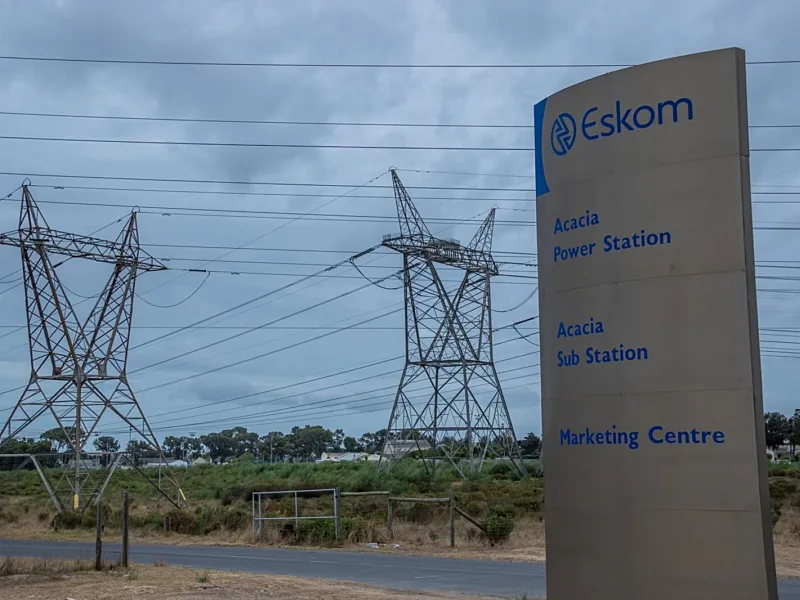
Nigeria is preparing to establish a new entity to oversee the management and operation of the national electricity grid, as authorities look to address persistent power system failures that have undermined electricity reliability nationwide.
The proposed company will assume responsibility for grid coordination, operational management and infrastructure oversight, replacing or restructuring existing arrangements that critics say have struggled to maintain system stability.
The decision follows a series of national grid collapses in recent years, which have repeatedly plunged millions of Nigerians into darkness and forced businesses and households to rely heavily on diesel and petrol generators.
Officials say the reform aims to strengthen governance, improve operational efficiency and create conditions that attract investment into Nigeria’s power transmission infrastructure.
For Africa’s largest economy, where electricity shortages remain one of the most significant barriers to industrial growth, stabilising the national grid has become an urgent economic priority.
Why Nigeria’s National Grid Continues to Struggle
Nigeria’s electricity sector has undergone multiple reforms over the past two decades, including the privatisation of generation and distribution companies in 2013.
However, the transmission segment of the power value chain remains state-controlled, with limited investment and operational challenges contributing to grid instability.
The national grid has experienced repeated failures, often triggered by generation fluctuations, transmission bottlenecks and system protection failures.
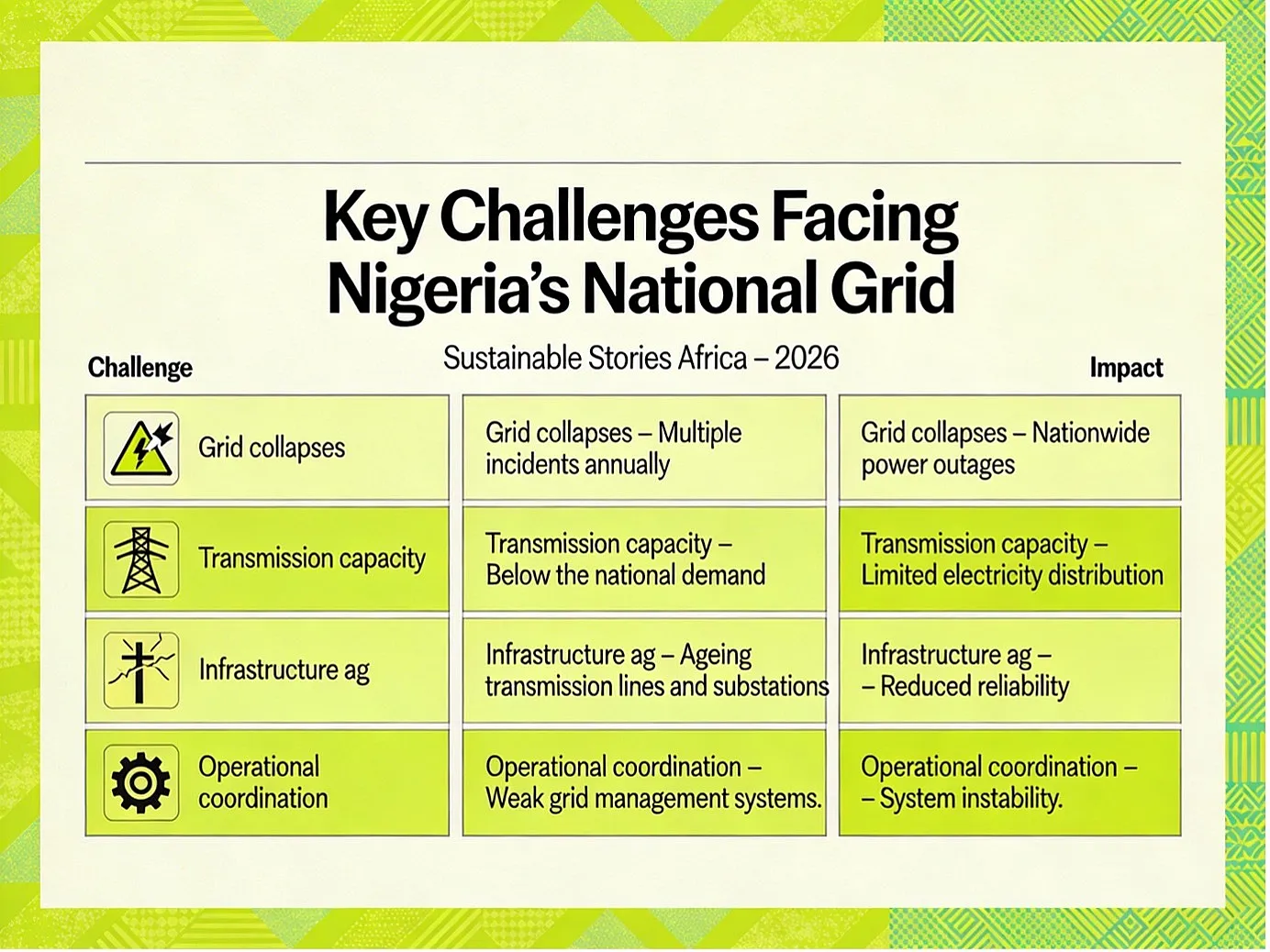
Key Challenges Facing Nigeria’s National Grid
Challenge | Current Situation | Impact |
|---|---|---|
Grid collapses | Multiple incidents annually | Nationwide power outages |
Transmission capacity | Below the national demand | Limited electricity distribution |
Infrastructure age | Ageing transmission lines and substations | Reduced reliability |
Operational coordination | Weak grid management systems | System instability |
Nigeria generates between 4,000 and 5,000 megawatts of electricity on average, far below the estimated 30,000 megawatts required to meet national demand.
As a result, millions of households and businesses depend on self-generation, making Nigeria one of the world’s largest markets for small-scale diesel and petrol generators.
Energy analysts say that even when generation capacity increases, the grid’s limited transmission capability often prevents electricity from reaching consumers efficiently.
The new grid management company is expected to focus on modernising transmission infrastructure, improving system coordination and strengthening grid resilience.
A Reliable Grid Could Transform Nigeria’s Economy
A stable electricity grid is widely seen as one of the most critical foundations for economic growth.
Reliable power enables factories to operate continuously, supports digital services and improves productivity across sectors ranging from manufacturing to agriculture.
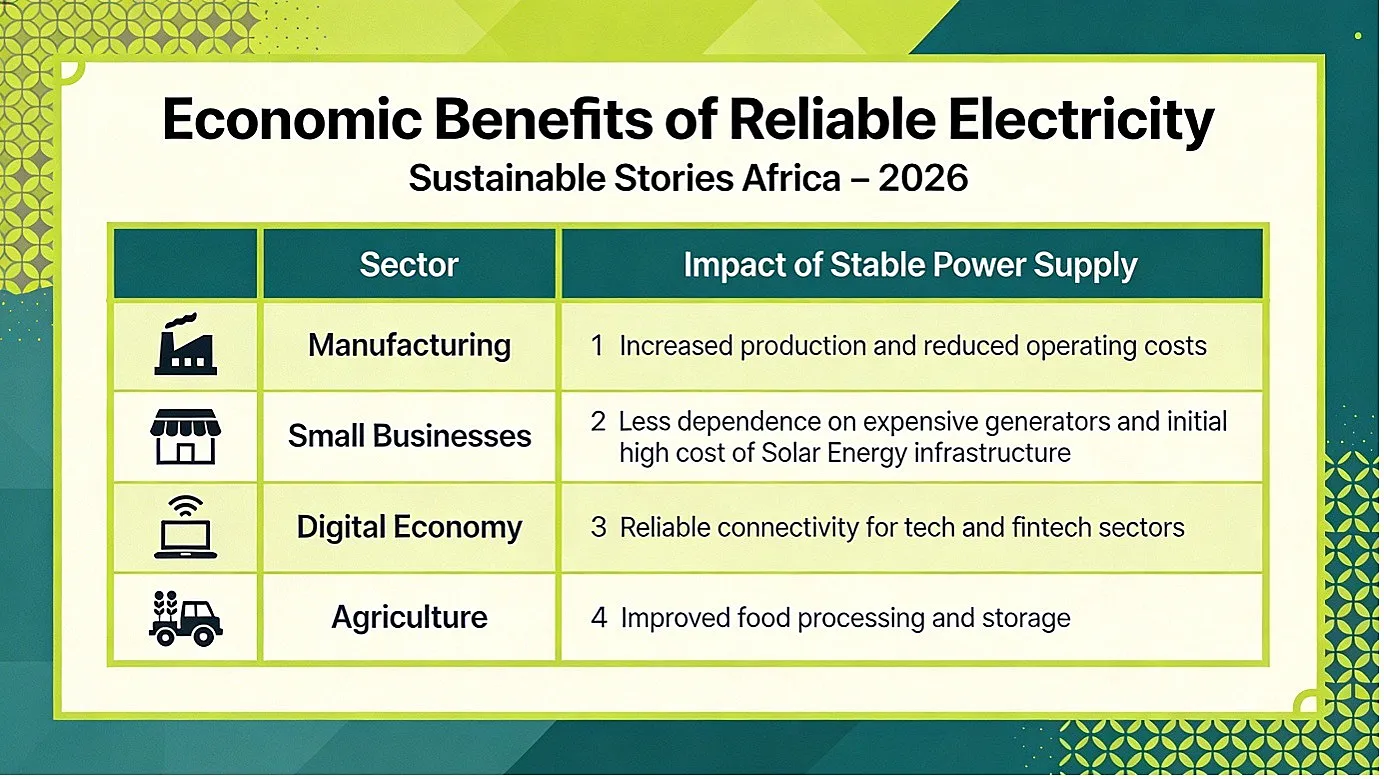
Economic Benefits of Reliable Electricity
Sector | Impact of Stable Power Supply |
|---|---|
Manufacturing | Increased production and reduced operating costs |
Small Businesses | Less dependence on expensive generators and initial high cost of Solar Energy infrastructure |
Digital Economy | Reliable connectivity for tech and fintech sectors |
Agriculture | Improved food processing and storage |
For Nigeria, improving grid reliability could unlock significant economic potential.
Businesses currently spend billions annually on fuel for backup generators and solar energy, significantly raising operating costs and reducing competitiveness.
A stronger grid could also support Nigeria’s energy transition by allowing renewable energy projects, including solar farms and mini grids, to integrate more effectively into the national electricity system.
Energy experts argue that grid modernisation is essential for enabling the large-scale deployment of renewable energy and distributed power systems.
Power Sector Reform Requires Coordinated Investment
The proposed grid management company signals the government’s recognition that Nigeria’s power sector requires structural reform and significant infrastructure investment.
Experts say the success of the initiative will depend on several factors:
- clear governance structures and operational independence
- large-scale investment in transmission infrastructure
- improved coordination between generation, transmission and distribution companies
- regulatory stability to attract private sector participation
Achieving universal electricity access and reliable supply will require sustained collaboration between government agencies, investors, development finance institutions and power sector operators.
For millions of Nigerians living with unreliable electricity, reforms that stabilise the national grid could represent a turning point.
But analysts caution that institutional reforms must be accompanied by long-term infrastructure investment and operational transparency to deliver lasting results.
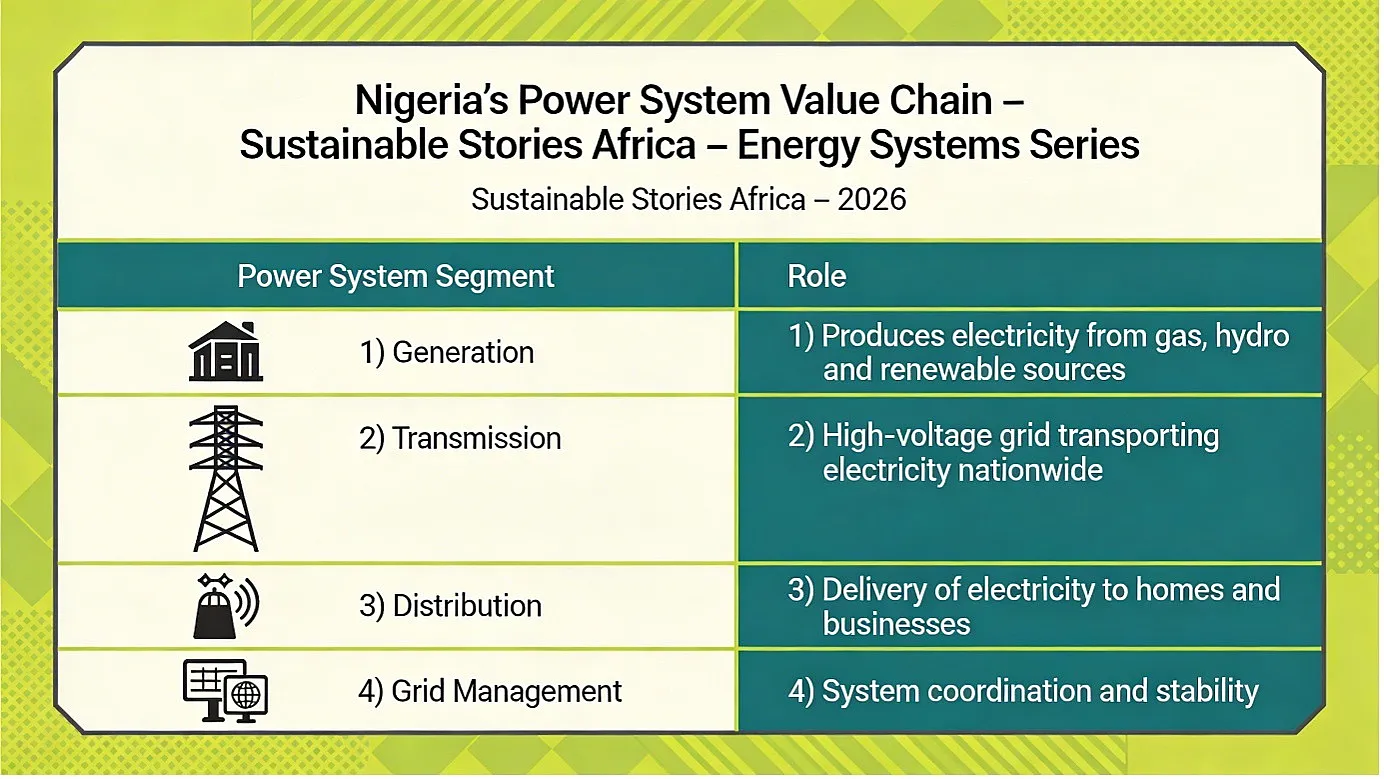
Nigeria’s Power System Value Chain – Sustainable Stories Africa – Energy Systems Series
Power System Segment | Role |
|---|---|
Generation | Produces electricity from gas, hydro and renewable sources |
Transmission | High-voltage grid transporting electricity nationwide |
Distribution | Delivery of electricity to homes and businesses |
Grid Management | System coordination and stability |
Path Forward – Rebuilding Trust in Nigeria’s Power System
Nigeria’s plan to establish a new grid management company reflects growing recognition that power sector reform must focus on operational efficiency and infrastructure investment.
If implemented effectively, the initiative could strengthen electricity reliability and unlock new investment in energy infrastructure.
For businesses and communities across Nigeria, a stable national grid would represent not only technical reform but a foundation for inclusive economic growth and sustainable energy development.
Culled From: Nigeria to establish new firm to oversee failing national grid - Energy in Africa