Nigeria is strengthening how it tracks short-lived climate pollutants across key sectors of its economy.
With support from the Climate and Clean Air Coalition (CCAC), the country is upgrading its monitoring, reporting, and verification systems to improve data quality and policy planning.
The reforms aim to support cleaner air, stronger climate action, and more effective emissions control in energy, waste, and agriculture.
Nigeria Upgrades Climate Pollution Tracking
Nigeria has started strengthening its monitoring, reporting, and verification (MRV) systems for short-lived climate pollutants (SLCPs) across key sectors of the economy, with technical support from the Climate and Clean Air Coalition (CCAC).
The initiative targeted pollutants such as methane, black carbon, and hydrofluorocarbons (HFCs), which contribute significantly to climate warming and air pollution despite their shorter atmospheric lifetimes.
According to CCAC, the reforms are designed to improve emissions data quality, support climate policy planning, and strengthen Nigeria's ability to meet both national and international climate commitments.
Why SLCPs Matter for Nigeria
Short-lived climate pollutants are responsible for a large share of short-term warming and urban air pollution. In Nigeria, major sources include:
- Gas flaring and oil-and-gas operations
- Waste disposal and open burning
- Transport emissions
- Agricultural practices
Reducing SLCPs can deliver quick climate benefits, improve air quality, and reduce health risks.
However, effective action depends on reliable data. Nigeria's existing emissions reporting systems have faced challenges related to fragmented data collection, inconsistent methodologies, and limited sector-level coverage.
The CCAC-supported programme focuses on strengthening Nigeria's institutional capacity to measure the levels of emissions accurately and consistently across priority sectors.
SLCP Sources in Nigeria
| Sector | Main Pollutants | Climate & Health Impact |
|---|---|---|
| Oil & gas | Methane, black carbon | Warming, air pollution |
| Waste | Methane | Climate, public health |
| Transport | Black carbon | Urban air quality |
| Agriculture | Methane | Climate, food systems |
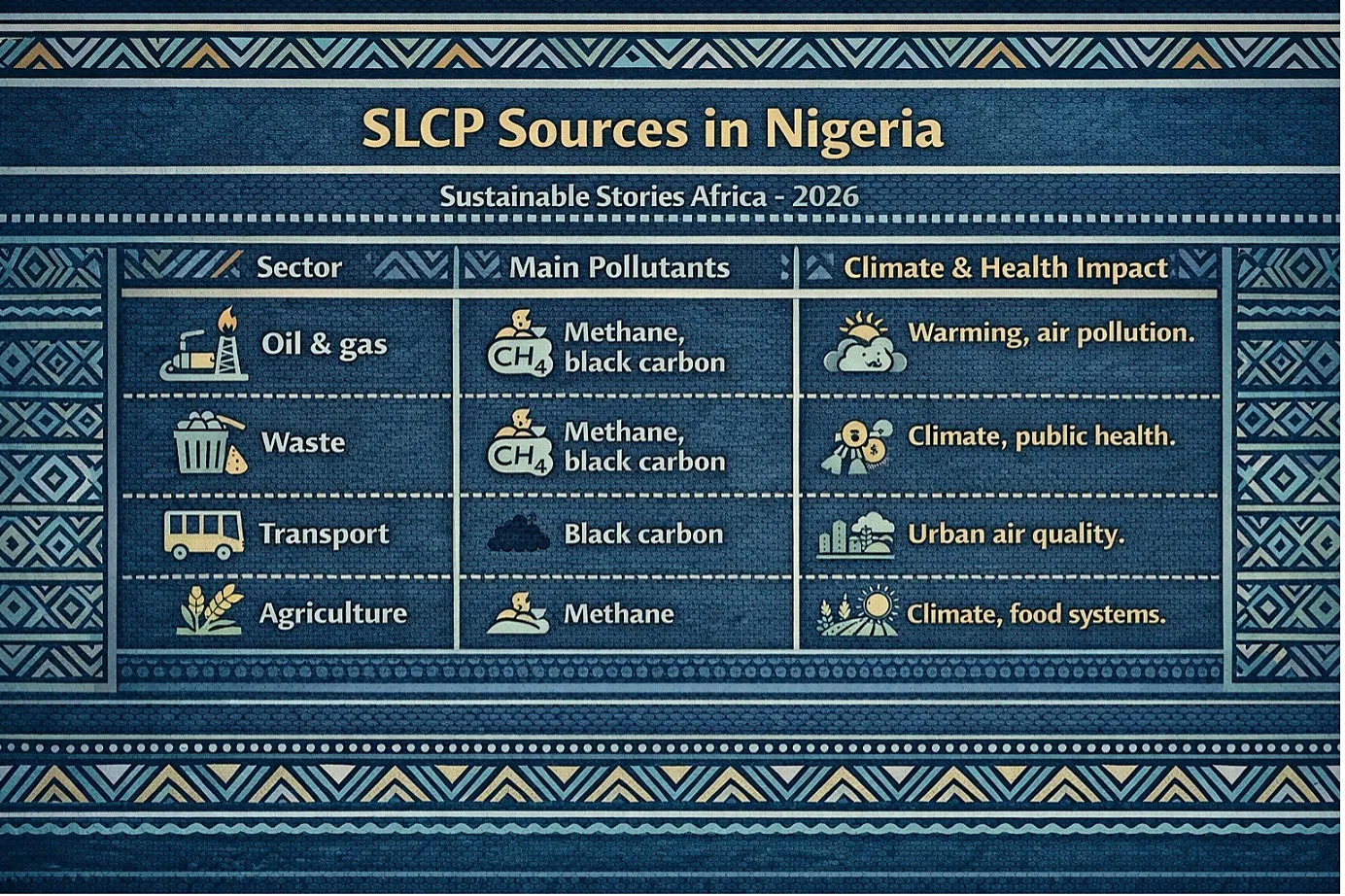
Improved MRV systems are expected to support better policy decisions and targeted mitigation strategies.
How the MRV Reforms Work
The upgraded MRV framework aims to:
- Standardise emissions data collection
- Improve sector-level reporting
- Strengthen institutional coordination
- Align national systems with global reporting standards
CCAC is providing technical assistance to Nigerian agencies responsible for climate reporting, helping them adopt more robust methodologies for tracking SLCP emissions.
The reforms also support Nigeria's commitments under the Paris Agreement, the Global Methane Pledge, and national climate strategies.
While the programme does not replace Nigeria's broader greenhouse-gas inventory systems, it enhances the country's ability to track pollutants with the most immediate climate and health impacts.
Objectives of Nigeria's SLCP MRV Upgrade
| Objective | Expected Outcome |
|---|---|
| Data standardisation | Consistent emissions reporting |
| Sector coverage | Better policy targeting |
| Institutional coordination | Faster decision-making |
| International alignment | Stronger climate credibility |
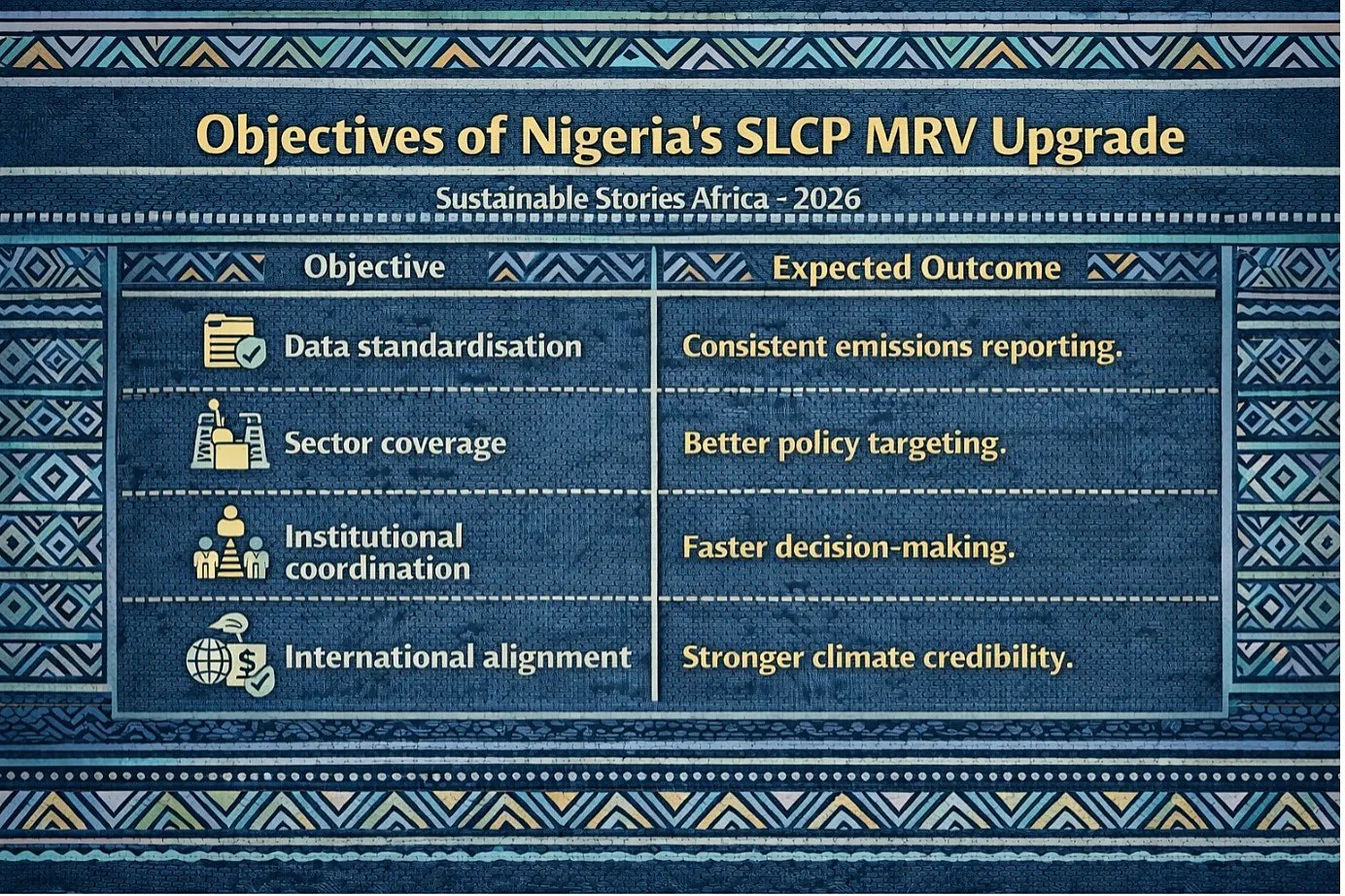
The CCAC said the improved systems will help Nigeria identify priority mitigation actions more accurately.
What Better Data Enables
Stronger MRV systems do more than improve reporting — they shape policy outcomes.
With clearer emissions data, Nigeria can:
- Design targeted methane-reduction policies
- Improve waste-management strategies
- Reduce gas flaring and leaks
- Strengthen air-quality regulations
- Attract climate-finance support
Accurate data is increasingly required for access to international climate finance and technical assistance. Donors and multilateral agencies often rely on verified emissions information to assess project impact and funding eligibility.
For Nigeria, improved SLCP tracking also supports public-health goals, particularly in urban areas affected by air pollution.
However, CCAC notes that long-term success will depend on sustained funding, institutional capacity, and political commitment.
PATH FORWARD – From Data to Climate Action
Nigeria's upgraded SLCP monitoring systems mark a step toward stronger climate governance and cleaner air.
With better emissions data, policymakers can target the most harmful pollutants more effectively.
If institutional capacity and funding are maintained, the reforms could support faster climate action, improved public health, and greater access to international climate finance.
Culled From: https://www.ccacoalition.org/news/nigeria-strengthens-slcp-mrv-systems-key-sectors-support-ccac