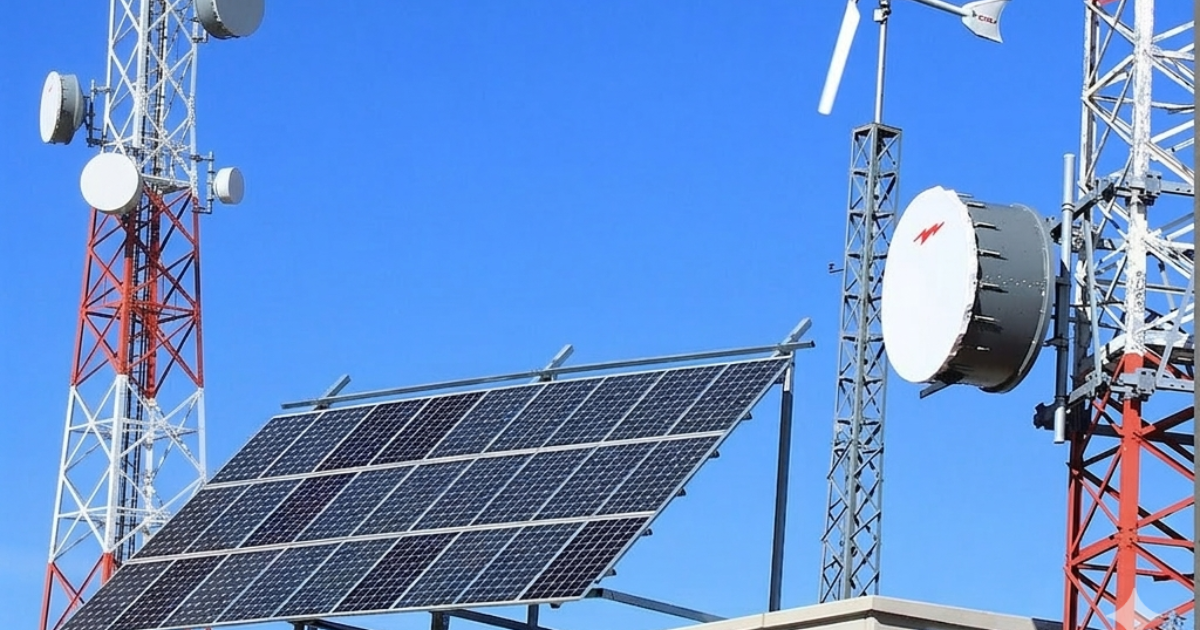
Solar power is rapidly replacing diesel generators at Africa’s telecom towers.
It is driven by increasing fuel costs, operational risks, and sustainability goals.
It is reshaping energy use in telecoms while improving reliability and reducing emissions across markets.
A Quiet Energy Revolution Powering Connectivity
Across Africa’s telecom landscape, a quiet but transformative shift is underway: solar energy is replacing diesel generators as the primary power source for thousands of telecom towers.
Long reliant on diesel due to unreliable grid electricity, telecom operators are now transitioning to solar hybrid and fully renewable systems.
This is due to economic pressure, operational efficiency, and sustainability commitments.
For an industry that underpins digital connectivity across the continent, this shift is not just about energy; it is about resilience, cost control, and long-term viability.
Why Diesel Is Losing Ground
Telecom towers are among the largest distributed energy consumers in Africa. With tens of thousands of sites, many are located off-grid or in areas with unstable electricity supply, diesel generators have historically been the default solution.
However, diesel comes with rising costs and logistical challenges. Fuel transportation, theft, maintenance, and price volatility have made operations increasingly expensive and unpredictable.
Solar solutions, often combined with battery storage, are emerging as a viable alternative, offering lower operating costs and greater reliability over time.
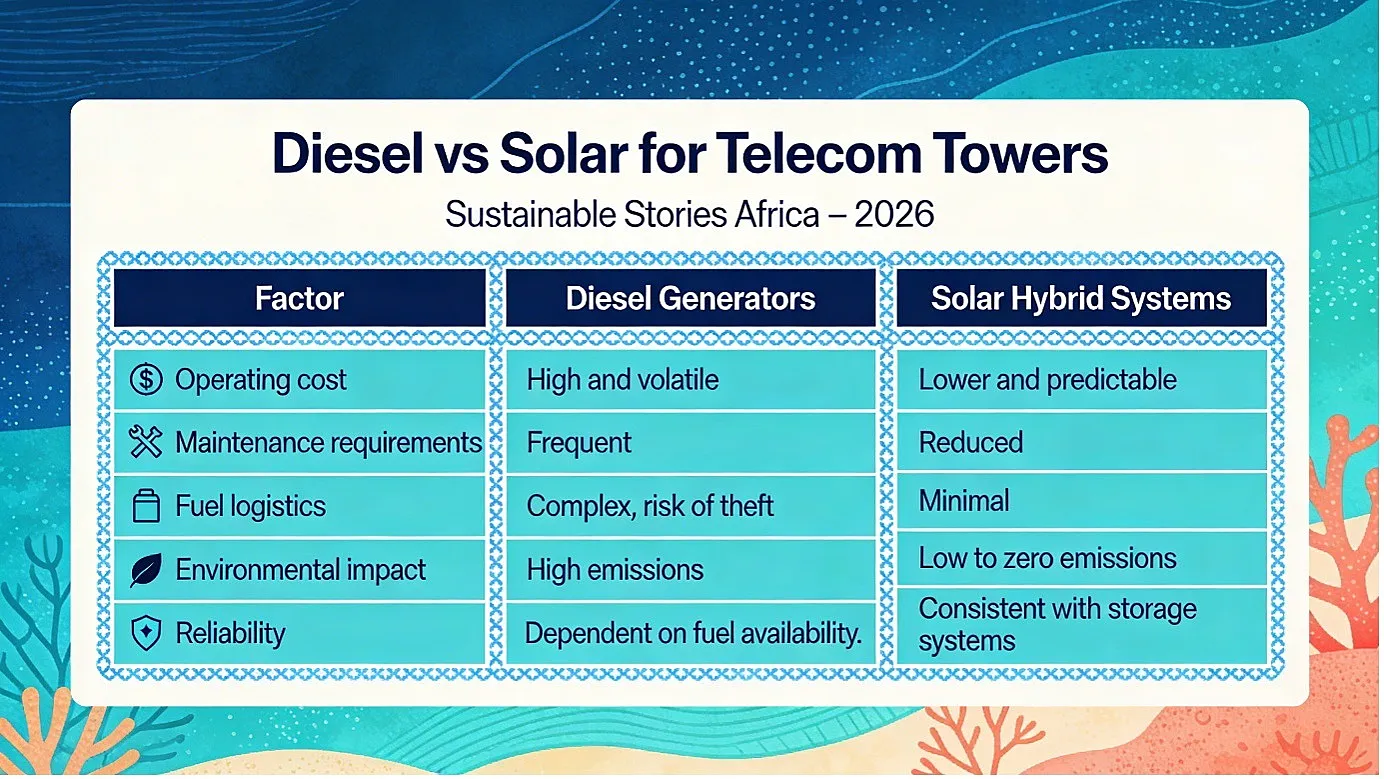
Diesel vs Solar for Telecom Towers
Factor | Diesel Generators | Solar Hybrid Systems |
|---|---|---|
Operating cost | High and volatile | Lower and predictable |
Maintenance requirements | Frequent | Reduced |
Fuel logistics | Complex, risk of theft | Minimal |
Environmental impact | High emissions | Low to zero emissions |
Reliability | Dependent on fuel availability | Consistent with storage systems |
Major tower companies and telecom operators across countries such as Nigeria, Kenya, and South Africa are already scaling solar deployments—often through partnerships with energy service companies.
In many cases, solar installations are not just replacing diesel—they are redefining how telecom infrastructure is powered, managed, and financed.
Cost Savings, Reliability, and Climate Gains
The benefits of this transition are multi-layered.
For operators, solar reduces operating expenditure significantly over the lifecycle of telecom towers. Lower fuel dependency translates into cost stability, an increasingly critical factor in volatile economic environments.
For communities, improved energy reliability means fewer network outages, enhancing communication, financial transactions, and access to digital services.
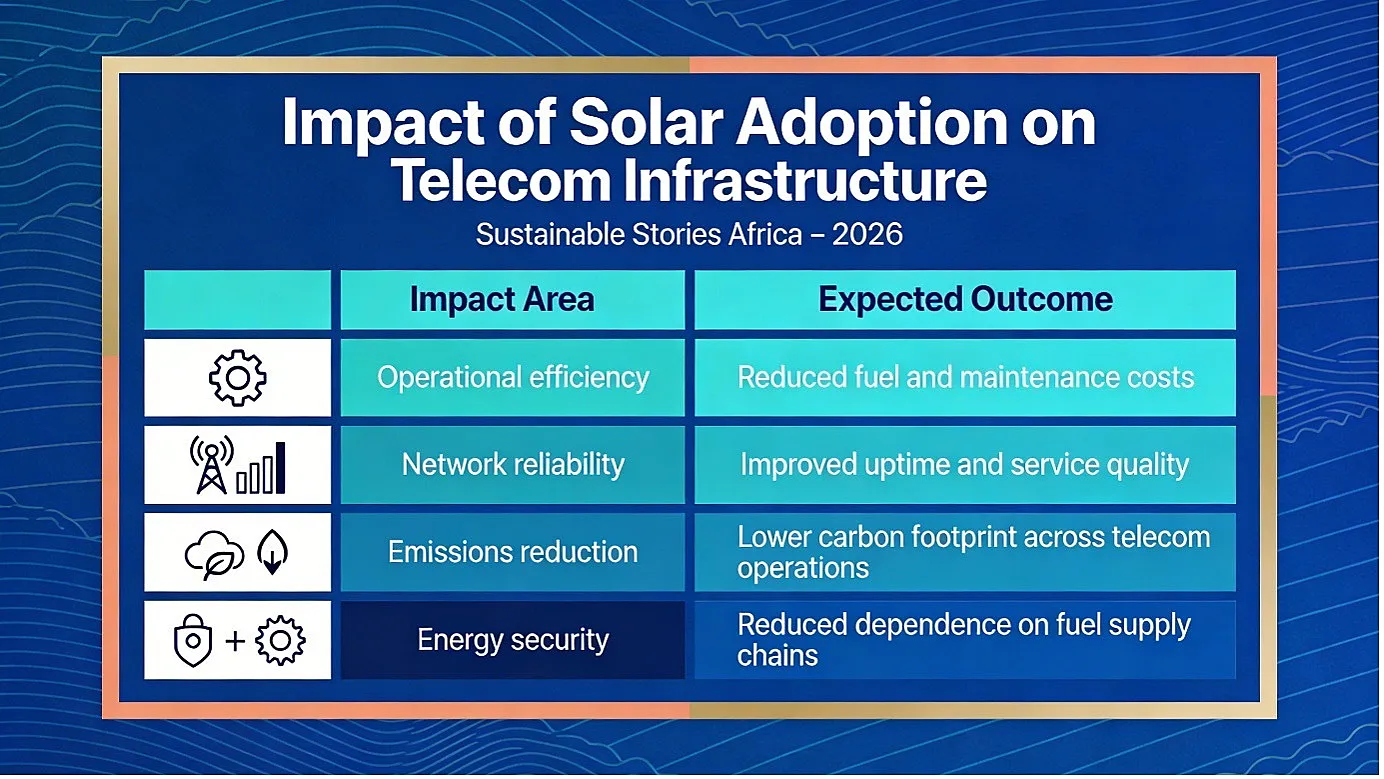
Impact of Solar Adoption on Telecom Infrastructure
Impact Area | Expected Outcome |
|---|---|
Operational efficiency | Reduced fuel and maintenance costs |
Network reliability | Improved uptime and service quality |
Emissions reduction | Lower carbon footprint across telecom operations |
Energy security | Reduced dependence on fuel supply chains |
From a climate perspective, the shift reduces emissions in one of Africa’s most energy-intensive service sectors, aligning with broader ESG and decarbonisation goals.
However, the transition is not without challenges. High upfront capital costs, financing constraints, and technical integration issues remain barriers for some operators.
Scaling the Solar Transition Across Networks
To sustain and accelerate this momentum, targeted action is required.
Governments can play a catalytic role by creating policy incentives to support renewable energy adoption in critical infrastructure sectors.
This includes tax breaks, import duty reductions for solar equipment, and regulatory frameworks that encourage private investment.
Financial institutions and development partners must expand access to financing models, such as energy-as-a-service, that reduce upfront costs for telecom operators.
Private sector collaboration is equally critical. Partnerships between telecom companies, tower operators, and renewable energy providers are already proving effective in scaling deployment.
Ultimately, the goal is clear: transition telecom infrastructure from diesel dependence to clean, reliable energy systems at scale.
PATH FORWARD – Power Connectivity With Clean, Reliable Energy Systems
Scaling solar adoption requires financing innovation, policy support, and strong partnerships.
By transitioning telecom towers to renewable energy, Africa can enhance digital resilience while advancing climate and sustainability goals.
Culled From: Solar is replacing diesel at Africa’s telecom towers