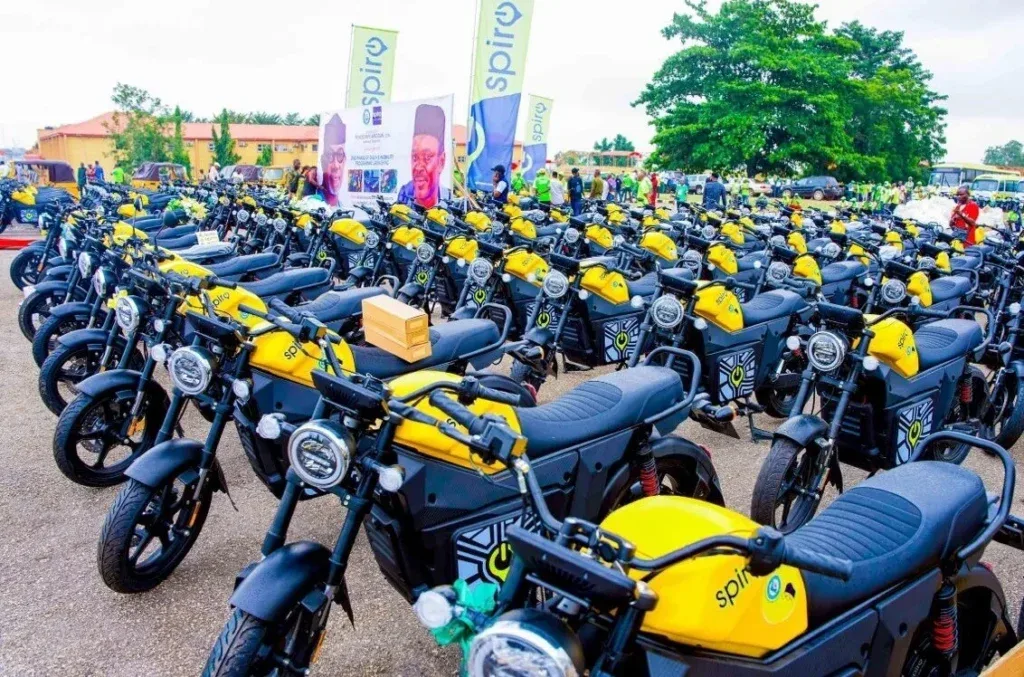
Spiro has raised $215 million to expand electric motorcycles and battery-swapping infrastructure across Africa.
The deal comes as fuel costs, congestion and climate pressure reshape urban transport economics.
For riders, cities and investors, the real test is whether clean mobility can become affordable infrastructure, not just a climate promise.
Major Bet on Two-Wheel Mobility
Spiro, one of Africa’s largest electric mobility companies, has secured $215 million in equity financing to scale its electric motorcycle and battery-swapping network across seven African markets, marking one of the strongest institutional bets yet on the continent’s clean transport transition.
The company currently operates in Kenya, Rwanda, Uganda, Togo, Benin, Nigeria and Cameroon, with more than 100,000 electric motorcycles and over 2,500 smart battery-swapping stations deployed.
The new capital, backed by institutional investors from Europe and Africa, including Impact Fund Denmark, will support network expansion, local manufacturing, assembly capacity and new technology such as solar-powered swap stations and battery storage.
For Africa’s cities, the timing matters. Motorcycles are not a fringe part of transportation. They are daily income tools for riders, delivery workers, commuters and small businesses.
In markets where petrol prices rise faster than wages, the cost of moving people and goods has become a household and enterprise issue.
Why Battery Swapping Matters Now
The power of Spiro’s model lies in a simple problem: commercial riders cannot afford to wait hours for a battery to charge.
Battery swapping turns electric mobility into a service. A rider exchanges a depleted battery for a charged one and returns to work within minutes.
That matters in Lagos, Nairobi, Kigali and Cotonou, where two-wheel transport supports livelihoods and fills gaps left by weak public transport systems.
- For a delivery rider, downtime means lost income.
- For a market trader, transport costs shape food prices.
- For cities, petrol motorcycles add noise, air pollution and emissions to already stressed roads.
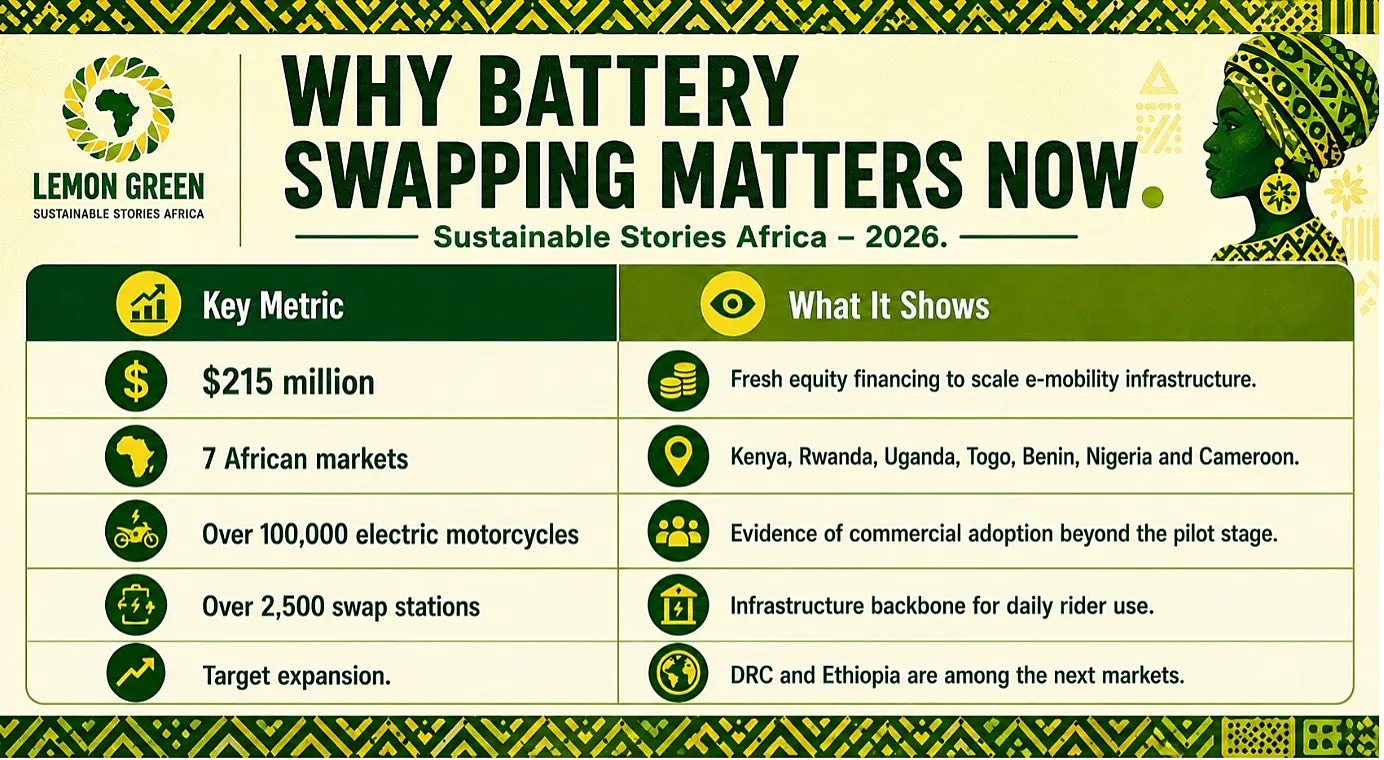
The investment also signals a shift in African climate finance. Clean mobility is moving from demonstration projects to infrastructure platforms.
Investors are no longer only funding vehicles; they are funding networks, software, maintenance systems, charging assets, batteries and local assembly.
However, scale brings pressure. Battery standards, grid reliability, import duties, financing terms and regulatory consistency will decide whether the model becomes widely affordable or remains concentrated in major urban corridors.
Lower Costs, Cleaner Cities, Better Work
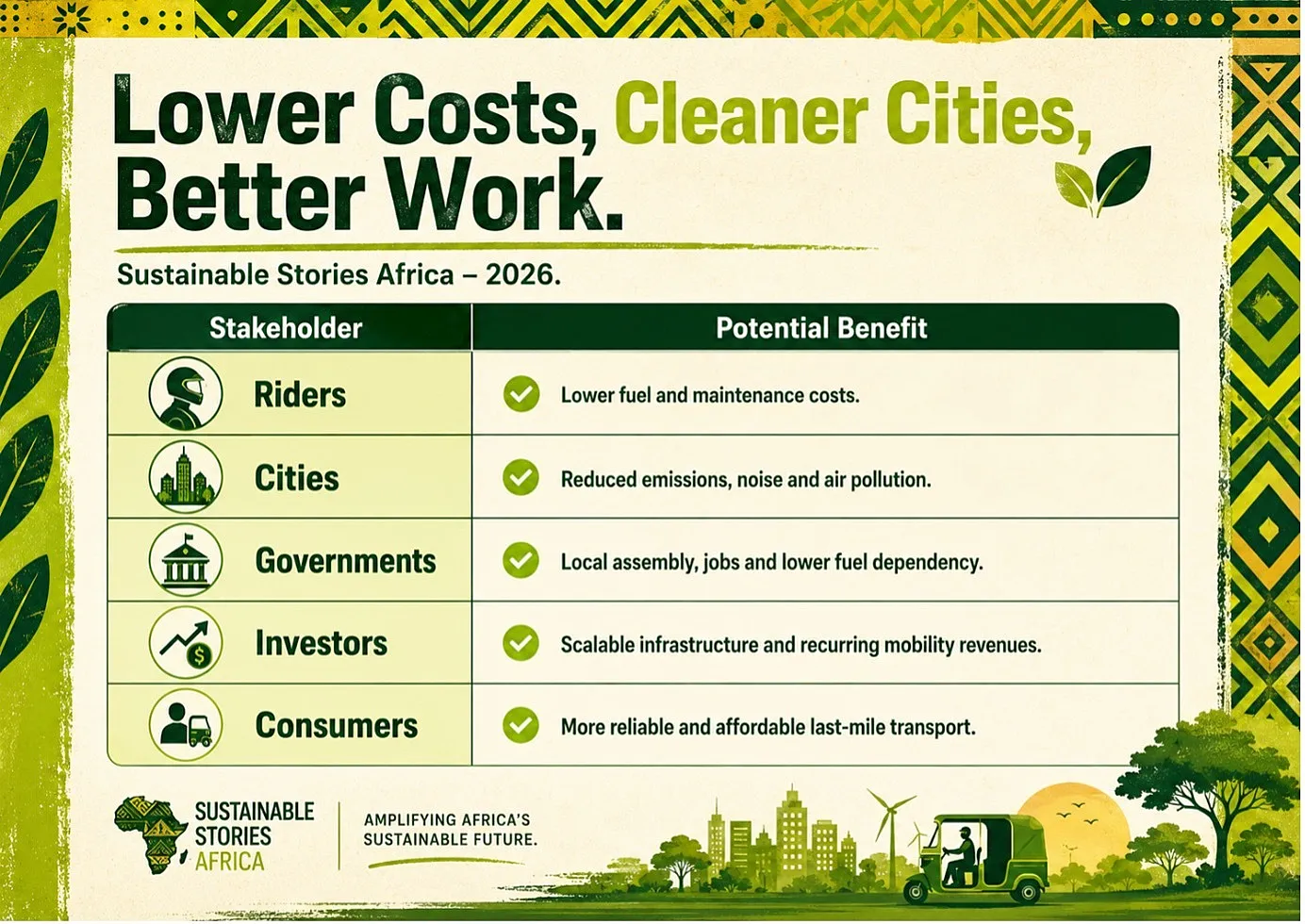
Spiro says its model can reduce transport costs for riders by up to 40%. If achieved at scale, that would make e-mobility more than an environmental story. It would become an economic productivity story.
- For African riders, lower operating costs can mean higher daily margins.
- For governments, electric motorcycles can cut exposure to imported fuel, reduce urban air pollution and support green industrial jobs.
- For investors, battery-swapping networks can create recurring revenue from mobility, energy and data services.
The bigger opportunity is industrial. If assembly, battery management and recycling are localised, Africa’s e-mobility transition could support manufacturing rather than importing finished vehicles.
However, without policy clarity, the risks remain fragmented regulations, weak charging standards, poor grid access, and limited consumer financing, which could slow adoption.
Policy Must Match the Capital
Spiro’s raise gives Africa’s e-mobility sector momentum, but capital alone cannot build a market.
- Governments need to reduce unnecessary import barriers on clean mobility components, support battery safety standards, create predictable licensing rules and encourage interoperability where possible.
- Development finance institutions and commercial banks must also move beyond headline funding rounds.
- Riders need affordable financing. Operators need working capital.
- Cities need planning frameworks that treat battery swapping as transport and energy infrastructure.
The private sector also has a responsibility.
- Scale must not come at the expense of rider protection, transparent pricing or responsible battery disposal.
If electric mobility is to become a trusted public infrastructure, it must be affordable, safe and accountable.
Path Forward – Build Clean Mobility That Works
Spiro’s $215 million raise shows that Africa’s electric mobility market is entering a more serious phase, where infrastructure, not hype, will decide the winners.
The next priority is execution: reliable swap stations, stronger local assembly, fair rider financing, battery recycling, renewable-powered charging and smart regulation.
Well done, this could turn Africa’s motorcycle economy into a cleaner, cheaper and more resilient transport system.
Culled From: Spiro Raises $215 Million to Scale Electric Mobility and Battery-Swapping Infrastructure Across Seven African Markets