Scientists say human-driven global warming is accelerating faster than previously estimated, increasing the risk that the 1.5°C climate threshold could be breached sooner than expected.
New research suggests rising greenhouse-gas emissions and feedback effects are intensifying warming trends.
For vulnerable regions, including economies in Africa and other parts of the Global South, the findings highlight the need for climate adaptation, energy transition, and development of climate resilience.
Scientists Warn of Accelerating Climate Heating
A climate study has found that human-driven global warming is accelerating, increasing the likelihood that the world could exceed the 1.5°C warming threshold earlier than scientists previously projected.
The research, conducted by an international team of climate scientists, shows that anthropogenic warming, primarily by fossil fuel emissions and deforestation, has intensified over the past decade, particularly in greenhouse gas concentrations, reinforcing climate feedback loops.
The 1.5°C threshold, established under the Paris Agreement, represents the level scientists say is necessary to avoid the most catastrophic impacts of climate change.
However, the study’s findings suggest the remaining carbon budget to stay within that limit may be shrinking faster than expected.
For countries already grappling with extreme heat, drought, floods and food insecurity, the implications are profound, particularly across Africa, South Asia and small island states, where climate vulnerability intersects with development challenges.
Why the Warming Trend Is Accelerating
Scientists attribute the acceleration in warming to several overlapping factors:
- Continued growth in global greenhouse gas emissions
- Reduced cooling effects from aerosol pollution
- Intensifying climate feedback mechanisms, such as melting ice and warming oceans
These dynamics are pushing global temperatures upward at a pace that is beginning to outstrip earlier projections.
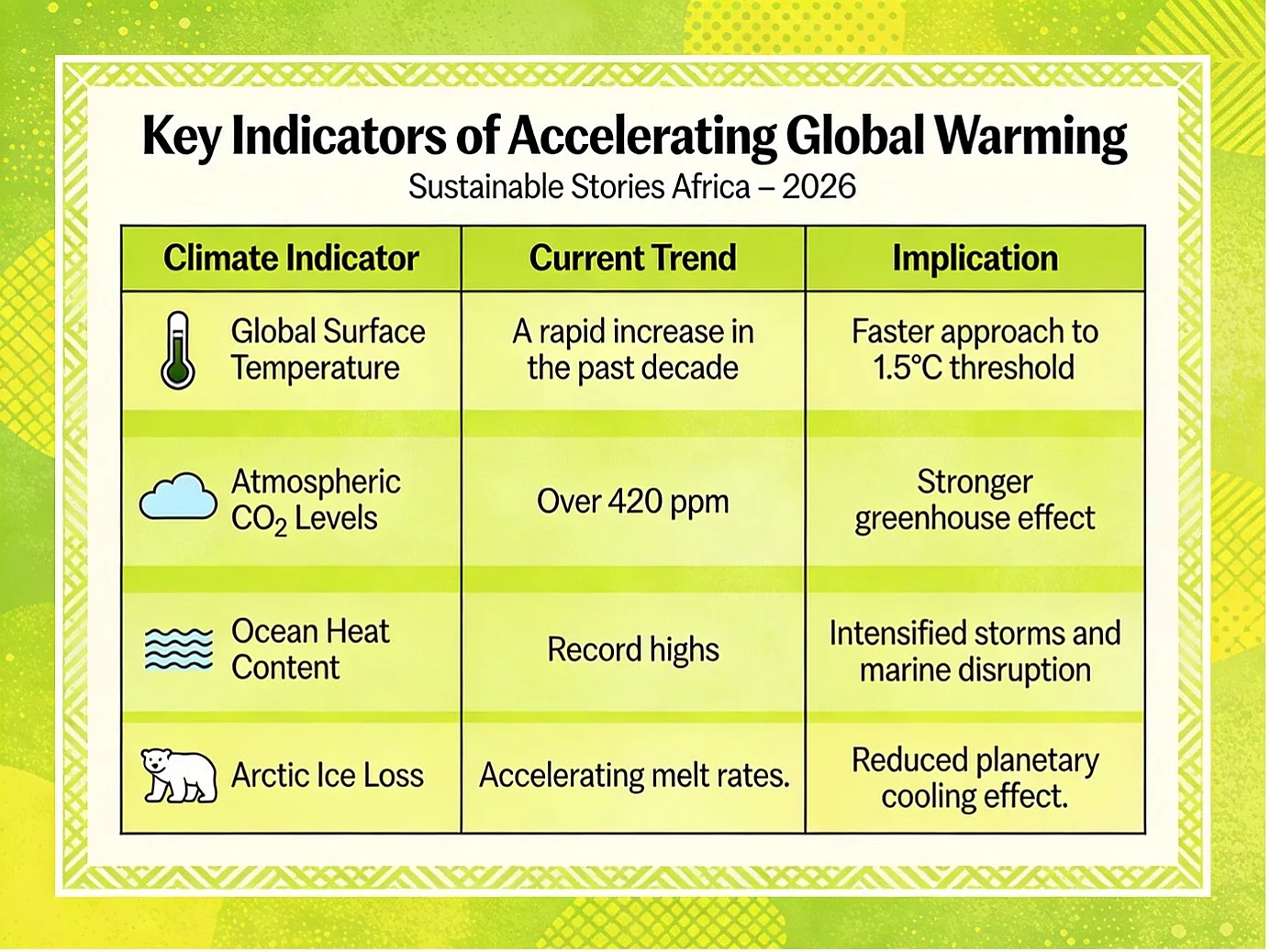
Key Indicators of Accelerating Global Warming
Climate Indicator | Current Trend | Implication |
|---|---|---|
Global Surface Temperature | A rapid increase in the past decade | Faster approach to 1.5°C threshold |
Atmospheric CO₂ Levels | Over 420 ppm | Stronger greenhouse effect |
Ocean Heat Content | Record highs | Intensified storms and marine disruption |
Arctic Ice Loss | Accelerating melt rates | Reduced planetary cooling effect |
Climate scientists warn that crossing the 1.5°C threshold does not represent a sudden tipping point, but it significantly raises the probability of severe climate disruptions.
These include:
- stronger heatwaves
- more intense storms
- sea-level rise
- disruptions to agriculture and water systems
For African economies, many of which depend heavily on rain-fed agriculture, these risks translate into real economic and social challenges.
In the Sahel, for example, prolonged drought cycles already threaten food production and rural livelihoods, while coastal cities such as Lagos, Alexandria and Abidjan face increasing flood risks from sea-level rise.
A Narrow Window to Avoid Worst Outcomes
Despite the troubling findings, scientists emphasise that the 1.5°C goal is still technically achievable, but only through rapid and sustained global action.
Reducing emissions this decade remains the most effective pathway to slow the tide of warming.
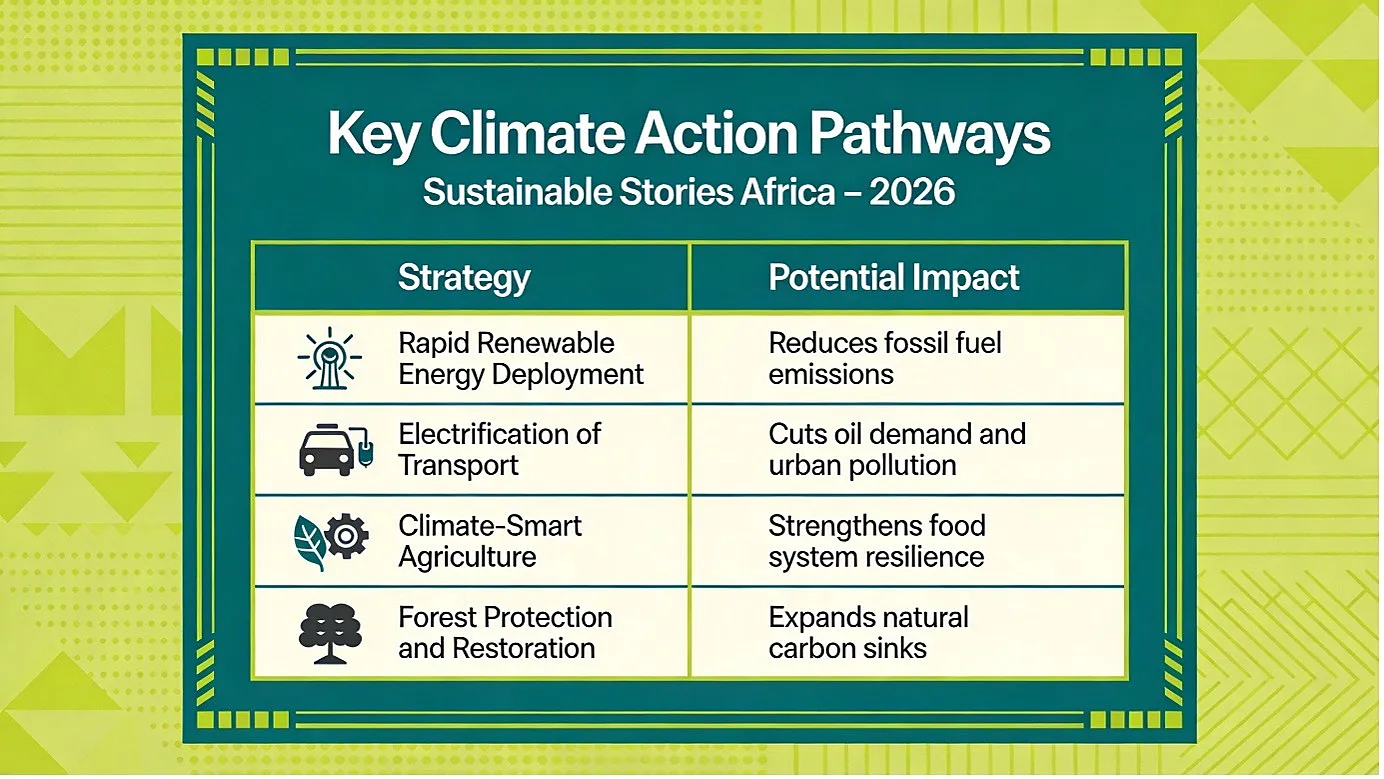
Key Climate Action Pathways
Strategy | Potential Impact |
|---|---|
Rapid Renewable Energy Deployment | Reduces fossil fuel emissions |
Electrification of Transport | Cuts oil demand and urban pollution |
Climate-Smart Agriculture | Strengthens food system resilience |
Forest Protection and Restoration | Expands natural carbon sinks |
The global clean-energy transition is already underway.
Solar and wind capacity are expanding rapidly, electric vehicles are gaining market share, and governments are increasingly introducing carbon pricing, climate disclosure rules and green industrial policies.
If these efforts accelerate, scientists say the world could still stabilise warming and limit the most damaging climate outcomes.
For Africa, this transition also presents economic opportunities, from renewable energy investment and green industrialisation to climate-smart agriculture and sustainable infrastructure.
Turning Climate Science Into Urgent Policy
The study underscores a critical reality: climate science is moving faster than global policy responses.
Experts say governments, businesses and financial institutions must act more decisively to close the gap.
Key priorities include:
- accelerating renewable energy deployment
- phasing out coal and reducing fossil fuel subsidies
- strengthening climate finance for developing countries
- investing in climate-resilient infrastructure
For Africa, access to climate finance remains one of the most significant barriers to effective adaptation.
Although the continent contributes less than 4% of global emissions, it faces some of the highest climate vulnerability risks.
Climate experts argue that global financial institutions, development banks and private investors must scale up funding to help emerging economies adapt to warming already underway while pursuing low-carbon growth pathways.
The accelerating warming trend is therefore not only a scientific warning, but also a call for stronger international cooperation, faster policy action and deeper investment in climate resilience.
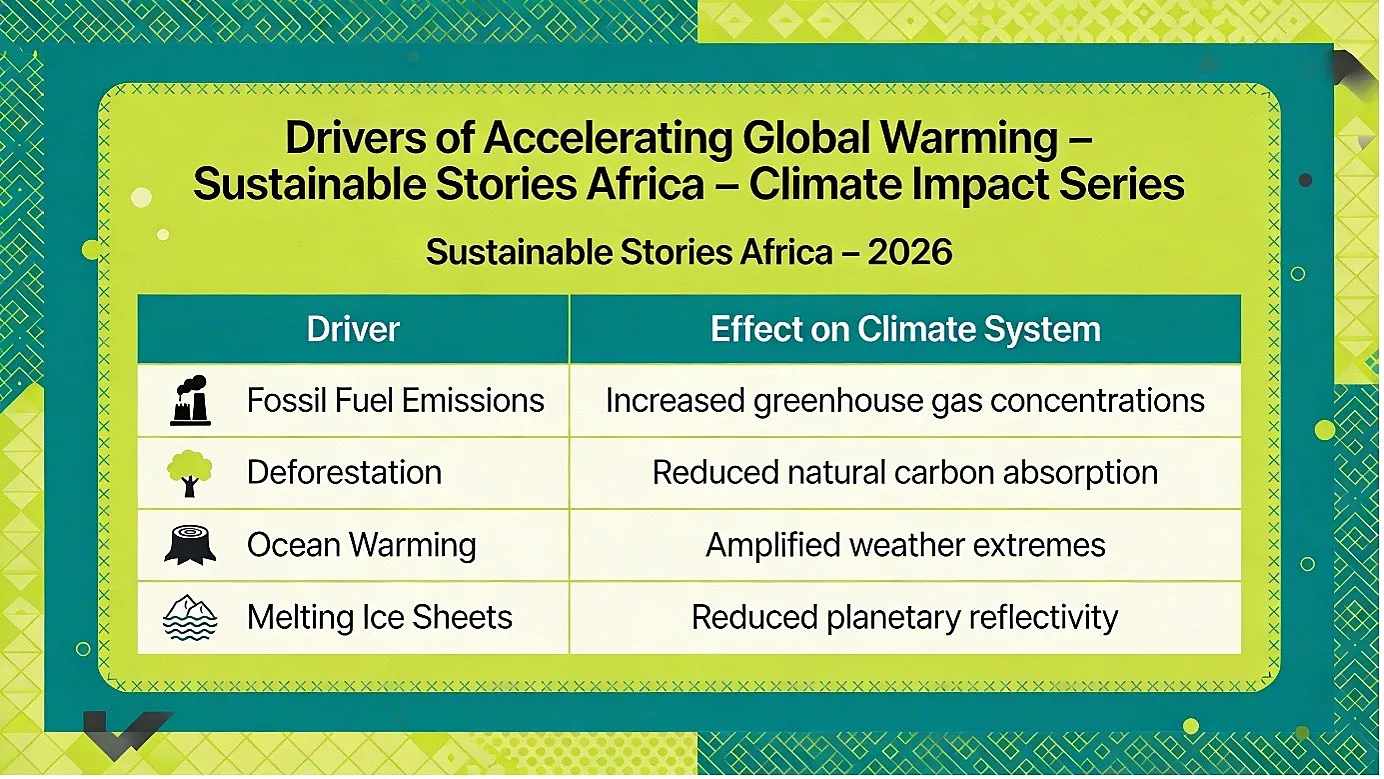
Drivers of Accelerating Global Warming – Sustainable Stories Africa – Climate Impact Series
Driver | Effect on Climate System |
|---|---|
Fossil Fuel Emissions | Increased greenhouse gas concentrations |
Deforestation | Reduced natural carbon absorption |
Ocean Warming | Amplified weather extremes |
Melting Ice Sheets | Reduced planetary reflectivity |
Path Forward – Closing the Gap Between Science, Policy
The accelerating pace of human-driven warming reinforces the urgency of translating climate science into action.
Governments, investors and industries must accelerate quickly to reduce emissions while strengthening climate resilience.
For Africa and other emerging regions, the priority will be to ensure that access to climate finance, technology and infrastructure that support sustainable development while protecting communities from the growing impacts of global warming.
Culled From: Study Finds Acceleration in Human-Driven Warming, Raising Risk of Early 1.5C Breach