Africa is rapidly positioning artificial intelligence as a cornerstone of its education and workforce strategy.
With over 60% of the population under 25, the continent faces a historic skills challenge and opportunity.
From virtual classrooms to AI tutors, governments and private players are reimagining how young Africans learn, train, and work in a digital economy.
The race is now on to ensure technology-driven education translates into real jobs, productivity, and inclusive growth.
Africa's Digital Skills Inflexion Point
Africa's education systems are undergoing a quiet revolution. Artificial intelligence, once confined to research labs and elite universities, is reshaping the learning patterns of millions of young Africans.
With youth unemployment stubbornly high and digital skills in short supply, policymakers and EdTech innovators are turning to AI-powered learning to bridge the divide between classrooms and the job market.
Across the continent, virtual tutors, adaptive learning platforms, and data-driven training tools are being rolled out to prepare students for the digital economy.
The urgency is clear: Africa's workforce must be future-ready, or risk being left behind.
How AI Is Transforming Learning
AI-enabled education platforms are expanding access to personalised learning at scale. These tools analyse students' performance in real time, adjusting lessons to match individual strengths and weaknesses.
In countries where teacher shortages and overcrowded classrooms are familiar, AI is filling critical gaps.
Several national strategies now place digital education at the centre of economic planning.
Governments are partnering with private EdTech providers to deliver online courses in coding, data analysis, cybersecurity, and entrepreneurship. The goal is not just literacy, but employability.
Key focus areas include:
- AI-supported teacher training
- Virtual STEM classrooms
- Mobile-based learning for rural students
- Digital skills certification for youth
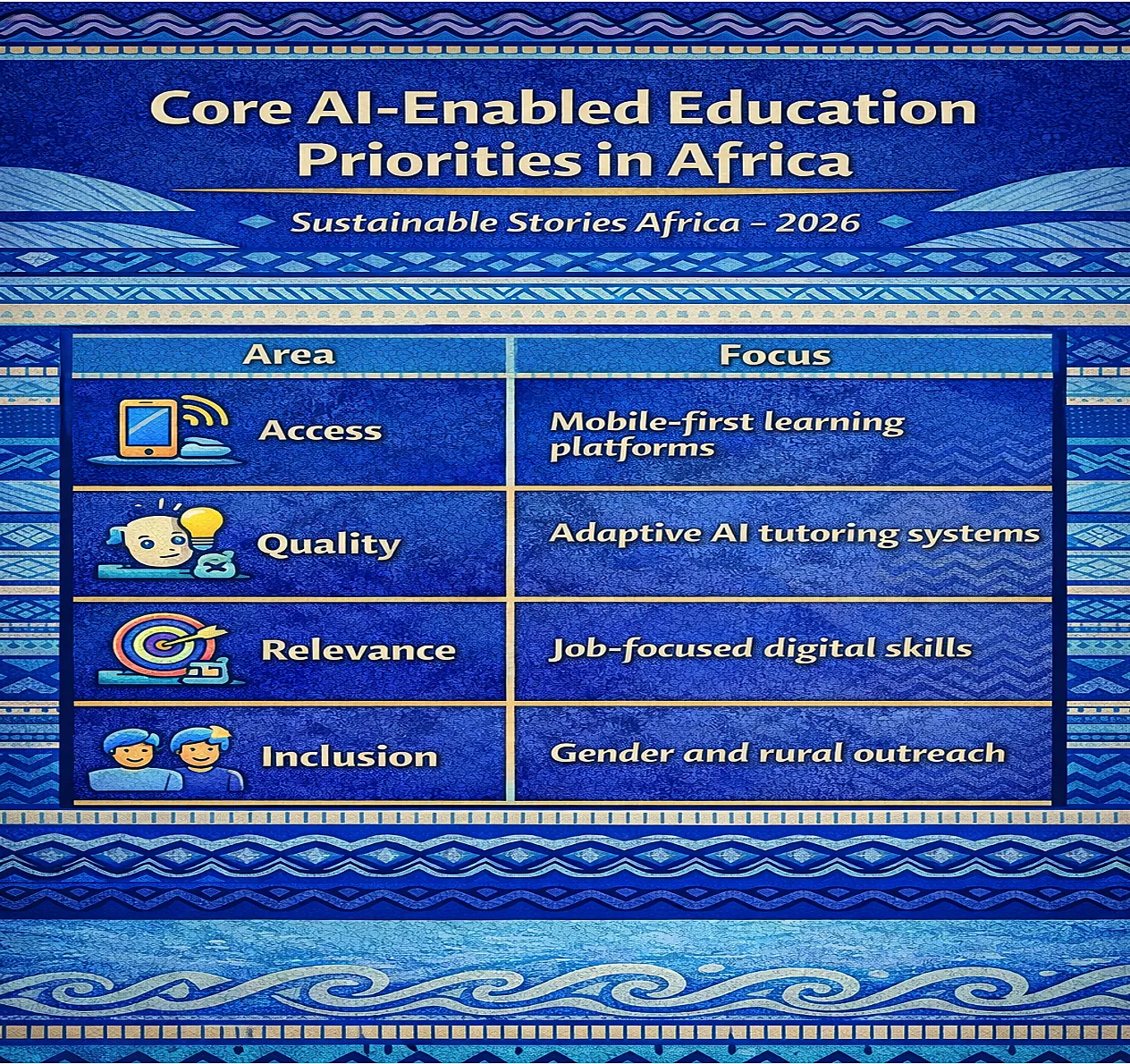
Core AI-Enabled Education Priorities in Africa
| Area | Focus |
|---|---|
| Access | Mobile-first learning platforms |
| Quality | Adaptive AI tutoring systems |
| Relevance | Job-focused digital skills |
| Inclusion | Gender and rural outreach |
Private sector investment is accelerating. Global tech firms and local startups are developing AI tools tailored to African contexts, using local languages, offline functionality, and culturally relevant content.
Skills for Jobs, Growth, and Inclusion
The promise of AI-powered education goes beyond technology. At stake is Africa's economic future.
Digital skills are increasingly linked to higher wages, productivity, and business creation.
By embedding AI into learning systems, countries aim to build a workforce that can compete globally in software development, fintech, health tech, and creative industries.
Education leaders argue that AI can also reduce inequality. Remote learning tools reach underserved communities, while data analytics help identify students at risk of dropping out.
Expected benefits include:
- Faster workforce upskilling
- Stronger links between education and labour markets
- Improved learning outcomes
- Greater inclusion for women and rural youth
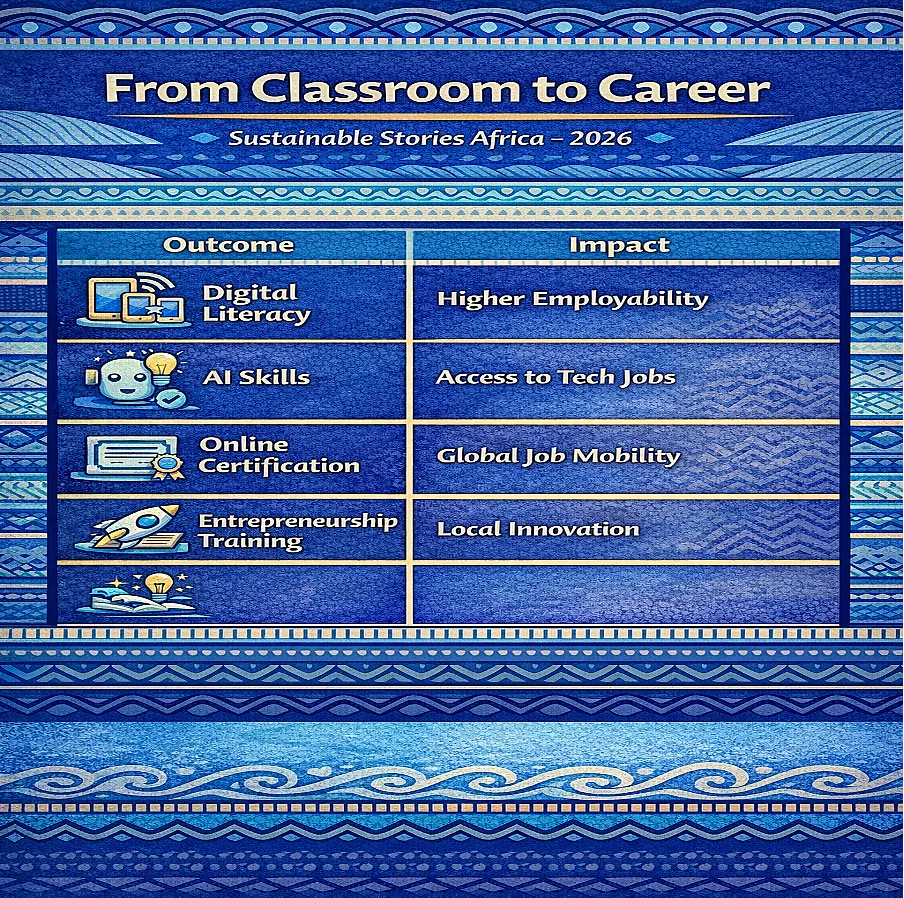
From Classroom to Career
| Outcome | Impact |
|---|---|
| Digital literacy | Higher employability |
| AI skills | Access to tech jobs |
| Online certification | Global job mobility |
| Entrepreneurship training | Local innovation |
However, experts remind us that technology is only part of the answer. Without steadfast governance, empowered teachers, and equitable access, AI's promise for education may remain just another promise, not progress.
What Must Happen Next
To turn digital ambition into real outcomes, stakeholders are calling for coordinated action.
Governments are encouraged to invest in broadband infrastructure, update national curricula, and establish data-protection standards for AI learning tools. Education ministries must also train teachers to use AI effectively, rather than treating it as a replacement.
Meanwhile, private EdTech firms are being encouraged to design affordable, localised solutions that reflect African realities, not just imported models.
The message is clear: Africa's AI education push must be inclusive, regulated, and job-focused to deliver long-term value.
PATH FORWARD – Building Africa's AI Talent Pipeline
Africa's future workforce will be shaped by how well AI is integrated into education today.
The priority is to align digital learning with labour-market needs, ensuring access for underserved communities, and safeguarding data and quality standards.
With the right investments and partnerships, AI-powered education can become a catalyst for economic growth, social mobility, and global competitiveness across the continent.
Culled From: The future is Africa: Shaping AI-enabled EdTech for skilling the next generation