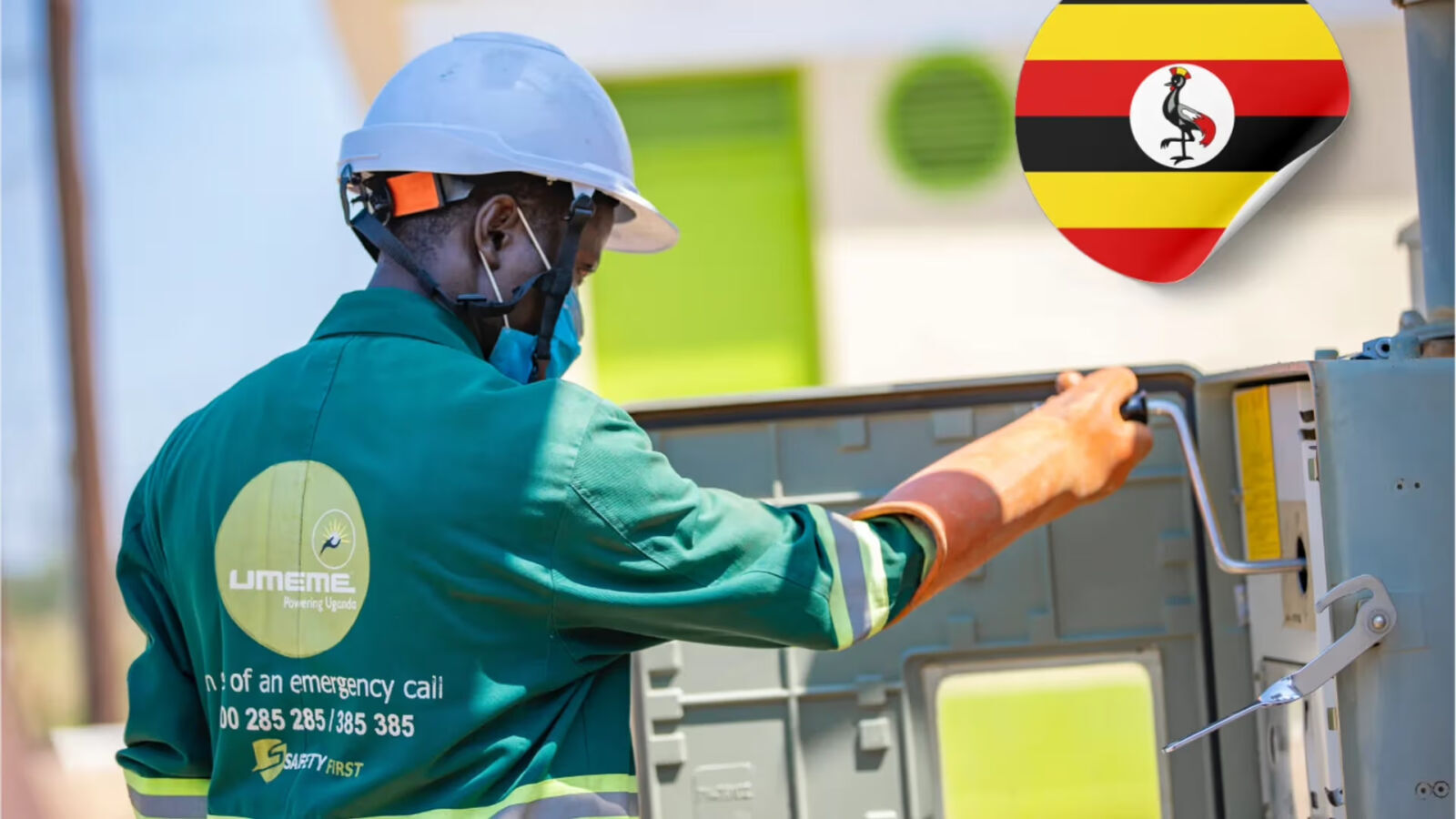
Uganda’s electricity sector is entering a pivotal transition as Umeme’s 20-year power distribution concession comes to an end, transferring responsibility back to the government.
The move raises pressing questions about whether state institutions can sustain electricity reliability while expanding national energy access.
Energy analysts say the shift could reshape Uganda’s power sector governance, investment outlook and long-term electricity distribution strategy.
Uganda Power Sector Enters New Era
Uganda’s electricity sector is undergoing one of its most significant structural transitions in two decades as Umeme’s long-running electricity distribution concession comes to an end.
Since 2005, Umeme has managed Uganda’s electricity distribution network under a public-private partnership model designed to improve grid reliability and attract investment into the power sector.
Over the years, the arrangement helped modernise parts of the electricity distribution system, reduce energy losses and expand grid coverage.
However, with the concession ending, the Ugandan government is preparing to assume full operational control of the country’s electricity distribution infrastructure through the Uganda Electricity Distribution Company Limited (UEDCL).
The transition marks a major test of Uganda’s broader energy reform strategy.
Balancing Energy Access With Operational Stability
The end of Umeme’s concession comes at a time when Uganda is attempting to expand electricity access while maintaining grid stability.
Energy demand has grown steadily as urbanisation accelerates and industrial development expands across the country.
However, maintaining operational efficiency in electricity distribution remains a major challenge.
Analysts say the transition raises key questions about whether public-sector management can maintain the performance improvements achieved under private-sector participation.
Energy experts warn that operational continuity, maintenance funding and technical capacity will be critical factors determining the success of the transition.
Key Achievements During the Umeme Concession
Indicator | Progress Achieved |
|---|---|
Network modernisation | Major upgrades to electricity distribution infrastructure |
Energy loss reduction | Technical and commercial losses reduced significantly |
Electricity connections | Millions of new customers connected to national grid |
Operational efficiency | Improved reliability across major distribution networks |
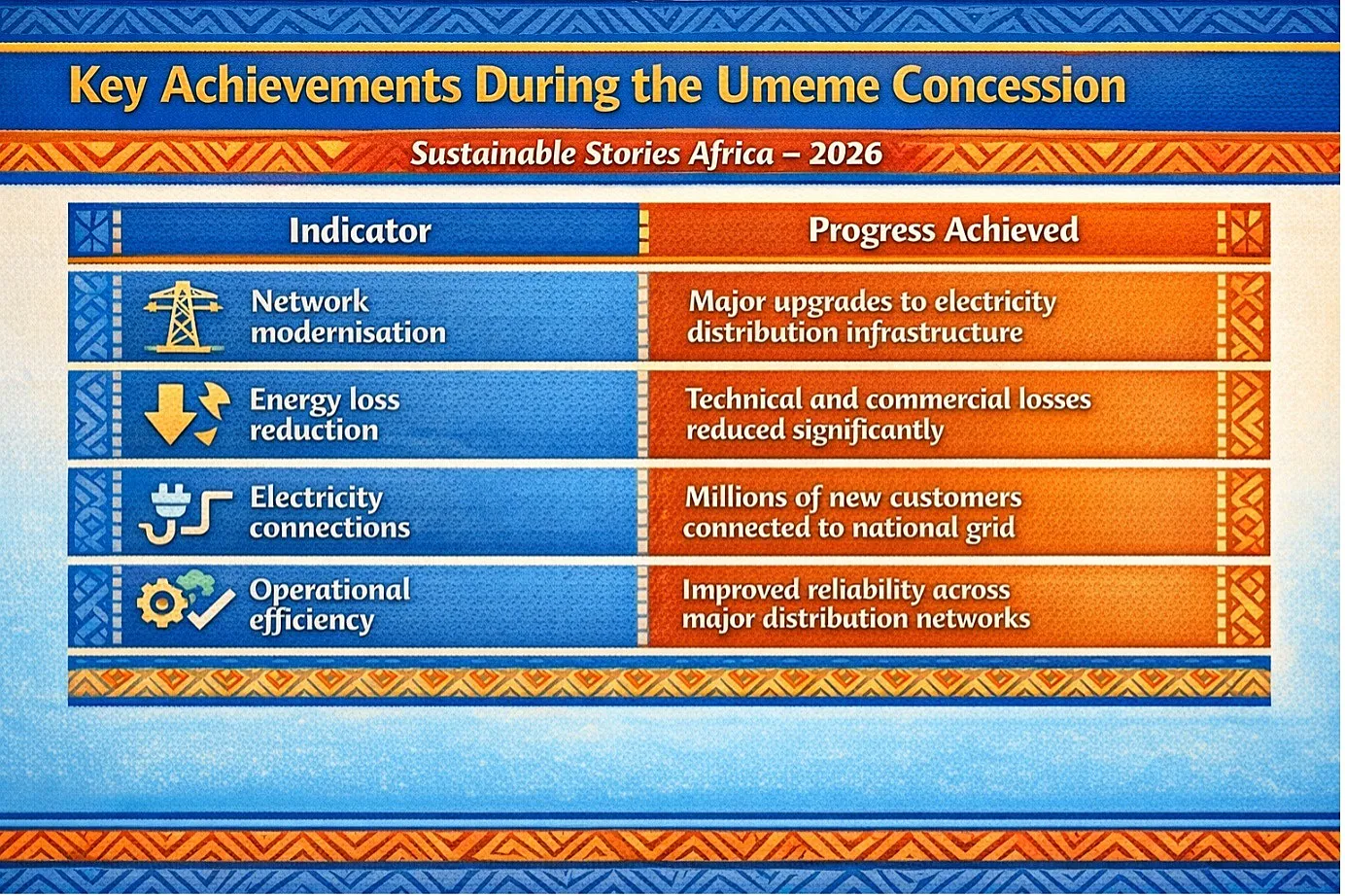
While these improvements strengthened Uganda’s power sector, sustaining them under a new governance structure will require careful planning.
Electricity Demand Continues Rising Rapidly
Uganda’s electricity demand is expected to grow significantly over the coming years as economic activity expands.
The country has invested heavily in power generation projects, particularly hydropower, resulting in increased national electricity supply.
However, expanding generation capacity is only part of the equation.
Efficient electricity distribution systems remain essential for ensuring that power produced reaches homes, businesses and industrial users.
Without effective distribution management, power sector investments risk underperforming.
Structural Challenges Facing Uganda’s Power Sector
Challenge | Implication |
|---|---|
Distribution infrastructure maintenance | Requires sustained capital investment |
Rising electricity demand | Greater pressure on grid capacity |
Institutional transition | Operational disruptions are possible during handover |
Financial sustainability | Tariff management and revenue collection are critical |
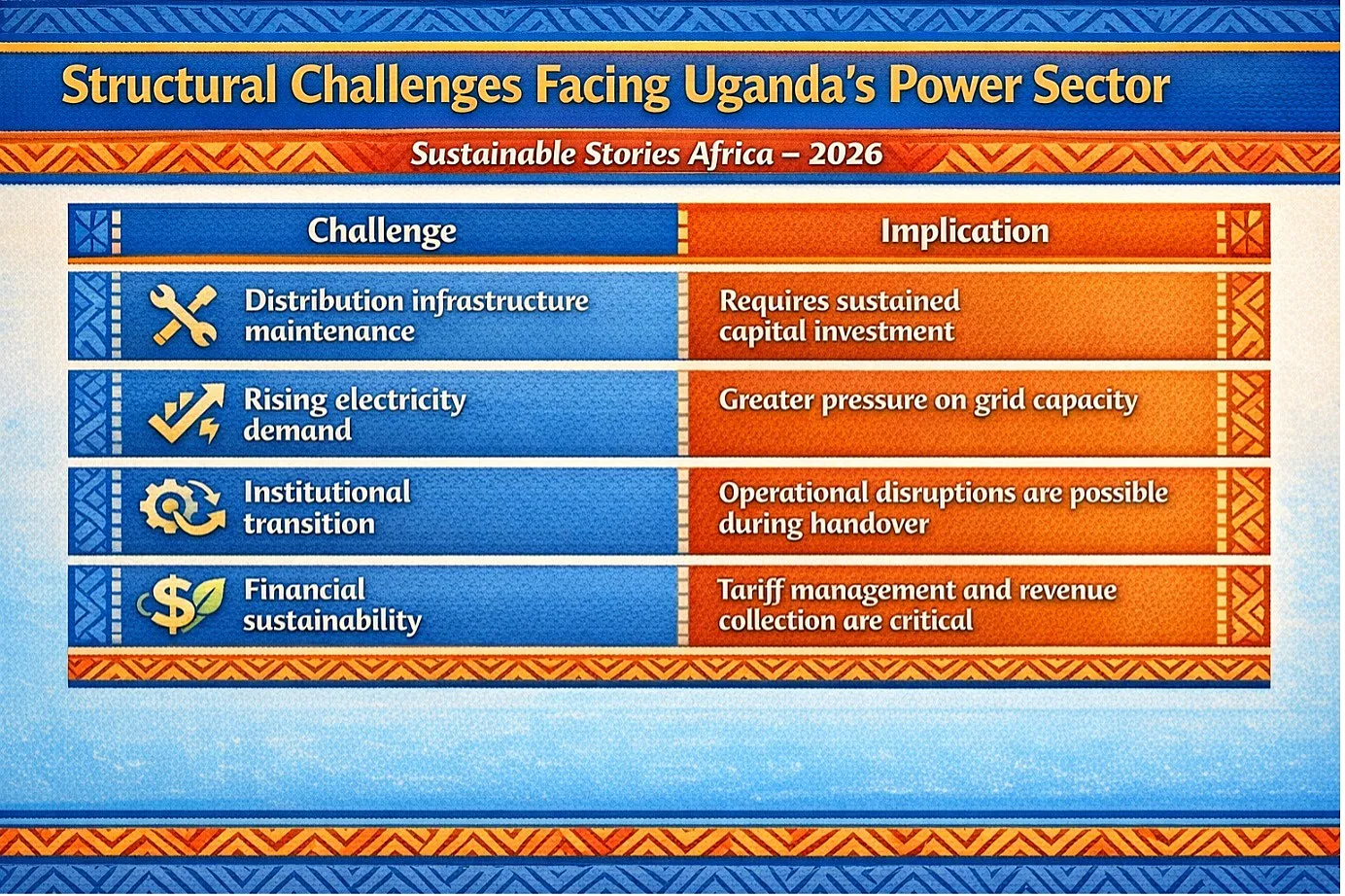
These challenges highlight why the transition from private concession to government management will be closely watched by investors and policymakers alike.
Government Faces Critical Energy Governance Test
Uganda’s government now faces the task of managing one of the country’s most complex infrastructure systems.
Ensuring a smooth transition will require strong institutional coordination, stable financing arrangements and technical expertise.
Energy sector observers say policymakers must prioritise maintaining service reliability while continuing to expand electricity access to underserved regions.
The outcome could influence broader debates across Africa about the role of public-private partnerships in energy infrastructure development.
For Uganda, the transition represents not just a contractual change, but a defining moment for the country’s long-term governance of the electricity sector.
Path Forward – Ensuring Stability During Energy Transition
Uganda’s immediate priority will be maintaining operational stability while strengthening institutional capacity within its electricity distribution agencies.
If managed effectively, the transition could provide an opportunity to deepen energy reforms, expand electricity access and improve long-term infrastructure resilience across the country’s power sector.
Culled From: As Umeme’s 20-year reign ends, can Uganda government keep the lights on? - Energy in Africa